Uterus Involution: Understanding Postpartum Recovery
Complete guide to uterine involution: the natural postpartum shrinking process and recovery timeline.
Understanding Uterus Involution: Your Postpartum Recovery Guide
After giving birth, your body undergoes remarkable changes as it transitions from pregnancy back to a non-pregnant state. One of the most significant transformations involves your uterus, which must return to its pre-pregnancy size and position. This natural process is called uterine involution, and it represents a critical phase of postpartum recovery that typically spans approximately six weeks following delivery.
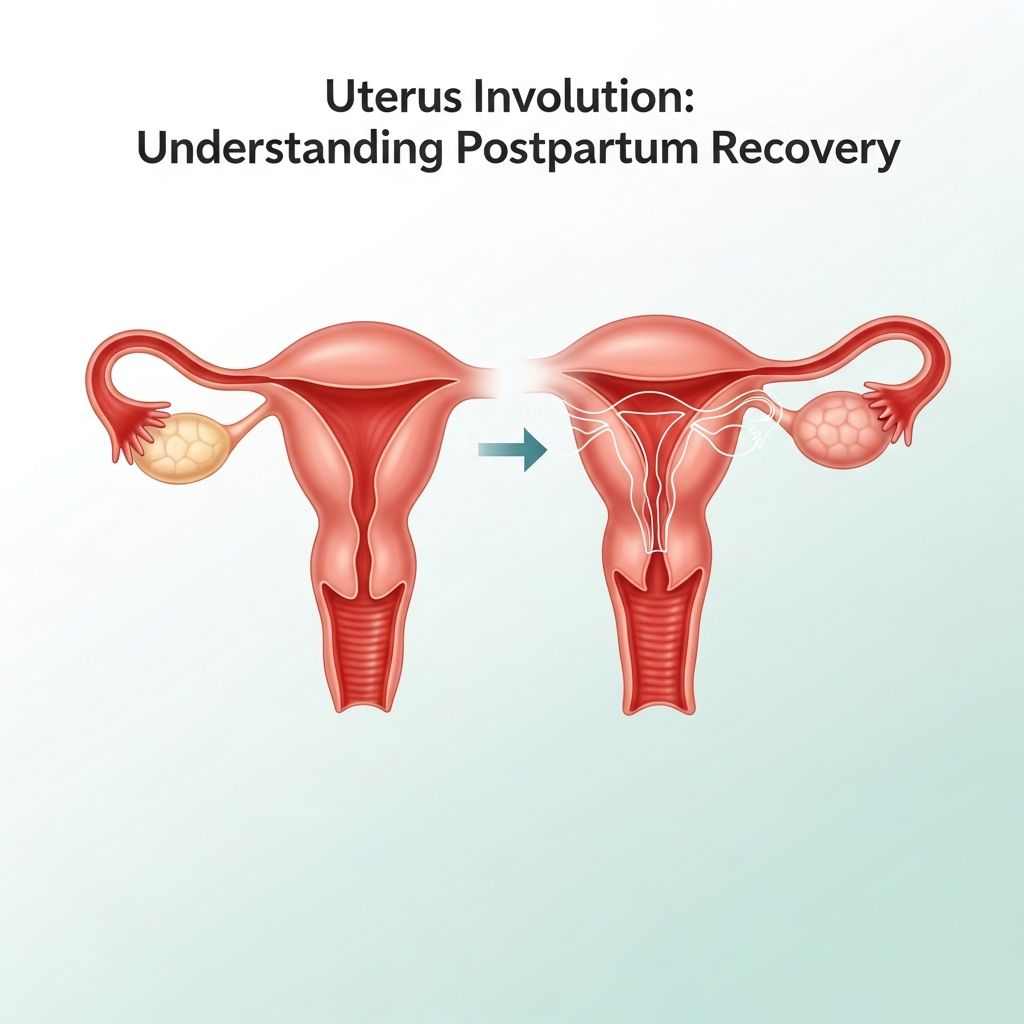
Uterine involution is the medical term for the shrinking and repositioning of your womb as it recovers from pregnancy and childbirth. During pregnancy, your uterus expands dramatically to accommodate a growing fetus, eventually becoming about 500 times larger than its normal size. After delivery, your body initiates an organized physiological process to restore your uterus to its original dimensions and function. Understanding this process helps you recognize normal recovery and identify potential complications that may require medical attention.
What Happens During Uterine Involution?
Uterine involution begins immediately after the delivery of the placenta, the organ that nourished your baby throughout pregnancy. The process involves several interconnected mechanisms that work together to reduce your uterus from its enlarged gestational size back to its normal, non-pregnant dimensions.
The Physiological Mechanisms
During pregnancy, the muscle fibers of your uterus stretch and enlarge to accommodate fetal growth. After delivery, these muscle fibers contract and gradually decrease in size through a process called autolysis, where the muscle cells essentially consume themselves. This natural breakdown of excess muscle tissue is entirely normal and represents your body’s efficient way of restoring anatomical balance.
Simultaneously, the blood vessels that expanded during pregnancy to supply the enlarging uterus also diminish in size. The endometrium, the inner lining of your uterus, sheds as lochia—the postpartum vaginal discharge that contains blood, tissue fragments, and other materials. This shedding is essential for preparing the uterine lining for future pregnancies and represents another critical component of the involution process.
The position of your uterus also changes during involution. During pregnancy, your uterus typically tilts backward, a position called retroversion. As involution progresses, your uterus gradually returns to a more forward-tilted position, called anteversion, which represents its typical non-pregnant orientation.
Timeline of Uterine Involution
Understanding the expected timeline for uterine involution helps you monitor your recovery and recognize when something may require medical evaluation. The involution process follows a fairly predictable schedule, though individual variation occurs based on factors such as parity, delivery method, and overall health.
The First Week After Delivery
During the first 24 hours after delivery, your uterus weighs approximately 1,000 grams (about 2.2 pounds), still significantly enlarged from pregnancy. The fundus—the top portion of your uterus—is typically palpable at or just below your umbilicus (belly button). This is an important clinical marker that healthcare providers assess to ensure normal involution is occurring.
Related Stories



By the end of the first week postpartum, your uterus has shrunk considerably. The fundus descends by approximately one fingerbreadth each day, so by day seven, it may no longer be palpable above the pubic bone. Your uterus now weighs roughly 500 grams and continues its rapid reduction in size.
The Second and Third Weeks
During weeks two and three postpartum, your uterus continues its gradual but steady decrease in size. By the end of the second week, your uterus typically weighs around 350 grams and is largely confined within your pelvis. The lochia changes in character during this period, transitioning from bright red to a darker, brownish color as the rate of bleeding decreases.
Weeks Four Through Six
By the end of the fourth week postpartum, your uterus weighs approximately 100 to 150 grams and has returned to your pelvis. By week six, your uterus typically returns to its pre-pregnancy weight of about 50 to 60 grams and fits entirely within your pelvic cavity. At this point, most women are cleared for resuming sexual intercourse and other normal activities by their healthcare providers.
The complete involution process typically concludes around six weeks postpartum, though in some women, particularly those who have given birth multiple times (multiparous women), the process may extend slightly longer. Research indicates that multiparous women may experience involution lasting up to eight weeks, with their uteri remaining slightly larger throughout the postpartum period.
What Is Lochia?
Lochia represents the postpartum vaginal discharge that occurs during uterine involution. This discharge contains blood, mucus, and tissue fragments from the endometrium and is a completely normal part of recovery. Understanding the characteristics of normal lochia helps you distinguish normal recovery from potential complications.
Stages and Characteristics of Lochia
Lochia progresses through three distinct stages that reflect the changing composition of your uterine discharge:
Lochia Rubra (Bloody Lochia): This stage occurs during the first three to five days postpartum and is characterized by bright red discharge, similar in appearance to a heavy menstrual period. The discharge contains primarily maternal blood, fetal blood, fragments of the placenta, and pieces of the endometrium. Flow during this stage is typically heavy, potentially requiring a sanitary pad every one to two hours.
Lochia Serosa (Serous Lochia): Beginning around day five and continuing through approximately day ten postpartum, lochia transitions to a lighter, pinkish or brownish color. This stage contains less blood and more serous fluid, along with white blood cells and bacteria. The flow becomes progressively lighter during this phase.
Lochia Alba (White Lochia): From approximately day ten through week four to six postpartum, lochia becomes pale or yellowish-white. This final stage contains primarily white blood cells, decidual cells, epithelial cells, and bacteria. The flow during this stage is minimal and may be nearly absent by the end of the third week.
Duration and When to Seek Help
While the typical duration of lochia is three to six weeks, some variation is normal. Factors such as breastfeeding, physical activity, and individual healing rates influence the exact timeline. However, certain characteristics warrant contacting your healthcare provider, including excessive bleeding that soaks through more than one pad per hour, passing large blood clots larger than a golf ball, foul-smelling discharge suggesting infection, or absence of lochia that occurs abnormally early, which might indicate retained products of conception.
Factors Affecting Uterine Involution
While uterine involution follows a fairly consistent pattern, several factors can influence the speed and completeness of the process. Understanding these factors helps explain individual variation in recovery timelines.
Parity and Number of Previous Pregnancies
Women who have given birth previously (multiparous women) often experience a slightly different involution pattern compared to women giving birth for the first time (primiparous women). Research demonstrates that while the trend of involution is similar between these groups, multiparous women may have a slightly prolonged involution period extending up to eight weeks. Additionally, the uterine cavity may be wider in multiparous women during the early postpartum period, though this normalizes by the end of the involution process.
Breastfeeding
Breastfeeding significantly influences the speed of uterine involution through hormonal mechanisms. When your baby breastfeeds, the stimulation of your nipples triggers the release of oxytocin, a hormone that causes uterine contractions. These contractions help compress blood vessels within the uterus, reducing bleeding and accelerating the involution process. Women who breastfeed often experience faster uterine shrinkage compared to those who bottle-feed.
Delivery Method
Whether you deliver vaginally or via cesarean section can influence involution. Women who deliver vaginally generally experience straightforward involution, while those who deliver via cesarean section may have a slightly prolonged recovery period. The surgical incision in the uterine wall requires additional healing time, which can marginally extend the complete involution process.
Maternal Health and Complications
Certain maternal health conditions or delivery complications can affect involution. Conditions such as infection, retained placental tissue, uterine atony (insufficient uterine contractions), or multiple gestations may complicate or prolong the involution process. Women with these complications may require additional medical support or intervention to ensure proper recovery.
Signs of Normal Uterine Involution
Recognizing the signs of normal involution helps you understand your recovery progress and provides reassurance that your body is healing appropriately:
Fundal Height Descent: Your healthcare provider measures the distance from your pubic bone to the top of your uterus (fundal height) during postpartum visits. A normal pattern shows the fundus descending approximately one fingerbreadth each day during the first week and returning to your pelvis by the end of the second week.
Progressive Uterine Contractions: You may experience afterpains—cramping sensations as your uterus contracts during involution. These are most noticeable during breastfeeding and typically resolve within the first week postpartum.
Decreasing Lochia: The progressive change in lochia from bright red to pink to white, with decreasing volume and duration, indicates normal involution progression.
Return of Normal Uterine Position: As involution progresses, your uterus returns from its pregnant position to fit entirely within your pelvis, allowing your abdomen to gradually return toward its pre-pregnancy appearance and your organs to resume their normal positions.
When to Contact Your Healthcare Provider
While most women experience uncomplicated uterine involution, certain symptoms warrant prompt medical evaluation. Contact your healthcare provider if you experience excessive vaginal bleeding that saturates more than one pad per hour or continues beyond six weeks, passage of large blood clots or tissue fragments, foul-smelling vaginal discharge suggesting infection, fever or signs of infection, severe or worsening abdominal pain, or signs of retained placental tissue such as absence of normal lochia progression.
Supporting Healthy Uterine Involution
Several actions can support optimal uterine involution during your recovery:
Breastfeeding on Demand: Nursing your baby frequently stimulates oxytocin release, which promotes uterine contractions and accelerates involution. Even if breastfeeding is challenging, frequent attempts support this natural process.
Skin-to-Skin Contact: Direct contact with your baby promotes oxytocin release and enhances the hormonal cascades supporting involution.
Rest and Recovery: Adequate rest allows your body to direct energy toward healing processes. While light activity is generally beneficial, excessive physical exertion may interfere with optimal recovery.
Adequate Hydration and Nutrition: Consuming sufficient fluids and nutrient-dense foods supports the metabolic processes underlying involution and helps prevent complications such as infection.
Pelvic Floor Exercises: Gentle pelvic floor strengthening exercises, when cleared by your healthcare provider, support overall postpartum recovery and help restore normal pelvic anatomy.
Frequently Asked Questions About Uterine Involution
Q: Can involution be too slow?
A: Yes, delayed involution can indicate complications such as retained placental tissue, infection, or uterine atony. If your healthcare provider determines that involution is progressing slower than expected, additional evaluation or treatment may be necessary. Regular postpartum check-ups help identify and address these issues promptly.
Q: Will my uterus return to exactly its pre-pregnancy size?
A: In most cases, yes. However, women who have given birth multiple times may have a uterus that remains slightly larger than nulliparous women (those who have never given birth). This minor difference typically does not affect fertility or health.
Q: When can I resume exercise after delivery?
A: Most healthcare providers recommend waiting until your six-week postpartum checkup before resuming strenuous exercise. Your provider will assess your individual recovery and clear you for activity based on your specific circumstances, including delivery method and any complications.
Q: Is it normal to have afterpains?
A: Yes, afterpains are normal uterine contractions that occur during involution. They are typically mild to moderate and resolve within the first week postpartum. They are often more pronounced during breastfeeding. Over-the-counter pain relievers can help manage discomfort if needed.
Q: How long should lochia last?
A: Lochia typically lasts three to six weeks postpartum. The duration varies based on individual factors including breastfeeding status, physical activity level, and maternal health. Lochia persisting beyond six weeks or accompanied by foul odor, fever, or excessive bleeding warrants medical evaluation.
Q: Can complications affect involution?
A: Yes, delivery complications such as infection, hemorrhage, or retained placental tissue can affect the involution timeline. Your healthcare provider will monitor for these complications during postpartum visits and provide appropriate treatment if complications develop.
References
- Physiological Uterine Involution in Primiparous and Multiparous Women — National Center for Biotechnology Information (NCBI/PMC). 2017. https://www.ncbi.nlm.nih.gov/pmc/articles/PMC5438840/
- Postpartum: Stages, Symptoms & Recovery Time — Cleveland Clinic. 2024. https://my.clevelandclinic.org/health/articles/postpartum
- Uterus: Anatomy, Function, Size, Position & Conditions — Cleveland Clinic. 2024. https://my.clevelandclinic.org/health/body/22467-uterus
- Oxytocin Massage and Breastfeeding on Demand in the Uterine Involution Process — Genius Journal. 2021. https://genius.inspira.or.id/index.php/genmj/article/view/104
- How Long Does It Take for the Uterus to Shrink After Birth? — The Bump. 2024. https://www.thebump.com/a/size-uterus-after-birth
Similar Articles








Read full bio of Sneha Tete