UV Index: Essential Guide To Risks And Sun Protection
Understand the UV index scale, risks of sun exposure, and essential protection strategies to prevent skin damage and cancer.
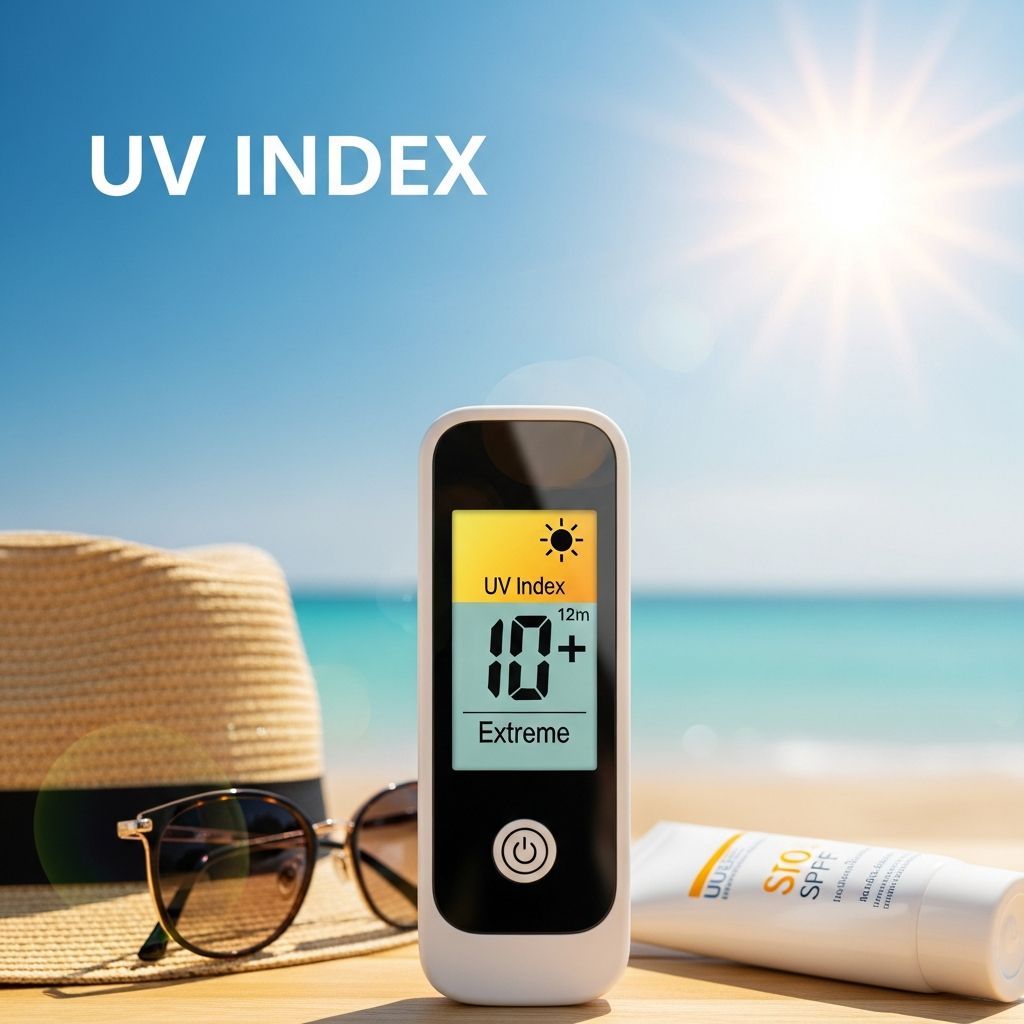
The
UV index
is a vital tool developed by the World Health Organization (WHO) in 2002 to measure the intensity of ultraviolet (UV) radiation from the sun at a particular place and time. It helps individuals assess the risk of skin damage, sunburn, and long-term health issues like skin cancer, guiding when to take protective measures.What Is the UV Index?
The UV index provides a standardized scale from 0 to 11+ indicating UV radiation strength, weighted toward wavelengths most harmful to human skin (primarily UVB). Higher values mean greater risk of harm in shorter exposure times. For instance, at a UV index of 5, fair skin might burn in about 40 minutes unprotected; at 10, that time halves to 20 minutes.
It’s calculated using computer models factoring in sun elevation, ozone levels, cloud cover, altitude, pollutants, and reflections, rather than direct measurement in most cases. Daily forecasts peak around midday (noon to 1 PM), aligning with prime vitamin D production hours (10 AM to 2 PM).
How Is the UV Index Calculated?
UV index values derive from atmospheric models by organizations like the National Weather Service. Key inputs include:
- Solar zenith angle: Sun’s position affects intensity; highest at midday.
- Ozone concentration: Thicker layers absorb more UV.
- Cloud cover and aerosols: Can reduce but often scatter UV.
- Altitude and surface reflection: Higher elevations and snow/water amplify exposure.
Values above 10 occur in equatorial regions, high altitudes, or ozone-depleted areas.
UV Index Scale and Risk Levels
The scale categorizes risk with color codes and protection advice:
| UV Index | Level | Risk | Protection Needed |
|---|---|---|---|
| 0-2 | Low (Green) | Minimal | None required |
| 3-5 | Moderate (Yellow) | Low-Moderate | Seek shade midday, wear sunscreen, hat, sunglasses |
| 6-7 | High (Orange) | High | Extra protection: clothing, SPF 30+, avoid peak sun |
| 8-10 | Very High (Red) | Very High | Avoid outdoors midday; full coverage essential |
| 11+ | Extreme (Violet) | Extreme | No outdoor exposure midday; maximum protection |
A threshold of
3 or above
signals the need for sun protection to prevent burns and cumulative damage.Health Risks of High UV Exposure
UV radiation causes acute effects like sunburn and long-term risks including melanoma, basal cell carcinoma, and squamous cell carcinoma—the most preventable cancers. It also damages eyes (cataracts, photokeratitis) and suppresses immunity.
Systematic reviews show UV as the primary skin cancer cause, affecting millions yearly. Despite UVI awareness efforts, public understanding remains low, limiting behavior change.
Sun Protection Recommendations
Follow these tiered strategies based on UV index:
- Clothing: Long sleeves, pants, UPF-rated fabrics.
- Hats and Sunglasses: Wide-brim hats; UV400 lenses.
- Sunscreen: Broad-spectrum SPF 30+, reapply every 2 hours or after swimming/sweating.
- Shade: Trees, umbrellas, awnings during 10 AM-4 PM.
- Avoid Tanning: No safe tan; use self-tanners.
Related Stories



For UV 3+, combine multiple methods; above 8, stay indoors midday.
Common Misconceptions About the UV Index
A dangerous trend involves using high UV index for ‘optimal tanning.’ This ignores that higher indices accelerate burning alongside tanning, increasing cancer risk. The UV index warns of danger, not tanning safety.
Other myths:
- Clouds block UV: They reduce but don’t eliminate it (up to 80% penetrates).
- Dark skin is immune: Protection needed, burns slower but damage accumulates.
- Vitamin D needs override protection: Short, safe exposure suffices; excess UV risks outweigh benefits.
UV Index Awareness and Usage
Studies indicate low-to-moderate UVI awareness globally. A review of 25+ studies found limited understanding and minimal behavior impact. Some use it to tan more (risky), others for protection (beneficial). In Canada, high awareness linked to sunburn predictors like outdoor work; avoidance during high UV reduced odds.
In Europe, ~1/3 used UVI for planning, associating with fewer sunburns but not more protection methods. Paradoxically, higher UVI sometimes decreased sunscreen use among youth.
Factors Affecting UV Index Readings
- Time of Day/Year: Peaks midday, summer.
- Geography: Higher near equator, poles in summer.
- Weather: Clouds, pollution modulate but unpredictably.
- Altitude/Surface: +10-12% per 1,000m; snow reflects 80% UV.
Tools to Check UV Index
- Weather apps/forecasts (e.g., NOAA, AccuWeather).
- Apps like dminder for real-time, personalized alerts based on skin type/location.
- Wearables like SunFriend UV monitors.
- WHO/Environment Canada sites for global data.
UV Index and Vitamin D Balance
UVI aids safe sun for vitamin D (10-30 minutes midday, arms/legs exposed, several times weekly depending on skin type/location). Above UVI 3, protect to avoid overdose risks while gaining benefits. Insufficient evidence to adjust UVI for vitamin D.
Skin Cancer Prevention with UV Index
Using UVI≥3 threshold promotes protection without conflicting physical activity messages. Evidence supports its role in raising awareness, though behavior change needs enhancement via education.
Frequently Asked Questions (FAQs)
What does a UV index of 1 mean?
A UV index of 1 indicates low risk; no special protection needed, even for sensitive skin.
Is UV index higher in the morning or afternoon?
Highest midday (10 AM-4 PM); symmetric morning/afternoon but peaks solar noon.
Can I tan safely at UV index 6?
No—high risk of burns; tan signals damage. Use alternatives like bronzers.
Does wind or cool weather reduce UV risk?
No, UV penetrates regardless of temperature or breeze; check index directly.
How accurate are UV index forecasts?
Highly accurate via models validated against measurements; hourly updates available.
UV index for indoor activities?
Negligible indoors; relevant for outdoor plans only.
Children and UV index?
Extra cautious—thin skin burns faster; protect under UVI 3.
References
- Awareness, Understanding, Use, and Impact of the UV Index — Nihalani et al., National Library of Medicine. 2019-05-28. https://pmc.ncbi.nlm.nih.gov/articles/PMC6534479/
- All about the UV Index — GrassrootsHealth. 2023-06-12. https://www.grassrootshealth.net/blog/all-about-the-uv-index/
- Validity and use of the UV index — Allinson et al., ICNIRP. 2012-11-01. https://www.icnirp.org/cms/upload/publications/ICNIRPjointUVIpaper.pdf
- The UV index tanning trend: Risks and alternatives — Medical News Today. 2024-05-15. https://www.medicalnewstoday.com/articles/uv-index-tanning
- Ultraviolet radiation — World Health Organization. 2023-11-09. https://www.who.int/news-room/fact-sheets/detail/ultraviolet-radiation
Similar Articles








Read full bio of medha deb