UV Radiation Dangers During Travel: Planes, Trains & Cars
Discover hidden UV exposure risks during travel and learn essential protection strategies.
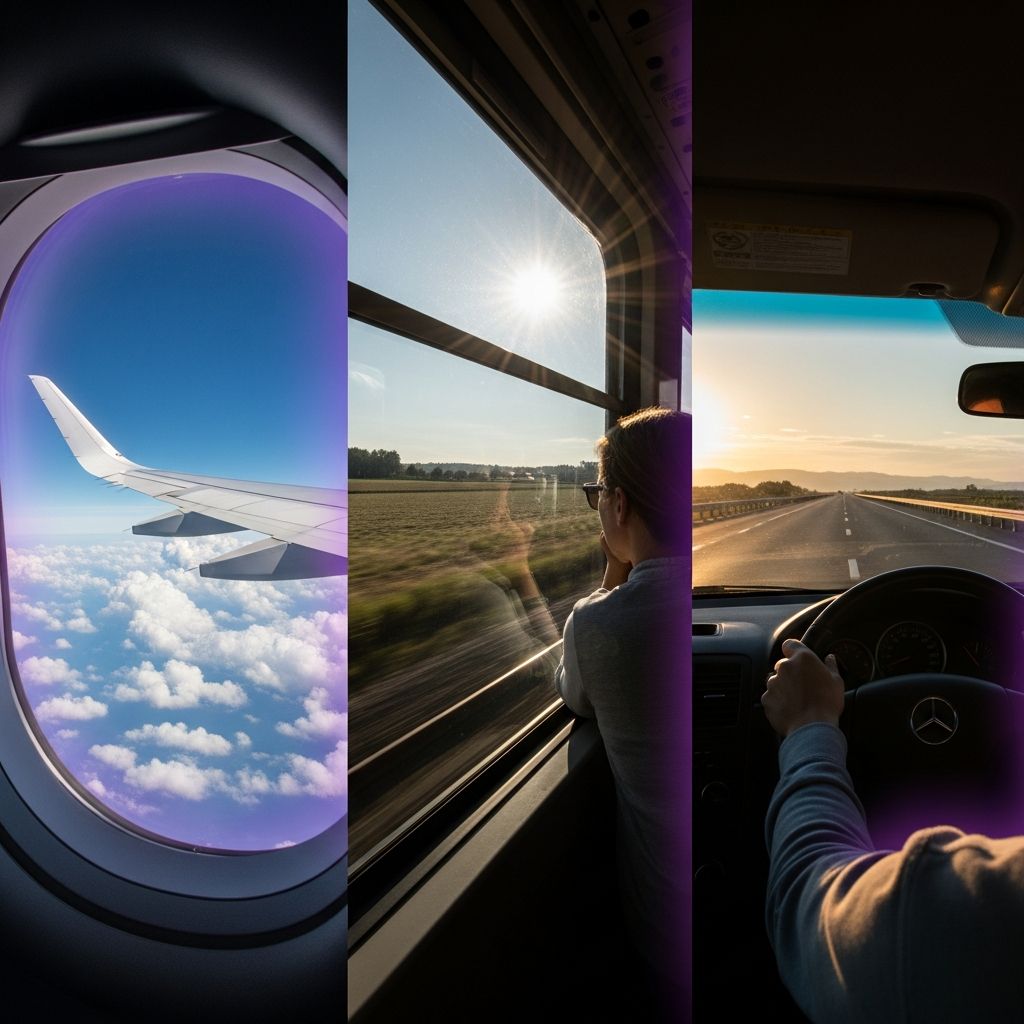
A Surprising Danger in Planes, Trains and Automobiles
Many people carefully apply sunscreen before heading to the beach or spending time outdoors, yet overlook a significant source of UV exposure that affects millions daily: the windows of vehicles used for travel. Whether you’re commuting to work, taking a long road trip, or flying across the country, UV radiation poses a hidden threat that deserves your attention. Understanding this risk and implementing proper protection strategies can substantially reduce your likelihood of developing skin cancer.
The threat becomes particularly concerning when considering that approximately 90 percent of all holiday travel occurs by car, with average distances exceeding 200 miles per journey. During these extended periods inside vehicles, passengers and drivers experience cumulative UV exposure that can contribute to skin damage and cancer development over time. This article examines the mechanisms of UV penetration through vehicle windows, explains why certain types of rays pose greater risks than others, and provides practical travel protection strategies.
How UV Rays Damage Your Skin During Travel
Two primary types of ultraviolet radiation from the sun can damage skin cells even during brief exposures. Understanding the differences between these rays is essential for implementing effective protection strategies.
UVB rays are shorter wavelength rays that primarily cause the immediate sunburn sensation most people recognize. These rays are relatively effective at causing acute skin damage and are blocked quite efficiently by standard glass materials.
UVA rays are longer wavelength rays that penetrate deeper into the skin, causing cumulative damage including tanning, skin aging, wrinkles, and cellular mutations. Critically, UVA rays are far less effectively blocked by conventional glass compared to UVB rays. Over extended periods, this combination of factors leads to accelerated skin aging and increased melanoma risk.
The cumulative damage from either or both ray types can eventually lead to various forms of skin cancer, including basal cell carcinoma, squamous cell carcinoma, and melanoma. This progression typically occurs over years or decades of repeated exposure, making prevention during frequent travel especially important.
Why Vehicle Windows Don’t Provide Adequate Protection
A common misconception is that being inside a vehicle provides automatic sun protection. Research contradicts this assumption, revealing significant vulnerabilities in window protection across all common travel modes.
Car Windows and UV Penetration
Automotive glass provides vastly different protection depending on the window type. Windshields in most vehicles are treated with a special coating that blocks approximately 99 percent of UVB rays and provides some UVA protection. However, side windows, rear windows, and sunroofs typically receive no such treatment. These untreated windows block UVB rays effectively due to the properties of standard glass, but allow significant UVA transmission ranging from nearly negligible amounts to over 50 percent depending on the glass composition.
Research examining 29 automobile models from 15 different manufacturers revealed that protection from front windshields was reasonably adequate, but side windows offered minimal protection against harmful UV radiation. This asymmetry explains why long-distance truck drivers and individuals with extended commutes show elevated rates of skin cancer, particularly melanomas and other cancers on the left side of the body—the driver-side window exposure.
Studies have documented that melanoma and Merkel cell carcinoma cases show significantly higher prevalence on the left side compared to the right, with this effect most prominent on the arm. The driver-side automobile ultraviolet exposure is approximately five times stronger on the left arm than the right arm, providing a clear mechanistic explanation for this epidemiological pattern.
Airplane and Train Windows
The situation becomes more concerning at high altitudes. Airplane windows present a similar problem to automotive side windows, allowing UVA transmission while blocking UVB rays. However, flying at 30,000 feet substantially increases the intensity of UV-A exposure due to reduced atmospheric filtering at high altitudes. Research measuring UV-A levels inside airplane cockpits during flight at 30,000 feet detected approximately 242 μW/cm² of UV-A radiation.
This measurement is particularly significant when compared to exposure levels in tanning beds. A 20-minute session in a UV-A-only tanning bed delivers a carcinogenic effective dose of 2,940 mJ/m². A pilot flying for approximately 57 minutes at 30,000 feet receives an equivalent carcinogenic effective UV-A dose. These measurements demonstrate that occupational pilots and cabin crew members experience substantial UV-A exposure during their working hours.
The elevated melanoma rates observed in airline pilots and cabin crew members support these findings. These individuals demonstrate significantly higher incidence of melanoma compared to the general population and other professions, directly correlating with their occupational UV exposure during flights.
Trains and buses similarly allow UVA transmission through side windows, presenting the same risk to passengers during extended travel periods.
Additional Factors That Increase UV Exposure During Travel
Several environmental and geographical factors can amplify UV exposure beyond baseline levels during travel.
- Cloud cover: Many travelers mistakenly believe that overcast conditions eliminate UV exposure. However, UV radiation penetrates clouds effectively, requiring consistent protection regardless of weather conditions.
- Reflective surfaces: When traveling over snow-covered terrain or near water bodies, UV radiation reflects off these surfaces, increasing cumulative exposure by up to 85 percent compared to travel over non-reflective surfaces.
- Altitude: Higher altitudes receive stronger direct UV radiation due to less atmospheric filtering, making air travel particularly risky for UV exposure.
- Latitude and season: Travel to equatorial regions or during peak summer months substantially increases UV intensity compared to travel during other times and to higher latitudes.
Five Essential Travel Protection Tips
Implementing multiple protection strategies creates a comprehensive defense against UV damage during travel.
1. Apply Broad-Spectrum Sunscreen Before Travel
Sunscreen application remains the most accessible and practical protection method for travelers. Ensure all family members apply sunscreen before loading luggage into the trunk or boarding your flight. For infants under six months, clothing and hats provide the best protection, as sunscreen is not recommended for this age group. Starting at six months of age, sunscreen becomes appropriate and should be applied generously and reapplied regularly.
Look specifically for the words “broad spectrum” on the sunscreen label to ensure protection against both UVA and UVB rays. Products labeled only with SPF number may provide adequate UVB protection while offering minimal UVA defense, leaving your skin vulnerable to deep-penetrating damage.
2. Wear Protective Clothing and Accessories
Physical barriers provide superior protection compared to sunscreen alone, particularly for extended travel periods. Lightweight, long-sleeved shirts, pants, and wide-brimmed hats create effective barriers against UV radiation without the need for regular reapplication. UV-blocking driving gloves specifically designed for automotive use protect hands and forearms during extended driving periods.
Sunglasses with UV protection prevent ocular damage and protect the sensitive skin surrounding the eyes. Many travelers overlook this aspect of sun protection, yet UV exposure contributes significantly to cataracts and other eye conditions.
3. Install Transparent UV-Blocking Window Film
For individuals who spend substantial time driving—whether for commuting, professional driving, or frequent road trips—installing transparent UV-blocking window film on side and rear windows provides long-term protection. This film blocks UV-A rays while maintaining visibility and aesthetic appearance, making it an excellent investment for vehicles subjected to frequent long-distance travel.
4. Maximize TSA-Approved Sunscreen on Flights
Travelers flying to destinations with significant sun exposure should bring the maximum amount of sunscreen the Transportation Security Administration permits in carry-on luggage, which is 3.4 ounces. This reserve allows for mid-flight reapplication if necessary. Additional sunscreen containers should be packed in checked luggage for use throughout the remainder of your trip after landing.
5. Plan Seat Selection Strategically
When possible, request seating on the side of vehicles and aircraft away from direct window exposure during peak sun hours. While this strategy provides only partial protection, combined with other measures, it contributes to comprehensive UV risk reduction during travel.
Special Populations and Increased Risk
Certain groups face elevated skin cancer risk from travel-related UV exposure and warrant special attention.
Professional Drivers
Long-distance truck drivers have demonstrated significantly higher skin cancer rates than the general population due to cumulative UV exposure during extended periods behind the wheel. These individuals should prioritize window film installation, protective clothing, and regular dermatological screening.
Airline Pilots and Cabin Crew
Aviation professionals experience substantially elevated melanoma risk due to occupational exposure to high-altitude UV radiation. Research indicates that pilots flying 56.6 minutes at 30,000 feet receive UV-A doses equivalent to a 20-minute tanning bed session. These professionals should maintain consistent sun protection practices and undergo regular skin cancer screening.
Frequent Commuters
The average American driver spends over one hour in their vehicle daily. This cumulative exposure, while lower intensity than professional drivers experience, still contributes meaningfully to skin cancer development over years or decades.
Year-Round UV Protection Considerations
Many people reserve sun protection efforts for spring and summer months, overlooking the fact that UV radiation reaches earth year-round. Winter travel, particularly to snow-covered regions, can actually expose travelers to intense UV radiation due to snow reflection amplifying exposure by up to 85 percent. Cloudy days provide minimal protection, as UV rays penetrate cloud cover effectively.
This means your travel protection strategies should remain consistent throughout all seasons and weather conditions, not just during traditionally sunny periods.
Frequently Asked Questions
Q: Do car windshields provide complete UV protection?
A: Windshields block approximately 99 percent of UVB rays and provide some UVA protection through special treatment. However, side windows, rear windows, and sunroofs typically provide minimal protection against UVA rays, which penetrate 0.4 to 53.5 percent of the time depending on glass composition.
Q: Why is there more skin cancer on the left side of drivers’ bodies?
A: Driver-side UV exposure is approximately five times stronger on the left arm than the right arm due to unprotected side window transmission of UVA rays. This asymmetry explains the epidemiological pattern showing elevated skin cancer rates on drivers’ left sides.
Q: Is UV protection necessary on cloudy days during travel?
A: Yes. UV radiation penetrates clouds effectively, meaning you receive substantial UV exposure even when the sky appears overcast. Protection should remain consistent regardless of weather conditions.
Q: How much sunscreen should I bring on an airplane?
A: The TSA permits a maximum of 3.4 ounces of sunscreen in carry-on luggage. Larger containers should be packed in checked baggage for use during your trip after landing.
Q: At what age can sunscreen be applied to infants?
A: Sunscreen can be applied starting at six months of age. For younger infants, protective clothing and hats provide the best UV protection.
Q: Are airline pilots at higher risk for skin cancer?
A: Yes. Airline pilots and cabin crew members demonstrate elevated melanoma rates due to cumulative occupational exposure to high-altitude UV radiation, which is significantly more intense than ground-level exposure.
Implementation Strategy for Travel Safety
Transform these recommendations into actionable habits by establishing a pre-travel routine. Before any extended travel, review your specific destination’s UV intensity, plan protective strategies accordingly, and ensure all family members understand sun protection requirements. Stock travel-sized sunscreen in your vehicle, maintain UV-blocking window film in acceptable condition, and keep protective clothing accessible during travel. Regular dermatological screening becomes increasingly important for individuals with significant travel exposure, allowing early detection of any skin abnormalities that may develop.
The cumulative effects of UV exposure during travel contribute substantially to skin cancer development. By recognizing that planes, trains, and automobiles present genuine UV radiation hazards and implementing comprehensive protection strategies, you can significantly reduce your skin cancer risk while maintaining comfortable travel experiences. These evidence-based approaches require minimal lifestyle modification while providing meaningful health protection for you and your family.
References
- A Surprising Danger in Planes, Trains and Automobiles — Skin Cancer Foundation. 2024. https://www.skincancer.org/blog/surprising-danger-planes-trains-automobiles/
- The Risk of Melanoma in Pilots and Cabin Crew: UV Measurements in Airplane Cabins and Comparison with Tanning Bed Exposure — National Center for Biotechnology Information (NCBI). 2014. https://www.ncbi.nlm.nih.gov/pmc/articles/PMC4476387/
- Time Spent Driving an Automobile May Increase Skin Cancer Risk — Newswise. 2011. https://www.newswise.com/articles/time-spent-driving-an-automobile-may-increase-skin-cancer-risk
- A Newly Discovered Risk Factor For Skin Cancer: Your Car — CBS News. 2015. https://www.cbsnews.com/colorado/news/a-newly-discovered-risk-factor-for-skin-cancer-your-car/
- Do Car Windows Protect You from UV Rays? — Academy of Dermatology. 2023. https://aadermatology.com/why-you-should-wear-sunscreen-in-the-car/
- Driving Your Risk for Skin Cancer — Skin Cancer Foundation. 2023. https://www.skincancer.org/blog/driving-your-risk-for-skin-cancer/
- What Pilots Need to Know About Skin Cancer and UV Risks — Aviate Medical. 2024. https://www.aviatemedical.com/news/skin-in-the-game-what-pilots-need-to-know-about-skin-cancer-and-uv-risks
Similar Articles








Read full bio of medha deb