UVA Photochemotherapy: PUVA Guide, 25–30 Sessions For Clearance
Comprehensive guide to PUVA therapy: mechanism, indications, protocols, and safety in photochemotherapy for skin disorders.
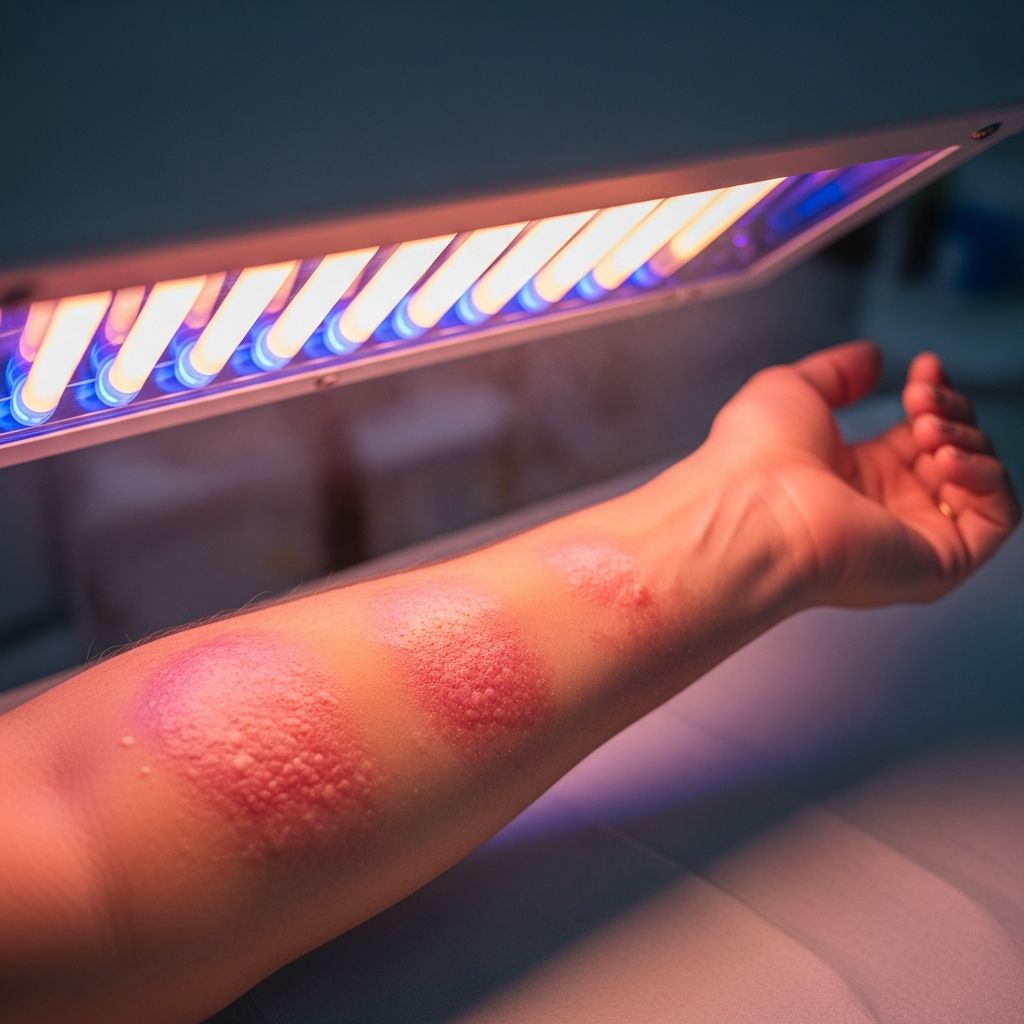
UVA photochemotherapy
UVA photochemotherapy, commonly known as PUVA (psoralen plus ultraviolet A), is a targeted light-based treatment that combines photosensitizing agents with UVA radiation to manage various dermatological conditions. This therapy leverages psoralens—plant-derived compounds that sensitize the skin to UVA light—to induce therapeutic effects such as reduced inflammation and repigmentation.
What is UVA photochemotherapy?
PUVA therapy involves administering psoralen orally, topically via bath or soak, or systemically, followed by controlled exposure to UVA light (320–400 nm). Psoralens intercalate into DNA, and upon UVA activation, form cross-links that inhibit cell proliferation in hyperactive skin cells, making it highly effective for proliferative disorders like psoriasis. Unlike UVB phototherapy, PUVA requires photosensitization, enhancing UVA’s penetration into deeper skin layers.
The treatment is typically delivered 2–3 times weekly, with sessions lasting 15–45 minutes, spaced at least 48 hours apart to allow skin recovery. Clearance often requires 25–30 sessions, achieving up to 80% improvement in conditions like psoriasis. No topical psoralen formulations are currently available in the US, so oral administration predominates.
History
Developed in the 1970s, PUVA emerged as a breakthrough for severe psoriasis after studies demonstrated its superiority over topical therapies. Early randomized trials showed PUVA outperforming placebo, establishing it as a standard for refractory cases. Over decades, its use expanded to vitiligo and mycosis fungoides, supported by systematic reviews confirming high clearance rates.
Mechanism of action
Psoralens (e.g., 8-methoxypsoralen or 5-methoxypsoralen) are activated by UVA, forming mono- and bifunctional adducts with pyrimidine bases in DNA. This suppresses DNA synthesis and mitosis in keratinocytes, reduces cytokine production, and promotes melanocyte stimulation in vitiligo. In psoriasis, it normalizes epidermal hyperplasia; in eczema, it modulates immune responses. The minimal phototoxic dose (MPD) or minimal erythema dose (MED) guides dosing to minimize burns while maximizing efficacy.
Indications
PUVA is medically necessary for:
- Severe psoriasis unresponsive to topicals, coal tar, or UVB.
- Vitiligo, especially generalized cases.
- Atopic dermatitis (eczema).
- Mycosis fungoides and cutaneous T-cell lymphoma.
- Lichen planus, morphea, parapsoriasis, pityriasis lichenoides, prurigo nodularis.
- Graft-versus-host disease, chronic actinic dermatitis.
Clearance rates reach 80% for psoriasis (PASI-75 in 80% of patients), comparable to biologics. For vitiligo, repigmentation occurs in 70–75% of cases after 100–150 sessions. It is not indicated for infectious keratitis or lymphomatoid papulosis due to insufficient evidence.
Photobiology
UVA penetrates deeper than UVB, reaching the papillary dermis. Psoralen-UVA interaction generates reactive oxygen species and apoptosis in T-cells, key in inflammatory dermatoses. MPD testing on a small skin patch determines starting doses, typically beginning at 10 seconds and increasing incrementally until mild erythema. Post-treatment monochromator testing shows increased MED, enhancing sunlight tolerance in photodermatoses.
Psoralens
Oral psoralens like Oxsoralen Ultra (8-MOP) are prescribed 1–2 hours pre-exposure. Doses: 0.4–0.6 mg/kg for adults. Bath PUVA uses diluted solutions for localized disease (e.g., hands/feet). Patients must fill prescriptions before the first session. Eye protection with UVA-blocking glasses is mandatory on treatment days.
Photochemotherapy protocols
| Type | Description | Frequency | Sessions to Clearance |
|---|---|---|---|
| Systemic (Oral) PUVA | Oral psoralen + whole-body UVA | 2–3/week | 25–30 |
| Bath/Soak PUVA | Psoralen bath + targeted UVA (hands/feet) | 2–3/week | 20–40 |
| Hand/Foot PUVA | Localized soak for acral vitiligo/psoriasis | 3/week | 30–50 |
Treatment phases: Clearing (initial dose escalation to clearance), Maintenance (weekly then monthly). Max cumulative dose monitored to prevent carcinogenesis.
UVA dosimetry
Starting dose: 30–50% of MPD. Increments: 20–40% per session if no erythema. Max dose: 10–20 J/cm². Erythema grading (0–4+) dictates adjustments. Modern cabins use electronic dosimetry for precision.
Patient selection
Ideal candidates: Adults with extensive disease failing topicals/UVB. Contraindications include pregnancy, lactation, photosensitivity disorders (e.g., lupus), history of skin cancer, or inability to comply with photoprotection. Children may benefit (72% response rate), but with caution.
Pre-treatment assessment
Includes history, skin type (Fitzpatrick I–VI), MPD testing, liver/renal function, and counseling on risks. Baseline bloods, ophthalmologic exam for high-risk patients.
Treatment regimen
Clearing: 2–3 sessions/week until clearance (9–15 weeks). Maintenance: Reduce to once weekly, then monthly for 6–12 months. Total treatments: Up to 150–200 lifetime limit recommended.
Clinical modifications
For darker skin types, lower starting doses. In HIV-associated eruptions, monitor for flares. Adjunctive topicals (e.g., emollients) enhance outcomes.
Effectiveness
Psoriasis: 80–90% clearance. Vitiligo: 50–75% repigmentation. Eczema/mycosis fungoides: 70% response. Long remissions post-maintenance in 50%.
Side effects
- Acute: Nausea (oral psoralen), pruritus, erythema (dose-dependent).
- Chronic: Premature aging, actinic keratoses, squamous cell carcinoma (risk rises >150 treatments, especially Fitzpatrick I–II).
- Rare: Cataracts (prevented by eye protection).
36% of pediatric patients experience mild erythema, resolving quickly.
Patient instructions
Avoid sunlight 24 hours post-psoralen; use sunscreen (SPF 30+), cover-up clothing. No pregnancy during/6 months post-therapy. Annual skin checks mandatory.
Does UVA photochemotherapy cure?
No, it induces remission but does not cure. Relapse common; repeat courses possible with cumulative dose caution.
Frequently Asked Questions (FAQs)
Q: How many PUVA sessions for psoriasis clearance?
A: Typically 25–30 sessions over 9–15 weeks, 2–3 times weekly.
Q: Is PUVA safe for children?
A: Yes, effective in 72% with good tolerance; mean 32 treatments.
Q: What are long-term risks of PUVA?
A: Skin cancer risk increases with >150 treatments; requires lifelong surveillance.
Q: Can PUVA treat vitiligo?
A: Yes, especially bath PUVA for hands/feet; 70% repigmentation.
Q: How is dosing determined?
A: Via MPD/MED testing; start at 30–50% and escalate.
Conclusion
PUVA remains a cornerstone for severe dermatoses, balancing high efficacy with manageable risks when protocols are followed. Patient education and monitoring ensure optimal outcomes.
References
- Phototherapy and Photochemotherapy (PUVA) for Skin Conditions — Aetna Clinical Policy Bulletin. 2023. https://www.aetna.com/cpb/medical/data/200_299/0205.html
- Psoralens Plus Ultraviolet A (PUVA) Therapy (Photochemotherapy) — BCBS Florida Medical Coverage Guidelines. 2023. http://mcgs.bcbsfl.com/MCG?mcgId=02-10000-16&pv=false
- The Patient’s Guide to Psoriasis Treatment. Part 2: PUVA Phototherapy — PMC/NCBI. 2016-07-26. https://pmc.ncbi.nlm.nih.gov/articles/PMC4972736/
- PUVA therapy — Wikipedia (informed by primary sources). 2023. https://en.wikipedia.org/wiki/PUVA_therapy
- Oral Psoralen Ultraviolet A Radiation (PUVA) photochemotherapy — University Hospitals Sussex NHS. 2025-02. https://www.uhsussex.nhs.uk/wp-content/uploads/2025/02/Oral-Psoralen-Ultraviolet-A-Radiation-final-pdf.pdf
- Comparison of UVA1 Phototherapy Versus Photochemotherapy — ClinicalTrials.gov. 2007. http://clinicaltrials.gov/show/NCT00533195
Similar Articles



Read full bio of medha deb