UVB Phototherapy: A Comprehensive Guide To Benefits And Uses
Comprehensive guide to UVB phototherapy for treating psoriasis, eczema, vitiligo, and other skin conditions effectively.
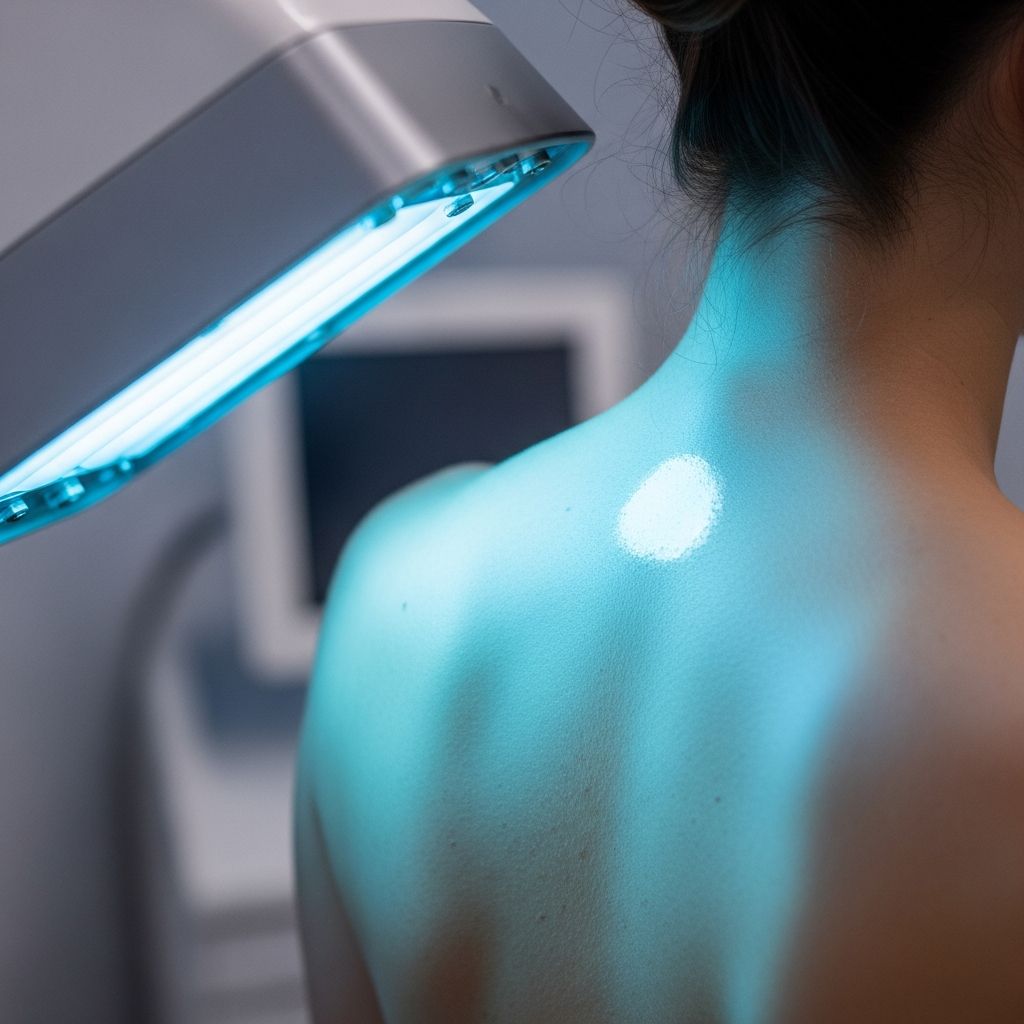
Ultraviolet B (UVB) phototherapy is a widely used treatment for various inflammatory skin conditions, delivering controlled shortwave ultraviolet radiation to suppress DNA synthesis in skin cells, reduce inflammation, and promote remission. Narrowband UVB (311–312 nm) has become the preferred form over broadband UVB (270–350 nm) due to shorter treatment times and longer remission periods.
Introduction
UVB phototherapy mimics the beneficial effects of natural sunlight but in a controlled medical setting, targeting conditions like
psoriasis
,atopic dermatitis
, andvitiligo
by slowing excessive skin cell growth and modulating immune responses. Developed decades ago, it offers a non-systemic option with high efficacy rates, achieving clearance in 60–70% of moderate-to-severe psoriasis cases after 20–36 sessions. Patients stand in specialized cabinets equipped with fluorescent tubes emitting precise UVB wavelengths, protecting sensitive areas like eyes and genitalia.This therapy is administered 2–3 times weekly, with sessions starting at a few seconds and uptitrating to 30 minutes based on skin type and response. Home units provide convenience, showing non-inferiority to clinic treatments for plaque psoriasis. Phototesting determines the minimal erythema dose (MED), with starting doses at 70% of MED and 20% increments thereafter to balance efficacy and safety.
Procedure
The UVB phototherapy procedure prioritizes patient safety and efficacy through a structured protocol involving preparation, exposure, and post-care.
- Pre-treatment assessment: Nurses examine skin for prior responses, adjusting doses if needed. Patients undress into gowns, covering genitalia and protecting eyes with goggles.
- Positioning: Patients enter a light box with fans for comfort, positioning to expose affected areas maximally.
- Exposure: Light is administered for seconds to minutes per session, with targeted dosing for limbs if required.
- Post-treatment: Moisturizers are applied, especially to hard-to-reach areas, followed by dressing. Appointments last 15–30 minutes total.
For home use, patients receive prescribed units, follow-up phototesting, and dose logs. Breaks over 12 days require dose reductions: 25% for 12–20 days, 50% for 21–27 days, or restart after 28+ days. Maintenance shifts to weekly sessions post-clearance.
Uses
UVB phototherapy treats a range of photo-responsive dermatoses, with
narrowband UVB
first-line for many.Common Indications
- Psoriasis: Ideal for extensive plaque or guttate types; 12–24 sessions yield clearance, with months-long remission. Not for very fair skin or photo-aggravated cases.
- Atopic dermatitis (eczema): Reduces inflammation and itch; broadband UVB occasionally used for severe cases.
- Vitiligo: Stimulates repigmentation via cytokine activation; twice-weekly for 3–4 months, up to 1–2 years.
Other Indications
- Guttate psoriasis, generalized pruritus, mycosis fungoides, localized scleroderma, lichen planus, polymorphous light eruption.
- Targeted devices like excimer lasers for localized lesions spare healthy skin.
| Condition | Typical Sessions | Frequency | Expected Outcome |
|---|---|---|---|
| Psoriasis | 20–36 | 3x/week | 60–70% clearance |
| Vitiligo | Months–2 years | 2x/week | Repigmentation |
| Atopic Dermatitis | Variable | 2–3x/week | Itch relief, reduced inflammation |
Related Stories



Contraindications
Certain conditions preclude UVB due to heightened risks.
- Absolute: Photosensitive disorders (e.g., lupus, xeroderma pigmentosum), active skin infections, history of melanoma or high skin cancer risk.
- Relative: Very fair skin (Fitzpatrick type I), pregnancy (unless benefits outweigh risks), immunosuppression, concurrent photosensitizing medications (e.g., tetracyclines).
- Caution in children, elderly, or those with cardiovascular issues unable to stand in cabinets.
Benefits
UVB offers rapid, safe clearance without systemic side effects, suitable for long-term use.
- Efficacy: Comparable to biologics for psoriasis (60–70% clearance); longer remissions with narrowband.
- Safety profile: Low carcinogenesis risk with modern protocols; no internal organ impact.
- Convenience: Outpatient or home options reduce travel; cost-effective.
- Versatility: Targets immune overactivity in multiple diseases.
Disadvantages
Despite benefits, logistical and cutaneous challenges exist.
- Time commitment: 2–3 weekly visits for months.
- Access: Not all areas have facilities; home units expensive initially.
- Non-response in 20–30%; photo-worsening rare.
- Cumulative exposure concerns, though minimal with guidelines.
Side Effects and Risks
Most effects are mild and manageable.
- Short-term: Erythema (peaks 24–48h), pruritus, xerosis (treat with emollients); burning managed by dose reduction.
- Long-term: Premature aging, increased non-melanoma skin cancer risk (low with <350 sessions/year); monitor annually.
- Rare: Photoallergic reactions, herpes reactivation.
Preventive measures: Sunscreen on untreated areas, lip balm, eye protection. Follow-up every 3–6 months.
Frequently Asked Questions (FAQs)
What is narrowband UVB phototherapy?
A targeted UVB spectrum (311–312 nm) for safer, more effective treatment than broadband, with shorter sessions and prolonged remissions.
How many sessions for psoriasis clearance?
Typically 20–36 sessions at 3x/week; maintenance weekly thereafter.
Is home UVB phototherapy safe?
Yes, equivalent to clinic if supervised with phototesting and logs.
Does UVB cause skin cancer?
Minimal risk with protocol adherence; lower than PUVA.
Can pregnant patients use UVB?
Generally avoided; consult physician.
What post-care is needed?
Daily moisturizers, avoid sun exposure 24h post-treatment, report burns.
References
- Light Therapy for Psoriasis — National Psoriasis Foundation. 2023. https://www.psoriasis.org/phototherapy/
- The Patient’s Guide to Psoriasis Treatment. Part 1: UVB Phototherapy — PMC (PubMed Central). 2016-07-27. https://pmc.ncbi.nlm.nih.gov/articles/PMC4972735/
- UVB Phototherapy (Ultraviolet Light Therapy) — DermNet NZ. 2023. https://dermnetnz.org/topics/uvb-phototherapy
- Guidelines for narrowband ultraviolet B phototherapy – 2022 — British Journal of Dermatology (Wiley). 2022. https://onlinelibrary.wiley.com/doi/10.1111/bjd.21732
- About Your Phototherapy Procedure — Memorial Sloan Kettering Cancer Center. 2023. https://www.mskcc.org/cancer-care/patient-education/about-your-phototherapy-procedure
Similar Articles








Read full bio of medha deb