Vaccines Overview: 6 Vaccine Types, How They Protect You
Comprehensive guide to vaccine types, how they work, benefits, and essential information for informed health choices.
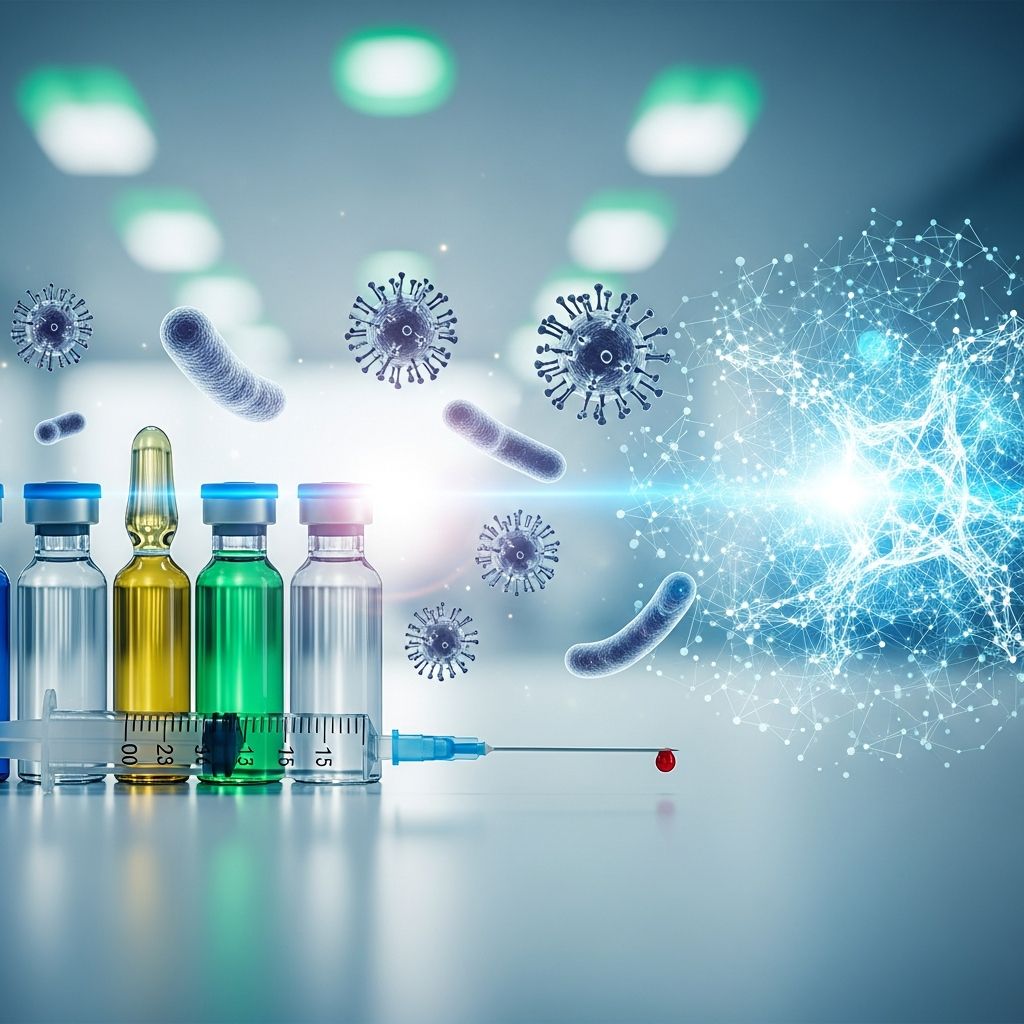
Vaccines represent one of the most effective tools in modern medicine for preventing infectious diseases. By stimulating the immune system to recognize and combat specific pathogens, they reduce illness severity, prevent outbreaks, and save millions of lives annually.
Understanding the Fundamentals of Immunization
Immunization through vaccines mimics natural infection without causing disease. When a vaccine enters the body, it introduces harmless pathogen components or instructions to produce them. The immune system responds by generating antibodies and memory cells, enabling rapid defense against future exposures. This process underpins protection against viruses and bacteria like those causing measles, influenza, and COVID-19.
Key benefits include herd immunity, where widespread vaccination shields vulnerable populations, and long-term reduction in disease incidence. For instance, vaccines have nearly eradicated polio in many regions and drastically lowered hepatitis B rates.
Main Categories of Vaccine Technologies
Vaccines are classified by their composition and mechanism. Each type balances efficacy, safety, and production feasibility.
Live-Attenuated Vaccines
These use weakened live pathogens that replicate mildly in the body, provoking a robust, enduring immune response often lasting years or a lifetime. Ideal for healthy individuals, they closely replicate natural infection but pose risks for immunocompromised people.
- Examples: Measles-mumps-rubella (MMR), varicella (chickenpox), rotavirus, yellow fever.
- Strengths: Typically 1-2 doses suffice; strong cellular immunity.
- Limitations: Requires cold chain storage; not for pregnant or weakened immune systems.
Inactivated Vaccines
Made from killed pathogens, these cannot replicate or cause disease. They trigger antibody production but may need boosters for sustained protection. Safe for most, including immunocompromised patients.
- Examples: Influenza (injection), polio (IPV), hepatitis A, rabies.
- Strengths: Stable storage; broad safety profile.
- Limitations: Weaker initial response; frequent boosters.
mRNA Vaccines
A newer technology, mRNA vaccines deliver genetic instructions for cells to produce pathogen proteins, like the COVID-19 spike protein. No live virus involved, ensuring no disease risk. They prompt quick, potent antibody and T-cell responses.
- Examples: COVID-19 (Moderna Spikevax, Pfizer Comirnaty), RSV.
- Strengths: Rapid development; adaptable to variants.
- Limitations: Cold storage needs; boosters for waning immunity.
For 2025-2026, updated mRNA COVID-19 vaccines target strains like LP.8.1, approved for ages 6 months+ in at-risk groups and all over 65.
Subunit, Recombinant, and Conjugate Vaccines
These target specific pathogen fragments, such as proteins or sugars, purified for precision. Conjugates link bacterial polysaccharides to proteins for better child immunity.
- Examples: Hepatitis B, HPV, pneumococcal, meningococcal, whooping cough (pertussis).
- Strengths: Minimal side effects; safe for all ages.
- Limitations: May require adjuvants and multiple doses.
Protein subunit vaccines, like Novavax’s Nuvaxovid for COVID-19 (targeting JN.1), contain harmless spike proteins to elicit antibodies.
Toxoid Vaccines
These neutralize bacterial toxins rather than the bacteria. Inactivated toxins build immunity against harm like paralysis from tetanus.
- Examples: Diphtheria, tetanus (in Tdap), pertussis components.
- Strengths: Prevents toxin damage; combined in boosters.
- Limitations: Boosters every 10 years.
Related Stories



Viral Vector Vaccines
Harmless viruses carry pathogen genes into cells, instructing protein production. Effective for complex diseases.
- Examples: COVID-19 (earlier versions), Ebola.
- Strengths: Strong T-cell response; single-dose potential.
- Limitations: Pre-existing vector immunity may reduce efficacy.
How Vaccines Trigger Immune Protection
Regardless of type, vaccines activate innate and adaptive immunity. Antigens alert dendritic cells, leading to B-cell antibody production and T-cell memory. Memory cells ensure faster responses upon re-exposure, preventing or mitigating illness.
| Vaccine Type | Mechanism | Duration of Protection | Examples |
|---|---|---|---|
| Live-Attenuated | Weakened pathogen replicates | Lifelong (1-2 doses) | MMR, Rotavirus |
| Inactivated | Killed pathogen | Years (boosters) | Flu, Polio IPV |
| mRNA | Protein-coding RNA | Months-Years (boosters) | COVID-19, RSV |
| Subunit | Pathogen fragments | Years (boosters) | HPV, Hep B |
| Toxoid | Inactivated toxin | 10 years (boosters) | Tetanus, Diphtheria |
| Viral Vector | Vector-delivered genes | Years | Ebola |
Standard Vaccination Timelines Across Life Stages
Vaccination schedules vary by age, risk, and location, recommended by bodies like CDC. Infants receive multiple doses for core protection.
- Childhood: Birth to 18 years – Hep B, DTaP, Hib, PCV, IPV, MMR, varicella, etc.
- Adolescents: Tdap, HPV, meningococcal.
- Adults: Annual flu, Tdap boosters, shingles (50+), pneumococcal (65+).
- Special Groups: Pregnant (Tdap, flu), travelers (yellow fever), healthcare workers.
COVID-19 updates for 2025-2026 prioritize high-risk and elderly.
Addressing Common Concerns: Safety and Side Effects
Vaccines undergo rigorous testing. Common reactions include soreness, fever, fatigue – signs of immune activation. Serious events are rare (e.g., anaphylaxis ~1/million).
- Myths Debunked: No autism link; mRNA doesn’t alter DNA.
- Monitoring: Systems like VAERS track issues post-approval.
Benefits far outweigh risks: vaccines prevent 2-3 million deaths yearly.
Global Impact and Future Horizons
Vaccines have transformed public health, eliminating smallpox and nearing polio eradication. Emerging tech like self-amplifying mRNA promises broader applications for HIV, cancer.
Challenges include equitable access and variant adaptation. Ongoing research enhances thermostability and universal flu vaccines.
Frequently Asked Questions (FAQs)
Are vaccines safe for pregnant people?
Yes, certain vaccines like Tdap and flu are recommended during pregnancy to protect mother and baby.
Do vaccines cause the disease they prevent?
No; live-attenuated may cause mild symptoms, but not full disease.
How soon after vaccination am I protected?
Typically 2-4 weeks for full effect; varies by vaccine.
Can I get multiple vaccines at once?
Yes, safe and effective per guidelines.
What if I miss a dose?
Resume schedule; no restart needed.
Consult healthcare providers for personalized advice.
References
- Different types of COVID-19 vaccines: How they work — Mayo Clinic. 2025. https://www.mayoclinic.org/diseases-conditions/coronavirus/in-depth/different-types-of-covid-19-vaccines/art-20506465
- Understanding Vaccine Types: How They Protect Against Disease — Sabin Vaccine Institute. 2023. https://www.sabin.org/resources/understanding-vaccine-types-how-they-protect-against-disease/
- Vaccines | Immunization | Inoculation — MedlinePlus (NIH). 2024. https://medlineplus.gov/vaccines.html
- Vaccines and the Diseases they Prevent — CDC. 2025. https://www.cdc.gov/vaccines/by-disease/index.html
- Different Types of Vaccines — History of Vaccines Project (College of Physicians of Philadelphia). 2023. https://historyofvaccines.org/vaccines-101/what-do-vaccines-do/different-types-vaccines/
- Vaccine Types — HHS.gov. 2024. https://www.hhs.gov/immunization/basics/types/index.html
Similar Articles








Read full bio of medha deb