Vaginal Moisturizer vs Lubricant: Key Differences
Understand the essential differences between vaginal moisturizers and lubricants for optimal vaginal health.
Understanding Vaginal Moisturizers and Lubricants: What’s the Difference?
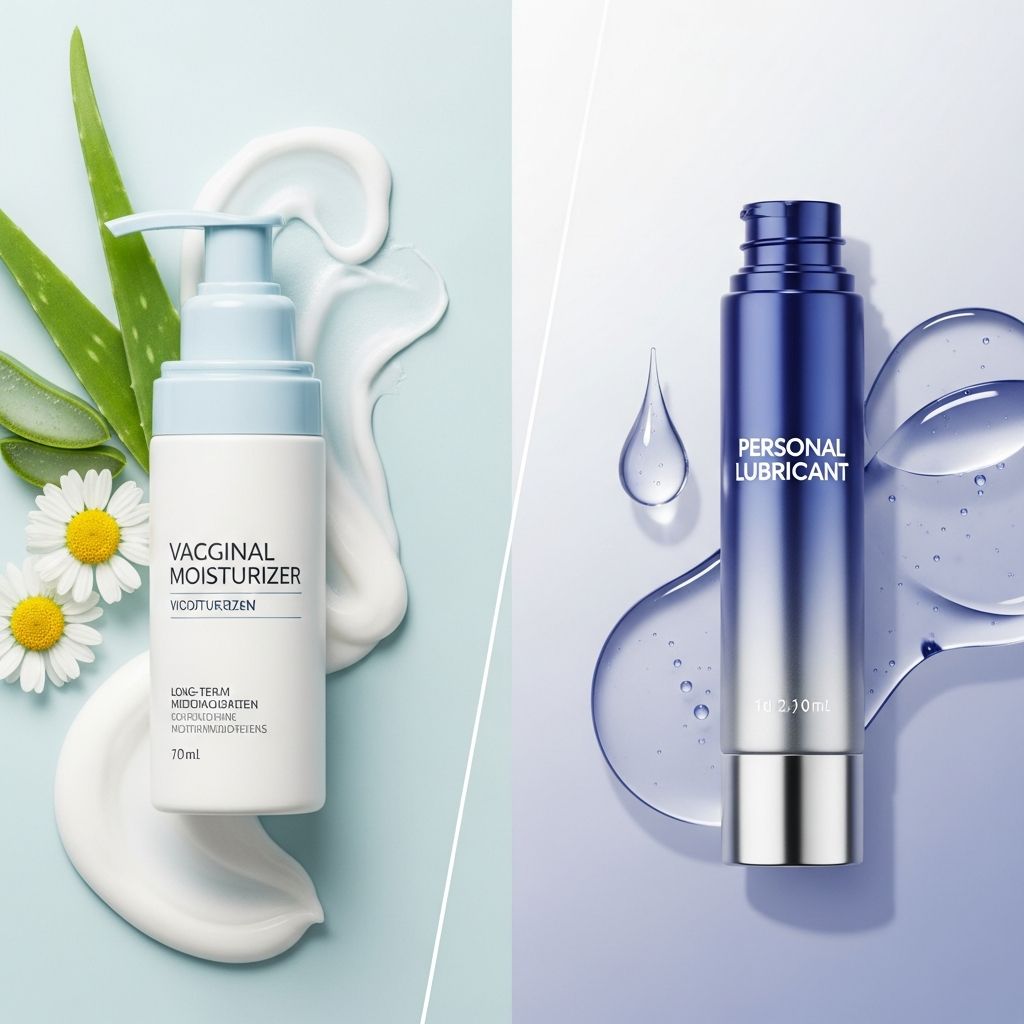
Many women experience confusion about vaginal moisturizers and lubricants, often thinking they serve the same purpose. However, these two products are fundamentally different in their composition, function, duration of action, and intended use. Understanding these distinctions is crucial for making informed decisions about vaginal health and choosing the right product for your specific needs.
The basic distinction lies in their purpose: vaginal moisturizers are designed to provide long-term hydration and restore elasticity to vaginal tissues, while lubricants offer immediate, temporary relief from friction during sexual activity. While both products address moisture-related concerns, they work through different mechanisms and are used at different times.
What Are Vaginal Lubricants?
Vaginal lubricants are formulations designed to provide immediate, short-term relief from dryness and friction during sexual activity. These products supplement the body’s natural lubrication and are applied directly before or during intercourse. The primary function of lubricants is to reduce friction between surfaces, making sexual activity more comfortable and enjoyable.
Types of Vaginal Lubricants
Vaginal lubricants come in three main formulations, each with distinct characteristics:
Water-Based Lubricants
Water-based lubricants are the most versatile and widely used option. They are easy to clean, compatible with all types of condoms and sex toys, and available in various formulations with added ingredients for different sensations. These lubricants are non-staining and generally easy to apply and remove. However, they may require frequent reapplication during extended sexual activity and can become sticky or tacky as they dry.
Silicone-Based Lubricants
Silicone-based lubricants offer a longer-lasting alternative to water-based options. They provide superior glide and tend to stay slippery longer, making them excellent for extended intimate sessions. Silicone-based lubricants are compatible with latex and non-latex condoms and are often preferred by couples seeking extended comfort during sexual activity.
Oil-Based Lubricants
Oil-based lubricants, whether derived from natural oils like coconut or olive oil or from synthetic sources, are typically thicker and longer-lasting than water or silicone-based alternatives. They provide excellent moisturizing properties and can be very effective for extended sexual sessions. However, oil-based lubricants are not compatible with latex condoms or some sex toys and can be difficult to clean. Additionally, they may increase the risk of vaginal infections in some women.
How Lubricants Work
Lubricants function by creating a slippery barrier that reduces friction between the penis, sex toys, or fingers and the vaginal tissues. Unlike moisturizers, lubricants do not alter vaginal tissues or change their composition. They provide immediate relief at the time of use but do not have lasting effects on vaginal hydration or elasticity. The lubrication typically wears off relatively quickly, which is why reapplication may be necessary during prolonged sexual activity.
What Are Vaginal Moisturizers?
Vaginal moisturizers are specifically formulated products designed to combat chronic vaginal dryness by providing long-term hydration and restoring tissue health. These products address underlying vaginal dryness rather than situational dryness associated with insufficient natural lubrication during sexual activity. Vaginal moisturizers are intended to be used on a continuous basis, independent of sexual intercourse, to maintain vaginal health and elasticity.
Related Stories



How Long-Acting Vaginal Moisturizers Work
True vaginal moisturizers work through a different mechanism than lubricants. They typically contain polymers, such as polycarbophil, that adhere to the vaginal wall and promote intracellular water absorption. This process helps rehydrate the vaginal tissues at a deeper level, restoring their natural moisture content and elasticity. Additionally, these moisturizers often function as weak acids that buffer vaginal tissues, lowering the vaginal pH to the optimal range of 3 to 4.5, which allows for repopulation of lactobacilli—the healthy bacteria essential for vaginal health.
Vaginal moisturizers are designed to stay in the vagina for an extended period, often an hour or more, allowing the vaginal lining adequate time to absorb and rehydrate. This prolonged contact time enables these products to provide lasting benefits that can persist for several days after application. Most vaginal moisturizers require reapplication every couple of days to maintain their protective and hydrating effects.
Treating Vaginal Atrophy
One of the primary reasons women use vaginal moisturizers is to address vaginal atrophy, also known as atrophic vaginitis. This condition involves inflammation of the vagina that causes thinning and shrinking of vaginal tissues, along with dryness, itchiness, and irritation. Vaginal atrophy is remarkably common and can occur at any age, though it is particularly prevalent during and after menopause due to declining estrogen levels. It can also result from cancer treatments, certain medications, or autoimmune conditions.
Vaginal moisturizers are specifically designed to combat the effects of vaginal atrophy by restoring hydration and promoting tissue elasticity. By rehydrating the vaginal lining, these products help counteract the thinning and shrinking that characterizes atrophic vaginitis, thereby reducing associated discomfort and irritation.
Key Differences Between Moisturizers and Lubricants
| Feature | Vaginal Moisturizer | Vaginal Lubricant |
|---|---|---|
| Primary Purpose | Long-term hydration and tissue restoration | Immediate friction reduction during sex |
| Duration of Effect | Days (typically 2-3 days per application) | Hours (typically during sexual activity) |
| Frequency of Use | Every couple of days or as directed | With each sexual encounter |
| Application Time | Independent of sexual activity | Just before or during sexual activity |
| Mechanism of Action | Absorbs into tissue to restore hydration | Creates slippery barrier on surface |
| Tissue Changes | Alters water content and elasticity | Does not alter vaginal tissues |
| Application Method | Inserted with applicator | Applied to vulva, penis, or sex toy |
When to Use Each Product
Using Vaginal Moisturizers
Vaginal moisturizers are best used as part of a regular maintenance routine, particularly for women experiencing chronic vaginal dryness or symptoms of vaginal atrophy. These products should be used consistently, typically every two to three days, regardless of whether sexual activity is planned. By maintaining consistent hydration and supporting vaginal tissue health, moisturizers help prevent discomfort and support long-term vaginal wellness.
Vaginal moisturizers are particularly beneficial for women going through menopause, cancer survivors experiencing treatment-related dryness, or those with autoimmune conditions affecting vaginal health. They can also be valuable during the postpartum period, when vaginal tissues may be dry and healing.
Using Vaginal Lubricants
Vaginal lubricants should be used before or during sexual activity to enhance comfort and reduce friction-related irritation. Even women who regularly use vaginal moisturizers may benefit from using lubricants during sexual activity, as moisturizers address underlying tissue hydration but may not provide sufficient immediate lubrication for comfortable intercourse.
Lubricants are particularly helpful for women with vaginal atrophy who need additional lubrication during sexual activity, even when using moisturizers consistently. They are also valuable for any woman seeking enhanced comfort or sensation during intimate encounters, regardless of whether they have underlying vaginal health issues.
Using Moisturizers and Lubricants Together
While vaginal moisturizers and lubricants serve different purposes, they are best used together as complementary products. Think of moisturizers as a way to maintain overall vaginal health and hydration, while lubricants provide the immediate lubrication needed during sexual activity. This two-product approach addresses both long-term tissue health and immediate comfort needs.
For women with vaginal atrophy or chronic dryness, using a moisturizer several times per week maintains tissue elasticity and hydration, while using a lubricant during sexual activity ensures comfort and prevents friction-related irritation. This combination approach is often more effective than using either product alone.
Important Considerations When Choosing Products
Product Labeling Can Be Misleading
Many products labeled as “personal moisturizers” or “feminine moisturizers” are not actually intended for internal vaginal use. Some are designed only for external vulvar use and have no long-acting effect on vaginal walls or lubrication. Always read product labels carefully to determine whether a product is truly a vaginal moisturizer designed for internal use or simply an external vulvar product.
Condom Compatibility
When selecting a lubricant, consider condom compatibility. Water-based and silicone-based lubricants are compatible with all condom types. However, oil-based lubricants are not compatible with latex condoms and should be avoided if latex protection is needed. Some vaginal moisturizers, such as those containing polycarbophil, are compatible with specific condom types, so check product information before use.
Ingredient Sensitivity
Some women may be sensitive to specific ingredients in vaginal moisturizers or lubricants. Common irritants can include certain preservatives, additives, or fragrances. If you experience irritation, itching, or burning after using a product, discontinue use and consult with a healthcare provider about alternative options.
Benefits for Pelvic Floor Health
Moisturizers and Pelvic Floor Health
Well-hydrated vaginal tissues are less prone to irritation and microtraumas that can contribute to pelvic floor dysfunction. By maintaining tissue elasticity and health, vaginal moisturizers support overall pelvic floor function. This is particularly important during the postpartum period, when vaginal tissues are healing and more vulnerable to injury.
Lubricants and Pelvic Floor Health
By reducing friction and discomfort during sexual activity, lubricants help prevent small tears and irritation that could potentially weaken pelvic floor muscles over time. This friction-reducing function is especially important for women with sensitive vaginal tissues or those recovering from childbirth or medical procedures.
Frequently Asked Questions
Q: Can I use a vaginal moisturizer instead of a lubricant during sexual activity?
A: While vaginal moisturizers improve overall tissue hydration, they are not designed to provide the immediate lubrication needed during sexual activity. Using a dedicated lubricant during intercourse ensures proper friction reduction and comfort. You can use both products in your routine—moisturizers for maintenance and lubricants for sexual activity.
Q: How long does a vaginal moisturizer last?
A: Most vaginal moisturizers provide benefits for 2-3 days after application. However, this varies depending on the product and individual factors. Always follow product instructions for recommended reapplication frequency.
Q: Are vaginal lubricants safe to use with condoms?
A: Water-based and silicone-based lubricants are safe and compatible with all condom types. Oil-based lubricants should not be used with latex condoms as they can compromise condom integrity. Always choose a condom-compatible lubricant.
Q: Can I use vaginal moisturizers during menopause?
A: Yes, vaginal moisturizers are particularly beneficial during menopause when declining estrogen levels often cause vaginal dryness and atrophy. They help restore hydration and tissue elasticity, reducing menopausal symptoms like dryness and irritation.
Q: Do I need to use both moisturizers and lubricants?
A: It depends on your individual needs. If you have chronic vaginal dryness or atrophy, using both products—moisturizers for ongoing tissue health and lubricants for sexual comfort—often provides the best results. However, if you only experience situational dryness during sexual activity, a lubricant alone may be sufficient.
Q: Are there any side effects from using vaginal moisturizers?
A: Vaginal moisturizers are generally safe for most women. However, some women may experience sensitivity to specific ingredients. If you notice irritation, itching, or burning, discontinue use and consult your healthcare provider about alternative products.
Q: Can vaginal moisturizers be used with other vaginal medications?
A: This depends on the specific medications involved. Always consult your healthcare provider or pharmacist before combining vaginal moisturizers with other medications or treatments to avoid potential interactions.
Conclusion
Understanding the differences between vaginal moisturizers and lubricants is essential for maintaining optimal vaginal health. Vaginal moisturizers provide long-term hydration and tissue restoration for chronic dryness and vaginal atrophy, while lubricants offer immediate friction reduction during sexual activity. Rather than viewing these products as alternatives, consider them as complementary tools that work together to support overall vaginal wellness. By using them appropriately and consistently, you can address both long-term tissue health concerns and immediate comfort needs, leading to improved vaginal health and sexual satisfaction.
References
- What Is Vaginal Moisturizer? – How Moisturizers Work vs. Lubricants — Prevention. Accessed 2025-12-01. https://www.prevention.com/health/a36384977/what-is-vaginal-moisturizer/
- Vaginal Moisturiser vs Lubricant — The Pelvic Hub. Accessed 2025-12-01. https://www.thepelvichub.com/blogs/menopause/vaginal-moisturiser-vs-lubricant
- Difference between Vaginal Lubricant and Moisturizer — Replens. Accessed 2025-12-01. https://www.replens.com/en/why-try-replens/what-is-the-difference-between-personal-lubricants-and-vaginal-moisturizers
- Vaginal Moisturizer vs Lubricant | Sex For Women — Bonafide Health. Accessed 2025-12-01. https://hellobonafide.com/blogs/news/vaginal-moisturizers-vs-lubricants-whats-the-difference
- The Difference Between Vaginal Moisturizers and Lubricants — Encore Therapy KC. Accessed 2025-12-01. https://www.encoretherapykc.com/blog/understanding-the-differences-between-vaginal-moisturizers-and-lubricants
- What’s the Difference Between Vaginal Moisturizer and Lube? — Katie Couric Media. Accessed 2025-12-01. https://katiecouric.com/health/wellness/difference-between-vaginal-moisturizer-lube-mary-claire-haver/
- Vaginal Moisturizers and Lubricants — Breast Cancer.org. Accessed 2025-12-01. https://www.breastcancer.org/treatment-side-effects/vaginal-dryness/moisturizers-lubricants
Similar Articles








Read full bio of Sneha Tete