Vagotomy Surgery: Purpose, Procedure & Recovery
Complete guide to vagotomy surgery: understanding the procedure, benefits, risks, and recovery process.
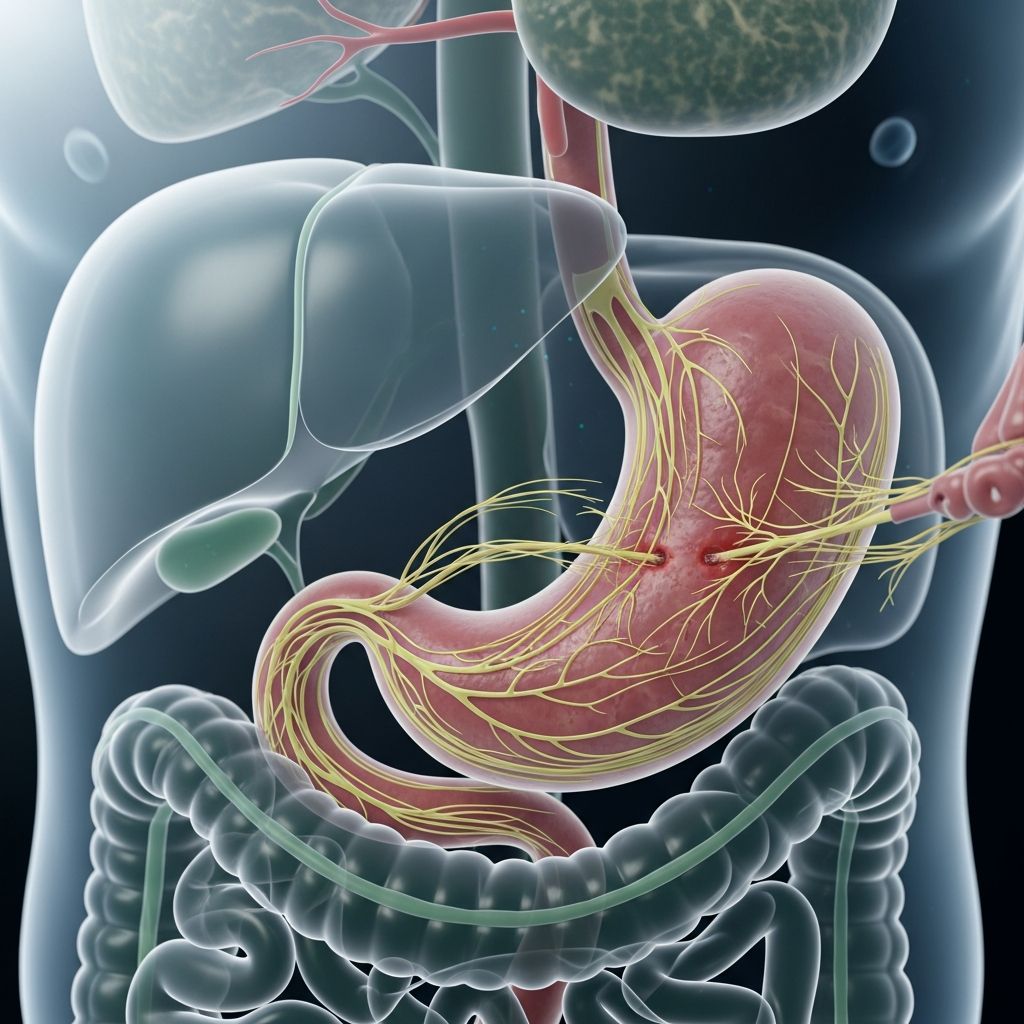
Understanding Vagotomy Surgery
Vagotomy is a surgical procedure in which a surgeon cuts portions of the vagus nerve to reduce the amount of stomach acid your body produces. The vagus nerve is responsible for regulating various bodily functions, including digestion and gastric acid secretion. By interrupting the vagal nerve supply to the stomach, this procedure effectively decreases acid production, which helps alleviate symptoms associated with chronic acid-related conditions. This surgery has been used for decades as a treatment option for severe peptic ulcer disease and other gastric acid-related disorders that don’t respond adequately to medical management.
What Is the Vagus Nerve?
The vagus nerve is one of the body’s most important nerves, extending from the brainstem through the chest and abdomen. It controls numerous vital functions, including heart rate, digestion, and stomach acid production. In the context of vagotomy, surgeons focus on the branches of the vagus nerve that innervate the stomach. By selectively cutting these nerve fibers, doctors can reduce the stomach’s ability to produce acid without significantly affecting other functions controlled by the vagus nerve in different parts of the body. Understanding the anatomy of the vagus nerve is crucial for surgeons to perform this procedure safely and effectively.
Indications for Vagotomy Surgery
Vagotomy is typically considered when conservative treatments have failed to manage peptic ulcer disease or related conditions. The primary indications for this procedure include:
- Chronic peptic ulcers that don’t heal with medication
- Recurrent bleeding ulcers despite medical and endoscopic interventions
- Severe acid reflux disease that doesn’t respond to proton pump inhibitors or H2 blockers
- Gastric ulcers with complications
- Zollinger-Ellison syndrome in specific cases
Vagotomy is generally reserved for severe cases because less invasive treatment options, including modern acid-suppressing medications, have become highly effective for most patients. Your healthcare provider will determine whether vagotomy is appropriate for your specific condition based on your medical history, the severity of symptoms, and previous treatment responses.
Types of Vagotomy Procedures
Truncal Vagotomy
Truncal vagotomy is the standard or complete vagotomy procedure, where the surgeon cuts both branches of the vagus nerve (anterior and posterior) as they pass through the esophageal hiatus below the diaphragm. This is the most complete form of vagotomy and provides the most significant reduction in stomach acid production. However, it also affects the nerve’s function in other parts of the body, which can lead to additional side effects.
Selective Vagotomy
In selective vagotomy, the surgeon cuts only the branches of the vagus nerve that supply the stomach while preserving the branches that supply other abdominal organs. This approach reduces some of the systemic side effects associated with truncal vagotomy while still effectively decreasing gastric acid production. Selective vagotomy has become increasingly popular because it provides a balance between efficacy and tolerability.
Highly Selective Vagotomy (Proximal Gastric Vagotomy)
Also known as parietal cell vagotomy, highly selective vagotomy is the most targeted approach. The surgeon denervates only the parietal cell mass of the stomach—the area responsible for acid production—while preserving vagal innervation to the rest of the stomach and other organs. This technique provides maximum preservation of normal stomach function and has shown excellent results in reducing acid production while minimizing postoperative complications.
Surgical Approach and Technique
Subdiaphragmatic Approach
The subdiaphragmatic approach, which involves accessing the vagus nerve through an abdominal incision below the diaphragm, has become the procedure of choice for most vagotomy cases. This approach offers several advantages over the transthoracic (chest) approach. The abdominal approach allows the surgeon to explore the entire abdomen simultaneously, checking for concomitant pathology such as gallstones or hiatus hernia. Additionally, this approach enables the surgeon to perform concurrent operations such as gastroenterostomy or pyloroplasty to prevent gastric retention complications that may result from reduced gastric motility following vagotomy.
Related Stories



Identification and Division of Vagal Branches
During the procedure, the surgeon makes an abdominal incision and carefully identifies the anterior vagus nerve, which typically travels along the anterior surface of the esophagus. The nerve is isolated through blunt dissection and followed up to or through the diaphragm to ensure all accessible branches are included. Once identified, the nerve is clamped with a surgical clamp, divided, and tied with nonabsorbable ligature material.
The posterior vagus nerve is located through a separate dissection by inserting a hand through the peritoneum of the gastrohepatic omentum. The posterior vagus appears as a tense cord lying on the esophageal musculature and is similarly isolated, clamped, divided, and tied. The surgeon verifies that the posterior vagus passes upward through the esophageal hiatus to avoid confusion with posterior vessels.
Associated Procedures
Pyloroplasty
Pyloroplasty is commonly performed in conjunction with vagotomy. The vagus nerve controls the opening and closing of the pylorus (the muscle that controls passage of food from the stomach into the small intestine). When vagotomy reduces stomach acid production, it also diminishes the nerve’s control over this muscle, potentially leading to delayed gastric emptying. Pyloroplasty surgically widens the pyloric opening to allow food to pass through more easily, preventing gastric retention and associated complications. This combined approach has shown excellent immediate and long-term results.
Ulcer Excision
In some cases, particularly with gastric ulcers, the surgeon may perform local excision or biopsy of the ulcer itself. This approach allows for examination of the ulcer tissue and ensures that malignancy is not present. Combined vagotomy with pyloroplasty and wedge excision or biopsy of benign gastric ulcers has proven to be comparable to more extensive gastric resection procedures in terms of outcomes.
Risks and Complications
Early Postoperative Complications
Like all surgical procedures, vagotomy carries certain risks. Early complications may include infection, bleeding, and anesthesia-related reactions. In rare cases, the vagus nerve or surrounding structures may be injured during the procedure. If the stomach tissue is particularly fragile, perforation may occur, requiring careful management and additional surgical intervention.
Dumping Syndrome
Dumping syndrome can occur after vagotomy when food moves too quickly from the stomach into the small intestine. This may cause symptoms such as sweating, flushing, rapid heartbeat, and gastrointestinal distress shortly after eating. This complication is less common with highly selective vagotomy but can occur with other vagotomy types.
Delayed Gastric Emptying
Although rare, some patients may experience prolongation of stomach emptying time. In most cases, these patients experience no significant symptoms and require no treatment. However, significant gastric retention may necessitate reoperation to relieve the obstruction.
Diarrhea
Post-vagotomy diarrhea occurs in a subset of patients and can range from mild to severe. This occurs because the vagus nerve normally helps regulate intestinal motility and secretion. While usually manageable with dietary modifications or medication, severe cases may require additional treatment.
Recurrent Ulceration
Although vagotomy effectively reduces stomach acid production, recurrent ulceration can occur in some patients, particularly if the vagotomy is incomplete. Modern proton pump inhibitors and H2 blockers have reduced this complication significantly compared to historical data.
Recovery and Postoperative Care
Hospital Stay
Most patients remain hospitalized for several days following vagotomy. During this time, surgeons monitor for immediate complications, manage pain, and begin gradual nutritional support. Nasogastric tubes may be placed to help decompress the stomach during the initial healing phase.
Diet Progression
After surgery, patients typically progress through a staged diet, beginning with clear liquids and gradually advancing to soft foods and regular foods as tolerated. This gradual progression allows the digestive system to adjust to the changes made during surgery and reduces the risk of postoperative complications.
Activity and Return to Normal Function
Most patients can resume light activities within a few weeks of surgery, though full recovery typically takes six to eight weeks. Return to heavy physical activity, exercise, and work should be discussed with your healthcare provider based on your individual circumstances and surgical complexity.
Long-term Follow-up
Regular follow-up appointments are essential to monitor healing, assess symptom relief, and identify any long-term complications. Your healthcare provider may recommend periodic testing to ensure adequate acid reduction and proper stomach function. Dietary counseling can help optimize nutrition and minimize postoperative side effects.
Effectiveness and Outcomes
Vagotomy has demonstrated gratifying immediate results and subsequent progress in the vast majority of patients. The effectiveness of the procedure depends on several factors, including the type of vagotomy performed, the completeness of nerve division, and the presence of concurrent procedures. Highly selective vagotomy has shown particularly excellent results with minimal complications and good long-term outcomes regarding both acid reduction and symptom relief.
Studies comparing different vagotomy techniques indicate that while truncal vagotomy provides complete acid reduction, selective and highly selective approaches offer better quality of life outcomes with fewer side effects. The choice of technique should be individualized based on patient factors and surgeon expertise.
Alternatives to Vagotomy
Before considering vagotomy, patients should understand that medical management has evolved significantly. Modern proton pump inhibitors and H2 receptor antagonists effectively control stomach acid in most patients. Endoscopic interventions can often manage bleeding ulcers without surgery. Vagotomy is now typically reserved for cases where these less invasive options have failed or where specific clinical circumstances warrant surgical intervention.
Frequently Asked Questions
Q: Is vagotomy still commonly performed today?
A: Vagotomy is performed less frequently than in previous decades due to the effectiveness of modern acid-suppressing medications. However, it remains an important surgical option for selected patients with severe, refractory peptic ulcer disease or specific complications.
Q: What is the difference between vagotomy and gastric bypass surgery?
A: Vagotomy cuts the vagus nerve to reduce acid production, while gastric bypass is primarily a weight loss procedure that reduces stomach size and alters food passage. These are fundamentally different operations with different purposes.
Q: Can vagotomy be reversed?
A: Vagotomy is not reversible because the vagus nerve cannot be regenerated once cut. This is why careful patient selection and thorough preoperative evaluation are essential.
Q: How long does the surgery take?
A: Vagotomy typically takes one to two hours, depending on the type of procedure performed and whether concurrent operations like pyloroplasty are needed.
Q: Will I need to take medications after vagotomy?
A: Many patients can reduce or discontinue acid-suppressing medications after successful vagotomy, though some may still require periodic medication management. Your healthcare provider will determine the appropriate postoperative medication regimen.
Q: What should I expect regarding pain after surgery?
A: Postoperative pain is typically managed with prescribed pain medications during the hospital stay and early recovery period. Pain gradually improves over several weeks as the surgical site heals.
References
- Subdiaphragmatic Vagotomy; Indications and Technic — George Crile Jr., MD, Cleveland Clinic Journal of Medicine. 1950. https://www.ccjm.org/content/ccjom/14/2/65.full.pdf
- Selective and Highly Selective Vagotomy with and without Gastric Drainage — Avram M. Cooperman, MD, Cleveland Clinic Journal of Medicine. 1976. https://www.ccjm.org/content/ccjom/43/2/51.full.pdf
- Operations for Gastric Ulcer: A Long-Term Study — National Center for Biotechnology Information, PubMed. https://pubmed.ncbi.nlm.nih.gov/8712567/
- Pyloroplasty: Surgery Definition, Procedure & Risks — Cleveland Clinic Health. https://my.clevelandclinic.org/health/treatments/23388-pyloroplasty
- Vagotomy — EBSCO Research Starters Health and Medicine. https://www.ebsco.com/research-starters/health-and-medicine/vagotomy
Similar Articles








Read full bio of medha deb