Vagus Nerve: Function, Location & Health Impacts
Understanding your vagus nerve: anatomy, functions, and its critical role in brain-body communication.
What Is the Vagus Nerve?
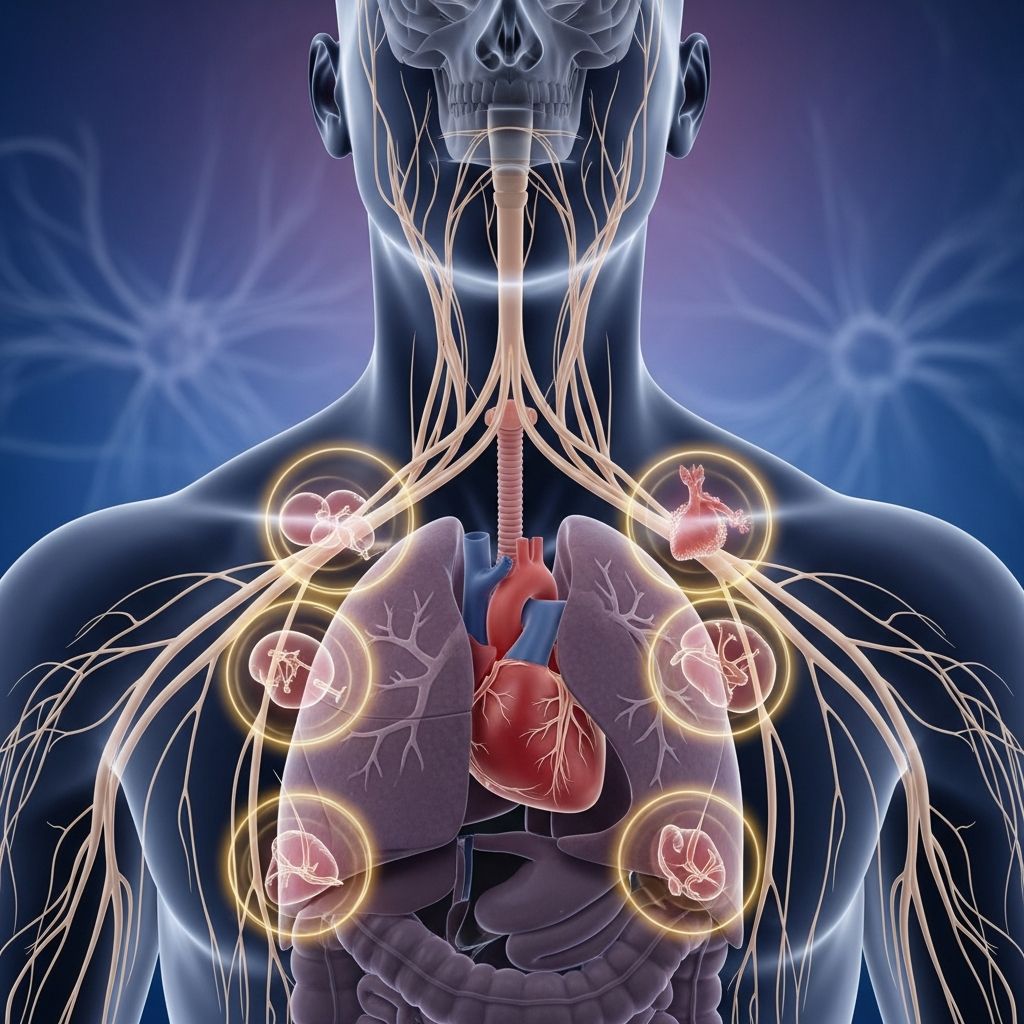
The vagus nerve is one of the most important yet often overlooked structures in the human body. As the longest cranial nerve, it extends from your brain all the way down to your gut, serving as a vital communication highway between your central nervous system and your body’s organs. The name “vagus” comes from the Latin word for “wandering,” which accurately describes how this nerve travels throughout your body, branching off to reach multiple organs and systems.
The vagus nerve is part of your parasympathetic nervous system, which plays a crucial role in promoting rest, relaxation, and recovery. Unlike the sympathetic nervous system, which controls your fight-or-flight response during times of stress, the vagus nerve helps your body return to a state of calm and balance. This fundamental distinction makes the vagus nerve essential for maintaining homeostasis and overall wellness.
Anatomical Location and Structure
The vagus nerve begins at the brainstem, specifically in the medulla oblongata, which is located at the base of your skull. From there, it emerges from the brain and travels down through the neck on both sides, passing through the jugular foramen. The nerve descends alongside major blood vessels and continues its journey through the chest and abdomen, eventually reaching your intestines.
The vagus nerve is composed of approximately 80 percent sensory fibers and 20 percent motor fibers. The sensory fibers transmit information from your organs back to your brain, allowing your nervous system to monitor and assess your body’s internal state. The motor fibers, conversely, carry signals from your brain to your organs, enabling your brain to control various bodily functions. This bidirectional communication is what makes the vagus nerve so powerful and essential for coordinating complex physiological processes.
Primary Anatomical Components
The vagus nerve comprises several branches and nuclei that work together to maintain bodily functions. The dorsal motor nucleus controls parasympathetic outflow to your heart and gastrointestinal system. The nucleus ambiguus innervates muscles involved in swallowing and phonation. The solitary nucleus receives sensory information from your taste buds and internal organs, while the spinal trigeminal nucleus processes pain and temperature information from the head and neck region.
Primary Functions of the Vagus Nerve
The vagus nerve controls numerous automatic functions that you don’t consciously think about but are essential for survival and optimal health. These functions work seamlessly together to maintain your body’s internal balance and ensure that all systems operate harmoniously.
Regulation of Heart Rate
One of the most critical functions of the vagus nerve is regulating your heart rate. Through parasympathetic innervation of the sinoatrial and atrioventricular nodes, the vagus nerve can slow your heart rate during times of rest and relaxation. When you’re in a calm state, the vagus nerve releases acetylcholine, a neurotransmitter that reduces heart rate and blood pressure. This is why deep breathing and relaxation techniques can effectively lower your heart rate—they activate the vagus nerve.
Control of Breathing
Your breathing is another automatic function controlled partly by the vagus nerve. The nerve innervates muscles in your larynx and pharynx, which are essential for controlling airflow. Additionally, the vagus nerve relays information about lung inflation to your brainstem, helping to regulate the depth and rhythm of your breathing. This feedback mechanism ensures that your breathing remains appropriate for your activity level and metabolic needs.
Related Stories



Digestive Function and Gut Motility
The vagus nerve plays a central role in digestion by controlling gastric secretion, gastric motility, and intestinal movements. When you see, smell, or taste food, the vagus nerve stimulates your stomach to produce digestive juices and prepares your gut for the arrival of food. The nerve also coordinates peristalsis, the wave-like contractions that move food through your digestive tract. Furthermore, the vagus nerve mediates various reflexes that operate within your gut in response to changing conditions, such as chemical changes or the presence of food.
Additional Critical Functions
Beyond these primary functions, the vagus nerve influences numerous other bodily processes. It helps regulate your immune response by controlling inflammation throughout your body. The nerve also plays a role in thermoregulation, helping your body maintain optimal temperature. Additionally, the vagus nerve influences your vocal cords, enabling speech and swallowing, and it affects your sense of taste and smell through its sensory components.
The Mind-Body Connection
The vagus nerve serves as a direct line of communication between your brain and body, making it instrumental in the mind-body connection. This nerve carries sensory information from your organs to your brain, allowing your brain to become aware of your body’s internal state. Simultaneously, it carries motor signals from your brain to your organs, enabling your thoughts and emotions to influence your physical health.
When you experience stress or anxiety, your sympathetic nervous system activates, triggering your fight-or-flight response. Your heart rate increases, your muscles tense, and your digestion slows. However, when you practice relaxation techniques such as meditation, deep breathing, or yoga, you activate your parasympathetic nervous system, which includes the vagus nerve. This activation sends calming signals throughout your body, reducing stress hormones and promoting a sense of wellbeing.
Vagus Nerve Health and Optimization
Understanding the importance of your vagus nerve has led researchers to explore various ways to support and optimize its function. A healthy, well-functioning vagus nerve can help you better manage stress, improve emotional resilience, enhance digestive health, and support overall wellness.
Natural Ways to Support Vagus Nerve Function
There are several evidence-based methods to stimulate and strengthen your vagus nerve without medical intervention. These include:
Meditation and Mindfulness: Regular meditation practice has been shown to increase vagal tone, which refers to the strength and efficiency of vagus nerve signaling. This improved tone enhances your body’s ability to shift into a relaxed state.
Deep Breathing Exercises: Slow, deep breathing activates the parasympathetic nervous system and stimulates the vagus nerve. Techniques such as box breathing or diaphragmatic breathing can be particularly effective.
Physical Exercise: Regular aerobic exercise strengthens vagal tone and improves your body’s stress response. Even moderate-intensity exercise can have significant benefits.
Yoga and Tai Chi: These mind-body practices combine movement, breathing, and mindfulness, making them excellent for vagus nerve stimulation and overall nervous system balance.
Vocal Activities: Humming, singing, or gargling can stimulate the vagus nerve through the muscles in your throat that the nerve innervates. Try humming or singing or just listening to calm, soothing music—those sounds and vibrations may stimulate your vagus nerve.
Cold Exposure: Controlled exposure to cold, such as splashing cold water on your face, can activate the vagus nerve and trigger the parasympathetic response.
Adequate Sleep: Quality sleep is essential for maintaining healthy vagal tone and supporting your parasympathetic nervous system.
Social Connection: Positive social interactions and meaningful relationships support vagal health and emotional wellbeing.
Medical Applications: Vagus Nerve Stimulation
In addition to natural methods of supporting vagal function, medical science has developed therapeutic applications of vagus nerve stimulation (VNS). VNS is a medical procedure that uses an implantable device to send electrical impulses to your vagus nerve. VNS is sometimes called a “pacemaker for the brain” because of how it works to modulate brain activity.
Current Clinical Uses
Epilepsy Treatment: VNS was the first condition for which vagus nerve stimulation received FDA approval. For patients with difficult-to-control epilepsy, VNS has proven effective in reducing seizure frequency and severity.
Depression Management: VNS is approved to treat treatment-resistant depression in patients who have not responded adequately to other therapeutic approaches. The device helps modify physiologic responses and can improve mood and quality of life.
Stroke Recovery: More recently, VNS paired with physical rehabilitation has shown promising results for functional recovery after ischemic stroke. The VNS-REHAB pivotal trial demonstrated that patients receiving VNS plus rehabilitation achieved clinically meaningful improvement in upper extremity function at twice the rate of patients receiving rehabilitation alone. Almost half of patients in the active VNS group showed a clinically meaningful response.
How the VNS Device Works
A VNS device consists of a small battery (about the size of a silver dollar) that is implanted in your upper chest, similar to a pacemaker. Connected to this battery is a lead wire with electrodes that wrap around your vagus nerve in your neck. The device sends regular, mild pulses of electrical energy to your vagus nerve, which then carries these signals to your brain. Once the electrical charge reaches your brainstem, it is dispersed to different areas of your brain to change the way brain cells work.
The VNS Implantation Procedure
The VNS implantation is a minimally invasive surgical procedure that typically takes between 45 and 90 minutes. Your surgeon makes two small incisions: one on the left side of your neck to expose the vagus nerve and another on your upper left chest. The coil electrodes at the end of the lead wire are gently wrapped around your left vagus nerve through the neck incision. The insulated lead wire is then guided from your neck down to your chest at the chest incision, where it connects to the battery. The battery is secured to your pectoralis fascia with permanent stitches. Most patients are discharged the same day after brief monitoring, and recovery is typically marked only by mild throat numbness and temporary difficulty swallowing.
Activation and Programming
Following the surgical procedure, you’ll return to your healthcare provider’s office in two to four weeks to activate the stimulator device. Your healthcare provider uses specialized computer software and a programming wand to set the device to deliver electrical impulses at a specific strength of current, pulse frequency (measured in Hertz), duration (measured in microseconds to seconds), and on a specific time-on/time-off cycle. The settings are customized to your individual needs and therapeutic goals.
Emerging Research and Future Applications
The potential therapeutic applications of vagus nerve stimulation continue to expand as researchers investigate its effectiveness for various health conditions. Current research is exploring VNS for:
Neurological Conditions: Studies are underway to evaluate VNS for multiple sclerosis, Alzheimer’s disease, and other neurodegenerative conditions. The vagus nerve’s ability to promote neuroplasticity—the brain’s capacity to form new neural connections—makes it a promising target for these conditions.
Headaches and Migraines: Research suggests that VNS may help reduce the frequency and severity of chronic migraines and other types of headaches.
Long COVID-19: New research shows that the virus may have adverse effects on the vagus nerve, causing persistent voice problems, dizziness and low blood pressure. Vagus nerve stimulation is being investigated as a potential treatment to help restore normal function.
Inflammatory Disorders: VNS has shown anti-inflammatory properties, leading to studies in long-term inflammatory disorders and other conditions characterized by excessive inflammation.
Considerations and Insurance Coverage
While VNS has received FDA approval for use in epilepsy, depression, and as a rehabilitation aid after stroke, specific criteria must be met before implantation is considered. Your healthcare provider will evaluate whether you are a suitable candidate for the procedure based on your specific condition and medical history. Additionally, it’s important to contact your health insurance company to determine whether the cost of the VNS device is covered under your plan, as coverage policies may vary.
Frequently Asked Questions
Q: Can I stimulate my vagus nerve without surgery?
A: Yes, there are many non-invasive ways to stimulate your vagus nerve, including meditation, deep breathing exercises, yoga, singing, cold exposure, and regular physical exercise. These methods can help improve your vagal tone and support your parasympathetic nervous system.
Q: What is vagal tone, and why is it important?
A: Vagal tone refers to the strength and efficiency of your vagus nerve’s signaling ability. Higher vagal tone is associated with better stress resilience, improved emotional regulation, better heart rate variability, and overall improved health. You can improve your vagal tone through regular practice of vagus nerve stimulation techniques.
Q: What are the side effects of VNS surgery?
A: The VNS implantation procedure is minimally invasive with low risk. Most patients experience only mild side effects such as throat numbness and temporary difficulty swallowing that resolve within a few days. The device itself may occasionally cause hoarseness or a pulling sensation in the neck, which can be managed by adjusting the stimulation settings.
Q: Is VNS effective for conditions other than epilepsy and depression?
A: Currently, VNS is FDA-approved for epilepsy, treatment-resistant depression, and as a rehabilitation aid for stroke recovery. However, research is ongoing to investigate its effectiveness for other conditions, including migraines, multiple sclerosis, Alzheimer’s disease, and inflammatory disorders.
Q: How long does it take to see results from vagal nerve stimulation?
A: The timeline for results varies depending on the condition being treated and the individual patient. For stroke recovery with VNS paired with rehabilitation, patients typically begin therapy two weeks after implantation and engage in intensive therapy sessions. Some patients may begin to see improvements within weeks, while others may require several months of consistent therapy to achieve meaningful functional gains.
References
- Vagal Nerve Stimulation for Functional Recovery After Stroke — Cleveland Clinic. 2025. https://consultqd.clevelandclinic.org/vagal-nerve-stimulation-after-stroke
- Vagus Nerve Stimulation (VNS): What It Is, Uses & Side Effects — Cleveland Clinic. 2024. https://my.clevelandclinic.org/health/treatments/17598-vagus-nerve-stimulation
- Fight Anxiety With a Strong Vagus Nerve — Cleveland Clinic. 2024. https://health.clevelandclinic.org/what-does-the-vagus-nerve-do
- What Is the Gut-Brain Connection? — Cleveland Clinic. 2024. https://my.clevelandclinic.org/health/body/the-gut-brain-connection
- 5 Ways To Stimulate Your Vagus Nerve — Cleveland Clinic. 2024. https://health.clevelandclinic.org/vagus-nerve-stimulation
Similar Articles








Read full bio of Sneha Tete