Variegate Porphyria: 5 Key Triggers, Symptoms, Treatment
Understanding variegate porphyria: genetic disorder causing acute attacks and skin blisters due to porphyrin buildup.
Variegate porphyria (VP), also known as porphyria variegata, is a rare genetic disorder classified among the acute hepatic porphyrias. It results from partial deficiency of the enzyme protoporphyrinogen oxidase (PPOX), disrupting heme biosynthesis and causing accumulation of toxic porphyrins and precursors. This leads to a unique combination of acute neurovisceral attacks and chronic cutaneous symptoms, distinguishing it from other porphyrias like acute intermittent porphyria (AIP) or porphyria cutanea tarda (PCT).
VP prevalence varies globally; it is rare outside South Africa, where it affects approximately 3 in 1,000 individuals of Dutch ancestry due to a founder effect. Worldwide, incidence is estimated at 1-3 per 100,000. The condition often manifests in adulthood, with skin symptoms preceding acute attacks in many cases.
What is variegate porphyria?
Variegate porphyria arises from autosomal dominant mutations in the PPOX gene on chromosome 1q23, reducing PPOX enzyme activity by about 50%. PPOX catalyses the conversion of protoporphyrinogen IX to protoporphyrin IX in the heme pathway. Deficiency causes buildup of porphyrin intermediates like coproporphyrin and protoporphyrin, which are excreted in urine, faeces, and plasma, triggering symptoms.
Unlike purely cutaneous porphyrias, VP combines acute attacks (similar to AIP and hereditary coproporphyria, HCP) with photosensitive skin lesions (resembling PCT). Attacks are infrequent without triggers but can be life-threatening if untreated.
Who gets variegate porphyria?
VP is inherited autosomal dominantly, so each child of an affected parent has a 50% risk. Penetrance is low (around 20-40%), meaning many carriers remain asymptomatic lifelong. It affects males and females equally, though women experience more attacks due to hormonal triggers like progesterone during the menstrual cycle.
High prevalence in South Africa’s Afrikaans population stems from a specific PPOX mutation introduced by Dutch settlers in the 17th century. Diagnosis often occurs in the 20s-40s, but latent cases are detected via family screening.
What causes variegate porphyria?
The primary cause is heterozygous PPOX mutations (over 150 identified), impairing heme production in the liver. This induces hepatic ALA synthase (ALAS1), increasing aminolevulinic acid (ALA) and porphobilinogen (PBG) production. Accumulating neurotoxic precursors cause acute attacks, while porphyrins photosensitize skin.
Triggers of acute attacks
- Drugs: Barbiturates, sulfonamides, anticonvulsants, oral contraceptives (via CYP450 induction)
- Hormones: Progesterone surge in luteal menstrual phase
- Nutritional: Calorie/carbohydrate restriction, fasting
- Lifestyle: Alcohol, smoking, recreational drugs
- Other: Infections, surgery, stress
Skin symptoms are triggered by UV exposure on fragile skin.
What are the clinical features of variegate porphyria?
VP presents with two symptom groups: acute neurovisceral attacks (20-60% of patients) and chronic cutaneous manifestations (60-70%). Some have only one type; 20-30% experience both.
Acute attacks
Attacks last days to weeks, often requiring hospitalization. Hallmark is severe abdominal pain (90%), without peritonism. Other features:
- Gastrointestinal: Nausea, vomiting, constipation (tachycardia from pain)
- Neurological: Peripheral neuropathy (limb/back/chest pain, weakness, quadriparesis), central (anxiety, hallucinations, seizures)
- Autonomic: Tachycardia, hypertension, hyponatraemia
- Urinary: Darkens to red/brown on standing (porphobilin)
Severe cases risk respiratory failure or death (rare with treatment).
Cutaneous features
Related Stories



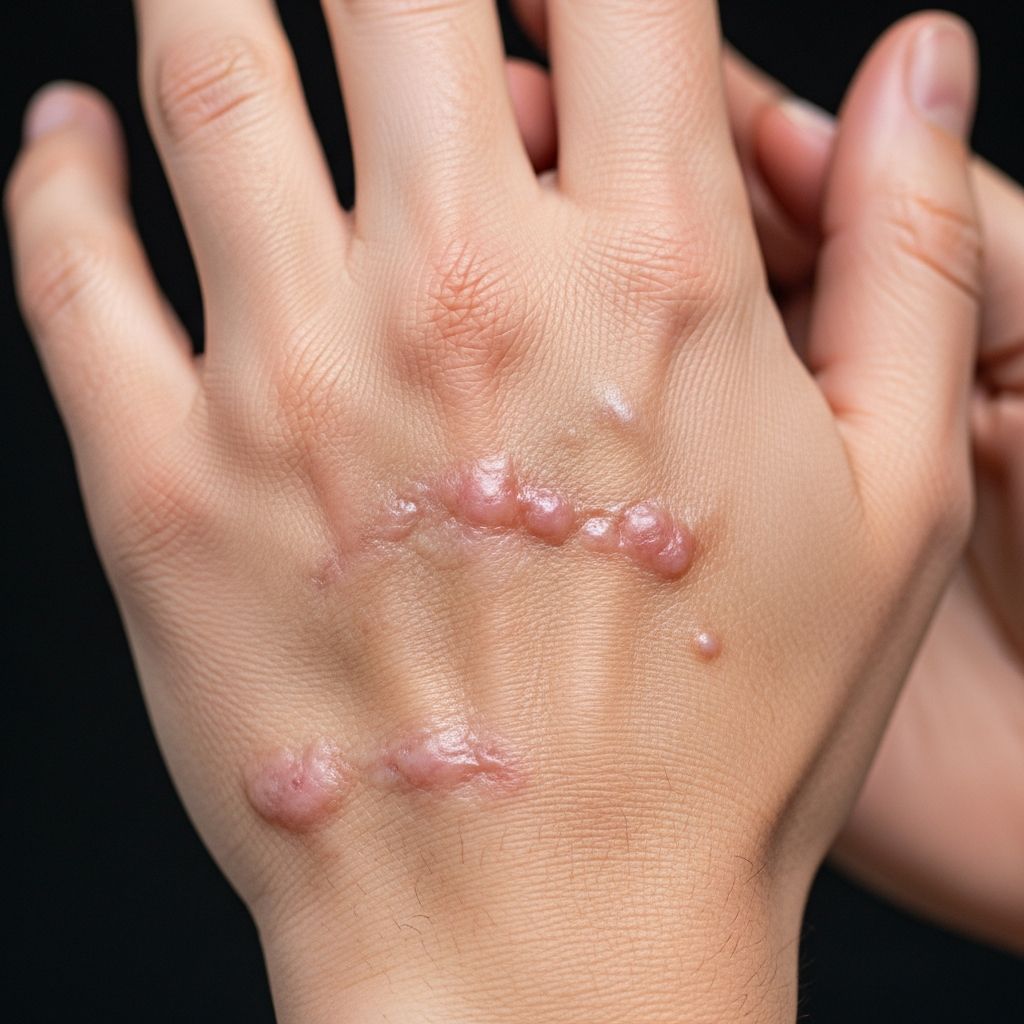
Chronic, sun-induced on dorsa of hands, forearms, face:
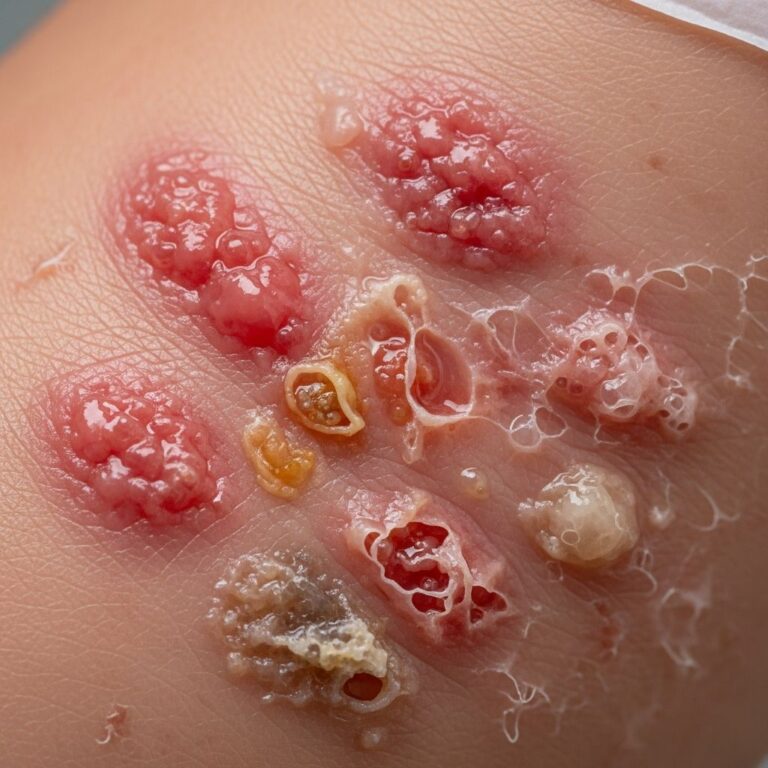
- Fragile skin with superficial blisters, erosions, crusting
- Milia (white cysts), scarring (hypo/hyperpigmented)
- Hypertrichosis (face, temples)
- Pseudosclerodermatous thickening
Skin heals slowly; no itching/pain during blisters.
Chronic symptoms
- Fatigue, insomnia, chronic pain, muscle weakness
How is variegate porphyria diagnosed?
Suspect VP in acute abdominal pain with neuropsychiatric features or unexplained blisters. Diagnosis combines clinical, biochemical, and genetic tests.
Biochemical tests (during attack ideal)
| Test | Elevation in VP |
|---|---|
| Urine PBG/ALA | Marked during attack; normal interictal |
| Faecal porphyrins | Coproporphyrin III > protoporphyrin (hallmark) |
| Plasma porphyrins | Elevated with 624 nm fluorescence peak |
| Urine during remission | Normal PBG; elevated coproporphyrin |
Genetic testing
Confirms PPOX mutations; useful for family screening. Enzymatic assay rarely used.
Differential diagnosis
- Acute: AIP, HCP, lead poisoning, Guillain-Barré
- Cutaneous: PCT, erythropoietic protoporphyria
Table below differentiates acute porphyrias:
| Porphyria | Acute Attacks | Skin Lesions | Faecal Pattern |
|---|---|---|---|
| VP | Yes | Yes (blisters) | Copro III > proto |
| AIP | Yes | No | Normal |
| HCP | Yes | Yes | Coproporphyrin |
| PCT | No | Yes | Uroporphyrin |
What is the treatment for variegate porphyria?
Focus: Withdraw triggers, supportive care for attacks, sun protection for skin.
Acute attack management
- Hospitalize for monitoring (respiratory, electrolytes, neuropathy)
- Pain control: Opioids (e.g., pethidine/morphine); avoid NSAIDs if renal issues
- Antiemetics: Ondansetron, phenothiazines
- Specific therapy:
- Glucose loading (300-500g/day IV) for mild attacks
- Hemin (Panhematin/Normosang 3-4mg/kg/day IV x4 days) for severe
- Supportive: Correct hyponatraemia, beta-blockers for tachycardia
Attacks resolve in days with prompt hemin; prophylactic hemin/GnRH analogues for recurrent. Newer: Givosiran (Givlaari) reduces attacks in frequent cases.
Skin management
- Sun avoidance (protective clothing, broad-spectrum sunscreen)
- Wound care; no benefit from phlebotomy/chloroquine (unlike PCT)
Prevention
- Avoid triggers; consult drug databases (e.g., American Porphyria Foundation list)
- Adequate nutrition; hormone suppression if cyclic
- Liver transplant for refractory cases
What is the outcome for variegate porphyria?
With trigger avoidance and prompt treatment, prognosis is excellent; mortality <5% per attack. Chronic skin improves with photoprotection. Neurological sequelae rare if treated early. Genetic counselling essential. Regular screening detects latent cases.
Frequently asked questions
Is variegate porphyria fatal?
Rarely, if attacks are untreated. Prompt hemin reduces risks significantly.
Can VP be cured?
No cure; managed by avoiding triggers and treating attacks. Liver transplant curative in severe cases.
Does VP affect pregnancy?
Increased attack risk; monitor closely, avoid triggers.
How to prevent skin blisters in VP?
Strict sun protection: gloves, hats, UPF clothing, sunscreens.
References
- Variegate Porphyria (VP) — American Porphyria Foundation. 2023. https://porphyriafoundation.org/for-patients/types-of-porphyria/vp/
- Variegate Porphyria — Canadian Porphyria Network. 2024. https://www.porphyria.org/variegate
- Variegate Porphyria — Metabolic Support UK. 2023-09-15. https://metabolicsupportuk.org/condition/variegate-porphyria/
- Treatment of the Acute Attack — University of Cape Town Porphyria Service. 2024. https://porphyria.uct.ac.za/porphyria-patients/treatment/treatment-acute-attack
- Variegate porphyria — DermNet NZ. 2024-01-10. https://dermnetnz.org/topics/variegate-porphyria
- Variegate Porphyria — GeneReviews® (NCBI). 2023-05-18. https://www.ncbi.nlm.nih.gov/books/NBK121283/
Similar Articles








Read full bio of Sneha Tete