Vascular Proliferations and Abnormalities of Blood Vessels
Understanding vascular naevi, birthmarks, and blood vessel anomalies in children and adults.
Understanding Vascular Naevi and Anomalies
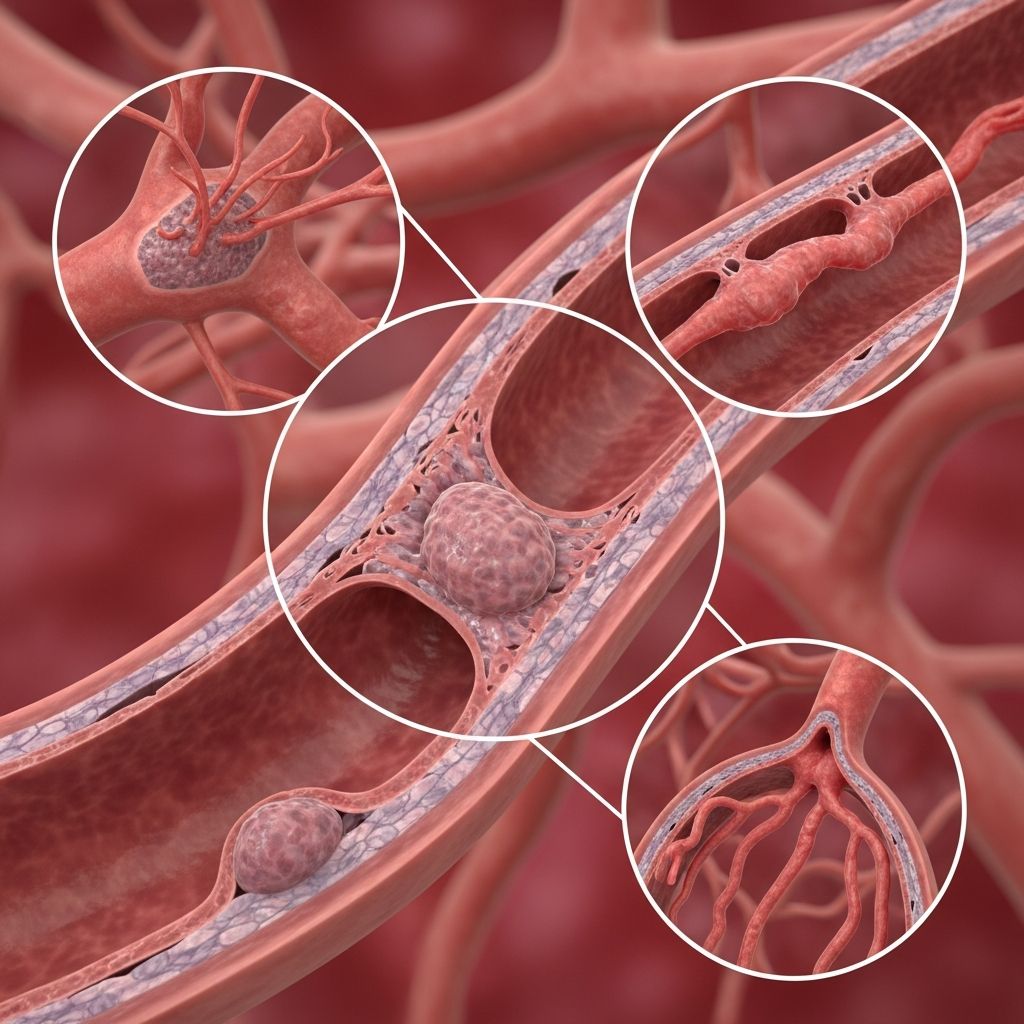
Vascular naevi or anomalies represent a diverse group of vascular lesions that are typically present at birth or appear during early childhood. These lesions are characterized by abnormal development of blood vessels and are classified based on the size and type of vessel involved. Unlike hemangiomas, which are benign tumors formed by the dilation of blood vessels or the proliferation of new endothelial cells, vascular malformations result from dysmorphogenesis—abnormal development during embryogenesis. The distinction between these two categories is clinically significant, as they differ in their natural history, progression patterns, and treatment approaches.
Vascular anomalies may remain stable throughout life or become increasingly prominent as individuals mature. Many of these conditions are associated with specific genetic mutations and syndromic presentations that require comprehensive clinical evaluation and management. Understanding the classification, clinical features, and associated syndromes is essential for healthcare providers involved in the care of affected individuals.
Classification of Vascular Anomalies
Vascular anomalies are classified into several categories based on their morphological characteristics and the type of vessel involved:
- Simple vascular malformations: These include capillary malformations (CMs), venous malformations (VMs), lymphatic malformations (LMs), and arteriovenous malformations (AVMs) or arteriovenous fistulas (AVFs)
- Combined vascular malformations: Defined as two or more distinct vascular malformations present within a single lesion
- Anomalies of major named vessels: These represent abnormalities in the origin, course, number, length, or diameter of major anatomically named blood vessels, including conditions such as aplasia, hypoplasia, stenosis, ectasia, aneurysm, persistence of embryonic vessels, and abnormal communications
The genetic basis of vascular anomalies has become increasingly well-understood. Most vascular anomalies result from inherited germline mutations or somatic mutations occurring during development. According to Knudson’s two-hit hypothesis, a second loss-of-function mutation in somatic cells can lead to loss of heterozygosity and manifestation of vascular anomalies.
Capillary Vascular Malformations
Capillary vascular malformations, commonly known as red birthmarks or port wine stains, represent malformed dilated blood vessels in the skin. These lesions are non-cancerous and appear as blotches of red or purple skin discoloration that can develop on any part of the body. Unlike hemangiomas, capillary vascular malformations are present at birth, though they may become more obvious with age and progression.
These lesions vary considerably in size, ranging from small dots to occasionally involving an entire limb, and they typically grow proportionally with the child’s general growth. The color and appearance may change over time, with lesions potentially darkening and developing a nodular, hyperkeratotic surface as individuals age.
Genetic Basis of Capillary Vascular Malformations
Capillary vascular malformations are now recognized as genetic disorders with clear hereditary patterns. Investigators have identified mutations in the GNAQ gene on chromosome 9q21 in the vast majority of patients with port-wine stains and Sturge-Weber syndrome. This discovery has transformed our understanding of these conditions from developmental anomalies to specific genetic entities.
Related Stories



Diagnostic Approach
Capillary vascular malformations are typically diagnosed clinically, and investigations are unnecessary for the majority of flat lesions. However, when diagnostic uncertainty exists or underlying tissue involvement is suspected, ultrasound scanning is often performed. On ultrasound, vascular malformations characteristically demonstrate blood vessels set within normal background tissue.
Venous Malformations
Venous malformations are slow-flow vascular lesions representing a type of vascular naevus or birthmark. These lesions result from malformed dilated veins and are non-cancerous. They typically present as skin-colored, blue, or purple swellings on any part of the body, often with prominent veins visible near the skin surface.
Like capillary vascular malformations, venous malformations are always present at birth, though they may become more apparent over time. They vary in size from small dots to occasionally involving an entire limb and grow proportionally with the child’s general growth, unlike cavernous hemangiomas.
Cellular and Molecular Basis
Venous malformations are caused by defects in vascular morphogenesis during early embryonic life, specifically during weeks 4-10 of gestation. These lesions are characterized by clusters of dilated venous channels associated with thin or absent vascular walls. The RAS/RAF/MAPK/ERK signaling pathway plays a critical role in the development of these malformations, with specific genetic mutations driving their formation.
Associated Syndromes
Vascular anomalies are frequently associated with specific genetic syndromes that have important clinical implications:
Sturge-Weber Syndrome
Sturge-Weber syndrome, also known as encephalotrigeminal angiomatosis, represents the association of a capillary vascular malformation affecting the skin supplied by one branch of the trigeminal nerve of the face with defects in underlying tissues. These underlying defects may result in a shrunken brain, calcification inside the skull, seizures, meningeal angioma, and eye abnormalities including glaucoma and optic atrophy. The syndrome results from a somatic mutation in the GNAQ gene.
Parkes-Weber Syndrome
Parkes-Weber syndrome refers to the association of a capillary vascular malformation with an arteriovenous malformation. The birthmark in this condition tends to be quite large and may range from faint pink to bright red in color. The affected limb is characteristically warmer and longer than the contralateral side, though it maintains normal shape. Physical examination may reveal a palpable ‘thrill’ due to high-flow blood through the arteriovenous malformation, and auscultation with a stethoscope may detect a swishing sound or ‘bruit’. In some cases, cardiac enlargement may occur, potentially leading to heart failure.
Klippel-Trénaunay Syndrome
Klippel-Trénaunay syndrome represents the association of a capillary vascular malformation with both venous and lymphatic malformations. The surface red birthmark tends to be relatively small or patchy but appears prominent. The lymphatic malformation component can contain either large fluid-filled cysts (macrocystic) or clusters of smaller ones (microcystic).
Hyperkeratotic Cutaneous Capillary-Venous Malformation
Hyperkeratotic cutaneous capillary-venous malformation typically affects tissues around the eye and may be associated with vascular malformations in the brain, known as cavernomas. This disorder is inherited as an autosomal dominant abnormality, affecting approximately half the children of an affected person. It results from mutations in the KRIT1 gene.
Maffucci Syndrome
Maffucci syndrome is a rare genetic disorder affecting both males and females, characterized by the triad of cartilage growths (enchondromas), bone deformities, and venous malformations. The disease may be present at birth or develop during infancy. The venous malformations in this syndrome present as soft blue nodules on the arms, legs, or elsewhere. Enchondromas are frequently found on fingers and toes or at the ends of long bones, and they may result in fractures. Significantly, malignant transformation to chondrosarcoma may occur in approximately 30% of adult patients.
Proteus Syndrome
Proteus syndrome is an extremely rare condition thought to result from abnormalities in the PTEN tumor-suppressor gene. The syndrome demonstrates highly variable manifestations, including enlarged hands and feet, unilateral body overgrowth, various birthmarks including vascular malformations, connective tissue naevi, epidermal naevi, skull abnormalities, and fatty tumors (lipomas) beneath the skin and internally.
Genetic Mechanisms and Molecular Pathways
Recent advances in molecular genetics have revealed the specific genetic basis for many vascular anomalies. Loss-of-function mutations in genes encoding proteins critical for vascular integrity—such as KRIT1, CCM2, and CCM3—result in molecular disorganization and dysfunction of endothelial junctions, compromising the maintenance of vascular barrier integrity.
In addition to inherited germline mutations, somatic mutations play a significant role in vascular anomaly development. Recent studies have identified somatic mutations in genes including MAP3K3, PIK3CA, and MAP2K7 in various vascular lesions, suggesting that somatic mosaicism may contribute to their pathogenesis.
Clinical Presentation and Natural History
The clinical presentation of vascular anomalies varies widely depending on their type, location, and associated genetic factors. Most vascular anomalies are present at birth or appear during early childhood. While some lesions remain stable throughout life, others become progressively more prominent with maturity.
The natural history of vascular anomalies differs significantly based on their classification. Hemangiomas, for example, often demonstrate a characteristic biphasic course with proliferation during infancy followed by spontaneous involution. In contrast, vascular malformations typically persist and may slowly enlarge over time.
Diagnostic Considerations
The diagnosis of vascular anomalies is primarily clinical, based on characteristic appearance and history. For simple flat lesions without evidence of underlying tissue involvement, clinical diagnosis is typically sufficient. However, when diagnostic uncertainty exists or when evaluation of underlying structures is necessary, imaging studies such as ultrasound are indicated.
Advanced imaging modalities including magnetic resonance imaging (MRI) and computed tomography (CT) may be employed when there is concern for extensive involvement or when surgical planning is anticipated. These imaging techniques help define the extent of the lesion and its relationship to surrounding structures.
Frequently Asked Questions
Q: What is the difference between a hemangioma and a vascular malformation?
A: Hemangiomas are benign tumors formed by the proliferation of endothelial cells and typically demonstrate a biphasic course with growth followed by involution. Vascular malformations, in contrast, result from abnormal embryonic development and typically persist and remain stable or slowly enlarge over time.
Q: Are all vascular anomalies present at birth?
A: While most vascular anomalies are present at birth, some may not become apparent until early childhood. Additionally, some lesions may become more obvious with age even if present from birth.
Q: Can vascular malformations be inherited?
A: Yes, many vascular malformations have genetic bases and can run in families, particularly those associated with specific syndromes like Sturge-Weber syndrome and hyperkeratotic cutaneous capillary-venous malformation, which are inherited as autosomal dominant conditions.
Q: What is the significance of syndromic vascular anomalies?
A: Syndromic vascular anomalies indicate involvement of multiple organ systems and may have significant clinical consequences. For example, Sturge-Weber syndrome may involve the brain and eyes, requiring monitoring for seizures and glaucoma.
Q: How are vascular malformations classified clinically?
A: Vascular malformations are classified based on the type and size of vessels involved, ranging from simple lesions (capillary, venous, lymphatic, or arteriovenous malformations) to combined malformations and anomalies of major named vessels.
Conclusion
Vascular proliferations and abnormalities of blood vessels represent a diverse and complex group of conditions with varying clinical presentations, genetic bases, and natural histories. From simple capillary malformations to complex syndromic presentations, these lesions require careful clinical evaluation and appropriate management. The identification of specific genetic mutations underlying many vascular anomalies has revolutionized our understanding of their pathogenesis and opened new avenues for targeted therapeutic interventions. Healthcare providers involved in the care of patients with vascular anomalies must maintain awareness of associated syndromes and complications to ensure comprehensive and appropriate clinical management.
References
- The Genetic Architecture of Vascular Anomalies: Current Data and Future Perspectives — National Center for Biotechnology Information (NCBI). 2022-09-20. https://pmc.ncbi.nlm.nih.gov/articles/PMC9603778/
- Capillary Vascular Malformation (Red Birthmarks, Port Wine Stain) — DermNet. 2024. https://dermnetnz.org/topics/capillary-vascular-malformation
- Vascular Proliferations and Abnormalities of Blood Vessels — DermNet. 2024. https://dermnetnz.org/topics/vascular-proliferations-and-abnormalities-of-blood-vessels
- Venous Malformation (Blue Birthmarks, Glomulovenous Malformations) — DermNet. 2024. https://dermnetnz.org/topics/venous-malformation
- Vascular Anomalies — Children’s Hospital of Philadelphia. 2024. https://www.chop.edu/conditions-diseases/vascular-anomalies
Similar Articles








Read full bio of Sneha Tete