Vasectomy: What To Expect, Risks, And Recovery
Discover everything about vasectomy: a safe, effective permanent male contraception method with low risks and quick recovery.
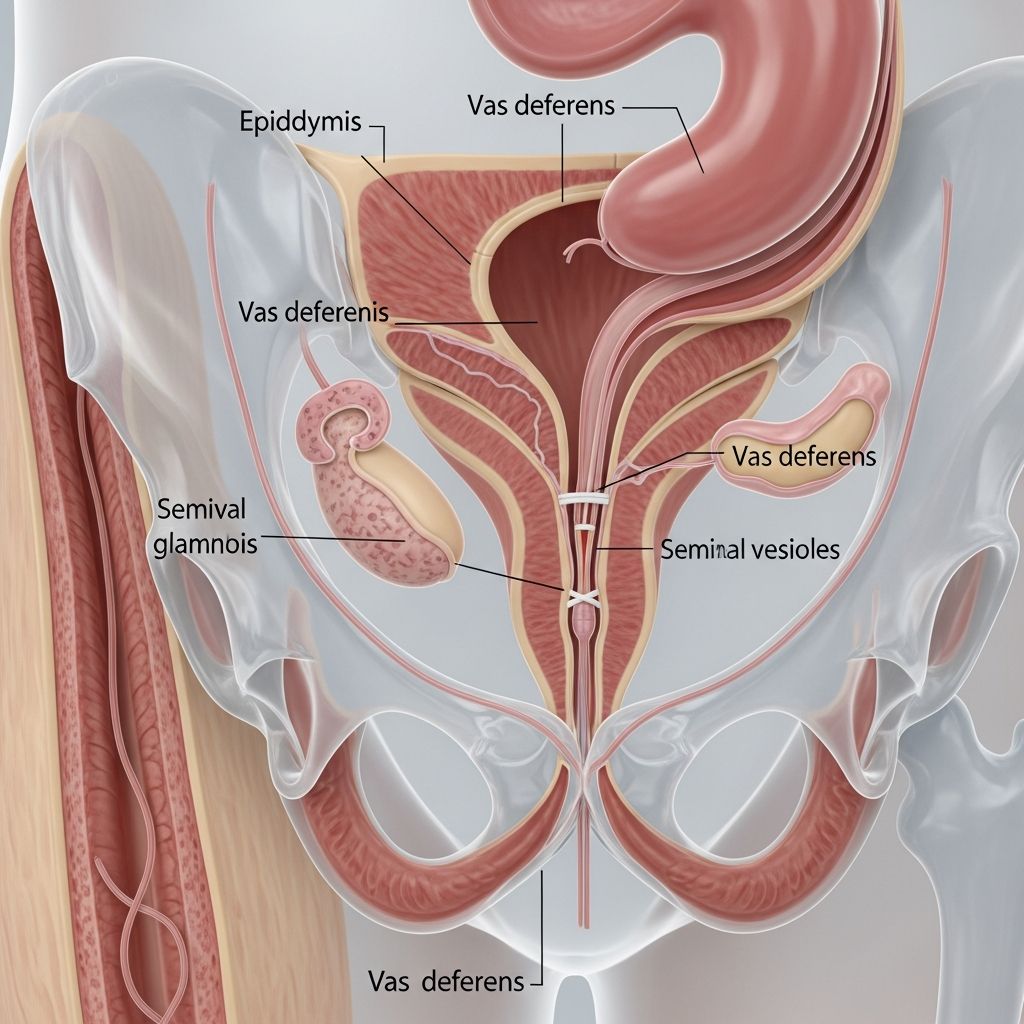
Vasectomy, also known as male sterilisation, is a safe, effective, and permanent form of contraception for men who are certain they do not want more children. This minor surgical procedure involves cutting and sealing the vas deferens, the tubes that carry sperm from the testicles, preventing sperm from mixing with semen during ejaculation.
What is a Vasectomy?
A vasectomy is a simple outpatient surgery that blocks sperm from reaching the semen ejaculated during orgasm. It does not affect hormone production, erections, orgasms, or sexual drive, as testosterone continues to be produced by the testicles. Semen volume decreases only slightly since sperm makes up less than 5% of ejaculate. The procedure takes 15-30 minutes under local anaesthesia and allows most men to go home the same day.
Vasectomy is nearly 100% effective at preventing pregnancy once confirmed sterile, with failure rates under 1% in pooled studies. It is more cost-effective and safer than female sterilisation (tubal ligation).
Why Have a Vasectomy?
Men choose vasectomy for reliable permanent contraception when their family is complete. Key reasons include:
- High effectiveness: Failure rate less than 1%, superior to most reversible methods.
- Permanence: Ideal for those not wanting future children.
- Low cost: Cheaper than long-term birth control or female sterilisation.
- No impact on sex life: Preserves libido, erections, and ejaculation; some report increased satisfaction.
- Quick and safe: Outpatient procedure with low complication rates.
Counselling is essential to ensure the decision is firm, as reversal is complex and not always successful.
Who Can Have a Vasectomy?
Most healthy adult men are candidates, typically over 21 or with children. Contraindications include:
- Ongoing testicular pain or disease.
- Uncertain about future children.
- Bleeding disorders or allergies to local anaesthetic.
- Active scrotal infection.
A pre-procedure consultation assesses suitability and discusses alternatives like condoms or female sterilisation.
No-Scalpel Vasectomy
The preferred
no-scalpel vasectomy
uses a puncture technique instead of incisions, reducing complications. A small tool punctures the scrotal skin to access the vas deferens, minimising bleeding, pain, and infection risks.Advantages over traditional incisional method:
| Complication | No-Scalpel OR | Incisional |
|---|---|---|
| Intraoperative bleeding | 0.49 | Higher |
| Hematoma | 0.23 (2.4%) | 12.5% |
| Postoperative pain | 0.63 | Higher |
| Infection | 0.21 (0.7%) | 2.2% |
No-scalpel shortens operative time and speeds resumption of sex. No-needle anaesthesia options further reduce pain.
The Vasectomy Operation
Performed under local anaesthetic in a clinic or surgery:
- Scrotum shaved and cleaned.
- Local anaesthetic injected (fine needle, warmed to 37°C for comfort).
- No-scalpel puncture or small incision to access vas deferens on each side.
- 0.5-1 cm vas segment removed or occluded via cutting, ligation (sutures/clips), cautery (thermal/electrical), or fascial interposition.
- **Fascial interposition** recommended: Bury one vas end in surrounding tissue to prevent recanalisation (OR 0.42 failure reduction).
- Site closed with dissolvable stitches or no stitches in no-scalpel.
Related Stories



Total time: 15-20 minutes. Complications like bleeding from pampiniform plexus occur in 2-4%.
Anaesthetic for Vasectomy
Local anaesthetic numbs the area; men stay awake. Sedation or general rare. No-needle jet injectors spray anaesthetic through skin, reducing injection pain.
After the Operation
Immediate recovery:
- Rest 48 hours; avoid heavy lifting/strenuous activity 1 week.
- Apply ice packs to reduce swelling.
- Wear supportive underwear.
- Common: Mild pain, bruising, swelling (resolves days).
Side effects (usually short-term):
- Bleeding/hematoma (2-12%).
- Infection (0.7-2%).
- Blood in semen (harmless, lasts ejaculations).
- Pulling sensation.
Sexual activity: Resume after 1 week or when comfortable; use contraception until sperm-free (see below).
How Effective is Vasectomy?
Vasectomy failure <1%, mainly recanalisation or rare anatomy issues. Effectiveness boosted by fascial interposition.
Post-vasectomy semen analysis (PVSA): Mandatory to confirm azoospermia (no sperm).
- First test: 12 weeks post-op, 20+ ejaculations.
- If sperm present, retest 3 months later.
- ~80% azoospermic by 6 weeks; wait longer if needed.
Use backup contraception until two clear tests.
Complications of Vasectomy
Most resolve quickly; serious rare.
| Complication | Rate | Treatment |
|---|---|---|
| Hematoma | 2-12% | Conservative; surgery if large. |
| Infection | 0.7-2% | Antibiotics. |
| Sperm granuloma | Common | Usually asymptomatic. |
| Post-vasectomy pain syndrome | 1-6% severe | Symptomatic; reversal if persistent. |
No impact on testosterone, prostate cancer risk, or sexual function.
Regret After Vasectomy
Regret low (2-6%), higher in younger men or without children. Discuss thoroughly pre-op. Reversal possible but success varies (patency 75-86%, pregnancy 45-70%).
Reversal of Vasectomy
Vasovasostomy reconnects vas ends; vasoepididymostomy if blocked. Microsurgery needed; costly, not NHS-funded routinely. Success declines with time since vasectomy. Sperm retrieval for IVF alternative.
Alternatives to Vasectomy
- Condoms, pills, IUDs (reversible).
- Female sterilisation (higher risks/cost).
Frequently Asked Questions (FAQs)
Q: Does vasectomy affect sex drive or erections?
A: No, vasectomy does not impact testosterone, libido, erections, or orgasm quality. Some men feel freer sexually.
Q: How soon after vasectomy can I have sex?
A: Wait 1 week or until comfortable, but use contraception until semen tests confirm no sperm (12+ weeks).
Q: Is vasectomy 100% effective immediately?
A: No, sperm can remain viable for weeks; get PVSA before unprotected sex.
Q: Can vasectomy cause prostate cancer?
A: No evidence supports this; studies show no increased risk.
Q: What if I change my mind?
A: Reversal success 45-70% pregnancy rate, but not guaranteed and expensive.
References
- Common Questions About Vasectomy — American Academy of Family Physicians (AAFP). 2013-12-01. https://www.aafp.org/pubs/afp/issues/2013/1201/p757.html
- Vasectomy and Female Sterilisation — Patient.info. Recent update. https://patient.info/doctor/gynaecology/sterilisation-vasectomy-and-female-sterilisation
- Vasectomy — Mayo Clinic. Recent update. https://www.mayoclinic.org/tests-procedures/vasectomy/about/pac-20384580
- What is it Like to Have a Vasectomy? — Patient.info. Recent. https://patient.info/features/mens-health/what-its-like-to-have-a-vasectomy
- Review of Vasectomy Complications and Safety Concerns — PMC (NCBI). 2021-06-29. https://pmc.ncbi.nlm.nih.gov/articles/PMC8255399/
Similar Articles








Read full bio of Sneha Tete