Vegan vs. Keto: How Do These Two Diets Compare?
Discover the key differences between vegan and keto diets in nutrition, weight loss, health impacts, sustainability, and which may suit you best.
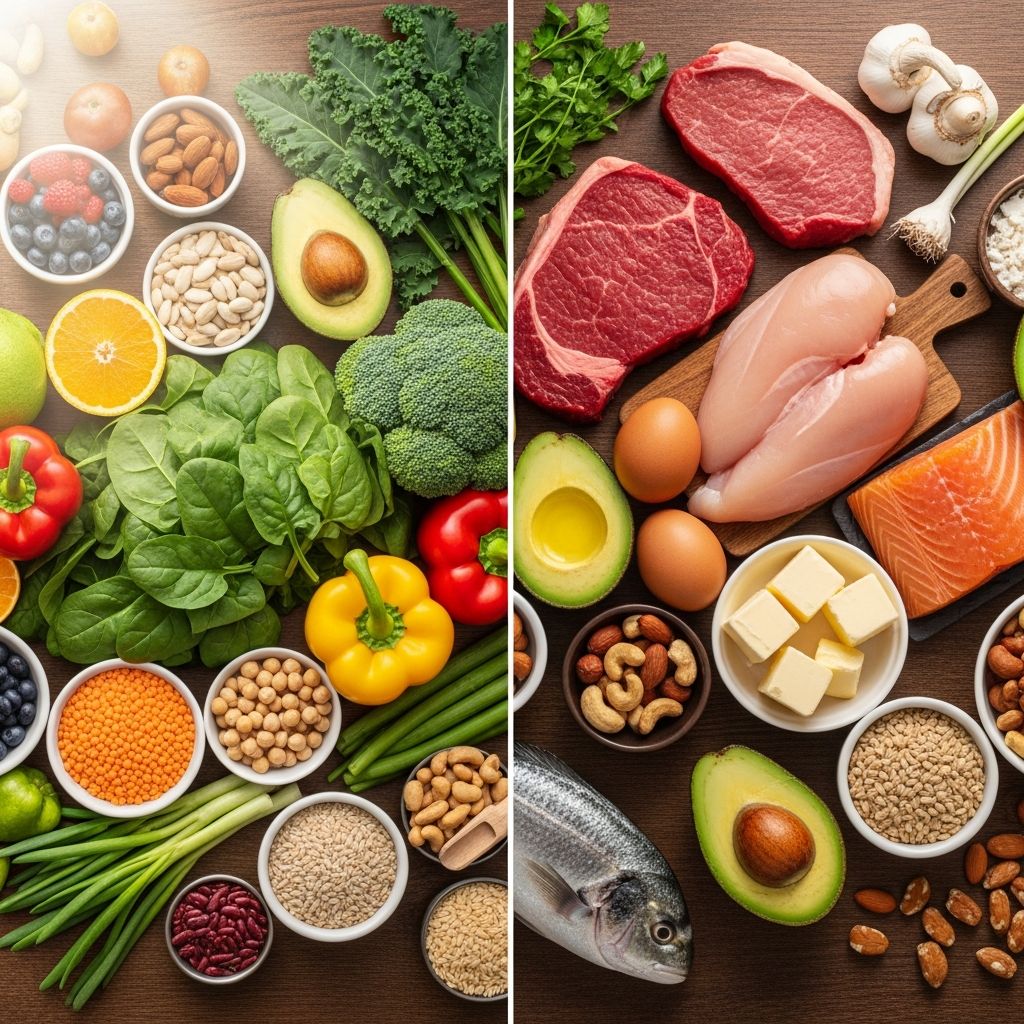
Two popular diets dominating conversations around health, weight loss, and sustainability are the vegan and ketogenic (keto) diets. Veganism emphasizes plant-based foods exclusively, excluding all animal products, while keto focuses on high-fat, low-carbohydrate intake to induce ketosis. This article breaks down their differences in nutrition, health effects, environmental impact, and more to help you decide which might fit your lifestyle.
What Is a Vegan Diet?
A vegan diet consists entirely of plant-derived foods, such as fruits, vegetables, grains, nuts, seeds, legumes, and plant-based alternatives. It eliminates meat, dairy, eggs, honey, and other animal products for ethical, environmental, or health reasons. Vegans prioritize whole foods rich in fiber, antioxidants, and essential nutrients like potassium, magnesium, folate, vitamins A, C, and E.
Typical daily intake includes oats for breakfast, salads with beans and avocado for lunch, and stir-fried tofu with quinoa for dinner. While nutrient-dense, vegans must monitor intake of vitamin B12, iron, calcium, omega-3s, and zinc, often supplementing or choosing fortified foods.
What Is a Keto Diet?
The ketogenic diet is a high-fat, moderate-protein, very low-carbohydrate eating plan designed to shift the body into ketosis, where fat becomes the primary fuel source instead of glucose. Macros typically break down to 70-90% fat, 10-20% protein, and 5-10% carbs, limiting intake to under 50g carbs daily.
Foods include fatty meats, fish, eggs, cheese, butter, oils, avocados, nuts, and low-carb vegetables like leafy greens. This induces rapid fat burning but can cause initial ‘keto flu’ symptoms such as fatigue, headaches, and irritability.
Key Differences in Macronutrients and Food Choices
Vegan and keto diets contrast sharply in composition:
- Carbohydrates: Vegan diets are carb-rich from grains, fruits, and veggies (45-65% of calories); keto severely restricts them (5-10%).
- Fats: Keto derives 70-90% calories from fats (animal and plant); vegan fats come from nuts, seeds, and oils (20-35%).
- Protein: Vegan sources include legumes, tofu (10-35%); keto allows moderate animal proteins (10-20%).
- Calories: Plant foods in vegan diets have lower density, aiding satiety; keto’s fats suppress appetite but risk overconsumption.
| Aspect | Vegan Diet | Keto Diet |
|---|---|---|
| Primary Focus | Plant-exclusive foods | High-fat, low-carb |
| Carbs (% calories) | 45-65% | 5-10% |
| Fats (% calories) | 20-35% | 70-90% |
| Sample Foods | Beans, grains, fruits | Meat, cheese, oils |
Health Benefits of Each Diet
Vegan Diet Benefits
Plant-based eating supports heart health by lowering cholesterol and blood pressure, reduces type 2 diabetes risk via high fiber, and aids weight management with low-calorie-density foods. Studies link it to decreased cancer risk and improved gut health through fiber and antioxidants. A UC Davis review found plant-based diets superior for A1c control in type 2 diabetes compared to keto.
- Rich in fiber for digestion and fullness.
- Antioxidants combat inflammation.
- Lower chronic disease risk.
Related Stories



Keto Diet Benefits
Keto excels in rapid weight loss by promoting ketosis, suppresses appetite, and improves blood sugar control, benefiting type 2 diabetes short-term. Users report mental clarity from stable energy.
- Quick fat loss and hunger control.
- Better insulin sensitivity initially.
- Potential neurological benefits.
Potential Downsides and Risks
Vegan Risks
Without planning, vegans risk deficiencies in B12, iron (less absorbable from plants), omega-3s, and protein. Bone health may suffer from low calcium if dairy alternatives are skipped.
Keto Risks
‘Keto flu,’ nutrient gaps in fiber/vitamins, kidney strain from high protein/fat, and unsustainable long-term due to restrictions. A study noted initial muscle/water loss, not pure fat.
| Risk | Vegan | Keto |
|---|---|---|
| Nutrient Deficiencies | B12, iron, omega-3s | Fiber, vitamins, electrolytes |
| Side Effects | Digestive adjustment | Keto flu, fatigue |
| Long-term Sustainability | High with variety | Low due to restrictions |
Weight Loss: Vegan vs. Keto
Both promote weight loss, but mechanisms differ. Keto’s ketosis burns fat quickly; vegan’s fiber and low calories reduce intake naturally. A comparison showed plant-based eaters consumed 700 fewer calories daily with equal satiety. Low-fat plant diets edged out keto in fat loss per studies, though both work short-term. Track body composition via DEXA to ensure muscle preservation.
Environmental Impact
Vegan diets shine in sustainability, emitting 0.7 kg CO2 per 1,000 calories vs. keto’s 3 kg—over fourfold higher due to meat reliance. Tulane research ranked vegan lowest impact, keto/paleo highest among U.S. diets. Switching omnivores to plant-forward cuts emissions equivalent to millions of vehicle miles.
Which Is Better for Long-Term Health?
Plant-based diets outperform keto for longevity, cancer risk reduction, heart health, and diabetes management per MSKCC and cohort studies. Keto suits short-term goals but struggles long-term. Hybrid ‘vegan keto’ exists but limits options.
Consult professionals; Mediterranean or DASH offer balanced alternatives improving both health and footprint without extremes.
Frequently Asked Questions
Can you do vegan keto?
Yes, by focusing on high-fat plants like avocados, nuts, coconut, and low-carb veggies, but it’s restrictive and requires careful planning for nutrients.
Which diet is better for weight loss?
Both effective short-term; vegan may sustain better long-term via lower calories and higher adherence.
Is vegan healthier than keto?
Evidence favors vegan for heart, diabetes, cancer risk reduction, and sustainability.
What are keto flu symptoms?
Fatigue, headache, nausea, irritability during carb adaptation.
Do vegans need supplements?
Often B12, possibly iron/omega-3s; monitor with blood tests.
References
- Keto vs vegan: Study of popular diets finds over fourfold difference in carbon footprints — Tulane University School of Public Health. 2023. https://sph.tulane.edu/keto-vs-vegan-study-popular-diets-finds-over-fourfold-difference-carbon-footprints
- Nutrition Face-Off: Keto Diet vs Vegan – What’s the Difference? — Vegan Essentials. 2023. https://veganessentials.com/blogs/news/keto-diet-vs-vegan-diet
- Pros & Cons of Vegan vs. Keto Diets: A Comprehensive Comparison for Weight Loss — DexaScan. 2023. https://dexascan.com/blogs/news/pros-cons-of-vegan-vs-keto-diets-a-comprehensive-comparison-for-weight-loss
- Keto vs Plant-Based: Which Diet Is Better for Your Body? — UW Medicine Right as Rain. 2023. https://rightasrain.uwmedicine.org/body/food/keto-or-plant-based-diet
- A Comparison of Plant-Based vs. Ketogenic Diets in Type 2 Diabetes — UC Davis Health. 2023. https://health.ucdavis.edu/nursing/news/Events/PDF/Other_presentations/A1c%20Levels%20A%20Comparison%20of%20Plant-Based%20vs.%20Ketogenic%20Diets%20in%20Type%202%20Diabetes.pdf
- Research Shows Plant-Based Diets Are Better Than Ketogenic Diets for Cancer Risk — Memorial Sloan Kettering Cancer Center. 2023. https://www.mskcc.org/news/research-shows-plant-based-diets-are-better-ketogenic-diets-cancer-risk-and-long-term-health
Similar Articles








Read full bio of medha deb