Vegetarian Salad Recipes: Protein-Packed Meal-Prep Ideas
Discover delicious, nutritious vegetarian salad recipes perfect for healthy eating and meal prep.
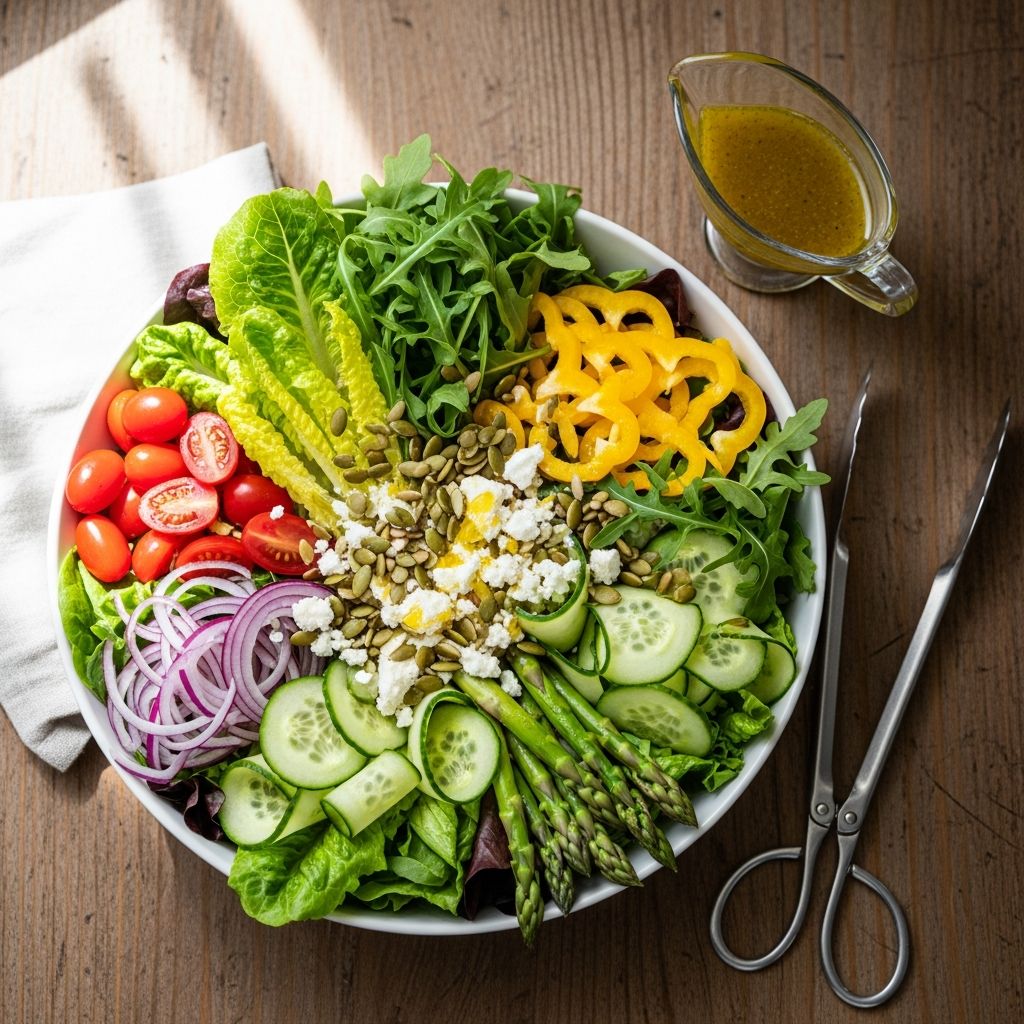
Vegetarian salads offer a refreshing way to enjoy nutrient-dense meals that are both satisfying and easy to prepare. These recipes emphasize fresh vegetables, plant-based proteins, and flavorful dressings to create balanced dishes suitable for lunch, dinner, or sides. High in fiber and protein, they support healthy eating habits while being versatile for meal prep.
Why Choose Vegetarian Salads?
Vegetarian salads are packed with vitamins, minerals, and antioxidants from colorful produce. According to the USDA, leafy greens like kale and cabbage provide essential folate and vitamin K, crucial for heart health and bone strength. A typical big salad can deliver over 20g of fiber and 30g of protein from sources like chickpeas and tofu, promoting satiety and digestive health.
These recipes are quick to assemble, often ready in under 5 minutes if components are prepped ahead. They align with plant-based diets, reducing reliance on processed foods while offering crunch, creaminess, and bold flavors.
Featured Recipe: Big Protein-Packed Salad
This staple weekday salad serves 1, boasting 30g protein and 23g fiber. It’s customizable and meal-prep friendly, using roasted elements for texture.
Ingredients
- 1 heaping cup shredded green cabbage (~75g)
- 1 ½ cups shredded, massaged kale (~65g)
- 1 cup shredded carrots (~65g)
- 2 tablespoons (32g) Red Wine Vinaigrette
- Heaping ⅓ cup (36g) Roasted Chickpeas
- 2 tbsp (14g) Roasted Walnuts
- 3 oz (85g) cooked tofu (e.g., baked nuggets)
- A scoop of sauerkraut
- Optional: ½ ripe avocado, feta crumbles, pickled onions
Instructions
- In a large bowl, massage kale and cabbage with Red Wine Vinaigrette until coated.
- Add remaining ingredients and optional mix-ins. Toss well. Adjust seasoning with salt, pepper, or more dressing.
Tip: Use high-quality extra virgin olive oil for the vinaigrette base to enhance flavor.
Meal Prep Components
Prepare these in advance for effortless salads throughout the week. Storage keeps crunch intact for 5-6 days.
Roasted Chickpeas and Walnuts
Ingredients (makes multiple servings):
- 2 (15 oz / 425g) cans chickpeas
- Extra virgin olive oil
- Diamond Crystal kosher salt
- Freshly cracked black pepper
- 1 ½ cups (168g) chopped walnuts
Instructions:
- Preheat oven to 425°F / 220°C. Position racks in top and bottom thirds.
- Drain, rinse, and dry chickpeas thoroughly. Toss with 4 tsp olive oil, generous pepper, and ~1.5 tsp kosher salt.
- Spread on a rimmed sheet pan without overlap. Roast in top third for 35 minutes until crisp.
- Meanwhile, toss walnuts with 2.5 tsp olive oil, pepper, and ~1 tsp salt. Roast in bottom third for 8-10 minutes until golden.
- Cool completely. Store chickpeas with lid ajar (5-6 days); walnuts in sealed jar (1-2 weeks).
Prepped Greens: Kale and Cabbage
Ingredients:
- 2 heads Lacinato or curly kale
- Lemon juice
- Sea salt
- ½ medium-large green cabbage
Instructions:
- Strip kale ribs, roll leaves, and chiffonade thinly. Wash and dry.
- Massage kale with lemon juice, pinch of salt (optional olive oil drizzle) until softened but not limp.
- Shred cabbage thinly. Store separately in airtight containers (3-5 days).
Red Wine Vinaigrette Recipe
This tangy dressing ties the salad together. Whisk or shake in a jar:
- ¼ cup extra virgin olive oil
- 3 tbsp red wine vinegar
- 1 tbsp Dijon mustard
- 1 tsp maple syrup or honey
- 1 small garlic clove, grated
- Salt and pepper to taste
Related Stories



Store in fridge up to 2 weeks. Shake before use.
Customizations and Variations
Adapt for preferences or seasons:
| Base Swap | Add-Ins | Protein Boost |
|---|---|---|
| Arugula or spinach | Red bell pepper, fennel, raw beets | Tempeh, edamame |
| Romaine for crunch | Cucumber, cherry tomatoes | Quinoa, lentils |
| Mixed greens | Roasted sweet potato | Seitan strips |
Optional mix-ins like avocado add creaminess; pickled elements bring acidity. Bell peppers and carrots store well for 3 days pre-shredded.
Nutrition Breakdown
Per serving (without optionals):
- Calories: ~450
- Protein: 30g
- Fiber: 23g
- Healthy Fats: From nuts, oil, tofu
- Key Nutrients: Vitamin A, C, K; iron, magnesium
Supports weight management and sustained energy, per Harvard T.H. Chan School of Public Health guidelines on plant-based proteins.
Benefits of Key Ingredients
- Kale & Cabbage: Cruciferous veggies rich in glucosinolates, linked to cancer prevention (National Cancer Institute).
- Chickpeas: Complete plant protein with resistant starch for gut health.
- Walnuts: Omega-3s for brain health (FDA).
- Tofu: Isoflavones support heart health (American Heart Association).
- Sauerkraut: Probiotics for microbiome diversity.
Storage and Tips for Success
- Keep wet and dry ingredients separate until assembly.
- Massage greens to reduce bitterness and aid digestion.
- Pat proteins dry before roasting to maximize crispiness.
- Scale up for batch cooking; portions freeze well except greens.
Frequently Asked Questions (FAQs)
Can I make this salad vegan?
Yes, skip feta and use maple syrup in vinaigrette. Tofu and chickpeas ensure plant-based protein.
How long does meal prep last?
Roasted items: 5-6 days; greens: 3-5 days; vinaigrette: 2 weeks. Assemble fresh daily.
What if I don’t have time to roast?
Use canned chickpeas (rinsed, patted dry) or store-bought roasted nuts. Prep on weekends.
Is this kid-friendly?
Customize with milder veggies like cucumber; involve kids in assembly for appeal.
Can I add grains?
Yes, cooked farro or quinoa boosts carbs and volume without sogginess.
More Vegetarian Salad Ideas
Expand your repertoire:
- Quinoa Tabouli: Parsley, tomatoes, lemon-cucumber dressing.
- Chickpea Avocado Smash: Mashed with lime, served over greens.
- Roasted Veggie Power Bowl: Eggplant, zucchini, tahini drizzle.
- Berry Spinach Salad: Nuts, balsamic glaze for sweetness.
These align with dietary guidelines from WHO, emphasizing 400g+ fruits/veggies daily.
References
- Dietary Guidelines for Americans, 2020-2025 — U.S. Department of Agriculture (USDA). 2020-12-01. https://www.dietaryguidelines.gov/
- Cruciferous Vegetables and Cancer Prevention — National Cancer Institute (NCI). 2023-05-15. https://www.cancer.gov/about-cancer/causes-prevention/risk/diet/cruciferous-vegetables-fact-sheet
- Plant-Based Proteins and Health — Harvard T.H. Chan School of Public Health. 2024-02-10. https://www.hsph.harvard.edu/nutritionsource/protein/
- Omega-3 Fatty Acids — U.S. Food and Drug Administration (FDA). 2022-08-20. https://www.fda.gov/food/hfp-constituent-updates/fda-announces-qualified-health-claim-epa-and-dha-omega-3-consumed-reduced-risk-hypertension-and
- Healthy Eating — World Health Organization (WHO). 2024-11-05. https://www.who.int/health-topics/healthy-diet
Similar Articles








Read full bio of Sneha Tete