Velamentous Cord Insertion: Risks, Management & Pregnancy Outcomes
Understanding velamentous cord insertion: causes, risks, monitoring strategies, and safe delivery options for expectant mothers.
Understanding Velamentous Cord Insertion
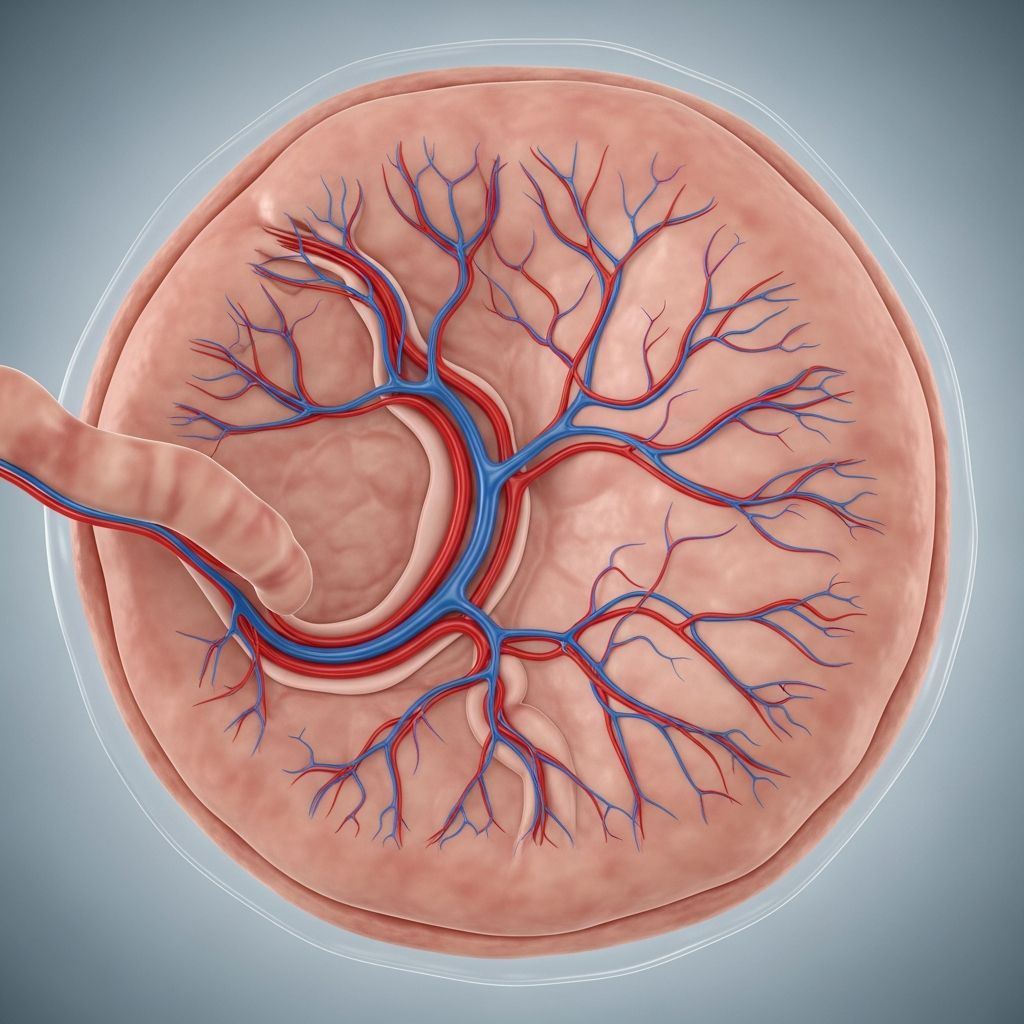
Velamentous cord insertion is a pregnancy complication that occurs when the umbilical cord attaches to the fetal membranes rather than directly into the placenta. During normal pregnancy, the umbilical cord travels from the fetus’s belly button to the inside of the placenta, where it provides easy access to nutrients and oxygen essential for fetal development. However, with velamentous cord insertion, this critical connection forms abnormally, creating potential risks for both mother and baby throughout pregnancy and delivery.
The placenta is an organ that develops in the uterus during pregnancy and serves as the lifeline between mother and fetus, allowing nutrient and oxygen exchange. The umbilical cord is the structure that facilitates this vital connection. Under normal circumstances, Wharton’s jelly, a gel-like substance, protects the blood vessels inside the umbilical cord, preventing them from twisting, squeezing, or breaking. This protective layer is crucial for maintaining the integrity of the fetal blood supply and ensuring healthy fetal development throughout gestation.
How Velamentous Cord Insertion Differs from Normal Cord Attachment
In velamentous cord insertion, the umbilical cord attaches to membranes outside of the placenta instead of inserting directly into the placental tissue. This means the blood vessels from the umbilical cord must travel considerably farther to access nutrients from the placenta. More significantly, these vessels make this journey without the protective cushioning provided by Wharton’s jelly. This unprotected pathway exposes the fetal blood vessels to potential injury and creates the foundation for several pregnancy complications.
The exposed blood vessels in velamentous cord insertion are more vulnerable to compression, squeezing, and rupture. Without the protective barrier of Wharton’s jelly and the placental tissue, these vessels are susceptible to damage during fetal movements, contractions, and labor. The reduced access to placental nutrients can also result in slower fetal growth and development, affecting the baby’s size and overall health throughout pregnancy and into infancy.
Associated Risks and Complications
Velamentous cord insertion can increase the risk of several serious pregnancy complications. Without the protection of Wharton’s jelly, the blood vessels in the umbilical cord are more likely to break and bleed. These risks may significantly affect pregnancy progression and newborn health. Potential complications include:
- Slow fetal growth and development due to reduced nutrient access
- Increased risk of preterm labor
- Fetal distress during labor and delivery
- Low birth weight
- Developmental delays in infancy
- Stillbirth in severe cases, particularly when vasa previa is present
Vasa Previa: A Critical Complication
Approximately 6% of pregnancies with velamentous cord insertion also involve a condition called vasa previa. Vasa previa occurs when the umbilical cord attaches to membranes that are positioned close to the cervix. During labor, as the fetus exerts pressure on the cervix, the exposed blood vessels run an extremely high risk of bursting and bleeding. Both mother and fetus face the potential for heavy, life-threatening hemorrhage during delivery. Without early detection and appropriate intervention, about half of pregnancies complicated by vasa previa result in stillbirth due to fetal blood loss.
Related Stories



Fortunately, when vasa previa is identified early through careful ultrasound screening, outcomes improve dramatically. Healthcare providers typically recommend planned cesarean delivery before labor begins or before the membranes rupture. With this intervention strategy, the survival rate for the fetus increases to between 97% and 99%, demonstrating the critical importance of early diagnosis and appropriate delivery planning.
Symptoms and Diagnosis
Recognizing Potential Warning Signs
Velamentous cord insertion may present with noticeable symptoms or may be detected incidentally during routine prenatal screening. Vaginal bleeding during pregnancy, particularly in the third trimester, can be a warning sign of velamentous cord insertion. However, many pregnant individuals with this condition experience no symptoms at all, which underscores the importance of regular prenatal monitoring and imaging.
The fetus may display signs including slower growth than expected for gestational age, reduced amniotic fluid levels, or decreased fetal movement. These indicators prompt healthcare providers to conduct more detailed investigation and imaging studies.
Diagnostic Methods and Early Detection
Healthcare providers typically diagnose velamentous cord insertion through imaging studies, primarily ultrasound, combined with careful fetal monitoring. Ultrasound examination allows visualization of the umbilical cord insertion site and can identify when the cord vessels enter the placental margin parallel to the uterine wall, do not move when the uterus is shaken, and diverge as they traverse the membrane. These sonographic features are characteristic of velamentous cord insertion.
Recent research has shown that velamentous cord insertion can be detected earlier than previously believed. Studies indicate that early detection is possible as early as 8 weeks of gestation when combining the diagnosis of embryonic sac implantation site at 6 weeks with the position of the placental plate, which becomes more definite at 7-8 weeks of gestation. Early identification of the cord insertion site during first trimester ultrasound surveillance is especially important for pregnancies with risk factors including first trimester bleeding, multiple gestations, or pregnancies achieved through assisted reproductive technologies.
Management and Monitoring Strategies
Treatment Approach
There is no way to treat or correct velamentous cord insertion once it has developed. Instead, healthcare providers focus on taking extra precautions to reduce risks and manage the condition proactively throughout pregnancy and delivery. The management strategy is individualized based on the location of the cord insertion, presence of associated complications like vasa previa, and other pregnancy factors.
Enhanced Prenatal Surveillance
Expectant mothers with velamentous cord insertion require closer monitoring than those with typical pregnancies. Healthcare providers typically implement the following monitoring strategies:
- Regular ultrasound examinations to track fetal growth and assess cord insertion location
- Non-stress tests to monitor fetal heart rate and movement patterns
- Detailed assessment of amniotic fluid volume
- Monitoring for signs of fetal distress or growth restriction
- Serial measurements of fetal biometric parameters
Delivery Planning Considerations
The delivery plan for pregnancies with velamentous cord insertion depends on several factors, including whether vasa previa is present, the location of the cord insertion, and the overall health status of both mother and fetus. Delivery may occur vaginally with close monitoring, or healthcare providers may recommend cesarean section to reduce delivery risks. Some providers suggest delivery around the due date, while others recommend delivery several weeks earlier to prevent potential complications associated with prolonged pregnancy.
When vasa previa is confirmed, cesarean delivery is typically recommended before labor onset or membrane rupture to prevent catastrophic fetal blood loss. Timing of delivery is carefully planned in consultation with maternal-fetal medicine specialists to optimize outcomes for both mother and baby.
Neonatal Care and Postnatal Management
Depending on the severity of velamentous cord insertion and associated complications, newborns may require additional care in the neonatal intensive care unit following delivery. NICU care allows for close monitoring of the baby’s vital signs, blood counts to assess for anemia from blood loss, and evaluation for any complications related to cord insertion abnormalities or reduced nutrient delivery during pregnancy.
Babies born with velamentous cord insertion may be at higher risk for complications such as low birth weight, prematurity, or developmental concerns that require specialized neonatal assessment and management. The neonatal team works to identify and address any health issues promptly, supporting optimal outcomes for the newborn.
Prevention and Risk Reduction
Unfortunately, velamentous cord insertion cannot be prevented, as it develops during early pregnancy when the placenta and cord are forming. However, the chances of experiencing this complication are extremely low. When velamentous cord insertion is diagnosed, the most important factor is that healthcare providers know to monitor the pregnancy closely for any complications. Early diagnosis and close monitoring make a substantial difference in achieving healthy pregnancy outcomes and ensuring safe delivery.
Pregnant individuals cannot take specific preventive actions to avoid velamentous cord insertion, but they can optimize their overall health through prenatal care, attending all scheduled ultrasounds and prenatal visits, and communicating any concerns to their healthcare providers. Following provider recommendations for monitoring and delivery planning significantly improves outcomes.
Questions to Ask Your Healthcare Provider
If you have been diagnosed with velamentous cord insertion, it is important to discuss your specific situation with your healthcare provider. Consider asking these questions to better understand your condition and pregnancy plan:
- Where exactly is my umbilical cord inserting into the placenta or membranes?
- Do I have vasa previa or other associated complications?
- How often will I need ultrasounds and other monitoring?
- What symptoms should I watch for and when should I contact you?
- What delivery method do you recommend for my specific situation?
- When do you anticipate I will deliver?
- What special care might my baby need after birth?
- What is the expected outcome for my pregnancy?
Frequently Asked Questions
Q: How common is velamentous cord insertion?
A: Velamentous cord insertion is relatively uncommon, occurring in only a small percentage of pregnancies. Your chances of experiencing velamentous cord insertion are extremely low. However, it is more commonly associated with certain risk factors including twin pregnancies, pregnancies conceived through assisted reproductive technology, and maternal diabetes.
Q: Can velamentous cord insertion resolve on its own during pregnancy?
A: In some cases, a low-lying velamentous cord insertion may resolve later in pregnancy as the placenta location evolves. However, velamentous cord insertion, regardless of intrauterine location, is an independent risk factor for obstetric complications. This is why ongoing monitoring throughout pregnancy remains essential.
Q: What does the discovery of velamentous cord insertion mean for my birth plan?
A: Discovery of velamentous cord insertion requires individualized birth planning with your healthcare provider. The specific recommendations depend on factors such as the cord insertion location, presence of vasa previa, fetal growth, and maternal health. Your provider will discuss whether vaginal delivery with close monitoring or cesarean delivery is most appropriate for your situation.
Q: Will my baby be healthy if I have velamentous cord insertion?
A: Many pregnancies with velamentous cord insertion result in healthy babies, especially when the condition is diagnosed early and managed appropriately. Close monitoring and careful delivery planning significantly improve outcomes. However, complications are possible, which is why specialized care and close follow-up are important.
Q: What should I do if I experience vaginal bleeding during pregnancy?
A: Vaginal bleeding during pregnancy always warrants immediate evaluation by your healthcare provider. While there are many possible causes, bleeding can be associated with velamentous cord insertion or other serious conditions. Contact your provider right away if you experience any vaginal bleeding, especially during the third trimester.
References
- Velamentous Cord Insertion: Precautions, Outcomes & Risks — Cleveland Clinic. 2024. https://my.clevelandclinic.org/health/diseases/24111-velamentous-cord-insertion
- Early detection of velamentous cord insertion at the eighth week of gestation — National Center for Biotechnology Information (NCBI). Published in Case Reports in Women’s Health. https://pmc.ncbi.nlm.nih.gov/articles/PMC7303848/
- Umbilical Cord Location, Care & Appearance — Cleveland Clinic. 2024. https://my.clevelandclinic.org/health/body/umbilical-cord
- Velamentous insertion of the cord — Britannica Academic. https://www.britannica.com/science/velamentous-insertion-of-the-cord
Similar Articles








Read full bio of medha deb