Venolymphatic Malformation: Causes, Symptoms & Treatment
Comprehensive guide to venolymphatic malformations: understanding diagnosis and treatment options.
Understanding Venolymphatic Malformation
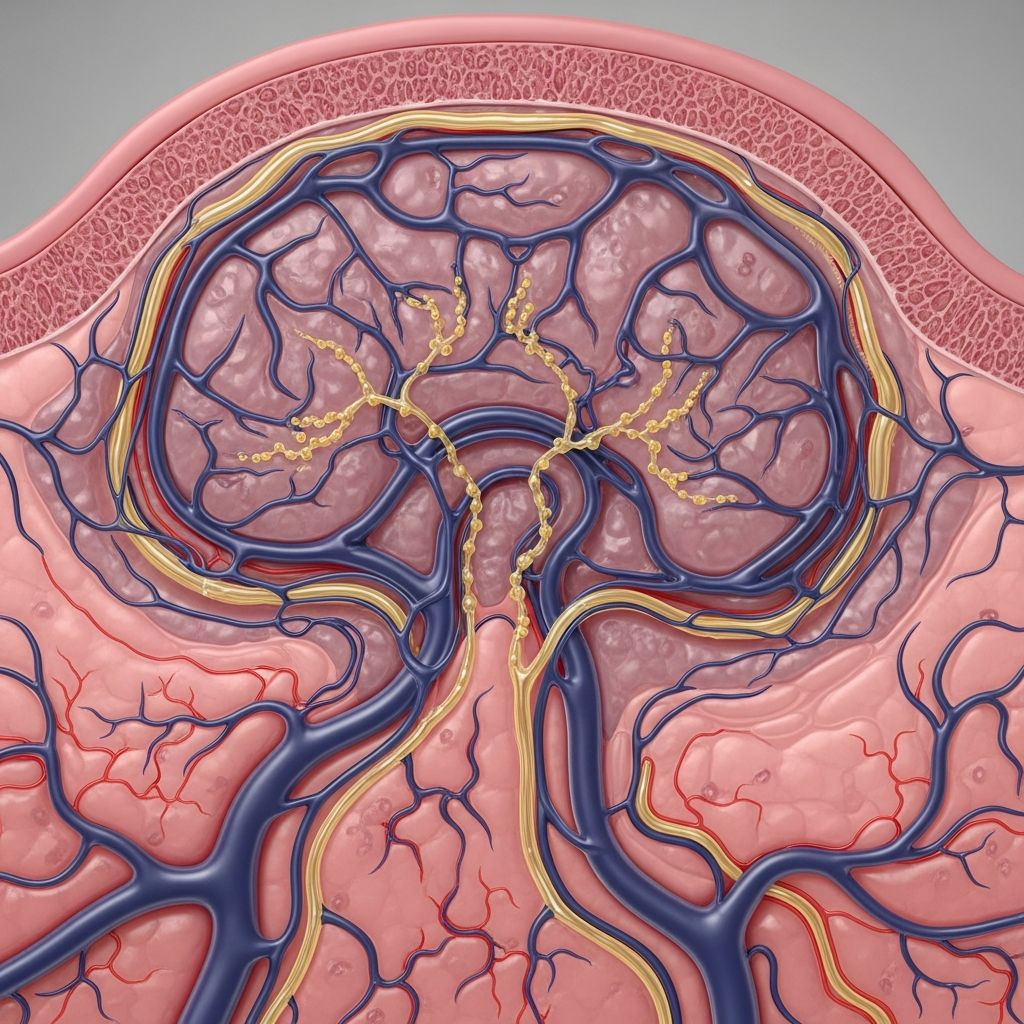
Venolymphatic malformations are congenital vascular disorders that affect the development and function of blood vessels and lymphatic vessels. These abnormalities arise from disrupted vessel formation during fetal development, resulting in collections of dilated venous and lymphatic channels. Unlike other vascular conditions that may develop later in life, venolymphatic malformations are present from birth, though symptoms may not become apparent until later in childhood or adulthood.
Venolymphatic malformations represent a significant category within the broader spectrum of vascular anomalies, which include various types of abnormal blood and lymphatic vessel formations. These malformations can range from small, asymptomatic lesions to large, complex structures that significantly impact quality of life and require comprehensive medical management.
Classification and Types
Venolymphatic malformations are classified based on the primary vessel type involved and the flow characteristics of the abnormality. The main classification systems help healthcare providers determine the appropriate treatment approach and predict potential complications.
Slow-Flow vs. High-Flow Lesions
Venolymphatic malformations are primarily classified as slow-flow lesions, characterized by minimal hemodynamic activity. Slow-flow malformations include purely venous malformations and lymphatic malformations, as well as combined venolymphatic lesions. In contrast, high-flow malformations involve arterial components and typically present with more acute symptoms and greater hemodynamic compromise.
Location-Based Classification
These malformations can occur anywhere in the body, but certain locations are more common:
- Head and neck region (most common location)
- Upper and lower extremities
- Trunk and thoracic cavity
- Abdominal and pelvic regions
- Mediastinum (space between lungs)
Causes and Pathophysiology
Venolymphatic malformations result from errors in vasculogenesis and angiogenesis during embryonic development. The exact mechanisms underlying their formation are complex and involve genetic and molecular factors that disrupt normal vessel formation and organization.
Genetic Factors
Recent advances in understanding the genetic basis of vascular malformations have identified several key pathways involved in their development. Mutations in genes controlling vascular development, particularly those affecting the mTOR/PI3K/AKT signaling pathway, have been identified in various types of vascular malformations. These molecular alterations lead to abnormal endothelial cell proliferation and disorganized vessel formation, resulting in the characteristic collections of dilated venous and lymphatic channels seen in venolymphatic malformations.
Developmental Disruption
During normal fetal development, blood and lymphatic vessels form through precisely coordinated processes. In venolymphatic malformations, disruption of these processes leads to incomplete vessel formation, abnormal valve development, and improper organization of vascular channels. This developmental abnormality creates abnormal hemodynamic patterns that may persist or worsen after birth.
Clinical Presentation and Symptoms
The clinical presentation of venolymphatic malformations varies widely depending on the size, location, and extent of the lesion. Some individuals may have minimal or no symptoms, while others experience significant morbidity.
Common Symptoms
Patients with venolymphatic malformations may experience:
- Visible swelling or mass, often noticed at birth or during early childhood
- Pain or tenderness, particularly with physical activity or pressure
- Functional limitations affecting movement or daily activities
- Recurrent infections or bleeding
- Cosmetic concerns due to visible deformity
- Complications such as thrombosis within the malformation
- Leg length discrepancy when lower extremity involvement occurs
Related Stories



Acute Complications
Some venolymphatic malformations may experience acute exacerbations characterized by sudden enlargement, increased pain, or thrombotic events. These episodes may be triggered by trauma, infection, or hormonal changes, particularly during puberty or pregnancy. Understanding these potential complications helps guide patient management and expectation-setting.
Diagnosis and Imaging
Accurate diagnosis of venolymphatic malformations requires a combination of clinical examination and sophisticated imaging techniques. A multidisciplinary diagnostic approach ensures comprehensive characterization of the lesion and proper treatment planning.
Clinical Examination
Initial evaluation includes detailed physical examination, careful history-taking regarding symptom onset and progression, and assessment of functional limitations. Clinicians assess the size, consistency, compressibility, and relationship to surrounding structures. Determining whether a lesion is compressible, blanching, or associated with skin changes helps differentiate venolymphatic malformations from other vascular anomalies.
Imaging Modalities
Multiple imaging techniques provide complementary information for diagnosis and treatment planning:
Ultrasound: Often the first imaging modality used, particularly in pediatric patients, providing real-time assessment of vessel flow patterns and internal characteristics without radiation exposure.
Magnetic Resonance Imaging (MRI): The gold standard for detailed anatomic characterization, providing excellent soft tissue definition and helping identify the extent of involvement relative to surrounding structures. MRI with contrast enhancement reveals the vascular nature of the lesion and helps distinguish venous from lymphatic components.
Computed Tomography (CT): Particularly useful for assessing involvement of bone and evaluating for complications such as intralesional thrombosis. CT angiography may be employed to assess vascular supply and drainage patterns.
Conventional Angiography: Performs a diagnostic role in complex cases and directly guides interventional procedures, allowing real-time visualization of vascular anatomy and hemodynamics.
Treatment Options
Management of venolymphatic malformations is individualized based on lesion characteristics, symptoms, location, and patient age. A multidisciplinary team approach optimizes outcomes while minimizing complications. Treatment goals focus on symptom relief, functional preservation, and cosmetic improvement.
Observation and Monitoring
Not all venolymphatic malformations require immediate intervention. Asymptomatic or minimally symptomatic lesions may be managed with careful observation and serial imaging to document stability or progression. Regular follow-up allows healthcare providers to identify patients who develop symptoms warranting treatment.
Interventional Radiology
Minimally invasive interventional procedures have become first-line treatment for many symptomatic venolymphatic malformations, offering effective symptom management with reduced morbidity compared to surgery.
Sclerotherapy: This technique involves injection of sclerosing agents directly into the malformation, causing endothelial injury and subsequent thrombosis and fibrosis. Common agents include 100% alcohol, sodium tetradecyl sulfate, and doxycycline. Treatment outcomes demonstrate that approximately 76% of patients experience some level of improvement in symptoms, with many patients requiring only one or two procedures for significant benefit.
Embolization: Endovascular embolization uses particles, coils, or other materials to obstruct abnormal vascular channels, reducing flow and promoting thrombosis. This technique is particularly useful for high-flow lesions or when sclerotherapy alone is insufficient.
Percutaneous Ablation: Thermal or chemical ablation techniques can be employed to destroy malformed vessel tissue, particularly in accessible lesions.
Surgical Management
Surgical resection remains an important treatment option for well-defined, accessible lesions causing significant morbidity. Surgery may be indicated when interventional approaches have failed, when lesions are causing progressive functional impairment, or when complete removal is feasible. Surgical planning requires careful assessment of surrounding structures to minimize complications.
Emerging Molecular Therapies
Understanding the genetic basis of venolymphatic malformations has opened new therapeutic avenues targeting underlying molecular pathways. Agents targeting the mTOR pathway and other signaling molecules involved in vascular development show promise in early studies and may provide effective treatment options for patients with complex or recurrent lesions resistant to conventional therapy.
Compression Therapy
External compression with garments or elastic wrapping can help manage symptoms and prevent malformation enlargement by maintaining external pressure on the lesion, reducing internal pooling and potential thrombotic complications.
Treatment Outcomes and Complications
Understanding potential outcomes and complications helps patients and healthcare providers make informed treatment decisions. Most patients treated with percutaneous sclerotherapy experience meaningful improvement in symptoms, though individual responses vary.
Positive Outcomes: Clinical studies demonstrate that approximately 32% of patients achieve significant improvement, 27% experience moderate improvement, and 17% show mild improvement following sclerotherapy. The median follow-up period shows durable results in most responsive patients.
Potential Complications: While generally well-tolerated, interventional procedures carry risks including nerve injury (5% incidence), deep vein thrombosis (4%), infection (3%), skin necrosis (3%), and muscle contracture (2%). Major complications occurred in approximately 20% of patients in clinical series, though most either resolved spontaneously or responded well to targeted treatment.
Multidisciplinary Care Approach
Optimal management of venolymphatic malformations requires collaboration among multiple specialties including interventional radiology, vascular surgery, pediatrics, dermatology, genetics, and other specialists based on lesion location and involvement. Johns Hopkins Medicine operates specialized vascular anomalies centers providing comprehensive, coordinated care for patients with complex venolymphatic malformations. These multidisciplinary programs enable discussion of complex cases, optimize treatment planning, and advance research into better therapeutic approaches.
Living with Venolymphatic Malformation
Patients with venolymphatic malformations require ongoing medical surveillance and may need multiple treatments over time. Education regarding warning signs, activity modifications, and when to seek emergency care helps patients and families manage their condition effectively. Psychological support addresses cosmetic concerns and functional limitations that may impact quality of life.
Frequently Asked Questions
Q: Are venolymphatic malformations congenital or acquired?
A: Venolymphatic malformations are congenital, meaning they develop during fetal development. However, symptoms may not appear until later in childhood or even adulthood, and they can enlarge over time.
Q: Can venolymphatic malformations go away on their own?
A: Most venolymphatic malformations do not resolve spontaneously. While some may remain stable, many tend to enlarge or cause progressive symptoms, necessitating medical intervention.
Q: What is the difference between venolymphatic malformations and hemangiomas?
A: Venolymphatic malformations are non-proliferative lesions present from birth that do not typically regress. Hemangiomas are proliferative vascular tumors that often appear after birth and frequently involute spontaneously during childhood.
Q: How are venolymphatic malformations monitored after treatment?
A: After treatment, patients typically undergo serial imaging studies to assess treatment response and detect any recurrence or progression. Follow-up intervals depend on individual circumstances and treatment approach.
Q: Is pregnancy a concern for patients with venolymphatic malformations?
A: Pregnancy-related hormonal changes may cause malformation enlargement or increased symptoms in some patients. Women of childbearing age should discuss pregnancy planning with their vascular specialists.
Q: What genetic testing is available for venolymphatic malformations?
A: Genetic testing for specific mutations associated with vascular malformations is available in specialized centers. Testing is particularly useful in familial cases or when specific syndromes are suspected.
References
- Venous Malformations: Diagnosis, Management, and Future Directions — Johns Hopkins University, Seminars in Interventional Radiology. 2024-11-07. https://pubmed.ncbi.nlm.nih.gov/39539881/
- The treatment of venous malformations with percutaneous sclerotherapy at a single academic medical center — Johns Hopkins Hospital, Division of Interventional Radiology. 2016-10. https://pubmed.ncbi.nlm.nih.gov/27009607/
- Johns Hopkins All Children’s Vascular Anomalies and Birthmarks Program — Johns Hopkins All Children’s Hospital. 2025. https://www.hopkinsmedicine.org/
Similar Articles








Read full bio of medha deb