Venous Disease: Understanding Symptoms and Treatment
Comprehensive guide to venous disease: causes, symptoms, diagnosis, and effective treatment options.
Understanding Venous Disease
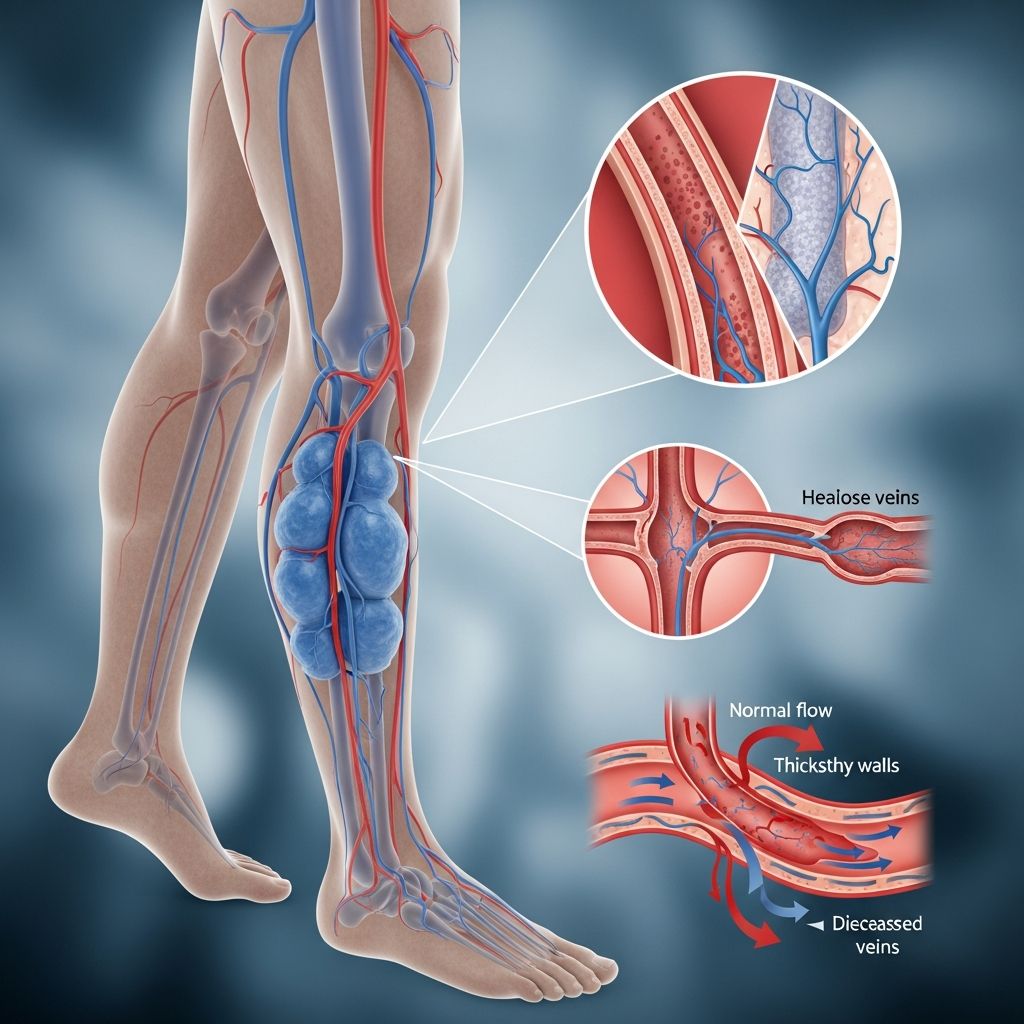
Venous disease, also known as chronic venous insufficiency (CVI), is a common condition affecting millions of Americans that occurs when the veins in the legs fail to return blood to the heart effectively. The most recognizable sign of venous disease is the presence of varicose veins, but this condition extends far beyond cosmetic concerns. When left untreated, venous disease can significantly impact quality of life and lead to serious complications, including venous ulcers and skin changes that may impair mobility and daily functioning.
The condition develops when the valves inside leg veins become damaged or weakened, preventing them from functioning properly. In healthy veins, these specialized valves open and close to ensure blood flows in one direction—upward toward the heart against gravity. When these valves malfunction, blood can pool in the legs, creating increased venous pressure and triggering the characteristic symptoms of venous insufficiency.
How Venous Disease Develops
The Role of Venous Valves
Venous valves are essential one-way gates within the veins that maintain proper blood circulation. When functioning correctly, these valves prevent blood from flowing backward, ensuring efficient return circulation to the heart. In venous disease, these valves become incompetent or leaky, allowing blood to reflux—flow backward—and accumulate in the lower extremities. This backward flow leads to vein enlargement and the characteristic pressure buildup associated with CVI.
Primary Causes and Risk Factors
The underlying mechanism of venous disease is believed to involve valvular reflux, though the exact etiology remains complex. Several factors contribute to the development of this condition:
– Faulty or weakened valves in leg veins- Deep vein thrombosis (DVT), the most common cause of CVI- Venous outflow obstruction- Arteriovenous malformations- Calf muscle pump failure- Genetic predisposition and hereditary conditions such as Klippel-Trenaunay and Parkes-Weber syndromes- Age, particularly over 50 years old- Family history of venous disease- Prolonged standing or sitting- Obesity- Pregnancy- Prior leg injuries or trauma
Studies indicate that approximately one in five Americans with varicose vein disease develop chronic venous insufficiency, highlighting the prevalence of this progressive condition. Genetic factors play a significant role, as individuals with a family history of venous disease face substantially higher risk of developing the condition themselves.
Recognizing Symptoms of Venous Disease
Common Clinical Presentations
Patients with chronic venous insufficiency typically present with a combination of symptoms that vary in severity and progression. The most commonly reported symptoms include:
– Heavy, achy, or tired-feeling legs- Leg swelling, particularly in the ankles and lower legs- Varicose veins (enlarged, twisted veins visible under the skin)- Cramping or restless legs, especially at night- Itching, prickling, or burning sensations around affected veins- Pain, throbbing, or aching sensations that worsen with prolonged standing or sitting- Skin discoloration or changes in skin texture- Telangiectasias (small spider-like veins)- Reticular veins (blue or purple web-like veins)- Edema that improves with leg elevation
Related Stories



Advanced Symptoms Requiring Medical Attention
In more severe cases, patients may experience:
– Venous ulcers or leg wounds that heal slowly or recur- Skin thickening or hardening- Changes in skin pigmentation- Limb heaviness and fatigue- Symptoms that interfere with daily activities or sleep quality
It is crucial to seek professional medical evaluation if you experience any combination of these symptoms, as delayed treatment can result in rapid disease progression and serious complications.
Diagnosis of Venous Disease
Physical Examination Techniques
Healthcare providers typically begin with a thorough physical examination to assess venous function. One important diagnostic test is the Trendelenburg test, during which the surgeon compresses the groin firmly to occlude the greater saphenous vein junction. The patient is then asked to stand, and the clinician observes whether the leg fills with venous blood. If the leg does not fill, this indicates incompetent valves in the superficial veins are causing CVI. If the leg fills with blood, it suggests the valves connecting superficial veins to deep veins are incompetent.
Imaging and Diagnostic Testing
Ultrasound imaging is the gold standard for diagnosing chronic venous insufficiency and assessing the severity of valve dysfunction. This non-invasive imaging technique allows physicians to visualize blood flow patterns, identify valve incompetence, and determine whether deep or superficial venous systems are affected. Venous duplex ultrasound provides detailed hemodynamic information essential for treatment planning.
Treatment Approaches for Venous Disease
Conservative Management Strategies
The primary goals of treatment are to reduce discomfort and edema, stabilize skin appearance, reduce venous reflux, diminish varicose veins, and promote ulcer healing. Most patients benefit from starting with conservative therapies, which form the foundation of CVI management:
Lifestyle Modifications
– Leg elevation: Raising legs above heart level when sitting or lying down improves drainage- Regular exercise: Resistance and aerobic exercises strengthen the calf muscle pump- Weight management: Maintaining a healthy weight reduces pressure on leg veins- Dietary changes: Consuming foods with less saturated fat may improve vascular health- Avoiding prolonged standing or sitting: Changing positions regularly promotes blood circulation- Limiting salt intake: May help reduce swelling and fluid retention
Compression Therapy
Compression stockings and bandages are highly effective in managing all forms of venous pathophysiology and represent a cornerstone of conservative treatment. Prescription-strength compression stockings help promote blood flow and reduce swelling by applying graduated pressure that is strongest at the ankle and decreases toward the knee or thigh. Various compression levels are available, with very tight stockings requiring a prescription. Many patients find that compression therapy alone effectively manages symptoms and prevents disease progression.
Pharmacologic Treatments
Medications may be prescribed to address specific symptoms associated with venous disease, such as pain, cramping, or heaviness. While pharmacologic treatments are typically used in conjunction with other therapies rather than as standalone solutions, they can significantly improve patient comfort and quality of life.
Minimally Invasive Interventional Procedures
For patients whose symptoms are not adequately controlled by conservative measures, several minimally invasive office-based procedures are available:
Endovenous Laser Treatment (EVLT)
This procedure involves inserting a thin laser fiber into the affected vein under ultrasound guidance. The laser energy heats and collapses the vein from the inside, redirecting blood flow to healthier veins nearby.
Radiofrequency Ablation
Similar to EVLT, radiofrequency ablation uses radiofrequency energy to heat and close the affected vein, providing effective treatment with minimal downtime.
Sclerotherapy
Sclerotherapy is beneficial in treating telangiectasias, reticular veins, and varicose veins measuring 1 to 4 millimeters in diameter. During this procedure, a special solution—typically a saline solution mixed with a sclerosing agent—is injected directly into the affected vein using a fine needle. This solution irritates the vein’s lining, causing it to collapse and stick together. Over time, the body reabsorbs the collapsed vein and reroutes blood to healthier vessels. Sclerosing agents may include hypertonic sodium chloride solution, polidocanol, sodium iodide, chromated glycerin, sodium tetradecyl sulfate, or sodium morrhuate. This treatment modality can be used alone or combined with other therapies.
Foam Sclerotherapy
For superficial vein reflux, foam sclerotherapy provides an effective treatment option that can address larger vessels more effectively than liquid sclerosing agents.
Microphlebectomy
This minimally invasive procedure involves removing varicose veins through tiny incisions, with excellent cosmetic outcomes and minimal recovery time.
These safe, outpatient treatments can significantly improve comfort, appearance, and overall vein health, allowing patients to resume normal activities quickly.
Advanced Surgical Interventions
When conservative and minimally invasive approaches are insufficient, surgical interventions may be considered. The surgical method depends on the underlying pathophysiologic processes and the affected vein area.
Ligation and Stripping
These traditional surgical techniques have been shown to enhance venous hemodynamics, alleviate pain, and promote ulcer healing. The procedures involve either tying off (ligation) or removing (stripping) affected veins.
Venous Valve Reconstruction
For certain patients, valve reconstruction procedures offer hope for improving venous function. These include valvuloplasty, transposition, transplant, cryopreserved vein valve allografts, and neo-valve construction. Valvuloplasty is technically demanding and does not always produce optimal results, but it remains an option in specialized centers.
Treatment of Different Venous Segments
Deep vein reflux may be treated with valve reconstruction or valve transplant, while perforator reflux can be managed with sclerotherapy, endovenous thermal ablation, or subfascial endoscopic perforator surgery (SEPS). However, compression therapy regimens that are adhered to remain highly effective in treating all forms of venous pathophysiology.
Regardless of the surgical approach selected, patients should combine surgery with compression stockings for maximal effectiveness. Potential complications include nerve injury, infection, bleeding, and recurrent symptoms.
Disease Progression and Complications
Chronic venous insufficiency is usually progressive and leads to postphlebitic syndrome and venous ulcers if left untreated. Annually, approximately 150,000 new patients are diagnosed with chronic venous insufficiency, with nearly $500 million spent on patient care. The disability associated with CVI contributes to diminished quality of life and loss of work productivity, making early diagnosis and treatment essential.
Comprehensive Treatment Planning
The optimum chronic venous disease treatment requires an interprofessional team approach, including primary care physicians, vascular surgeons, and other specialized healthcare providers. The approach to CVI management involves several different strategies, which are often combined based on individual patient needs and disease severity. Treatment selection depends on disease progression, underlying pathophysiology, patient preferences, and other medical conditions.
Frequently Asked Questions
Q: What is the difference between varicose veins and venous disease?
A: Varicose veins are enlarged, visible veins that represent one symptom of venous disease. While varicose veins are the most recognized sign, venous disease encompasses the broader condition of chronic venous insufficiency with its associated symptoms and complications.
Q: Can venous disease be prevented?
A: While genetic factors cannot be changed, you can reduce your risk by maintaining a healthy weight, exercising regularly, avoiding prolonged standing or sitting, elevating your legs when possible, and seeking prompt treatment for leg injuries or blood clots.
Q: Is compression therapy painful?
A: No, compression therapy is not painful. While compression stockings may feel snug, they should be comfortable and well-fitting. Properly prescribed compression stockings are designed to provide therapeutic benefit without discomfort.
Q: How long do minimally invasive procedures take?
A: Most minimally invasive procedures such as EVLT, radiofrequency ablation, and sclerotherapy can be completed in under an hour in an office setting, allowing patients to return home the same day.
Q: Will my venous disease return after treatment?
A: While treatment closes or removes affected veins, new veins may develop problems over time due to underlying valve dysfunction or genetic predisposition. Continuing conservative measures like compression therapy and lifestyle modifications helps prevent recurrence.
Q: When should I seek medical evaluation for leg symptoms?
A: You should consult a vein specialist if you experience persistent leg swelling, varicose veins, skin discoloration, slow-healing wounds, or symptoms that interfere with daily activities. Early evaluation allows for timely intervention and prevents disease progression.
References
- Venous Insufficiency — StatPearls, National Center for Biotechnology Information (NCBI). 2024. https://www.ncbi.nlm.nih.gov/books/NBK430975/
- Chronic Venous Insufficiency: Causes, Symptoms & Treatment — Cleveland Clinic. 2024. https://my.clevelandclinic.org/health/diseases/16872-chronic-venous-insufficiency-cvi
- Venous Disease: Symptoms and Treatment — SSM Health. 2024. https://www.ssmhealth.com/services/heart-vascular/venous-disease
- Varicose Veins – Symptoms and Causes — Mayo Clinic. 2024. https://www.mayoclinic.org/diseases-conditions/varicose-veins/symptoms-causes/syc-20350643
- What is Vein Disease and What Can I Do About It? — Advanced Heart and Vascular Institute. 2024. https://www.advancedhvi.com/2024/08/16/what-is-vein-disease-and-what-can-i-do-about-it/
Similar Articles








Read full bio of medha deb