Venous Eczema: Causes, Symptoms, And 4 Proven Treatments
Understanding venous eczema: causes, symptoms, diagnosis, and effective management strategies for this common lower leg skin condition.
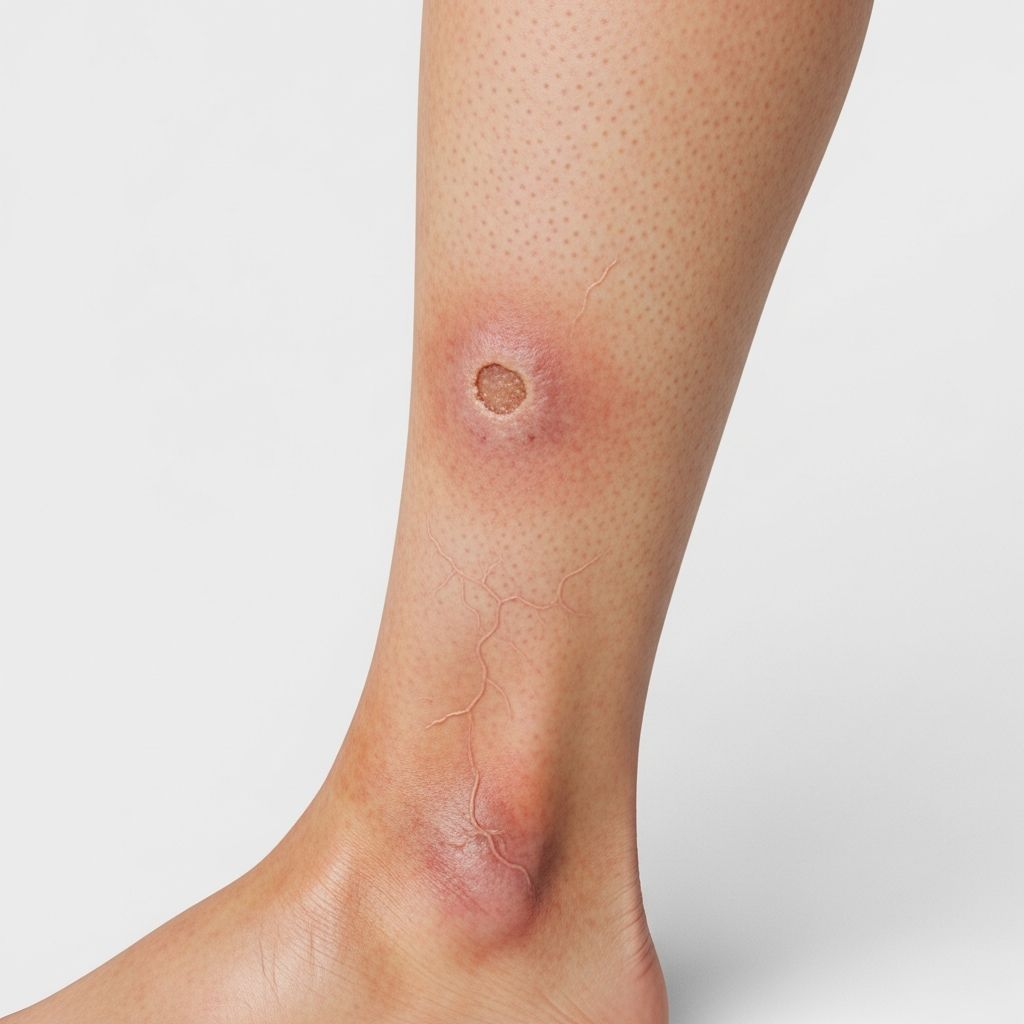
Synonyms: Gravitational eczema, stasis dermatitis, varicose eczema
What is venous eczema?
Venous eczema is a common form of
eczema
(also known asdermatitis
) that affects one or both lower legs in association withvenous insufficiency
. It is more accurately described as an eczematous dermatosis rather than true eczema because the pathogenesis involves chronic inflammation due to venous hypertension rather than the typical allergic or irritant mechanisms seen in other eczemas.The condition arises when blood pools in the superficial veins of the lower legs due to faulty venous valves, leading to increased hydrostatic pressure. This pressure forces fluid, red blood cells, and proteins into the surrounding tissues, triggering an inflammatory response and activation of the innate immune system. Over time, this results in skin changes characteristic of venous eczema.
Venous eczema predominantly affects older adults, particularly those over 50 years of age, with a higher prevalence in women due to factors like pregnancy, obesity, and hormonal influences on vein walls. It is often bilateral but can be asymmetrical if underlying venous disease varies between legs.
Who gets venous eczema?
Venous eczema typically develops in individuals with risk factors for chronic venous insufficiency (CVI). Key risk factors include:
- Age: Incidence increases with age as vein valves weaken naturally.
- Sex: More common in women (2:1 ratio).
- Obesity: Excess weight increases venous pressure.
- Prolonged standing or sitting: Occupations like nursing, teaching, or factory work promote venous pooling.
- Pregnancy: Multiple pregnancies stretch vein walls.
- Previous deep vein thrombosis (DVT): Damages venous valves.
- Family history: Genetic predisposition to varicose veins.
- Leg trauma or surgery: Including hip/knee replacements disrupting venous flow.
Up to 20% of adults over 50 may have some degree of CVI, with venous eczema manifesting in advanced cases.
What causes venous eczema?
The primary cause is
chronic venous hypertension
resulting from venous insufficiency. Under normal conditions, leg muscles act as a pump during walking to propel blood upwards against gravity, while one-way venous valves prevent backflow. When valves fail—due to age, clot damage (post-DVT), or varicose veins—blood refluxes and pools in the lower legs.This pooling generates high hydrostatic pressure, leaking plasma, erythrocytes, and fibrinogen into the dermis and subcutaneous tissues (extravasation). The leaked components trigger:
- Inflammation: Via innate immune activation and cytokine release.
- Tissue fibrosis: Fibrin deposition forms a ‘fibrin cuff’ around capillaries, impairing oxygen diffusion (lipodermatosclerosis).
- Oxidative stress: Haemoglobin breakdown products cause haemosiderin deposition, leading to pigmentation.
Secondary factors exacerbating flares include trauma, infection, contact dermatitis from topicals, or reduced mobility.
What are the clinical features of venous eczema?
Venous eczema evolves through stages, often starting subtly and progressing if untreated. Early features appear around the medial malleolus (inner ankle) and gaiter area (lower calf).
Early venous eczema
- Ill-defined erythema (redness on light skin; brown/purple on darker skin tones).
- Oedema (pitting ankle swelling worse by evening).
- Pruritus (itching, leading to excoriations).
- Scaling and xerosis (dry skin).
Established venous eczema
Becomes more eczematous with:
- Weeping and crusting.
- Lichenification (thickened, leathery skin from scratching).
- Excoriations and secondary bacterial infection (golden crusts, pustules).
Related Stories



Advanced chronic changes (lipodermatosclerosis)
- Inverted ‘champagne bottle’ leg shape (tapered ankle, bulbous calf).
- Hyperpigmentation (haemosiderin stain: golden-brown).
- Atrophie blanche (white porcelain scars).
- Varicose veins and telangiectasia.
Complications
- Venous leg ulcers (5-10% risk; shallow, base covered in yellow slough).
- Cellulitis (painful, warm, febrile).
- Contact dermatitis from inappropriate topicals.
Symptoms include heaviness, aching, night cramps, and restless legs, worsening with heat/dependence.
How is venous eczema diagnosed?
Diagnosis is primarily
clinical
, based on history and characteristic distribution/morphology in patients with venous risk factors. No single test confirms it, but investigations confirm underlying CVI.Clinical assessment
- Examine standing (reveals oedema, pigmentation, varices).
- Check for lipodermatosclerosis (hold skin pinch test).
Investigations
| Test | Purpose |
|---|---|
| Duplex ultrasound | Gold standard: Assesses valve reflux, obstruction, deep/superficial disease. |
| Hand-held Doppler | Quick bedside screening for reflux. |
| Photoplethysmography/ABPI | Measures venous refill time; rules out arterial disease (ABPI <0.8). |
| Patch testing | If contact allergy suspected. |
Differentiate from cellulitis, arterial disease, pretibial myxoedema, or neoplastic infiltrates.
What is the treatment of venous eczema?
Treatment targets underlying CVI, inflammation, oedema, and complications. Multidisciplinary approach (GP, dermatologist, vascular surgeon).
General measures
- Leg elevation: 30° above heart level, 30 min 3-4x/day.
- Exercise: Calf pumps (walking, cycling) to activate muscle pump.
- Weight loss: If obese.
- Skin care: Non-soap cleansers, fragrance-free emollients 2-3x/day.
Compression therapy (cornerstone)
- Graduated compression stockings: Class 2 (23-32 mmHg) or higher; replace 6-monthly.
- Multi-layer bandaging: For severe oedema/ulcers (4-layer system).
- Contraindicated if ABPI <0.8.
Topical treatments
- Emollients: First-line for dry skin.
- Topical corticosteroids: Potent (e.g., clobetasol) short-term (2-4 weeks) for flares; moderate for maintenance.
- Topical calcineurin inhibitors: (Tacrolimus) steroid-sparing.
- Antibiotics: Mupirocin for impetiginised areas; oral if cellulitis.
Specialist interventions
- Endovenous ablation/sclerotherapy: For superficial reflux/varices.
- Skin grafting for recalcitrant ulcers.
What is the outcome for venous eczema?
Venous eczema is a
chronic relapsing disorder
requiring lifelong management. Early intervention prevents progression to ulceration (10-20% untreated risk). Compression adherence reduces flares by 50-70%. Lipodermatosclerosis may persist despite treatment. Regular review essential; 30% develop ulcers within 5 years without control.How can venous eczema be prevented?
While not fully preventable in predisposed individuals, strategies reduce incidence/severity:
- Avoid prolonged standing/sitting; take walking breaks.
- Maintain healthy weight.
- Early varicose vein treatment.
- Compression hosiery prophylactically in at-risk.
- Daily emollient use; prompt flare treatment.
- Calf exercises and leg elevation habits.
Related topics
- Varicose eczema
- Venous leg ulcers
- Lipodermatosclerosis
- Chronic venous insufficiency
Frequently asked questions
What does venous eczema look like?
Red-brown itchy scaly patches around ankles, often with swelling, weeping, or crusting; progresses to thickened pigmented skin.
Is venous eczema dangerous?
Usually not, but untreated can lead to painful ulcers and infections requiring hospitalisation.
Can venous eczema be cured?
No, it’s chronic, but well-controlled with compression and skin care.
Does venous eczema itch?
Yes, intense pruritus is hallmark, driving the itch-scratch cycle.
References
- Venous Stasis Dermatitis – Symptoms, Causes, Treatments — WebMD. 2023-05-15. https://www.webmd.com/skin-problems-and-treatments/eczema/venous-stasis-dermatitis
- Venous Stasis Dermatitis: Causes, Symptoms & Treatment — Cleveland Clinic. 2024-02-20. https://my.clevelandclinic.org/health/diseases/24388-venous-stasis-dermatitis
- Varicose eczema — NHS UK. 2023-11-10. https://www.nhs.uk/conditions/varicose-eczema/
- Venous eczema, gravitational eczema — DermNet NZ. 2024-08-05. https://dermnetnz.org/topics/venous-eczema
- Stasis Dermatitis: Symptoms, Causes, Treatment — National Eczema Association. 2023-09-12. https://nationaleczema.org/types-of-eczema/stasis-dermatitis/
- Varicose eczema — National Eczema Society. 2024-01-18. https://eczema.org/information-and-advice/types-of-eczema/varicose-eczema/
Similar Articles








Read full bio of medha deb