Venous Lake: 5 Treatment Options, Diagnosis, And Prevention
Understanding venous lakes: common, harmless blue lesions on lips and skin, with treatment options for cosmetic concerns.
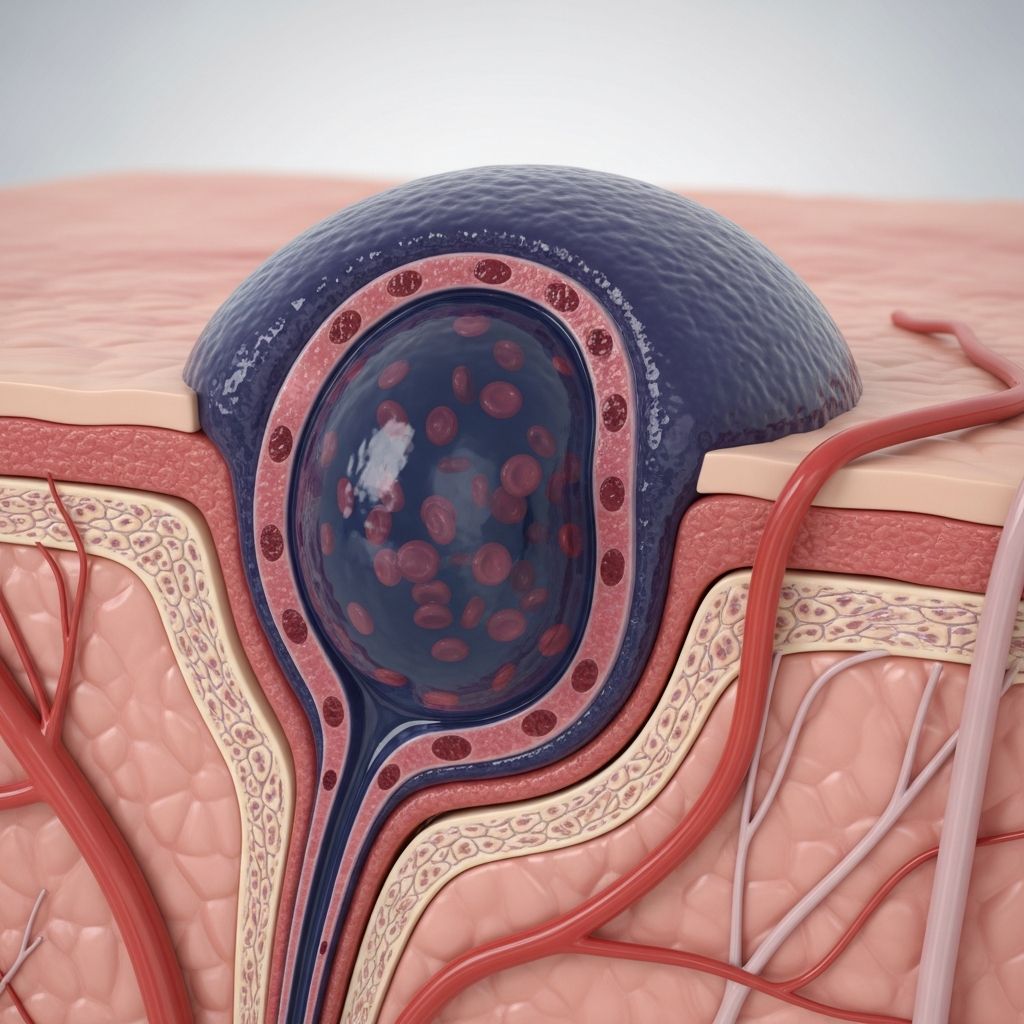
A
venous lake
is a common, benign, bluish softmacule
orpapule
resulting from vascular dilatation, most frequently observed on the lower lip.Who gets venous lake?
Venous lakes predominantly affect middle-aged and older adults of both sexes and all racial backgrounds. They are particularly prevalent in fair-skinned individuals with a history of chronic sun exposure. While exact incidence rates are not well-documented, they are recognized as a frequent finding in dermatological practice among patients over 50 years old. Men may present slightly more often due to cumulative UV damage from outdoor activities, though women are equally susceptible. These lesions are rare in children and young adults, underscoring their association with aging skin and long-term environmental factors.
Causes
The precise etiology of venous lakes remains unknown, but several predisposing factors have been implicated. Chronic ultraviolet (UV) radiation exposure is considered a primary contributor, as it leads to degeneration of dermal connective tissue and weakening of vessel walls, promoting venule dilatation. This explains their commonality on sun-exposed sites like the lips, ears, face, and neck. Aging plays a crucial role, with progressive loss of skin elasticity and vascular support structures facilitating ectasia. Trauma, such as repeated lip biting or mechanical irritation, may exacerbate or trigger lesion formation in susceptible individuals. Genetic predisposition might influence vessel fragility, though no specific hereditary patterns are established. Unlike malignant vascular tumors, venous lakes lack proliferative endothelial changes, confirming their benign nature as simple dilatations rather than true neoplasms.
Clinical features
Clinically, a venous lake presents as a soft, compressible, blue to purple
macule
orpapule
measuring 0.2–1 cm in diameter. The lesion is typically solitary but can be multiple in some cases. Its hallmark feature is blanching upon digital pressure, as compression expels deoxygenated blood from the dilated venule, temporarily restoring normal skin color. This is readily demonstrated using a glass slide or dermatoscope lens. Common locations include:- The
vermilion border
or mucosal surface of thelower lip
(most frequent site, up to 80% of cases). - **Earlobes**.
- Other sun-exposed areas on the
face
,neck
, orupper trunk
.
The lesion is usually asymptomatic, causing no pain, itching, or bleeding unless traumatized. Over time, it may enlarge slowly or darken with dependency (e.g., when lying flat). Surface changes are absent; the skin overlying the lesion remains intact without ulceration, crusting, or scale. In rare instances, repeated irritation can lead to superficial thrombosis, imparting a firmer consistency.
Diagnosis
Diagnosis of venous lake is primarily clinical, relying on its characteristic appearance and compressibility. No imaging or laboratory tests are routinely required. Dermoscopy enhances diagnostic confidence, revealing a
structureless blue or purple pattern
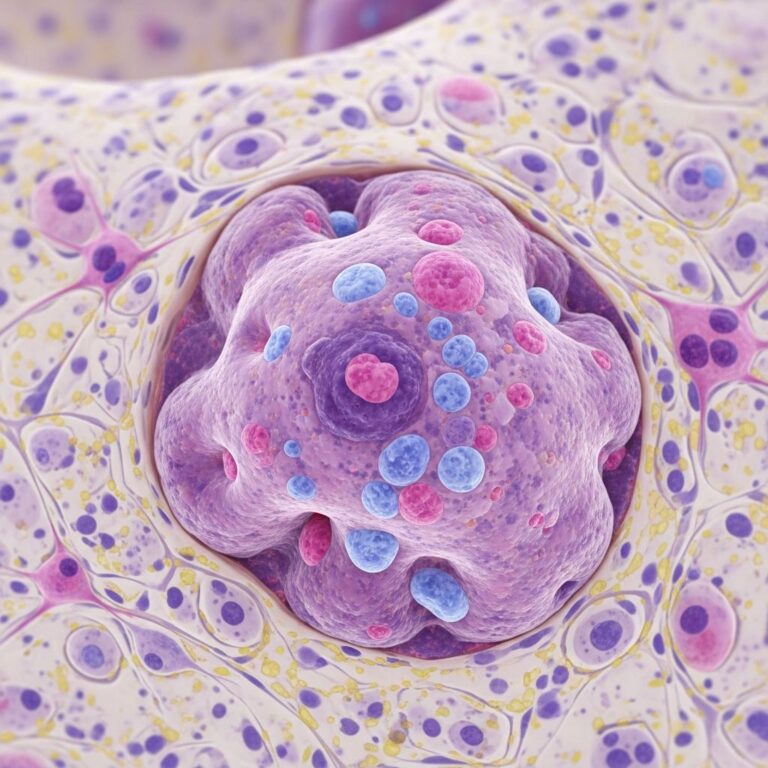
corresponding to the blood-filled venule, without arborizing vessels or other malignant features. This non-invasive tool is especially useful on the lip to differentiate from pigmented lesions. Biopsy is exceptionally rare, reserved for atypical presentations (e.g., rapid growth, induration, or non-blanching). Histopathology, if performed, confirms a dilated subepidermal venule lined by flat endothelium, filled with red blood cells, amid normal or sun-damaged dermis. No atypia or mitoses are seen, distinguishing it from vascular malignancies.Differential diagnoses
Venous lake may mimic several benign and malignant lesions, necessitating careful evaluation, particularly on the lip where melanoma risk is higher. Key differentials include:
- Melanocytic naevus or melanoma: Pigmented, non-compressible; dermoscopy shows pigment network or atypical features.
- Haemangioma: Brighter red, often raised; may have multiple feeder vessels on dermoscopy.
- Pyogenic granuloma: Rapidly growing, friable, bleeds easily; collarette of scale at base.
- Angiosarcoma: Rare, aggressive; multifocal, indurated purple plaques in elderly on sun-damaged skin.
- Basal cell carcinoma (nodular): Pearly border, telangiectasia; non-blanching.
- Seborrhoeic keratosis: Stuck-on appearance, waxy surface.
A table summarizing key discriminators:
| Lesion | Color | Compressibility | Dermoscopy | Growth |
|---|---|---|---|---|
| Venous lake | Blue/purple | Blanches | Structureless blue | Slow/stable |
| Melanoma | Brown/black | No | Atypical pigment | Variable/rapid |
| Haemangioma | Red | Partial | Red lagoons | Slow |
| Pyogenic granuloma | Red | No | White rail | Rapid |
Related Stories



Any doubt warrants biopsy.
Treatment
Venous lakes are entirely harmless, requiring no intervention unless cosmetically objectionable or symptomatic. Treatment aims to destroy the dilated venule, often resulting in a temporary scab and potential hypopigmentation or scar. Options include:
- Laser therapy: Pulsed dye laser (585–595 nm) targets haemoglobin effectively with minimal scarring; 1–2 sessions suffice. Nd:YAG or KTP lasers are alternatives.
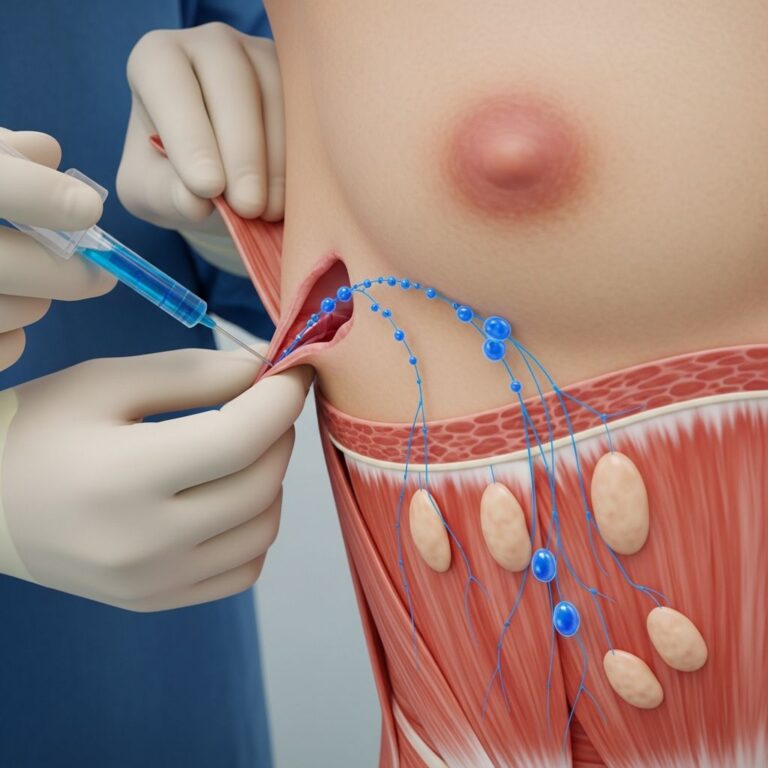
- Sclerotherapy: Intralesional 1% polidocanol or sodium tetradecyl sulfate collapses the vessel; highly effective for lip lesions with inconspicuous scarring after 1–2 injections, as shown in case reports.
- Electrocoagulation/infrared coagulation: Precise heat destruction; office-based, quick.
- Cryotherapy: Liquid nitrogen freezes the lesion; simple but risks pigment loss on lips.
- Surgical excision: Reserved for large or atypical lesions; linear scar inevitable on lip.
Choice depends on size, site, and patient preference. Post-treatment care involves wound protection and sun avoidance. Recurrence is uncommon but possible if predisposing factors persist.
Frequently Asked Questions (FAQs)
Q: Is a venous lake cancerous?
A: No, venous lake is a benign vascular dilatation, not cancerous. It lacks cellular proliferation or atypia seen in malignancies like angiosarcoma.
Q: Can venous lakes be prevented?
A: Prevention focuses on sun protection: daily lip balm with SPF 30+, hats, and avoiding midday UV exposure to minimize vessel damage.
Q: How long does treatment take to heal?
A: Most treatments heal in 1–3 weeks with scab formation. Laser and sclerotherapy often yield faster cosmetic recovery than excision.
Q: Do venous lakes bleed or hurt?
A: Typically asymptomatic; minor trauma may cause bleeding, but pain is rare unless thrombosed.
Q: Can they appear anywhere on the body?
A: Primarily sun-exposed areas like lips, ears, face; rarely on trunk or limbs.
Related topics
References
- Venous lake — DermNet NZ (Dr Amanda Oakley). 2017-12. https://dermnetnz.org/topics/venous-lake
- Venous lake of the lip treated with a sclerosing agent: report of two cases — Dermatol Surg (Hung-Wen Kuo et al.). 2003-04. https://pubmed.ncbi.nlm.nih.gov/12656828/
- Venous lake image — DermNet NZ. Accessed 2026. https://dermnetnz.org/imagedetail/21270-venous-lake
Similar Articles








Read full bio of Sneha Tete