Ventilators In Healthcare: 4 Essential Types And Uses
Comprehensive guide to medical ventilators: types, functions, and essential patient care insights for better respiratory support.
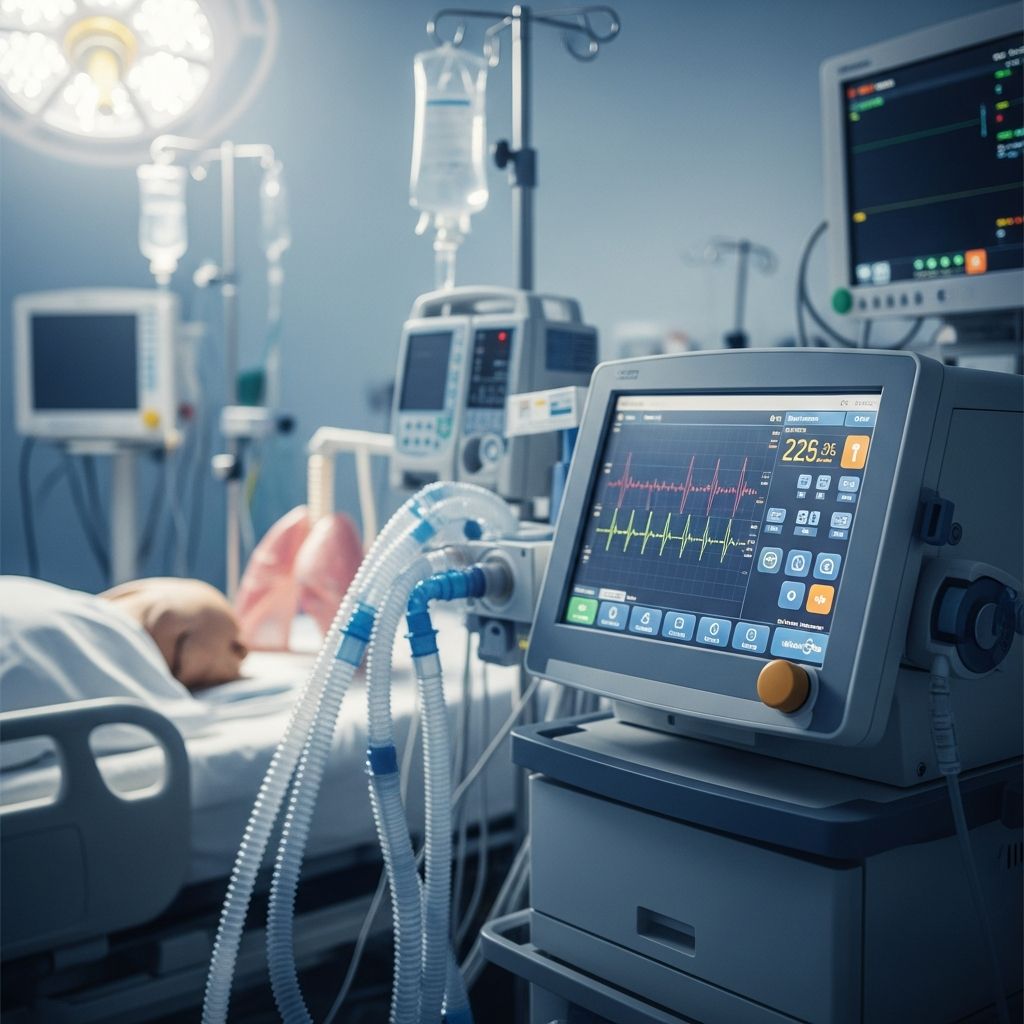
Medical ventilators are vital devices that assist or fully take over a patient’s breathing when their respiratory system fails or is compromised. These machines deliver controlled air pressure and oxygen to the lungs, playing a critical role in intensive care, surgery, emergencies, and chronic home management.
The Fundamental Role of Ventilators
Ventilators support patients unable to breathe adequately due to conditions like acute respiratory distress syndrome (ARDS), pneumonia, trauma, or neuromuscular diseases. By regulating oxygen intake and carbon dioxide expulsion, they maintain vital gas exchange, prevent organ damage, and buy time for recovery or treatment.
In hospitals, ventilators connect via tubes to the airway, either invasively through a tube in the trachea or non-invasively with masks. Modern units feature alarms for low oxygen, high pressure, or disconnections, ensuring safety.
Primary Categories of Medical Ventilators
Ventilators are classified by setting, patient needs, and delivery method. Key types include those for intensive care units (ICUs), home environments, portable emergency use, and surgical anesthesia.
Intensive Care Unit Ventilators
Designed for the sickest patients, ICU ventilators offer advanced monitoring and multiple modes to match severe respiratory failure. They handle invasive and non-invasive delivery, with features like high-flow oxygen therapy and integrated nebulizers for medications.
These machines support pediatric, adult, and neonatal patients, adapting to varying lung capacities. Modes include volume assist/control for consistent air delivery and pressure support for patient-initiated breaths.
Home and Portable Ventilators
Compact and user-friendly, home ventilators enable long-term support outside hospitals for conditions like chronic obstructive pulmonary disease (COPD) or sleep apnea. They prioritize portability, quiet operation, and battery power for mobility.
Ambulatory models allow movement during daily activities, often using non-invasive masks. They feature auto-adjusting pressure to sync with natural breathing patterns.
Anesthesia and Emergency Ventilators
During surgeries, anesthesia ventilators maintain breathing under sedation, focusing on precise control with limited but effective modes like volume-controlled or pressure-controlled ventilation.
Emergency ventilators, used by paramedics, are rugged and transportable, supporting rapid intervention in ambulances or field settings. They include special modes for CPR or rapid intubation.
Understanding Ventilation Delivery Methods
Ventilation divides into invasive and non-invasive approaches, each with pros and cons.
- Invasive: Uses endotracheal tubes or tracheostomies for direct lung access, ideal for total respiratory failure but risks infection and vocal cord damage.
- Non-invasive: Employs masks or nasal prongs, preserving natural airways and reducing complications, suitable for milder cases or weaning.
Key Ventilation Modes Explained
Ventilators operate in diverse modes to tailor support. Here’s a breakdown:
| Mode | Type | Description | Best Use |
|---|---|---|---|
| Volume-Controlled (VCV) | Volume | Delivers fixed air volume per breath, regardless of pressure changes. | Stable lung compliance, precise volume needs. |
| Pressure-Controlled (PCV) | Pressure | Maintains set pressure, varying volume based on lung resistance. | Protects against barotrauma in stiff lungs. |
| SIMV | Hybrid | Synchronizes mandatory breaths with patient efforts, aids weaning. | Transitioning from full support. |
| CPAP/BiPAP | Non-invasive | Continuous or bilevel pressure for spontaneous breathing. | Home therapy, sleep disorders. |
| PRVC | Hybrid | Combines volume target with pressure limits for safety. | Variable lung conditions. |
Related Stories



Volume modes ensure consistent tidal volumes (typically 5-8 ml/kg ideal body weight), while pressure modes limit risks like lung injury from overinflation.
Operational Principles of Ventilators
Breathing cycles involve trigger (start signal), inspiration (air delivery), cycling (breath end), and expiration (exhale). Positive-pressure systems, dominant today, push air in unlike older negative-pressure ‘iron lungs’ that pulled via chest expansion.
Parameters include tidal volume, respiratory rate (12-20/min adults), PEEP (to prevent collapse), and FiO2 (oxygen fraction). Alarms monitor deviations.
Patient Selection and Weaning Strategies
Not every patient needs a ventilator; indications include hypoxia unresponsive to oxygen, high breathing effort, or apnea. Contraindications cover airway issues or uncooperative states for non-invasive use.
Weaning assesses readiness via spontaneous breathing trials, reducing support gradually to rebuild muscle strength and avoid atrophy.
Caring for Patients on Ventilators
- Position semi-upright (30-45 degrees) to aid secretion drainage and ventilation.
- Suction airways regularly to clear mucus, using sterile technique.
- Perform mouth care hourly to prevent pneumonia; elevate head of bed.
- Monitor skin, provide eye lubrication, and ensure humidified gases.
- Promote communication via boards or apps; involve family.
Caregivers watch for alarms, ensure cuff pressures (20-30 cmH2O), and track nutrition to support recovery.
Potential Risks and Complications
While lifesaving, ventilators pose ventilator-associated pneumonia (VAP), barotrauma, or muscle weakening. Sedation risks include delirium; protocols minimize these via low tidal volumes and early mobility.
Future Trends in Ventilator Technology
Advancements feature AI-driven adjustments, wireless monitoring, and closed-loop systems that auto-titrate based on patient response. Portable units with longer batteries expand home care.
Frequently Asked Questions (FAQs)
What is the difference between CPAP and BiPAP?
CPAP provides constant pressure; BiPAP varies inhalation/exhalation pressures for easier breathing.
How long can someone stay on a ventilator?
Days to weeks typically; prolonged use risks complications but possible with care.
Can ventilators be used at home?
Yes, specialized models support chronic needs with training.
What triggers a ventilator alarm?
High/low pressure, low oxygen, disconnections, or apnea.
Are ventilators only for COVID-19 patients?
No, used for diverse respiratory failures.
References
- What are the 4 Different Types of Medical Ventilators? — Biosys. 2023. https://www.biosysmed.com/what-are-the-4-different-types-of-medical-ventilators/
- What Are the Different Types of Mechanical Ventilation? — Eastbrook Health. 2024-02-01. https://eastbrookhealth.com/2024/02/01/what-are-the-different-types-of-mechanical-ventilation/
- Ventilation types & modes — WEINMANN Emergency. 2024. https://www.weinmann-emergency.com/topics/ventilation/types-of-ventilation
- Modes Of Mechanical Ventilation Explained — Tracheostomy Education. 2023. https://tracheostomyeducation.com/blog/mechanical-ventilation-explained/
- Mechanical Ventilation — NCBI Bookshelf (StatPearls). 2023-08-07. https://www.ncbi.nlm.nih.gov/books/NBK539742/
- What is Mechanical Ventilation? — Zoll. 2024. https://www.zoll.com/en-us/other-resources-and-links/what-is-mechanical-ventilation
Similar Articles








Read full bio of medha deb