Ventricular Arrhythmia: Causes, Symptoms & Treatment
Understanding ventricular arrhythmias: Types, symptoms, diagnosis, and effective treatment options.
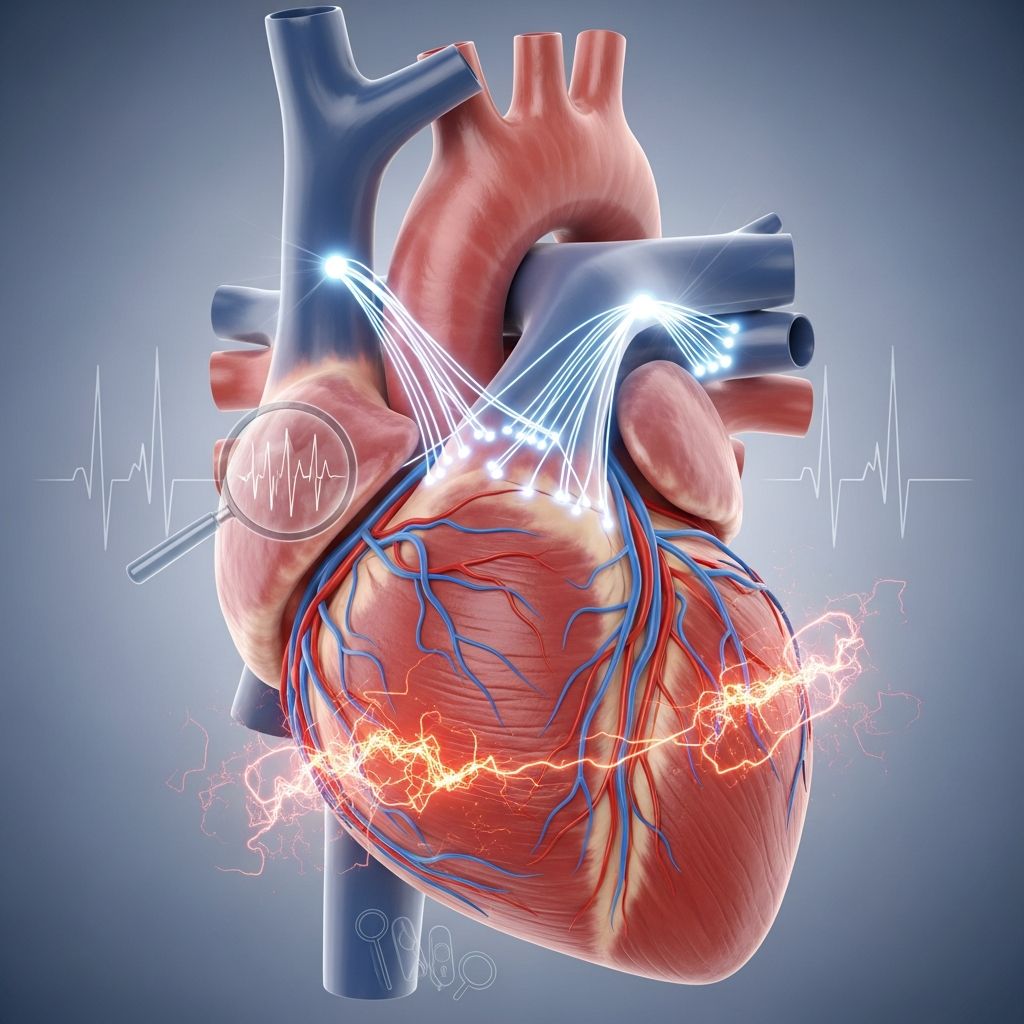
Ventricular arrhythmias are abnormal heart rhythms that originate in the lower chambers of your heart, known as the ventricles. Rather than pumping blood effectively, these chambers twitch or quiver irregularly, which can significantly limit or completely stop your heart from supplying blood to your body and brain. While some ventricular arrhythmias are harmless and produce no noticeable symptoms, others can have serious or even life-threatening consequences that require immediate medical attention.
Understanding Ventricular Arrhythmias
The heart is a sophisticated electrical organ that relies on precise timing to function properly. Electrical signals coordinate the contractions of the heart chambers, ensuring blood flows continuously throughout your body. When these electrical signals malfunction or become irregular, the result is an arrhythmia. Ventricular arrhythmias specifically affect the heart’s lower chambers, which are responsible for pumping blood to the lungs and throughout the entire body.
The severity of ventricular arrhythmias varies significantly. Some individuals may experience occasional irregular heartbeats that resolve without treatment, while others face potentially fatal conditions requiring immediate intervention. Understanding the different types of ventricular arrhythmias is crucial for recognizing symptoms and seeking appropriate care.
Types of Ventricular Arrhythmias
Medical professionals recognize three main categories of ventricular arrhythmias, each with distinct characteristics and clinical implications:
Premature Ventricular Contractions (PVCs)
Premature ventricular contractions, commonly abbreviated as PVCs, represent the most common type of ventricular arrhythmia. These are extra heartbeats that originate in the ventricles and occur earlier than expected in the normal heartbeat sequence. Patients often describe PVCs as feeling like their heart “skipped a beat” or experienced a sudden extra thump in their chest. In most cases, PVCs are entirely harmless and do not indicate a serious heart condition.
However, there are important exceptions to this general rule. PVCs can become concerning when they occur very frequently or persistently, particularly if the individual has an underlying heart condition that has altered the structure or function of the heart. Additionally, patients with conditions that have changed the shape of their heart should be evaluated if experiencing frequent PVCs, as this pattern may warrant closer medical monitoring or intervention.
Ventricular Tachycardia (VT)
Ventricular tachycardia occurs when the lower chambers of the heart beat unusually fast, typically at rates exceeding 100 beats per minute and sometimes reaching 150 or more. This rapid rate usually results from a malfunction in the heart’s electrical system. During ventricular tachycardia, the ventricles fail to completely fill with blood between contractions, meaning less blood is pumped to the body with each beat. In some cases, sustained ventricular tachycardia can deteriorate into an even more dangerous condition called ventricular fibrillation.
Ventricular tachycardia can be classified as either sustained or non-sustained. Sustained VT persists for more than 30 seconds and often requires emergency treatment. Non-sustained VT lasts fewer than 30 seconds and may resolve on its own, though medical evaluation remains important.
Ventricular Fibrillation (V-Fib)
Ventricular fibrillation, often abbreviated as v-fib, represents the most severe form of ventricular arrhythmia. In this condition, the lower chambers of the heart quiver or twitch chaotically rather than expanding and contracting in a coordinated manner. Because the ventricles cannot properly expand and contract, blood is not pumped through them. This immediately causes sudden cardiac arrest, and the lack of blood flow to the brain results in loss of consciousness within seconds. Without prompt restoration of blood flow through CPR or the use of an automated external defibrillator (AED), ventricular fibrillation is fatal within minutes.
Related Stories



Symptoms of Ventricular Arrhythmias
The symptoms experienced depend significantly on the type of ventricular arrhythmia and its severity. Some arrhythmias, particularly non-sustained and benign types like infrequent PVCs, produce no noticeable symptoms at all.
Symptoms of Ventricular Tachycardia
When ventricular tachycardia does cause symptoms, patients typically report:
– Palpitations or the sensation of a racing heartbeat- Chest pain or discomfort- Shortness of breath- Dizziness or lightheadedness- Fainting or loss of consciousness in severe cases- Sweating or feeling anxious
Symptoms of Ventricular Fibrillation
Ventricular fibrillation typically causes sudden collapse or loss of consciousness. Sometimes there are no warning signs before this catastrophic event occurs. When symptoms do appear, they tend to manifest just minutes before the person loses consciousness and may include:
– Sudden dizziness or severe lightheadedness- Chest pain or pressure- Shortness of breath- Loss of consciousness
Because ventricular fibrillation is immediately life-threatening, any person experiencing these symptoms requires emergency medical attention and cardiopulmonary resuscitation.
Diagnosis of Ventricular Arrhythmias
Electrocardiography (ECG or EKG)
The primary diagnostic test for ventricular arrhythmias is electrocardiography, commonly abbreviated as ECG or EKG. This non-invasive test uses multiple sensors called electrodes, which are placed on your chest, arms, and legs. These electrodes detect your heart’s electrical activity and display it as a wave pattern on a monitor or printout. Clinicians then carefully review and analyze these wave patterns to identify abnormalities.
An EKG typically takes only a few minutes to complete and can be performed in a hospital, clinic, or doctor’s office. The test can be done while you’re at rest or, in some cases, during or immediately after exercise to capture arrhythmias that occur with exertion.
Additional Diagnostic Tools
Beyond the standard EKG, several other diagnostic methods may be employed:
– Holter Monitor: A portable device worn for 24 to 48 hours that continuously records your heart rhythm during daily activities- Event Monitor: A device worn for longer periods that records heart rhythm when you activate it in response to symptoms- Echocardiogram: An ultrasound of the heart that evaluates heart structure and function- Stress Test: An ECG performed during physical exercise to observe how your heart responds to increased demands- Cardiac Imaging: CT or MRI scans that provide detailed images of heart structure and tissue
Causes and Risk Factors
Ventricular arrhythmias can develop for various reasons. Common causes and risk factors include:
– Previous heart attack or coronary artery disease- Heart failure or cardiomyopathy- Electrolyte imbalances, particularly potassium or magnesium deficiencies- High blood pressure- Thyroid disease- Caffeine or stimulant use- Alcohol abuse- Certain medications- Genetic predisposition to arrhythmia disorders- Extreme physical exertion in susceptible individuals
Treatment Options for Ventricular Arrhythmias
Treatment approaches vary based on the type of arrhythmia, its severity, frequency, and underlying heart conditions. The goal is to restore normal heart rhythm, prevent complications, and reduce the risk of sudden cardiac death.
Benign Arrhythmias
Benign arrhythmias like infrequent PVCs typically do not require treatment. Patients are usually advised to avoid known triggers such as excessive caffeine, stress, and certain medications. Regular monitoring through periodic ECGs may be recommended to ensure the arrhythmia remains stable.
Emergency Treatments
Life-threatening arrhythmias require immediate emergency intervention:
– Cardiopulmonary Resuscitation (CPR): Manually compressing the chest and providing rescue breathing to maintain blood circulation- Defibrillation: Delivering an electric shock through an automated external defibrillator (AED) or implanted cardioverter-defibrillator (ICD) to restore normal heart rhythm- Emergency Medications: Antiarrhythmic drugs administered intravenously to stabilize heart rhythm
Long-Term Treatments
For non-emergency but significant ventricular arrhythmias, several treatment strategies may be employed:
Medications
Antiarrhythmic medications work by altering electrical conduction in the heart to prevent or suppress abnormal rhythms. Common antiarrhythmic drugs include beta-blockers, calcium channel blockers, and class I or III antiarrhythmics. Medical therapy is often considered a first-line approach, particularly in patients with multiple comorbidities.
Catheter Ablation
Catheter ablation is a minimally invasive procedure that uses radiofrequency energy or cryotherapy to destroy the small area of heart tissue causing the arrhythmia. A cardiologist threads a thin catheter through blood vessels to the heart, identifies the problematic tissue, and eliminates it. High-volume specialized centers report excellent outcomes with catheter ablation, with many patients experiencing significant relief from symptoms and reduced arrhythmia occurrence. During the procedure, physicians attempt to identify and target all possible arrhythmia circuits to provide comprehensive treatment.
Implantable Cardioverter-Defibrillator (ICD)
For patients at high risk of sudden cardiac death, an implantable cardioverter-defibrillator may be recommended. This small device is surgically placed under the skin, usually near the collarbone. The ICD continuously monitors heart rhythm and can deliver therapy in several ways: pacing to restore normal rhythm, cardioversion to deliver a low-energy shock, or defibrillation to deliver a high-energy shock if ventricular fibrillation occurs.
Wearable Cardioverter-Defibrillator (WCD)
A wearable cardioverter-defibrillator is a non-invasive device worn on the torso that provides protection against sudden cardiac death while patients recover from acute conditions. The WCD continuously monitors heart rhythm and can detect both ventricular arrhythmias and atrial arrhythmias, providing valuable diagnostic information that may impact clinical management decisions. This device is particularly valuable for patients whose heart function may improve over time, potentially eliminating the need for a permanent ICD.
Heart Surgery
In some cases, particularly when catheter ablation alone may not be sufficient or when hemodynamic support is necessary, cardiac surgery may be recommended. Surgical approaches may include targeted tissue removal, surgical ablation, or other interventions to address the underlying structural heart problem contributing to arrhythmia formation.
Specialized Multidisciplinary Care
Complex ventricular arrhythmia cases benefit significantly from comprehensive, multidisciplinary medical teams. Centers specializing in ventricular arrhythmia management typically coordinate care among electrophysiologists, cardiologists, cardiac imaging specialists, heart failure experts, and cardiac surgeons. This collaborative approach ensures that treatment plans address not only the arrhythmia itself but also underlying structural heart disease, heart failure, and other comorbidities that influence prognosis and long-term outcomes.
Frequently Asked Questions
What is the difference between PVCs and ventricular tachycardia?
PVCs are occasional early heartbeats that are usually harmless, while ventricular tachycardia involves a sustained rapid heart rate originating in the ventricles. VT is generally more serious and may require treatment, whereas PVCs typically do not unless they occur very frequently.
Is ventricular fibrillation always fatal?
Ventricular fibrillation is immediately life-threatening and fatal within minutes without emergency treatment. However, prompt CPR and defibrillation with an AED can restore normal rhythm and save lives.
Can ventricular arrhythmias be prevented?
While some ventricular arrhythmias cannot be prevented due to underlying structural heart disease or genetic factors, you can reduce risk by maintaining heart health through regular exercise, managing blood pressure and cholesterol, limiting caffeine and alcohol, avoiding smoking, and managing stress.
What should I do if I experience symptoms of ventricular arrhythmia?
If you experience chest pain, severe shortness of breath, fainting, or prolonged palpitations, seek emergency medical attention immediately. For milder symptoms like occasional palpitations, schedule an appointment with your primary care physician or cardiologist for evaluation.
How effective is catheter ablation for treating ventricular arrhythmias?
Catheter ablation has proven highly effective at specialized centers with high procedural volumes, successfully eliminating or significantly reducing arrhythmias in the majority of patients. Success rates and outcomes depend on the specific type of arrhythmia and underlying heart condition.
References
- Clinical Impact of Ventricular and Atrial Arrhythmia Detection by Wearable Cardioverter Defibrillator — American Heart Association. 2024-11-15. https://www.ahajournals.org/doi/10.1161/circ.150.suppl_1.4141304
- Ventricular Arrhythmia: Causes, Symptoms & Treatment — Cleveland Clinic. 2024-12-01. https://my.clevelandclinic.org/health/diseases/21854-ventricular-arrhythmia
- A Review of Ventricular Tachycardia — Cleveland Clinic Ventricular Arrhythmia Center. 2025-01-13. https://www.youtube.com/watch?v=1OqX5lXcB5c
- Ventricular Arrhythmias: What You Need to Know — Cleveland Clinic. 2024-12-01. https://www.youtube.com/watch?v=lG1SBJgiV1s
- Management of Arrhythmias — Cleveland Clinic Abu Dhabi. 2024-12-01. https://www.clevelandclinicabudhabi.ae/en/health-hub/health-resource/diseases-and-conditions/management-of-arrhythmias
Similar Articles








Read full bio of medha deb