Ventricular Septal Defect Surgery for Children
Understanding VSD surgery options and treatment approaches for pediatric patients.
Understanding Ventricular Septal Defect (VSD)
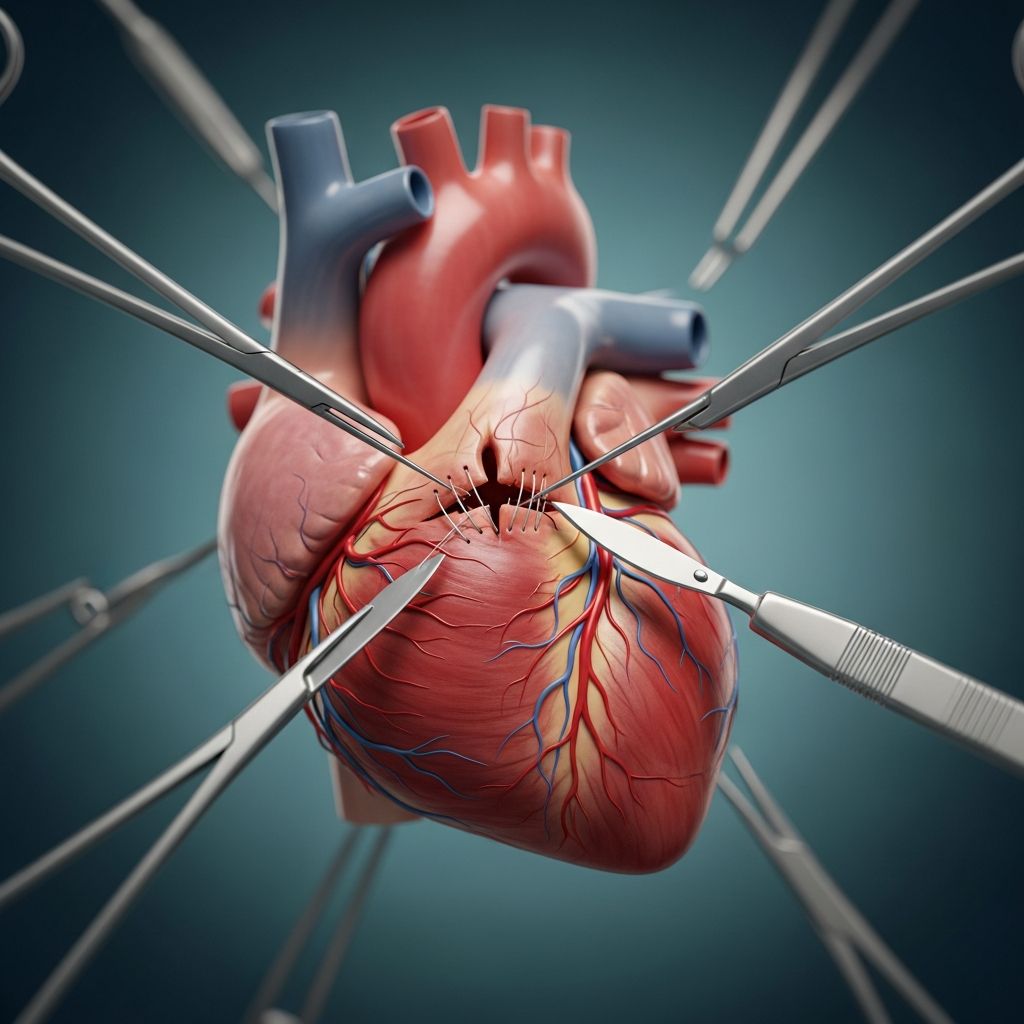
A ventricular septal defect (VSD) is a hole or opening in the wall that separates the two lower chambers of the heart, known as the ventricles. This is one of the most common congenital heart defects, occurring in approximately 2 to 3 out of every 1,000 live births. The hole allows blood to flow abnormally between the ventricles, which can put extra strain on the heart and lungs. The severity of a VSD depends on the size and location of the defect, as well as how much blood is flowing through the hole. Some children with small VSDs may not require treatment, while others with larger defects may need surgical intervention to prevent long-term complications.
Types and Classification of VSD
Ventricular septal defects are classified based on their anatomic location within the ventricular septum. Understanding the type of VSD is crucial for determining the appropriate treatment approach and predicting outcomes.
- Perimembranous VSD: The most common type, accounting for approximately 70-80% of all VSDs. These defects occur near the membranous portion of the septum and may extend into adjacent areas.
- Muscular VSD: Located in the muscular portion of the ventricular septum, these defects can be further classified as anterior, apical, or posterior. Some muscular VSDs may close spontaneously during childhood.
- Subarterial VSD: Also known as doubly committed subarterial defects, these occur beneath the pulmonary and aortic valves and represent approximately 5-7% of all VSDs.
- Inlet VSD: Located near the tricuspid and mitral valves, inlet VSDs are often associated with other cardiac abnormalities.
Symptoms and Diagnosis
The presentation of VSD symptoms varies depending on the size of the defect and the amount of blood shunting between the ventricles. Infants with small VSDs may show no symptoms and the defect might be discovered incidentally during routine physical examination when a heart murmur is detected. However, children with larger VSDs may experience significant symptoms that warrant closer medical attention and intervention.
Common symptoms of VSD in children include difficulty feeding, failure to thrive, rapid or labored breathing, excessive sweating, and recurrent respiratory infections. In severe cases, children may develop signs of congestive heart failure, including fatigue, swelling in the legs and abdomen, and poor exercise tolerance.
Diagnosis of VSD typically begins with a clinical examination where a cardiologist listens for a characteristic heart murmur using a stethoscope. To confirm the diagnosis and assess the severity of the defect, several diagnostic tests may be performed, including echocardiography, electrocardiography (ECG), and chest X-rays. Echocardiography is the gold standard diagnostic tool, providing detailed images of the heart structure and blood flow patterns that help determine the exact location and size of the VSD.
Treatment Options
The management of VSD depends on several factors, including the size and location of the defect, the presence of symptoms, and the degree of hemodynamic compromise. Not all VSDs require surgical intervention, and some may close spontaneously during infancy or early childhood.
Watchful Waiting and Medical Management
Small VSDs that do not cause significant symptoms may be managed conservatively with regular follow-up appointments and echocardiographic monitoring. This approach allows time for spontaneous closure, which occurs in approximately 75-80% of muscular VSDs and 50% of perimembranous VSDs by age 10 years. During this period, medications such as diuretics and ACE inhibitors may be prescribed to help manage symptoms and reduce the workload on the heart.
Catheter-Based Interventions
For select patients, minimally invasive catheter-based techniques have emerged as viable alternatives to traditional open-heart surgery. These procedures involve threading a catheter through blood vessels to reach the heart and close the VSD using specialized devices. Catheter-based closure is particularly beneficial for muscular VSDs and certain perimembranous defects, offering reduced recovery time and fewer complications compared to surgical repair. However, not all VSDs are amenable to catheter-based closure, and careful patient selection is essential for successful outcomes.
Related Stories



Surgical Repair
Open-heart surgery remains the definitive treatment for most significant VSDs that do not close spontaneously or are not suitable for catheter-based intervention. Surgical repair is indicated when the VSD is large, causes symptoms of heart failure, or poses a risk of complications such as endocarditis or aortic regurgitation.
Surgical Procedure for VSD Repair
Ventricular septal defect repair is typically performed under general anesthesia using cardiopulmonary bypass, which temporarily takes over the function of the heart and lungs during the procedure. The surgeon accesses the heart through a median sternotomy incision, which divides the breastbone to provide direct access to the heart chambers.
Once the heart is exposed, the surgeon identifies the location and size of the VSD and evaluates the surrounding structures to determine the best approach for closure. The defect is typically closed using a patch made from synthetic material or tissue, which is sutured in place to seal the hole. The choice of patch material depends on factors such as the size and location of the defect, the patient’s age, and surgeon preference.
The procedure is carefully performed to avoid damaging nearby structures, including the aortic valve, tricuspid valve, and the conduction pathways of the heart. Once the VSD is successfully closed, the incisions are closed layer by layer, and the patient is transferred to the intensive care unit for close monitoring and recovery.
Timing of Surgery
The optimal timing for VSD surgery depends on the clinical presentation and the severity of the defect. In general, elective surgery for hemodynamically significant VSDs is performed between 3 and 6 months of age, once the child has gained sufficient weight and strength to undergo the procedure safely. However, emergency surgery may be necessary for infants presenting with acute decompensated heart failure or other life-threatening complications.
Small, asymptomatic VSDs discovered after the neonatal period can be managed conservatively with regular follow-up, as many will close spontaneously. Surgery is deferred unless the child develops symptoms or complications that warrant intervention.
Risks and Complications
While VSD repair is generally safe when performed by experienced pediatric cardiac surgeons, there are potential risks and complications associated with the procedure. These may include bleeding, infection, arrhythmias, damage to cardiac structures or valves, and residual defects. Additionally, some patients may develop right ventricular outflow tract obstruction or aortic regurgitation following repair. However, advances in surgical techniques and perioperative management have significantly reduced complication rates in recent years.
Recovery and Post-Operative Care
Following VSD repair surgery, most children spend several days in the intensive care unit for continuous monitoring of heart function, blood pressure, and oxygen saturation. Pain management and gradual advancement of feeding are important components of post-operative care. Patients typically remain hospitalized for 5 to 10 days before discharge, with instructions for at-home care and follow-up appointments.
Full recovery typically occurs within 4 to 6 weeks, during which time children should gradually return to normal activities. Strenuous exercise and contact sports may be restricted for several weeks following surgery. Regular follow-up appointments with the cardiologist are essential to monitor healing and assess cardiac function through echocardiography and clinical examination.
Long-Term Outcomes
The long-term prognosis for children who undergo successful VSD repair is excellent, with most patients achieving normal cardiac function and having a normal lifespan. The majority of patients can participate in regular activities and sports without significant limitations. However, some patients may require long-term antibiotic prophylaxis to prevent infective endocarditis, particularly those with residual defects or associated valvular abnormalities.
Regular cardiac follow-up is recommended to monitor for late complications such as arrhythmias, valve dysfunction, or pulmonary hypertension. Most patients can live normal, active lives following successful repair and have minimal restrictions on their activities.
Frequently Asked Questions
Q: Will my child’s VSD close on its own?
A: Many VSDs, particularly muscular defects, do close spontaneously during infancy and early childhood. However, the likelihood of spontaneous closure depends on the type and location of the defect. Your cardiologist will monitor your child with regular echocardiograms to assess for closure and determine if intervention is necessary.
Q: When does my child need surgery for VSD?
A: Surgery is recommended when the VSD is large, causes symptoms of heart failure, increases the risk of complications such as endocarditis, or shows no signs of spontaneous closure by a certain age. Your cardiologist will determine the appropriate timing based on your child’s individual circumstances.
Q: What is the success rate of VSD repair surgery?
A: VSD repair surgery has excellent success rates, with over 95% of procedures resulting in successful closure of the defect. Complications are relatively uncommon when the surgery is performed by experienced pediatric cardiac surgeons at specialized centers.
Q: Can my child participate in sports after VSD repair?
A: Most children can return to normal activities and sports following successful VSD repair, typically without significant restrictions. Your cardiologist will provide specific recommendations based on your child’s individual recovery and cardiac function.
Q: Will my child need antibiotics after VSD repair?
A: Some patients may require prophylactic antibiotics to prevent infective endocarditis, particularly those with residual defects or associated valve abnormalities. Your cardiologist will determine if antibiotic prophylaxis is necessary for your child.
Q: How long is the hospital stay after VSD surgery?
A: Most children remain hospitalized for 5 to 10 days following VSD repair surgery. The exact length of stay depends on the child’s recovery progress and any complications that may arise.
References
- Ventricular Septal Defect — Johns Hopkins University. Accessed December 2025. https://pure.johnshopkins.edu/en/publications/ventricular-septal-defect-2/
- Innovations in Pediatric Congenital Heart Defect Treatment — Johns Hopkins Medicine. April 18, 2023. https://www.hopkinsmedicine.org/heart_vascular_institute/specialty-areas/pediatric-and-congenital-heart-center/index.html
- National Heart, Lung, and Blood Institute – Ventricular Septal Defect — U.S. Department of Health and Human Services, National Institutes of Health. 2022. https://www.nhlbi.nih.gov/health/congenital-heart-defects
- Pediatric Cardiac Surgery: Outcomes, Complications, and Long-term Follow-up — American Academy of Pediatrics. 2023. https://www.aap.org
- Minimally Invasive Techniques in Congenital Heart Disease — Society for Thoracic Surgeons. 2024. https://www.sts.org
Similar Articles








Read full bio of medha deb