Ventricular Septal Defect Transcatheter Repair for Children
Minimally invasive treatment for congenital heart defects in children using advanced catheterization techniques.
Understanding Ventricular Septal Defect Transcatheter Repair for Children
A ventricular septal defect (VSD) is an opening in the wall between the left and right ventricles of the heart that should not be present. This condition represents one of the most common congenital heart defects affecting children worldwide. While many VSDs may close spontaneously or remain small enough to require minimal intervention, larger defects often necessitate surgical repair or other treatment approaches. Transcatheter repair has emerged as an innovative, minimally invasive alternative to traditional open-heart surgery for select cases of VSD in children.
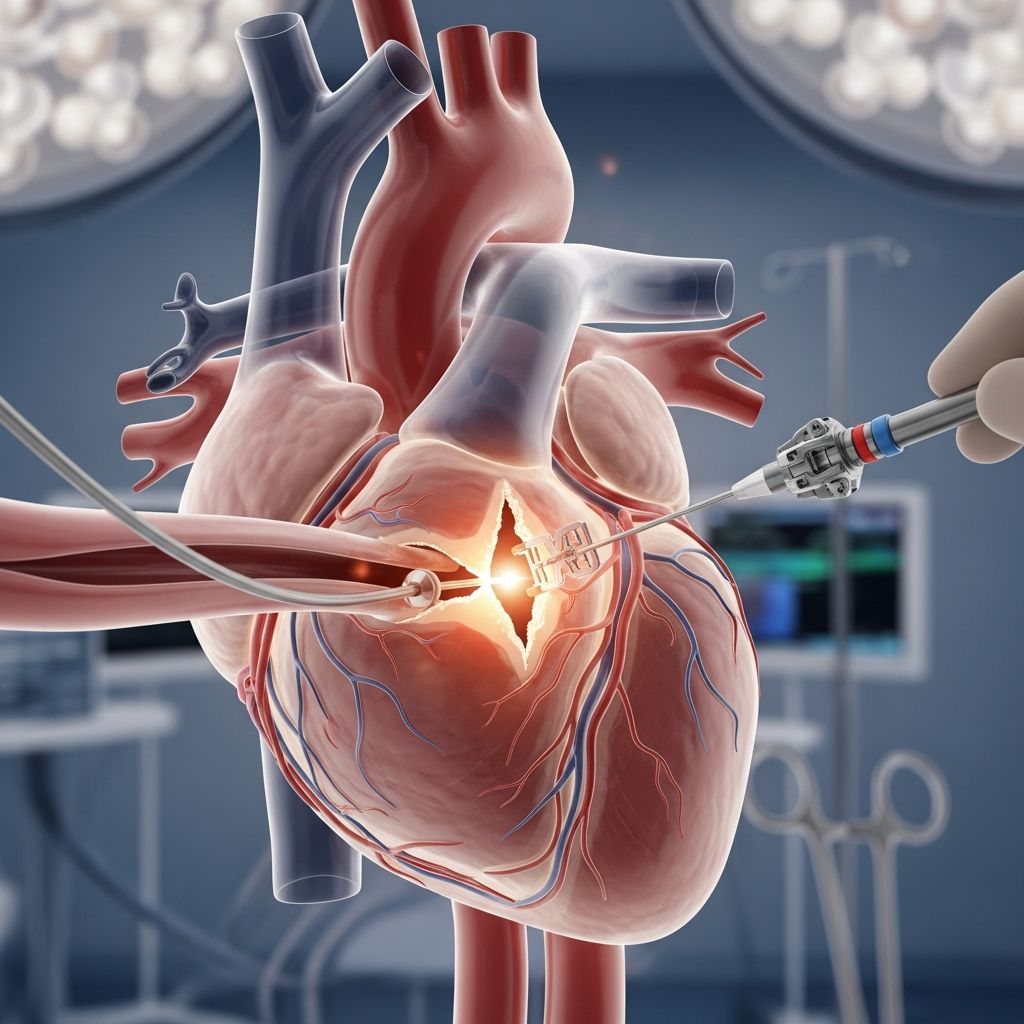
Transcatheter closure of a VSD involves threading a flexible tube called a catheter through blood vessels in the groin and into the heart, where a small device is released to plug the hole in the ventricular wall. This approach offers several potential advantages over conventional surgery, including shorter recovery times and reduced trauma to the body. However, it is important to understand that transcatheter closure is not suitable for all types of VSDs and may carry specific risks and benefits that parents and healthcare providers must carefully consider.
What is a Ventricular Septal Defect?
A ventricular septal defect occurs when there is an abnormal opening in the septum, the wall that divides the right and left ventricles. In a normal heart, this wall is completely intact, allowing blood to flow properly through the four chambers. When a VSD is present, blood can flow abnormally from the left ventricle to the right ventricle, a phenomenon known as left-to-right shunting.
VSDs vary significantly in size and location within the septum. Small VSDs may cause minimal disruption to blood flow and can often close on their own as the child grows. Larger defects, however, force the heart to work harder and can lead to complications such as pulmonary hypertension, heart failure, or endocarditis if left untreated. The specific characteristics of each VSD determine whether observation, medical management, or intervention is appropriate.
Current Treatment Options for VSD
The traditional and most widely used treatment for VSD repair remains open-heart surgery. During this procedure, a cardiac surgeon makes an incision in the chest, places the child on a heart-lung machine to maintain circulation while the heart is stopped, and then either stitches the hole closed directly or patches it with synthetic material or tissue from the child’s own body. While this approach has well-established safety records and excellent long-term outcomes, it is an invasive procedure requiring general anesthesia, hospitalization, and an extended recovery period.
Transcatheter closure represents a less invasive alternative for specific types of VSDs. This procedure avoids the need for open-heart surgery and bypass machine support in selected cases. Additionally, some children may benefit from hybrid approaches that combine surgical and catheterization techniques, providing a middle ground between fully invasive surgery and purely transcatheter methods.
Overview of Transcatheter VSD Repair
Transcatheter closure uses a catheter-based approach to deliver a small occluding device directly to the VSD site. The procedure is performed in a cardiac catheterization laboratory under general anesthesia and fluoroscopy (X-ray) guidance. The technique is particularly valuable for muscular VSDs located in the apex or anterior portion of the septum, which can be technically challenging or require ventriculotomy (an incision into the ventricle) during surgical repair. It is also effective for closing postoperative residual VSDs—small holes that may remain after initial surgical repair.
The success and appropriateness of transcatheter closure depend largely on the VSD’s location, size, and relationship to surrounding cardiac structures. Not all VSDs are suitable candidates for this approach, and careful anatomical assessment is essential before proceeding. Healthcare providers use advanced imaging techniques to determine whether transcatheter closure is feasible for an individual child.
Related Stories



The Transcatheter VSD Repair Procedure
Pre-Procedure Preparation
Before the transcatheter repair procedure, children must undergo thorough evaluation and preparation. Parents are typically instructed to have their child stop eating and drinking for several hours before the procedure, usually beginning the night before. Certain medications, particularly blood thinners, may need to be discontinued a few days prior. The healthcare team will provide specific instructions based on the child’s individual medical history and any current medications.
Pre-procedure imaging, such as echocardiography and cardiac catheterization angiography, provides detailed information about the VSD’s anatomy and helps guide the procedure planning. This assessment ensures that the child is an appropriate candidate and helps the interventional cardiologist develop a detailed strategy for device placement.
Step-by-Step Procedure
The transcatheter VSD repair procedure typically takes approximately two hours from start to finish. Here is how the procedure unfolds:
Catheter Placement
The interventional cardiologist begins by placing small, flexible catheters into blood vessels in the groin. These catheters are carefully threaded through the vascular system and advanced toward the heart. One of the catheters contains the small occluding device that will be used to close the VSD.
Navigation and Imaging
As the catheter approaches the ventricular septum, the cardiologist uses multiple imaging techniques to visualize its position in real-time. X-ray fluoroscopy provides continuous imaging of the catheter’s pathway through the blood vessels and into the heart. An echocardiogram, which uses ultrasound technology, helps visualize the heart structures and the VSD itself. In some cases, a transesophageal echocardiogram (TEE) may be used, in which an ultrasound probe is gently advanced into the child’s esophagus to provide superior visualization of the cardiac anatomy during the procedure.
Device Deployment
Once the catheter tip is precisely positioned adjacent to the VSD, the cardiologist carefully advances the occluding device out of the catheter and into position across the defect. The device typically consists of two discs or a self-expanding mesh structure designed to conform to the defect and seal the opening. The cardiologist ensures proper device positioning and secure seating before fully releasing it from the catheter.
Procedure Completion
After confirming that the device is properly positioned and functioning correctly through echocardiographic imaging, the catheter is withdrawn from the child’s body. The insertion site in the groin is then closed and bandaged. The child is transferred to the recovery area while remaining under observation.
Advantages of Transcatheter Closure
Transcatheter VSD repair offers several compelling advantages compared to traditional open-heart surgery. The most significant advantage is the reduced invasiveness of the procedure. By avoiding a thoracotomy (chest incision), children experience less surgical trauma, potentially leading to decreased pain, reduced infection risk, and faster healing.
Recovery time represents another substantial benefit. Children who undergo transcatheter closure typically experience shorter hospitalizations and faster return to normal activities compared to those undergoing open-heart surgery. While surgical patients may require several weeks of restricted activity and recovery, transcatheter patients often return to school and normal routines within days or a week or two.
The procedure also avoids the need for cardiopulmonary bypass (heart-lung machine), which carries its own associated risks and can trigger an inflammatory response in the body. Additionally, transcatheter closure preserves normal cardiac anatomy by avoiding the creation of a surgical scar on the heart muscle itself.
For specific anatomical situations—particularly muscular VSDs in challenging locations that would require a ventricular incision during surgery—transcatheter closure can be the technically superior approach. Postoperative residual VSDs, which can be difficult to access surgically, may also be more effectively managed through transcatheter methods.
Limitations and Considerations
Despite its advantages, transcatheter VSD closure is not appropriate for all patients and carries specific limitations. The most important constraint is anatomical suitability. The VSD must be in a location accessible to the catheter approach, and it must be of appropriate size and shape to accommodate the available occluding devices. Membranous VSDs located near important cardiac conduction structures require particular care to avoid damaging the electrical system of the heart.
The current standard treatment for VSD repair remains open-heart surgery, which has decades of proven outcomes and excellent long-term safety data. While transcatheter closure has demonstrated good results in published studies, the long-term effects of leaving an implanted device in the heart for decades are still being evaluated. Open surgery achieves permanent anatomic closure without leaving a foreign body in place.
Transcatheter closure may have a higher rate of periprocedural complications compared to surgery, although most are manageable and do not significantly impact outcomes. Potential complications include device embolization (the device moving out of position), residual shunting through or around the device, conduction disturbances affecting the heart’s electrical system, and tricuspid valve regurgitation. Device infection, while rare, is a serious concern requiring long-term antibiotic prophylaxis in some cases.
Not all cardiac centers have extensive experience with transcatheter VSD closure, and the procedure should ideally be performed at institutions where the interventional team has significant expertise. The learning curve for operators can affect outcomes, and patient selection is crucial for success.
Who is a Candidate for Transcatheter VSD Closure?
Healthcare providers consider transcatheter closure in specific clinical scenarios where it offers advantages over surgery. Children with muscular VSDs that would require ventriculotomy for surgical closure are ideal candidates, as the transcatheter approach avoids this additional myocardial injury. Patients with complex congenital heart disease and multiple VSDs may benefit from a combined approach using both catheterization and surgery.
Postoperative residual VSDs represent another important indication. When small holes persist after initial surgical repair, transcatheter closure can effectively seal these defects without reopening the sternum. Children with perioperative contraindications to cardiopulmonary bypass may also be considered for transcatheter closure as an alternative.
Individual patient factors—including age, VSD anatomy, associated cardiac defects, and the child’s overall medical condition—influence candidacy. The interventional cardiologist and surgical team work together to determine whether transcatheter closure is appropriate for each child.
Recovery and Post-Procedure Care
Children typically recover quickly from transcatheter VSD closure. Most experience minimal pain at the catheter insertion site, managed with over-the-counter analgesics. The groin site should be kept clean and dry, and children should avoid strenuous activity and immersion in water for a few days while the site heals.
Antibiotic prophylaxis is usually recommended for a period after device implantation to prevent bacterial infection of the device and heart tissue. Follow-up echocardiography is essential to confirm proper device positioning, assess for residual shunting, and evaluate cardiac function. Ongoing cardiology follow-up ensures that the device functions appropriately and that any complications are identified early.
Children can typically return to school within a few days and resume normal physical activities within a week or two, depending on individual recovery and physician recommendations. This rapid return to normalcy represents a significant quality-of-life advantage compared to open-heart surgery.
Comparing Treatment Options
| Aspect | Open-Heart Surgery | Transcatheter Closure | Hybrid Approach |
|---|---|---|---|
| Invasiveness | Highly invasive; requires chest incision | Minimally invasive; catheter-based | Moderate; combines both techniques |
| Recovery Time | Several weeks | Days to 1-2 weeks | 1-2 weeks |
| Hospital Stay | 3-5 days typical | Overnight or same-day discharge | 1-2 days |
| Cardiopulmonary Bypass | Required | Not required | May vary |
| Long-term Device | None; permanent surgical repair | Foreign body remains in heart | May involve implanted device |
| Suitable for All VSDs | Yes | No; specific anatomies only | No; specific indications |
| Procedural Experience Required | Standard at cardiac centers | Specialized expertise needed | Specialized expertise needed |
Clinical Outcomes and Success Rates
Research demonstrates that transcatheter VSD closure achieves high success rates in appropriately selected patients. Studies have reported successful device implantation in over 90% of attempted procedures, with successful closure rates exceeding 99% in experienced centers. The majority of patients show significant improvement in VSD size and shunting reduction after device placement.
Long-term follow-up data indicate stable device position and maintained closure over years of follow-up. While periprocedural complications occur in a percentage of cases, serious long-term complications directly caused by the device are uncommon. Patient outcomes, including functional status and quality of life, compare favorably with surgical outcomes.
However, it is important to recognize that open-heart surgery remains the gold standard with the longest track record of safety and efficacy. Children undergoing surgical repair achieve permanent anatomic closure with excellent long-term results and mortality rates below 1% at experienced centers.
Frequently Asked Questions
Q: Is transcatheter VSD closure safer than open-heart surgery?
A: Safety profiles differ between approaches. Transcatheter closure minimizes surgical trauma but leaves a device in the heart and may have a higher rate of periprocedural complications. Open-heart surgery is more invasive but achieves permanent repair. Both are safe in experienced centers, with selection depending on individual factors and VSD characteristics.
Q: How long does recovery take after transcatheter VSD closure?
A: Most children recover significantly faster after transcatheter closure than surgery. Many can go home within 24 hours, resume normal activities within days, and return to school within a week or two. Complete recovery typically occurs faster than the several-week recovery period for open-heart surgery.
Q: Can all VSDs be closed using transcatheter methods?
A: No. Transcatheter closure is suitable only for specific VSD types and locations. Muscular VSDs and some postoperative residual VSDs are good candidates, while many membranous VSDs and large defects in certain locations are better managed surgically. Your cardiologist will determine whether transcatheter closure is appropriate for your child’s specific VSD.
Q: What are the potential complications of transcatheter VSD closure?
A: Potential complications include residual shunting, device embolization, conduction disturbances affecting heart rhythm, tricuspid valve problems, and device infection. Most complications are manageable, and serious long-term complications are uncommon. Your team will discuss specific risks based on your child’s anatomy.
Q: Will my child need antibiotics after the procedure?
A: Yes, antibiotic prophylaxis is typically recommended for a period after device implantation to prevent infection of the device and heart tissue. Your cardiologist will provide specific instructions regarding duration and type of antibiotic prophylaxis.
Q: How often will my child need follow-up appointments?
A: Follow-up echocardiography is essential shortly after the procedure to confirm proper device function. Regular cardiology follow-up appointments are typically recommended for ongoing monitoring, though the frequency decreases over time as stability is confirmed. Your cardiologist will establish an appropriate follow-up schedule.
Q: Can the device be removed if problems develop?
A: While devices are designed to remain permanently in place, surgical device removal is possible if serious complications develop, though this is rare. Your cardiologist will monitor your child to identify any issues early and discuss management options if concerns arise.
Q: Are there activity restrictions after transcatheter VSD closure?
A: Children should avoid strenuous activities and contact sports for a brief period following the procedure, typically a week or two. After clearance from your cardiologist, most children can return to normal activities, including sports, as their condition permits.
References
- Transcatheter Device Closure of Congenital and Postoperative Ventricular Septal Defects — American Heart Association Journal of Circulation. 2004-07-13. https://www.ahajournals.org/doi/10.1161/01.cir.0000137116.12176.a6
- Ventricular Septal Defect – StatPearls — National Center for Biotechnology Information. 2024. https://www.ncbi.nlm.nih.gov/books/NBK470330/
- Ventricular Septal Defect Transcatheter Repair for Children — University of Rochester Medical Center. 2024. https://www.urmc.rochester.edu/encyclopedia/content?contenttypeid=161&contentid=111
- Early and mid-term outcomes of transcatheter closure of perimembranous VSD using a double-disc occluder device — Frontiers in Cardiovascular Medicine. 2025-01-10. https://www.frontiersin.org/journals/cardiovascular-medicine/articles/10.3389/fcvm.2025.1540595/full
- Transcatheter and Hybrid Ventricular Septal Defect Closure — Nicklaus Children’s Hospital. 2024. https://www.nicklauschildrens.org/treatments/transcatheter-and-hybrid-ventricular-septal-defect
- Ventricular Septal Defect (VSD): Types & Causes — Cleveland Clinic. 2024. https://my.clevelandclinic.org/health/diseases/17615-ventricular-septal-defects-vsd
Similar Articles








Read full bio of Sneha Tete