Ventricular Septal Defect (VSD): Causes, Symptoms, Diagnosis & Treatment
Comprehensive guide to ventricular septal defect including causes, symptoms, diagnosis, and treatment options
What is a Ventricular Septal Defect (VSD)?
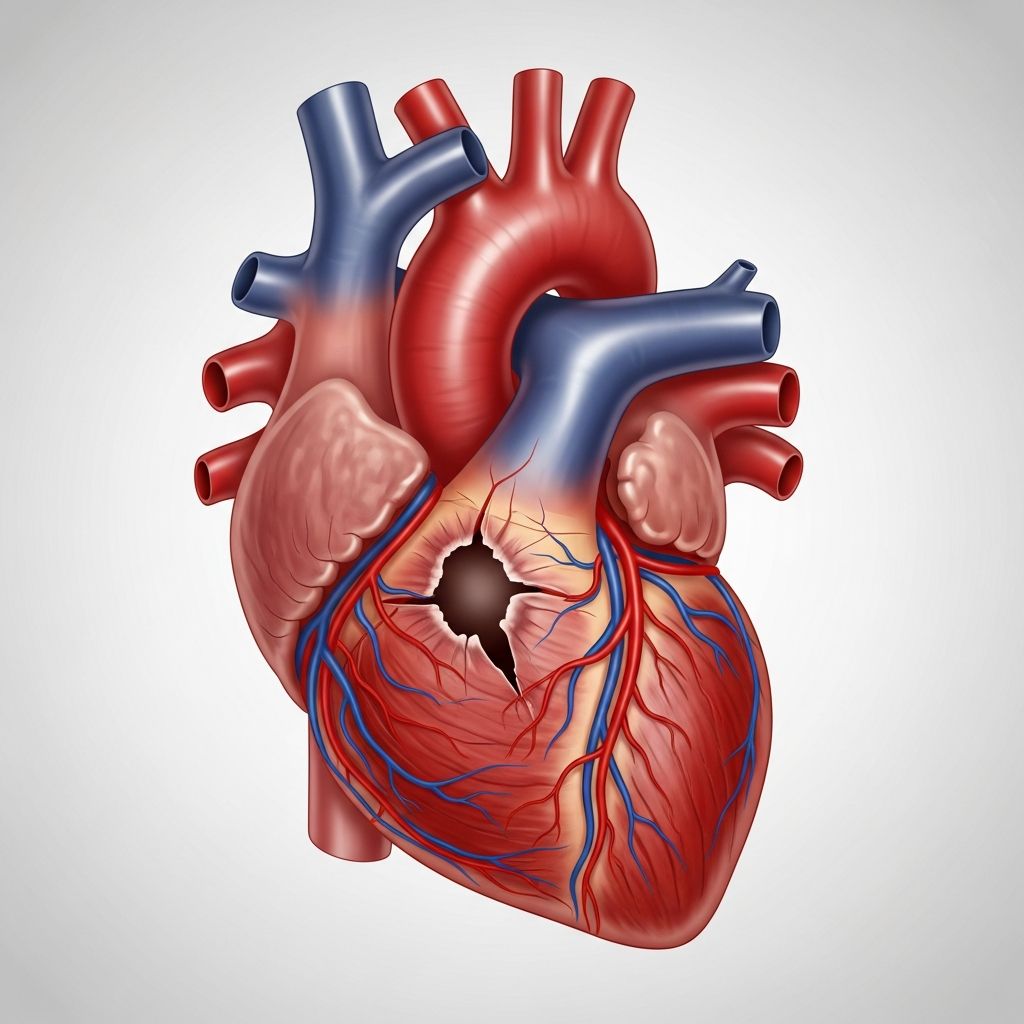
A ventricular septal defect (VSD) is a hole in the septum, the muscular wall that separates the heart’s two lower chambers called ventricles. This condition is one of the most common congenital heart defects, meaning it is present at birth. The hole allows blood to flow abnormally between the left and right ventricles, causing oxygen-rich blood from the left side of the heart to mix with oxygen-poor blood on the right side. This abnormal passage disrupts the normal circulation of blood through the heart and lungs.
Causes and Risk Factors
VSDs develop due to incomplete formation of the interventricular septum during early fetal development, specifically in the heart tube morphogenesis stage. The exact cause is often unknown but may involve genetic, environmental, or unknown factors affecting heart formation.
VSDs can occur in isolation or as part of other congenital heart anomalies such as:
- Atrial septal defects (holes between the atria)
- Patent ductus arteriosus (a persistent fetal blood vessel)
- Tetralogy of Fallot
- Aortic coarctation
- Transposition of the great arteries
Some VSDs appear more frequently in specific populations. For example, the infundibular (outlet) type occurs more often in Asians. Additionally, VSDs are frequently observed in children with genetic conditions like Trisomy 21 (Down syndrome).
Types of Ventricular Septal Defects
VSDs are classified based on their location within the interventricular septum:
| Type | Location | Key Characteristics |
|---|---|---|
| Perimembranous VSD | Membranous septum below the crista supraventricularis | Most common (~80%); may involve a pouch formed by the tricuspid valve leaflet, reducing shunting and aiding spontaneous closure |
| Infundibular (Outlet) VSD | Beneath the semilunar valves (aortic and pulmonary), in the outlet septum | Rare (~6%); higher prevalence (~30%) in Asian populations; associated with aortic valve prolapse and regurgitation; spontaneous closure is uncommon |
| Inlet (Atrioventricular Canal) VSD | Just below the inlet valves (tricuspid and mitral) | About 8% of cases; common in Trisomy 21; may coexist with other atrioventricular canal defects |
| Muscular VSD | Within the muscular portion of the septum | Not as common; these defects often close spontaneously |
Symptoms and Presentation
The clinical presentation of VSD varies widely depending on the size of the defect and the amount of blood shunted between ventricles.
- Small VSDs: Usually cause no symptoms. Many small defects close spontaneously during the first year of life and are detected only during routine physical exams when a heart murmur is heard.
- Medium-sized VSDs: May cause mild symptoms such as fatigue, poor growth in infants, mild congestive heart failure, or breathing difficulties. Pulmonary hypertension may or may not be present.
- Large VSDs: Often cause significant symptoms including marked congestive heart failure, frequent respiratory infections, poor weight gain, and signs of pulmonary arterial hypertension (PAH). If untreated, can progress to irreversible lung vascular disease (Eisenmenger syndrome).
How is VSD Diagnosed?
Diagnosis is often suspected when a doctor hears a characteristic heart murmur during the physical examination. The following diagnostic tools confirm and assess the severity of VSD:
- Echocardiogram (Echo): The primary tool for diagnosis. Ultrasound imaging shows the size, location, and effect of the defect on heart function.
- Chest X-ray: Can reveal an enlarged heart or increased blood flow to the lungs.
- Electrocardiogram (ECG): To evaluate the heart’s electrical activity and check for enlargement or arrhythmias.
- Cardiac catheterization: Sometimes used to gather detailed information about oxygen levels and pressures within heart chambers if surgical intervention is being considered.
Related Stories



Treatment and Management
The goal of treatment is to control symptoms, prevent complications, and close the defect if necessary.
Observation
Many small VSDs do not require intervention and may close spontaneously. Regular follow-up with a cardiologist is important to monitor for complications.
Medical Management
- Treat congestive heart failure if present, using medications such as diuretics, ACE inhibitors, or beta-blockers.
- Prevent and treat respiratory infections promptly.
Surgical and Device Closure
Surgical repair or catheter-based device closure is indicated for moderate to large VSDs that cause symptoms or hemodynamic compromise, or if complications such as aortic valve insufficiency arise.
- Surgical closure: Open-heart surgery to patch the ventricular septum defect, reducing abnormal blood flow.
- Transcatheter device closure: Minimally invasive technique suitable for selected muscular VSDs using a device inserted via a catheter.
Potential Complications
- Pulmonary arterial hypertension (PAH): Resulting from increased blood flow to the lungs, which can lead to vascular damage.
- Eisenmenger syndrome: A severe, irreversible complication where pulmonary hypertension leads to reversed shunting causing cyanosis.
- Valve problems: Aortic valve prolapse and regurgitation are common in outlet VSDs.
- Endocarditis: Infection of the heart lining, particularly in unrepaired defects.
- Arrhythmias: Postoperative or associated abnormal heart rhythms including heart block or atrial fibrillation.
- Left ventricular dysfunction: Due to chronic volume overload.
Prognosis
Prognosis depends largely on the size of the VSD and the timing of treatment. Small defects often resolve without long-term consequences. Surgical repair in early childhood typically results in excellent outcomes, with a very low mortality rate and normal life expectancy.
Untreated large defects may cause progressive heart and lung damage and can be life-threatening.
Frequently Asked Questions (FAQs)
Q: Can a ventricular septal defect close on its own?
A: Yes, many small VSDs close spontaneously during infancy or early childhood without treatment.
Q: What symptoms indicate a ventricular septal defect in infants?
A: Symptoms may include rapid breathing, poor feeding, sweating during feeds, failure to thrive, and frequent respiratory infections, mostly seen in moderate to large VSDs.
Q: Is surgery always required for VSD?
A: No, surgery is typically recommended only for moderate to large defects causing significant symptoms or complications. Small defects may be monitored without intervention.
Q: What are the risks of untreated VSD?
A: Untreated VSDs, especially large ones, can lead to pulmonary hypertension, heart failure, arrhythmias, and Eisenmenger syndrome.
Q: Can adults be diagnosed with VSD?
A: Yes, some small VSDs may go undetected in childhood and be diagnosed in adulthood, often incidentally during evaluation for heart murmurs or other conditions.
References
- Ventricular Septal Defect — Johns Hopkins Medicine. 2025-04-15. http://www.hopkinsmedicine.org/health/conditions-and-diseases/ventricular-septal-defect-vsd
- Ventricular Septal Defect — StatPearls, NCBI Bookshelf, NIH. 2023-11-08. https://www.ncbi.nlm.nih.gov/books/NBK470330/
- Congenital Heart Defects: Ventricular Septal Defect — American Heart Association. 2024-03-20. https://www.heart.org/en/health-topics/congenital-heart-defects/about-congenital-heart-defects/ventricular-septal-defect
Similar Articles








Read full bio of Sneha Tete