VHL Syndrome: Diagnosis, Surveillance, And Treatment Guide
Comprehensive guide to recognizing, diagnosing, and managing Von Hippel-Lindau syndrome for better patient outcomes.
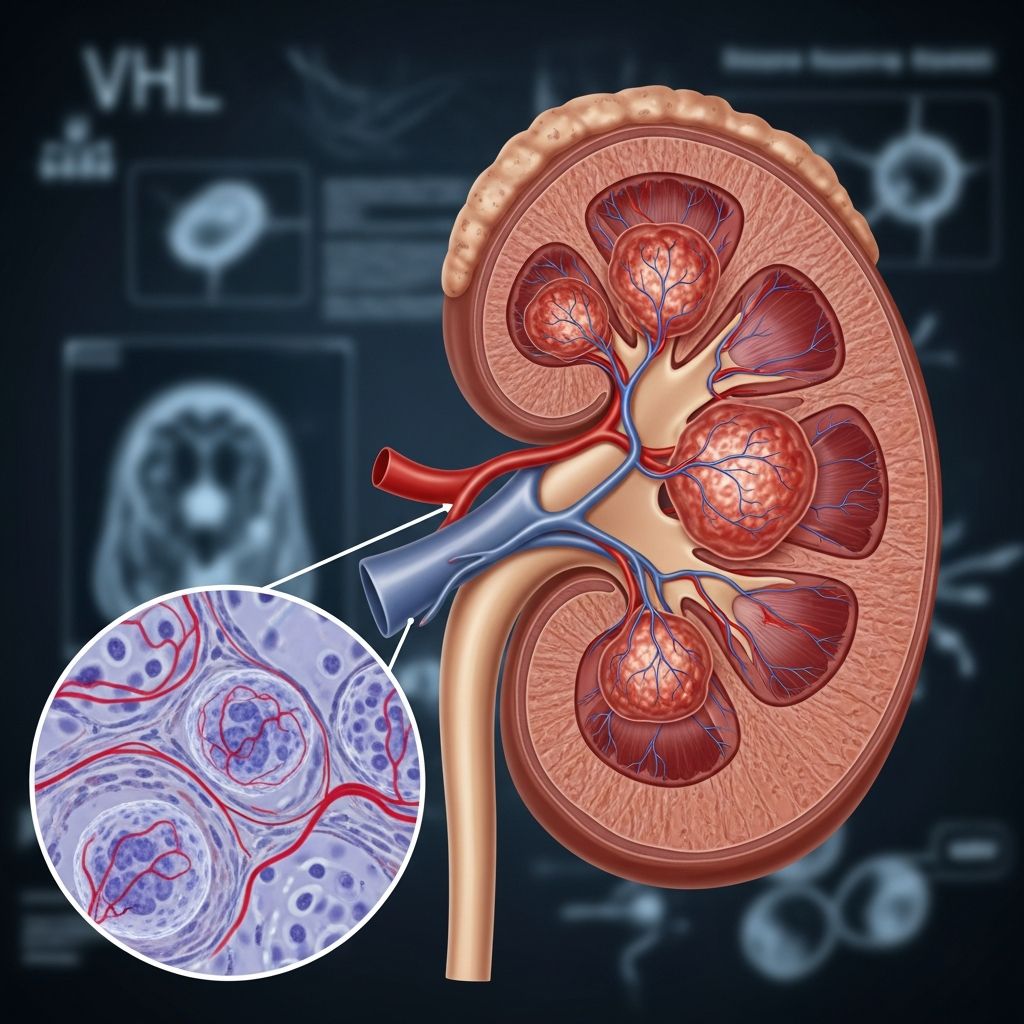
Von Hippel-Lindau (VHL) syndrome is a rare genetic disorder characterized by the development of multiple tumors and cysts across various organs, primarily due to mutations in the VHL gene on chromosome 3. This condition affects approximately 1 in 36,000 people and leads to tumors such as hemangioblastomas in the brain, spine, and retina, as well as renal cell carcinomas, pheochromocytomas, and pancreatic lesions. Early identification through family history, imaging, and genetic analysis is crucial to prevent complications and improve life expectancy, which has significantly increased with modern surveillance protocols.
Genetic Foundations of VHL Syndrome
The VHL gene functions as a tumor suppressor, regulating hypoxia-inducible factors (HIFs) that control cell growth under low-oxygen conditions. Mutations disrupt this process, causing uncontrolled vascular tumor formation. Inheritance follows an autosomal dominant pattern, meaning a single mutated gene copy from one parent is sufficient for disease manifestation, with nearly 100% penetrance by age 65.
Phenotypic variability arises from different mutation types: truncating mutations often correlate with higher risks of pheochromocytoma, while missense mutations are linked to retinal and central nervous system (CNS) hemangioblastomas. De novo mutations account for about 20% of cases without family history. Genetic testing confirms diagnosis by identifying pathogenic variants, essential for at-risk family members.
Recognizing Clinical Manifestations
VHL syndrome presents a multisystem profile, with tumors emerging at variable ages, often starting in the 20s or 30s. Common features include:
- Retinal capillary hemangioblastomas (angiomas): Appear in 50-60% of patients, typically bilateral, causing vision issues if untreated.
- CNS hemangioblastomas: Found in cerebellum, brainstem, or spine in 60-80% of cases, leading to headaches, ataxia, or hydrocephalus.
- Renal cell carcinomas (RCC): Clear cell type in 70% of patients by age 60, often multifocal.
- Pheochromocytomas: Adrenal or extra-adrenal in 10-20%, causing hypertension.
- Pancreatic cysts and neuroendocrine tumors: In 40-70%, usually benign but monitored for malignancy.
Symptoms vary; some patients remain asymptomatic until advanced stages, underscoring the need for proactive screening.
Diagnostic Approaches and Criteria
Diagnosis combines clinical evaluation, imaging, and genetics. Key criteria include:
- Family history of VHL plus one characteristic tumor (e.g., hemangioblastoma, RCC, pheochromocytoma).
- No family history but two or more VHL-associated tumors.
Imaging essentials:
- Ophthalmoscopy and fluorescein angiography for retinal lesions.
- MRI with contrast for CNS tumors, detecting small lesions early.
- Abdominal CT or MRI for renal/pancreatic involvement.
- Biochemical tests (plasma metanephrines) for pheochromocytoma.
Genetic testing via sequencing identifies VHL mutations with >95% sensitivity, guiding family screening. Differential diagnoses include isolated hemangioblastomas or RCC syndromes, ruled out by multisystem findings.
| Diagnostic Tool | Target | Frequency |
|---|---|---|
| Dilated Fundoscopy/OCT/FA | Retina | Annually from age 5 |
| Brain/Spine MRI | CNS | Every 1-3 years from age 11 |
| Abdominal MRI | Kidney/Pancreas | Every 1-2 years from age 16 |
| Genetic Testing | VHL Gene | Once confirmatory |
Surveillance Protocols for Lifelong Management
Regular monitoring detects tumors before symptoms, reducing mortality from 50% (pre-1980s) to near-normal lifespan. Protocols from expert consensus recommend:
Related Stories



- Annual ophthalmic exams starting childhood.
- MRI scans tailored by age and risk.
- Biochemical screening for endocrine tumors.
Thresholds guide intervention: e.g., RCC surveillance until 3 cm, then nephron-sparing surgery. Patient education on symptoms enhances compliance.
Treatment Modalities by Tumor Type
Treatment prioritizes tumor control while preserving function, favoring minimally invasive options.
Ocular Hemangioblastomas
Small lesions (<2 mm) respond to laser photocoagulation or photodynamic therapy (PDT). Mid-sized (2-4.5 mm) tumors suit cryotherapy or PDT; larger ones require vitreoretinal surgery, endoresection, or plaque brachytherapy. Systemic belzutifan inhibits growth in advanced cases.
CNS Hemangioblastomas
Microsurgical resection is gold standard for symptomatic or growing tumors, achieving complete removal in most benign cases. Stereotactic radiosurgery serves inoperable lesions; belzutifan emerging for unresectable disease.
Renal and Visceral Tumors
Nephron-sparing surgery for RCC up to 3 cm; partial nephrectomy preferred. Belzutifan approved for advanced RCC, hemangioblastomas, pancreatic neuroendocrine tumors. Pheochromocytomas demand preoperative alpha-blockade followed by adrenalectomy.
Pancreatic cysts rarely need intervention unless obstructive; neuroendocrine tumors undergo enucleation if feasible.
| Tumor Location | Primary Treatment | Alternatives |
|---|---|---|
| Retina | Laser/PDT/Cryo | Surgery, Brachytherapy, Belzutifan |
| CNS | Microsurgery | Radiosurgery, Belzutifan |
| Kidney | Partial Nephrectomy | Belzutifan (advanced) |
| Pheo | Adrenalectomy | Alpha-blockers pre-op |
Emerging Therapies and Future Directions
Belzutifan, a HIF-2α inhibitor, marks a paradigm shift, shrinking tumors systemically with fewer side effects than surgery. Clinical trials explore combinations for refractory cases. Gene therapy and novel inhibitors are in preclinical stages, promising reduced surveillance burden.
Patient and Family Support Strategies
Multidisciplinary teams—including ophthalmologists, neurosurgeons, urologists, endocrinologists, and genetic counselors—optimize care. Genetic counseling informs prenatal testing and cascade screening. Support groups address psychological impacts of lifelong monitoring.
Lifestyle advice includes hypertension management, avoiding hypoxia-aggravating activities, and annual compliance.
Frequently Asked Questions (FAQs)
What causes VHL syndrome?
Mutations in the VHL tumor suppressor gene lead to tumor formation.
Is VHL curable?
No cure exists, but surveillance and treatments control manifestations effectively.
How often should screening occur?
Annually for eyes, periodic MRIs per age-based protocols.
Can family members be tested?
Yes, genetic testing identifies at-risk relatives.
What is belzutifan’s role?
It treats advanced RCC, CNS hemangioblastomas, and pancreatic tumors.
Challenges in VHL Management
Despite advances, challenges persist: tumor multiplicity complicates surgery, variable penetrance delays diagnosis, and access to belzutifan varies. Longitudinal studies emphasize personalized protocols. Research into mutation-specific therapies could revolutionize care.
References
- Von Hippel–Lindau Disease (VHL) – Pediatrics – MSD Manuals — MSD Manuals Professional Edition. 2023. https://www.msdmanuals.com/professional/pediatrics/neurocutaneous-syndromes/von-hippel-lindau-disease-vhl
- Diagnosis and treatment of Von Hippel-Lindau syndrome – PMC – NIH — National Center for Biotechnology Information. 2024-10-15. https://pmc.ncbi.nlm.nih.gov/articles/PMC12400289/
- Management of Von Hippel-Lindau Syndrome — Review of Ophthalmology. 2023. https://www.reviewofophthalmology.com/article/management-of-von-hippellindau-syndrome
- Von Hippel-Lindau disease – Orphanet — Orphanet. 2024. https://www.orpha.net/en/disease/detail/892
- Pedigree analysis, diagnosis and treatment in Von Hippel-Lindau … — Spandidos Publications. 2018-01-18. https://www.spandidos-publications.com/10.3892/ol.2018.7957
- Hemangioblastomas / von Hippel-Lindau (VHL) disease — Uniklinik Freiburg. 2024. https://www.uniklinik-freiburg.de/neurosurgery/specialities/hemangioblastomas-von-hippel-lindau-vhl-disease.html
- von Hippel-Lindau Disease (VHL) – Cleveland Clinic — Cleveland Clinic. 2024. https://my.clevelandclinic.org/health/diseases/6118-von-hippel-lindau-disease-vhl
Similar Articles








Read full bio of Sneha Tete