Vibration White Finger – Hand-Arm Vibration Syndrome
Understand hand-arm vibration syndrome: causes, symptoms, diagnosis, and prevention for workers using vibrating tools.
What is vibration white finger?
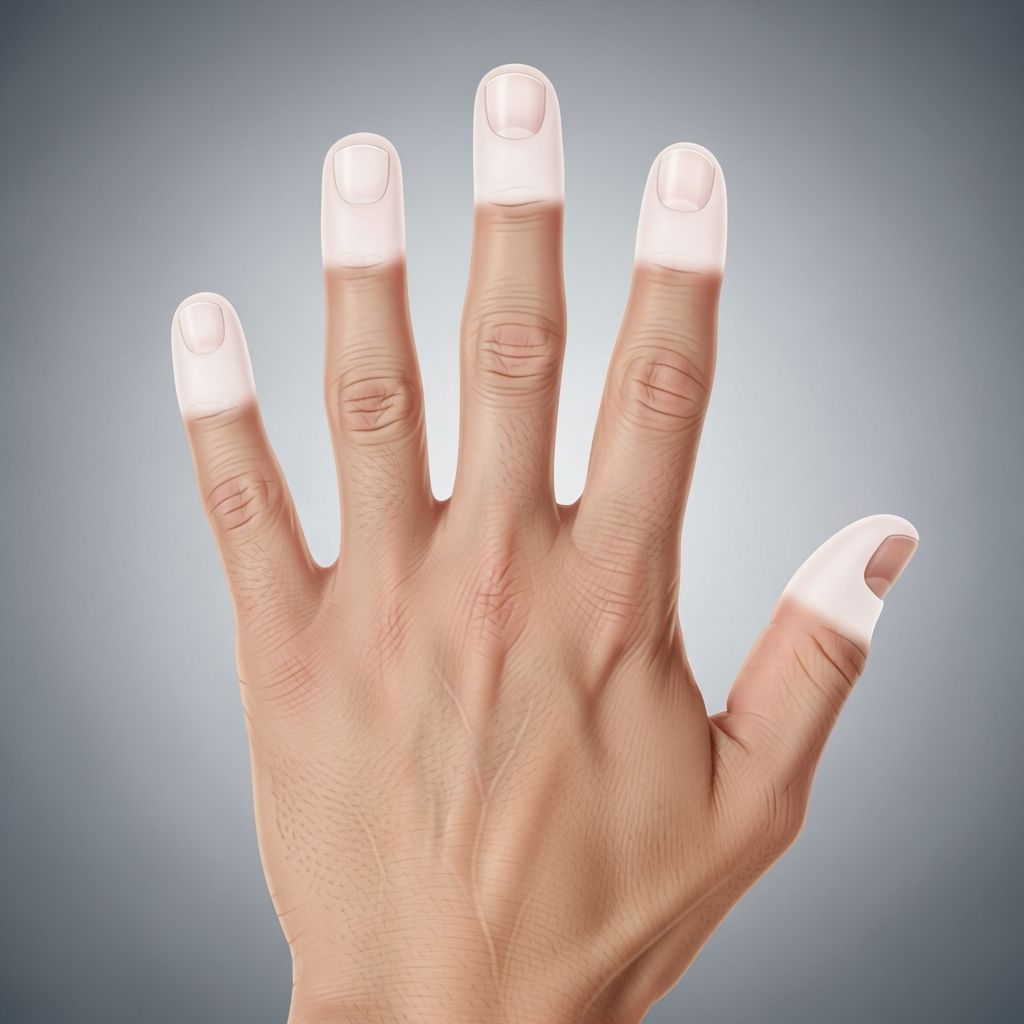
Vibration white finger (VWF), also known as hand-arm vibration syndrome (HAVS), is a secondary form of
Raynaud phenomenon
triggered by prolonged exposure to vibrating tools or machinery. This occupational condition affects the blood vessels, nerves, muscles, joints, and connective tissues of the hands, wrists, and arms. HAVS encompasses vascular, neurological, and musculoskeletal components, leading to significant impairment in hand function for affected workers.The syndrome arises from repeated mechanical vibration transmitted through the hands and arms, causing vascular spasms, nerve damage, and tissue degeneration. It is a well-recognized occupational disease in industries involving power tools, with regulatory limits established in many countries to control exposure levels measured in frequency (Hz) and daily exposure action values.
Who gets vibration white finger (demographics)?
HAVS predominantly affects workers in high-risk occupations with regular use of handheld or hand-guided vibrating equipment. Common professions include:
- Construction workers using jackhammers, grinders, and rivet guns
- Forestry workers operating chainsaws
- Miners and drillers with pneumatic tools
- Manufacturing operators handling sanders, polishers, and hammer drills
- Mechanics working with vibrating machinery
Men are more commonly affected due to occupational exposure patterns, though women in similar roles are also at risk. Development typically requires years of exposure—often 5–15 years—depending on vibration magnitude, frequency, grip force, posture, and environmental factors like cold. Smokers and individuals with pre-existing vascular conditions face higher susceptibility.
Global incidence has declined since the 1970s due to improved tool design, exposure regulations (e.g., EU Vibration Directive), and awareness, but it remains prevalent in developing regions and non-compliant workplaces.
Causes of vibration white finger
The primary cause is chronic exposure to hand-transmitted vibration (HTV) from tools oscillating at 5–1500 Hz, particularly high-frequency vibrations (30–250 Hz) that resonate with hand-arm structures. Mechanisms include:
- Vascular damage: Vibration induces arterial smooth muscle hypertrophy, endothelial injury, and release of vasoconstrictors like serotonin and thromboxane A2, leading to vasospasm and Raynaud-like blanching.
- Neurological injury: Direct mechanical trauma to sensory nerves causes demyelination, axonal degeneration, and reduced nerve conduction velocity.
- Musculoskeletal effects: Repetitive microtrauma leads to joint stiffness, muscle fatigue, and bone cysts (e.g., in carpal bones).
Aggravating factors include cold temperatures (triggering attacks), high grip and push forces, poor tool maintenance, smoking (vasoconstriction), and individual factors like low body mass or stress.
Clinical features of hand-arm vibration syndrome
HAVS presents in stages, classified by the Stockholm Workshop Scale for vascular (V) and neurological (N) components:
Vascular (Raynaud phenomenon)
- Stage 0 V: No episodes
- Stage 1 V: Blanching of 1–2 fingertips, occasional
- Stage 2 V: Blanching of ≥3 fingertips per hand, once/week
- Stage 3 V: Blanching of most fingers, daily, longer duration (>1 hour)
- Stage 4 V: Extensive trophic changes (ulcers, gangrene)
Attacks feature triphasic color changes: white (ischemia), blue (cyanosis), red (reperfusion hyperemia), with pain, numbness, and paresthesia.
Related Stories



Neurological features
- Stage 0 SN: Normal sensation
- Stage 1 SN: Intermittent numbness/tingling
- Stage 2 SN: Persistent numbness, reduced tactile discrimination
- Stage 3 SN: Severe sensory loss, muscle weakness/atrophy
Symptoms worsen with cold; grip strength and fine motor skills (e.g., buttoning, writing) decline.
Musculoskeletal features
Aches in wrists/elbows, reduced grip force, Dupuytren contracture, carpal tunnel syndrome, and osteoarthritic changes.
| Stage | Vascular (V) | Neurological (SN) |
|---|---|---|
| 0 | No attacks | Exposed, no symptoms |
| 1 | 1-2 fingertips, rare | Intermittent numbness |
| 2 | >3 fingertips, weekly | Persistent numbness |
| 3 | Most fingers, daily | Sensory loss, weakness |
Diagnosis
Diagnosis relies on history of vibration exposure, symptom profile, and exclusion of primary Raynaud disease or connective tissue disorders. Key tests:
- Cold provocation test: Finger blanching after cold immersion (unreliable).
- Vibrometry: Assesses vibration perception thresholds.
- Nerve conduction studies: Detect sensory neuropathy.
- Capillaroscopy: Abnormal nailfold vessels.
- Questionnaires: Standardized HAVS surveys.
Referral to occupational physician, rheumatologist, neurologist, or hand surgeon.
Management and treatment
No cure exists; focus is symptom control and halting progression:
- Primary prevention: Cease vibration exposure early—symptoms may remit.
- Lifestyle: Smoking cessation, hand warming, gloves with anti-vibration padding.
- Pharmacotherapy: Calcium channel blockers (e.g., nifedipine) for vasospasm; analgesics, NSAIDs for pain.
- Therapy: Occupational therapy for strengthening, ergonomics training.
- Severe cases: Sympathectomy (rare, variable efficacy).
Workers’ compensation available in many jurisdictions (e.g., UK Industrial Injuries Disablement Benefit).
Prevention of hand-arm vibration syndrome
Employers must assess risks per regulations (e.g., OSHA, EU Directive 2002/44/EC):
- Low-vibration tools with damping
- Limit daily exposure (e.g., A(8) < 2.5 m/s²)
- Training, maintenance, rotation of workers
- Health surveillance: annual questionnaires, exams for high-risk groups
Workers: Report early symptoms, use PPE, warm hands.
Patient / worker advice
- Monitor hands for early signs (tingling, blanching)
- Warm hands frequently, avoid cold/damp environments
- Quit smoking to improve circulation
- Use anti-vibration gloves, maintain neutral posture
- Report to employer/occupational health promptly
- Seek specialist referral if symptoms persist
Frequently Asked Questions
Q: Is vibration white finger permanent?
A: Early vascular stages may improve with exposure cessation, but neurological damage is often irreversible; prevention is key.
Q: How long before HAVS develops?
A: Typically 5–15 years of regular exposure, varying by intensity.
Q: Can HAVS affect only one hand?
A: Yes, often the dominant hand used for tool control.
Q: Are anti-vibration gloves fully protective?
A: They reduce but do not eliminate risk; combine with exposure limits.
Q: What if I have Raynaud symptoms without tool use?
A: Rule out primary Raynaud or other causes via specialist evaluation.
References
- Vibration Syndrome — NIOSH, CDC. 1983. https://www.cdc.gov/niosh/docs/83-110/default.html
- Raynaud’s Phenomenon — CCOHS. 2024. https://www.ccohs.ca/oshanswers/diseases/raynaud.html
- Vibration white finger — PubMed (Occup Environ Med). 1993-07. https://pubmed.ncbi.nlm.nih.gov/8330150/
- Hand-arm Vibration Syndrome (HAVS) — Patient.info. 2024. https://patient.info/bones-joints-muscles/hand-arm-vibration-syndrome-leaflet
- Vibration white finger – hand arm vibration syndrome — DermNet NZ. 2024. https://dermnetnz.org/topics/vibration-white-finger-hand-arm-vibration-syndrome
- Raynaud’s disease — Mayo Clinic. 2025. https://www.mayoclinic.org/diseases-conditions/raynauds-disease/symptoms-causes/syc-20363571
Similar Articles








Read full bio of Sneha Tete