Vibratory Angioedema: Symptoms, Causes, Diagnosis, Treatment
Rare chronic inducible urticaria triggered by vibration causing localised angioedema, erythema, and pruritus with genetic and acquired forms.
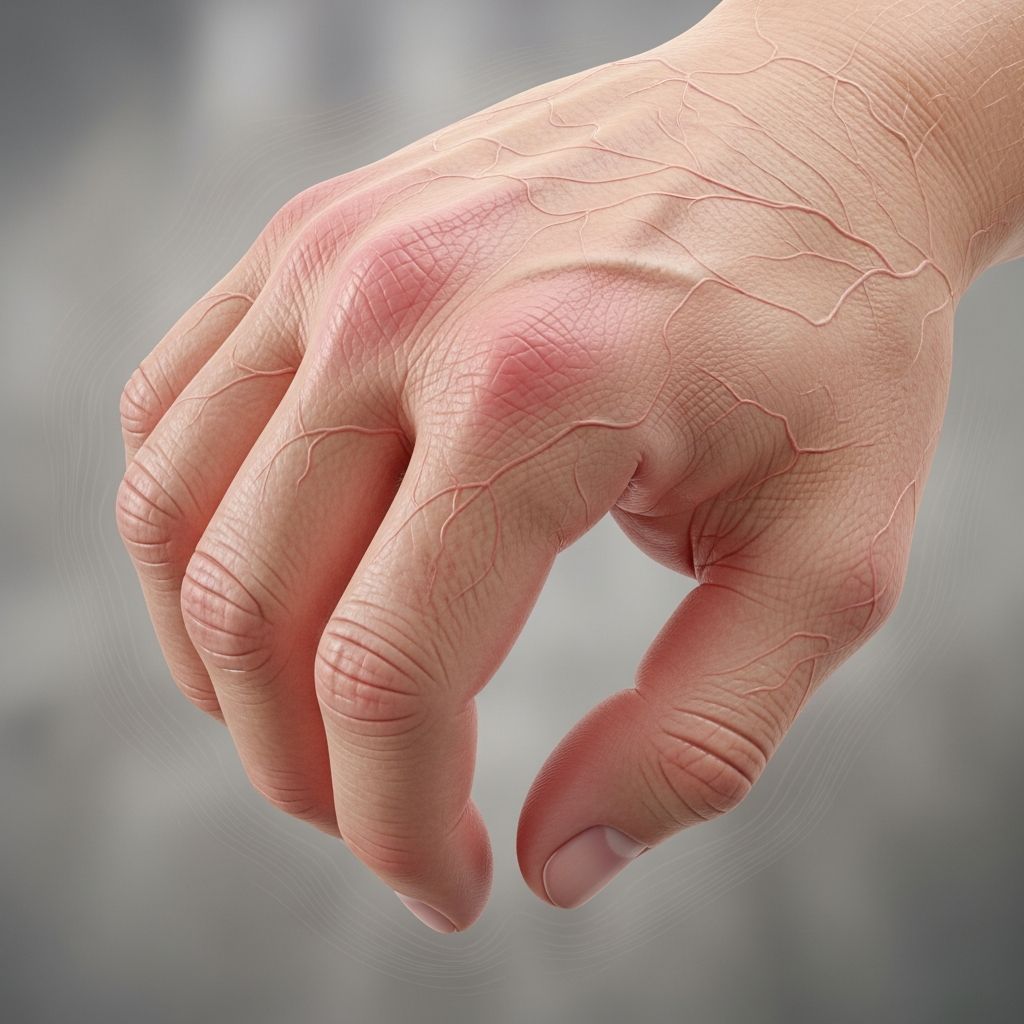
Vibratory angioedema is a rare variant of chronic inducible urticaria in which exposure of the skin to vibration results in classical localised angioedema and erythema.
Introduction
Vibratory angioedema represents one of the rarest forms of chronic inducible urticaria, with only a limited number of cases documented in medical literature and its true prevalence remaining unknown. This condition is distinct from the more commonly confused vibratory urticaria, where vibration provokes hives (wheals) rather than the deeper swelling characteristic of angioedema. Chronic inducible urticarias are a subset of urticaria triggered by specific physical stimuli, and vibratory angioedema specifically manifests through mechanical vibration acting on the skin.
Understanding vibratory angioedema is crucial for dermatologists and allergists, as it often goes underdiagnosed due to its rarity and overlap with other physical urticarias. Patients may experience significant quality-of-life impairments, particularly if their occupations involve vibratory exposure.
Demographics
Reports of vibratory angioedema are sparse, reflecting its extreme rarity. Both genetic (hereditary) and acquired (sporadic) variants exist, with the hereditary form showing an autosomal dominant inheritance pattern. Familial cases suggest a genetic predisposition, where affected individuals have a 50% chance of passing the trait to offspring. No strong gender or age predominance is firmly established, though cases have been noted across various demographics, often presenting in adulthood when vibratory exposures become routine.
Acquired forms may emerge later in life without family history, potentially linked to environmental or immunological factors not yet fully elucidated.
Causes
The precise pathophysiology of vibratory angioedema remains incompletely understood, but it is believed to stem from vibration-induced activation and degranulation of mast cells, leading to histamine release and subsequent vascular permeability changes. In hereditary cases, mutations in the ADGRE2 gene (also known as EMR2) play a pivotal role. This gene encodes a protein expressed on mast cells and other immune cells, crucial for maintaining structural integrity under mechanical stress.
The ADGRE2 mutation alters a single amino acid in the protein’s alpha subunit, destabilizing the interaction between its alpha and beta subunits. Vibration disrupts this fragile bond, triggering the beta subunit to signal mast cell degranulation and release of inflammatory mediators like histamine, causing angioedema. Not all cases involve this mutation, indicating possible other genetic or acquired mechanisms.
Clinical Features
Core symptoms of vibratory angioedema include localised angioedema, erythema (redness), and pruritus (itching) emerging shortly after vibratory stimulus application to the skin. Reactions typically develop within minutes and can persist for hours, distinguishing it from shorter-lived urticarial responses.
Common triggers encompass:
- Towel drying or rubbing the skin vigorously
- Clapping hands
- Running or jogging
- Cycling or horseback riding
- Using power tools, machinery, or jackhammers
- Mowing the lawn
- Riding in vehicles over bumpy roads
- Full-body vibratory massage
These everyday activities highlight the challenge of avoidance, especially for manual laborers or athletes.
Complications
While primarily localised, prolonged or intense vibratory exposure can provoke systemic symptoms, including:
- Anaphylaxis
- Headache
- Facial flushing or swelling
- Blurred vision
- Metallic taste
- Hypotension or fainting
Occupational exposure poses particular risks, limiting career choices and social activities. Chronicity may lead to psychological distress from unpredictable flares.
Diagnosis
Diagnosis hinges on a detailed history of angioedema or erythema post-vibratory stimuli, corroborated by a vibration provocation test. This test involves:
Related Stories



- Avoiding antihistamines for 3-5 days prior.
- Applying a vortex mixer or similar device to the forearm for 5 minutes at controlled intensity.
- Observing for angioedema, erythema, or wheals 5-10 minutes post-exposure.
Positive responses confirm vibratory angioedema. If equivocal, test for other inducible urticarias (e.g., cold, heat, pressure).
Differential diagnoses include:
- Vibratory urticaria (wheals vs. angioedema)
- Pressure urticaria
- Cholinergic urticaria
- Delayed pressure urticaria
- Allergic contact dermatitis
- Other physical urticarias
Laboratory tests like blood work or skin biopsy may exclude underlying causes but are not diagnostic for vibratory angioedema itself.
Treatment
The cornerstone of management is avoidance of vibratory stimuli wherever feasible. Patients should be counselled on high-risk activities and protective measures like padded gloves or vibration-dampening equipment.
Symptomatic relief relies on second-generation H1 antihistamines (e.g., cetirizine, loratadine, fexofenadine) at standard or up-dosed regimens. These block histamine effects, reducing swelling and itch. For refractory cases, omalizumab (anti-IgE monoclonal antibody) or short-term oral corticosteroids may be considered, though evidence is limited.
In severe systemic reactions, epinephrine auto-injectors are advised.
Outcome
Vibratory angioedema typically responds well to avoidance and antihistamines, with good symptomatic control. Spontaneous resolution rates are unknown due to rarity, but chronic urticaria persistence affects up to 15% long-term. Ongoing research into ADGRE2 may yield targeted therapies.
Frequently Asked Questions (FAQs)
What is vibratory angioedema?
A rare chronic inducible urticaria where skin vibration causes localised swelling (angioedema), redness, and itching due to mast cell activation.
How is it different from vibratory urticaria?
Vibratory urticaria produces hives (wheals), while angioedema involves deeper tissue swelling without prominent wheals.
Is vibratory angioedema hereditary?
Hereditary cases follow autosomal dominant inheritance via ADGRE2 mutations; acquired forms also occur.
How is it diagnosed?
Via history and vibration provocation test on the forearm, observing for angioedema post-stimulation.
What are the best treatments?
Avoid triggers and use non-sedating antihistamines like cetirizine; severe cases may need omalizumab.
Can it cause anaphylaxis?
Yes, rarely with prolonged exposure; carry epinephrine if at risk.
This comprehensive overview equips patients and clinicians to recognise, diagnose, and manage vibratory angioedema effectively, improving quality of life through informed strategies.
References
- Vibratory angioedema — DermNet NZ. 2023. https://dermnetnz.org/topics/vibratory-angioedema
- Vibratory Urticaria: Symptoms, Causes, Diagnosis, Treatment — Healthline. 2023-05-10. https://www.healthline.com/health/vibratory-urticaria
- Vibratory urticaria — MedlinePlus Genetics (U.S. National Library of Medicine). 2024. https://medlineplus.gov/genetics/condition/vibratory-urticaria/
- Angioedema: Causes, Symptoms, Types & Treatments — Cleveland Clinic. 2023-12-07. https://my.clevelandclinic.org/health/diseases/22632-angioedema
- Vibratory angioedema — Genetic and Rare Diseases Information Center (GARD), NIH. 2023. https://rarediseases.info.nih.gov/diseases/17901/vibratory-angioedema
Similar Articles








Read full bio of Sneha Tete