Viral Evolution: Mechanisms And Impacts, Key Insights
Discover how viruses mutate, evolve through drift and shift, and why these changes challenge vaccines and public health strategies worldwide.
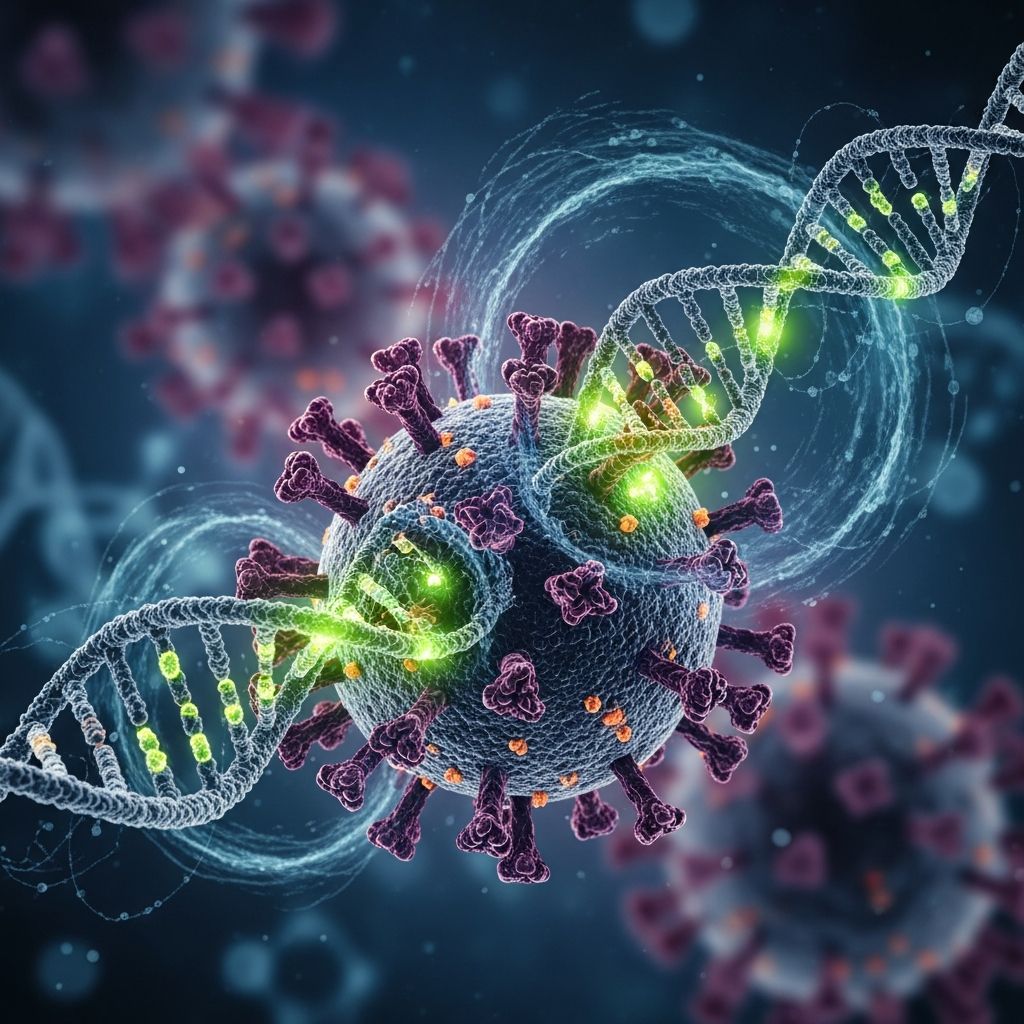
Viral evolution drives the constant transformation of pathogens, enabling them to adapt to host defenses and environmental pressures. These changes occur primarily through mutations during genetic replication, influenced by factors like genome type and host interactions.
The Fundamentals of Viral Genetics
Viruses carry their genetic information in either DNA or RNA, which fundamentally affects their mutation potential. DNA viruses replicate with higher fidelity due to proofreading mechanisms in their polymerases, allowing host cells to correct errors during copying. In contrast, RNA viruses lack robust proofreading, leading to error-prone replication and mutation rates up to a million times higher than DNA-based organisms.
This disparity arises because RNA polymerase enzymes do not verify base pairing as effectively as DNA polymerases. For instance, the genetic code relies on complementary pairing—adenine with thymine (or uracil in RNA) and cytosine with guanine—but mismatches occur frequently in RNA replication without correction.
Why Viruses Mutate: Survival Imperatives
Mutations serve as a survival strategy for viruses, allowing adaptation to new hosts, evasion of immune responses, and improved transmission. Beneficial mutations enhance infectivity, such as alterations in surface proteins that improve cell attachment, while deleterious ones may render the virus non-viable.
Host factors exacerbate mutation rates. In immunocompromised individuals, prolonged infections provide more replication cycles, increasing error opportunities. Recombination, where two viral strains infect the same cell and exchange genetic segments, further accelerates diversity.
- Replication Errors: Primary source in RNA viruses due to unstable RNA molecules.
- Host Enzymes: Deaminases like APOBEC introduce targeted mutations as antiviral defenses, inadvertently boosting viral diversity.
- Environmental Pressures: Selective forces favor mutants that escape antibodies or drugs.
Antigenic Drift: Gradual Viral Tweaks
Antigenic drift refers to small, cumulative mutations in viral surface proteins, such as hemagglutinin (HA) and neuraminidase (NA) in influenza viruses. These changes alter the virus’s appearance to the immune system, reducing the effectiveness of prior immunity or vaccines.
In flu viruses, drift occurs yearly, necessitating annual vaccine updates. The process is incremental: a single nucleotide change can modify an amino acid in HA, creating a variant that partially evades antibodies. Over time, drifted strains dominate populations, causing seasonal epidemics.
| Feature | Antigenic Drift | Antigenic Shift |
|---|---|---|
| Mutation Scale | Small, point mutations | Large, segment reassortment |
| Frequency | Continuous/seasonal | Infrequent, pandemic-potential |
| Impact on Immunity | Partial evasion | Near-total evasion |
| Example Virus | Seasonal influenza | H1N1 (2009 pandemic) |
Antigenic Shift: Radical Reassortments
Antigenic shift involves major genetic rearrangements, typically in segmented RNA viruses like influenza. When two different strains co-infect a cell—often in animal reservoirs like pigs or birds—their genome segments can reassort, producing novel subtypes with pandemic potential.
This mechanism explains events like the 1918 Spanish flu or 2009 H1N1 swine flu, where human-adapted and animal strains merged, creating viruses to which humans had no immunity. Shift is rarer than drift but far more dangerous due to population-wide susceptibility.
DNA vs. RNA Viruses: Mutation Dynamics
DNA viruses mutate slowly, benefiting from host DNA repair pathways and double-stranded stability. Large DNA viruses may even exploit host damage response (DDR) systems for replication, though this can introduce controlled instability.
Related Stories



RNA viruses, however, evolve rapidly. Coronaviruses like SARS-CoV-2 possess a proofreading exonuclease (nsp14), mutating slower than typical RNA viruses like influenza—about four times slower—yet still generate variants like Delta and Omicron.
Replication modes influence accumulation: the “stamping machine” model in some viruses limits rounds of copying per cell, curbing mutations, while others undergo multiple cycles, amplifying diversity.
Selective Pressures Shaping Viral Populations
Not all mutations persist; natural selection filters them. Variants better at transmission, immune escape, or replication outcompete others. In HIV, high mutation rates foster drug resistance; in flu, pressure from herd immunity drives drift.
Population bottlenecks—such as transmission between hosts—can fix advantageous mutations. Recombination rates often correlate with mutation rates, enhancing adaptability in co-infected cells.
Implications for Vaccines and Public Health
Viral evolution challenges vaccine efficacy. Drift requires reformulation, as seen in flu shots predicting dominant strains via surveillance. Shift demands entirely new vaccines, as in 2009.
Strategies include universal vaccines targeting conserved regions and broad-spectrum antivirals. Monitoring via genomic sequencing, as with GISAID for COVID-19, predicts threats early.
- Surveillance Networks: WHO’s Global Influenza Surveillance tracks HA/NA changes.
- Vaccine Platforms: mRNA tech enables rapid updates against variants.
- Antiviral Design: Targets polymerases to exploit mutation vulnerabilities.
Case Studies: Influenza and Coronaviruses
Influenza exemplifies evolution: seasonal H3N2 drifts constantly, while shifts like H2N2 in 1957 caused millions of deaths. Genetic diversity arises from high replication in respiratory tracts.
SARS-CoV-2’s evolution highlights proofreading’s role. Despite lower rates, recombination with animal coronaviruses and immune escape mutations produced variants of concern, underscoring zoonotic risks.
Future Trajectories in Viral Evolution
Climate change and globalization may increase zoonotic spillovers, fueling shifts. Antiviral use could select hypermutators, though fitness costs often limit them.
Research into mutagens—agents raising mutation rates to “error catastrophe”—offers therapeutic promise, overwhelming viral replication capacity.
Frequently Asked Questions (FAQs)
What causes most viral mutations?
Errors during RNA or DNA replication, lacking proofreading in many RNA viruses, lead to base mismatches.
Can all mutations make viruses more dangerous?
No; most are neutral or harmful to the virus, but selection favors beneficial ones like immune evasion.
How do vaccines keep up with viral changes?
Through strain prediction, surveillance, and adaptable platforms like mRNA for quick updates.
Are DNA viruses a lower pandemic risk?
Generally yes, due to slower evolution, though large ones like herpesviruses persist chronically.
What role do animals play in shifts?
Mixing vessels like pigs enable reassortment between human and avian strains.
References
- Viruses and Evolution — History of Vaccines Project. 2023. https://historyofvaccines.org/vaccines-101/what-do-vaccines-do/viruses-and-evolution/
- Mechanisms of viral mutation — PMC (NCBI). 2016-10-19. https://pmc.ncbi.nlm.nih.gov/articles/PMC5075021/
- How Do Viruses Mutate, and What Is the Role of Mutations in Viral Evolution? — Tulane University School of Public Health. 2023. https://publichealth.tulane.edu/blog/how-do-viruses-mutate/
- How Viruses Mutate and Create New Variants — Tufts University School of Medicine. 2023. https://medicine.tufts.edu/news-events/news/how-viruses-mutate-and-create-new-variants
- Evolution of viruses — Khan Academy. 2023. https://www.khanacademy.org/science/ap-biology/natural-selection/common-ancestry-and-continuing-evolution/a/evolution-of-viruses
- How Flu Viruses Can Change: “Drift” and “Shift” — Centers for Disease Control and Prevention (CDC). 2024-09-10. https://www.cdc.gov/flu/php/viruses/change.html
Similar Articles








Read full bio of medha deb