Viruses: Definition, Types, Characteristics & Facts
Learn what viruses are, how they spread, and their impact on human health and disease.
What Are Viruses?
Viruses are microscopic germs that require a host cell to reproduce and survive. Unlike bacteria, which are single-celled organisms capable of independent life, viruses are obligate intracellular parasites composed of genetic material—either DNA or RNA—enclosed within a protective protein shell called a capsid. This fundamental characteristic distinguishes viruses from all other microorganisms and is central to understanding how they cause infection and disease.
Viruses exist at the boundary between living and non-living matter. They cannot perform metabolic functions, produce energy, or grow on their own. Instead, they must invade host cells and hijack the cellular machinery to replicate. Once inside a host cell, viruses take over the cell’s resources to manufacture copies of themselves, often resulting in cell damage or death. This parasitic relationship is what makes viruses such effective agents of infection.
How Viruses Differ From Other Pathogens
Understanding the distinction between viruses and other disease-causing organisms is crucial for proper diagnosis and treatment. Several key differences set viruses apart from bacteria, fungi, and parasites that can also cause infectious diseases.
Bacteria are single-celled organisms with cell walls and can survive independently in various environments. They can reproduce on their own through binary fission and many are benign or beneficial to humans. In contrast, viruses require host cells for reproduction and cannot survive long outside a host organism. Fungi are eukaryotic organisms with cell walls made of chitin, while viruses lack any cell wall structure. Parasites are typically larger organisms that can live independently on or within a host organism. The fundamental difference lies in their structural complexity and their dependence on host cells for replication.
Structure and Composition of Viruses
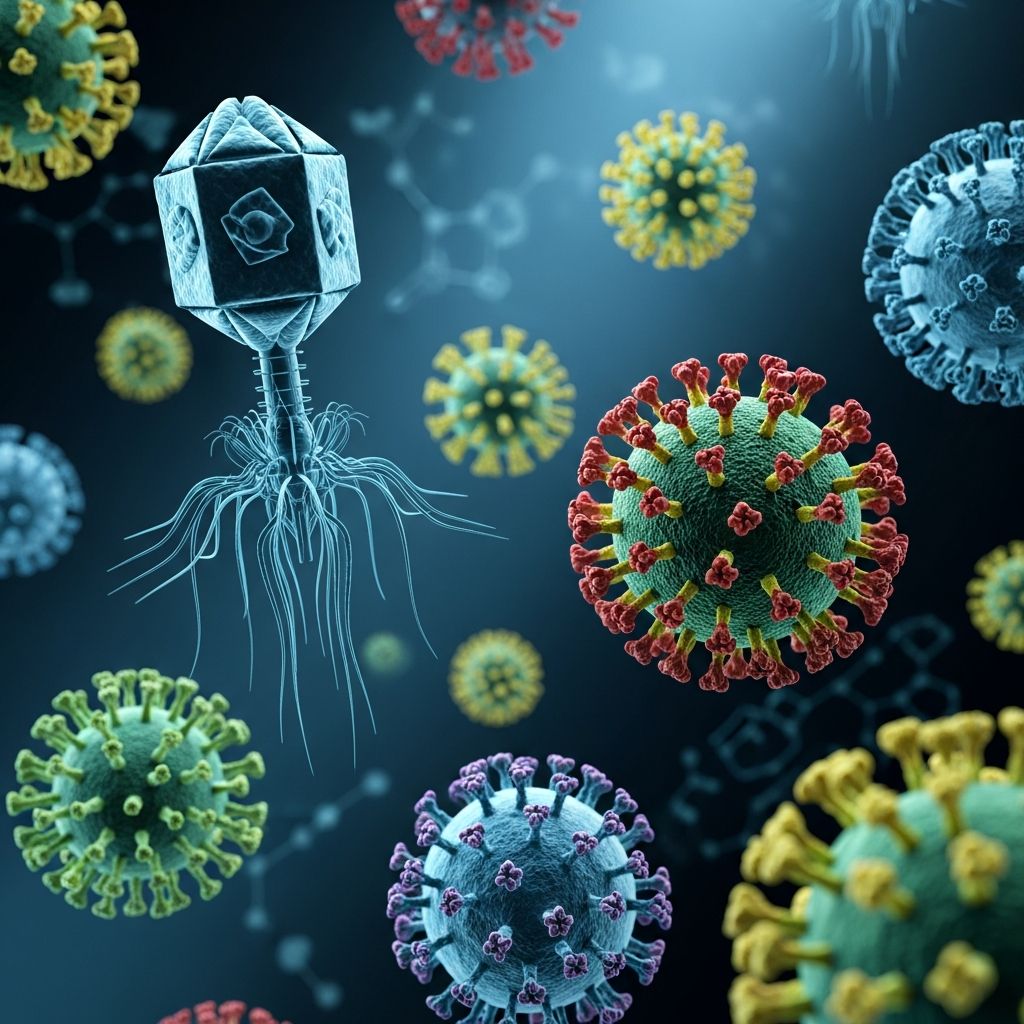
Viruses have a relatively simple yet elegant structure designed for one primary purpose: infecting host cells and reproducing. The basic components of a virus include the genetic material (genome), the protein shell (capsid), and in some cases, an outer lipid membrane (envelope).
Genetic Material
The genome of a virus contains either deoxyribonucleic acid (DNA) or ribonucleic acid (RNA). This genetic material carries the instructions necessary for the virus to replicate within a host cell. Some viruses have double-stranded DNA, while others contain single-stranded RNA or DNA. The size and complexity of viral genomes vary considerably, from small viruses like rhinoviruses to larger viruses like herpesviruses.
The Capsid
Surrounding the genetic material is the capsid, a protein shell composed of multiple copies of one or a few types of protein subunits called capsomers. The capsid serves multiple functions: it protects the genetic material from damage, facilitates attachment to host cells, and aids in entry into the host cell. The shape and structure of the capsid vary among different viruses, ranging from icosahedral (twenty-sided) to helical to complex polyhedra.
The Viral Envelope
Some viruses, known as enveloped viruses, possess an additional layer called the envelope. This membrane is derived from the host cell and contains viral proteins that facilitate infection. The envelope is studded with viral glycoproteins that help the virus attach to and penetrate host cells. Non-enveloped viruses, called naked viruses, lack this outer membrane and rely solely on their capsid for protection and cellular entry.
Related Stories



Major Types of Viruses
Viruses are classified into numerous categories based on their genetic material, structure, host range, and the diseases they cause. Understanding the major viral types helps contextualize their impact on human health.
DNA Viruses
DNA viruses contain double or single-stranded DNA as their genetic material. This category includes herpesviruses (such as herpes simplex virus and varicella-zoster virus), adenoviruses, papillomaviruses, and poxviruses. Many DNA viruses cause latent infections, meaning they can remain dormant in host cells for extended periods and reactivate later.
RNA Viruses
RNA viruses use RNA as their genetic material and include several important human pathogens. Positive-sense RNA viruses can be directly translated into proteins upon entering a host cell, while negative-sense RNA viruses must first be transcribed into positive-sense RNA. This category encompasses coronavirus (including SARS-CoV-2), influenza viruses, measles, mumps, rubella, and respiratory syncytial virus (RSV).
Respiratory Viruses
Respiratory viruses specifically target the respiratory tract and are transmitted through respiratory droplets. Important respiratory viruses include influenza, rhinovirus, parainfluenza, human metapneumovirus (HMPV), respiratory syncytial virus (RSV), and coronavirus. These viruses can range in severity from causing mild cold-like symptoms to severe pneumonia.
Emerging and Hemorrhagic Viruses
Some viruses, such as Ebola virus, are rare but can cause severe and life-threatening infections with high mortality rates.[10] These emerging pathogens can cause outbreaks, particularly in certain geographic regions, and require specialized containment and treatment protocols.
How Viruses Spread and Cause Infection
Viral transmission occurs through several primary mechanisms, each adapted to the specific virus and its target tissue.
Respiratory Transmission
Many viruses spread through respiratory droplets expelled when an infected person coughs, sneezes, or speaks. These droplets can travel through the air and infect others who inhale them. Respiratory viruses represent a significant burden during seasonal outbreaks and can cause community transmission.
Contact Transmission
Some viruses spread through direct contact with infected individuals or contaminated surfaces. The virus enters the body through mucous membranes or breaks in the skin.
Vertical Transmission
Certain viruses, including SARS-CoV-2, can transmit from mother to fetus during pregnancy, though the precise mechanisms are still being understood. Recent research demonstrates that viral components can cross the placental barrier and trigger inflammatory responses in the developing fetus.
Vector-Borne Transmission
Some viruses are transmitted through vectors such as mosquitoes, ticks, or other arthropods. These include dengue virus, Zika virus, and West Nile virus.
Viral Replication Cycle
Understanding how viruses reproduce within host cells illuminates their pathogenic mechanisms. The viral replication cycle generally follows these stages:
Attachment and Entry: The virus binds to specific receptors on the host cell surface and enters the cell through membrane fusion or endocytosis. Uncoating: Once inside, the viral capsid breaks down, releasing the genetic material into the cell’s cytoplasm or nucleus. Replication: The virus hijacks the host cell’s machinery to replicate its genetic material and synthesize viral proteins. Assembly: New viral components self-assemble to form complete viral particles. Release: The newly formed viruses exit the host cell, either by budding (acquiring the host cell membrane in the process) or by cell lysis (rupturing the cell). This cycle repeats until the host immune system eliminates the virus or the infection resolves.
The Impact of Viral Infections on Public Health
Viral infections represent a substantial burden on individual and public health globally. The COVID-19 pandemic fundamentally altered respiratory virus circulation patterns and demonstrated the devastating potential of viral pandemics. Research from Cleveland Clinic shows that winter-dominant respiratory viruses like influenza and RSV experienced significant disruptions in their seasonal patterns following the pandemic, with some viruses showing delayed recovery to their typical transmission cycles.
Current surveillance data indicates that multiple respiratory pathogens circulate year-round in communities, with rhinovirus/enterovirus showing particularly elevated positivity rates, while SARS-CoV-2 continues to circulate at lower levels. Healthcare systems must remain vigilant in monitoring viral circulation patterns and responding appropriately to emerging threats.
Prevention and Treatment Strategies
Several evidence-based approaches help prevent and manage viral infections. Vaccination remains one of the most effective prevention strategies, with prophylactic vaccines available for many important viral pathogens including influenza, measles, mumps, and COVID-19. Antiviral medications can treat certain viral infections and reduce symptom severity or duration. Standard preventive measures include hand hygiene, respiratory etiquette, mask usage during outbreaks, and vaccination.
Early diagnosis through molecular viral testing, such as nucleic acid amplification tests, enables prompt identification of viral infections and supports appropriate management. During respiratory virus seasons, healthcare providers employ targeted strategies to manage the burden of multiple circulating pathogens.
Common Viral Diseases in Humans
Viruses cause numerous diseases ranging from mild to severe. Common examples include the common cold (rhinovirus), influenza, chickenpox (varicella-zoster virus), measles, mumps, rubella, and more serious conditions like COVID-19, Ebola,[10] and hepatitis. Respiratory infections typically cause the greatest seasonal burden on healthcare systems and communities, particularly during fall and winter months.
Frequently Asked Questions
Q: What is the main difference between a virus and a bacterium?
A: Viruses require host cells to reproduce and cannot survive independently, while bacteria are single-celled organisms capable of independent life. Bacteria have cell walls and can perform metabolic functions, whereas viruses cannot.
Q: How do viruses cause illness?
A: Viruses infect host cells and replicate using the cell’s machinery. This process often damages or kills the host cell, leading to inflammation and the symptoms associated with viral infections.
Q: Can viruses be treated with antibiotics?
A: No, antibiotics are ineffective against viruses. Antibiotics target bacterial cell structures and processes that viruses do not possess. Antiviral medications or supportive care are used to treat viral infections instead.
Q: How long can a virus survive outside the body?
A: The survival time varies depending on the virus type and environmental conditions. Most respiratory viruses survive only minutes to hours on surfaces, though some can persist longer on certain materials.
Q: Is vaccination effective against all viruses?
A: Vaccines are available for many important viruses including influenza, measles, mumps, rubella, and COVID-19, but not all viruses have vaccines yet. Vaccines provide protection by training the immune system to recognize and fight specific viral pathogens.
Q: Can viruses mutate and become more dangerous?
A: Yes, viruses frequently undergo mutations as they replicate. Some mutations may increase transmissibility or virulence, while others may decrease these characteristics. This is why new vaccine formulations are sometimes needed to protect against viral variants.
References
- Changes to Endemic Respiratory Virus Circulation and Testing Patterns Following the COVID-19 Pandemic — Oxford University Press, Open Forum Infectious Diseases. 2024-09-01. https://academic.oup.com/ofid/article/12/9/ofaf493/8266110
- COVID Study Reveals Virus-Induced Inflammation During Pregnancy, Redefines Vertical Transmission — Cleveland Clinic Lerner Research Institute. 2024-10-11. https://www.lerner.ccf.org/news/article/?title=COVID+study+reveals+virus-induced+inflammation+during+pregnancy%2C+redefines+vertical+transmission
- Cleveland Clinic Respiratory Pathogen Surveillance Statistics — Cleveland Clinic Labs. 2025. https://clevelandcliniclabs.com/respiratory-virus-surveillance-statistics/
- Coronavirus Disease (COVID-19): Symptoms & Treatment — Cleveland Clinic. 2025. https://my.clevelandclinic.org/health/diseases/21214-coronavirus-covid-19
- Respiratory Virus Season: Strategies for Successful Navigation — Cleveland Clinic Journal of Medicine. 2023-02-01. https://www.ccjm.org/content/92/2/95
- Respiratory Viruses: Preventive and Therapeutic Approaches to Seasonal and Emerging Viral Infections — Cleveland Clinic Journal of Medicine. 2024-09-01. https://www.ccjm.org/content/91/9_suppl_1/S4
Similar Articles








Read full bio of medha deb