Visceral Fat: What It Is and How to Lose It
Discover the hidden dangers of visceral fat, why it's more harmful than subcutaneous fat, and proven strategies to reduce it effectively.
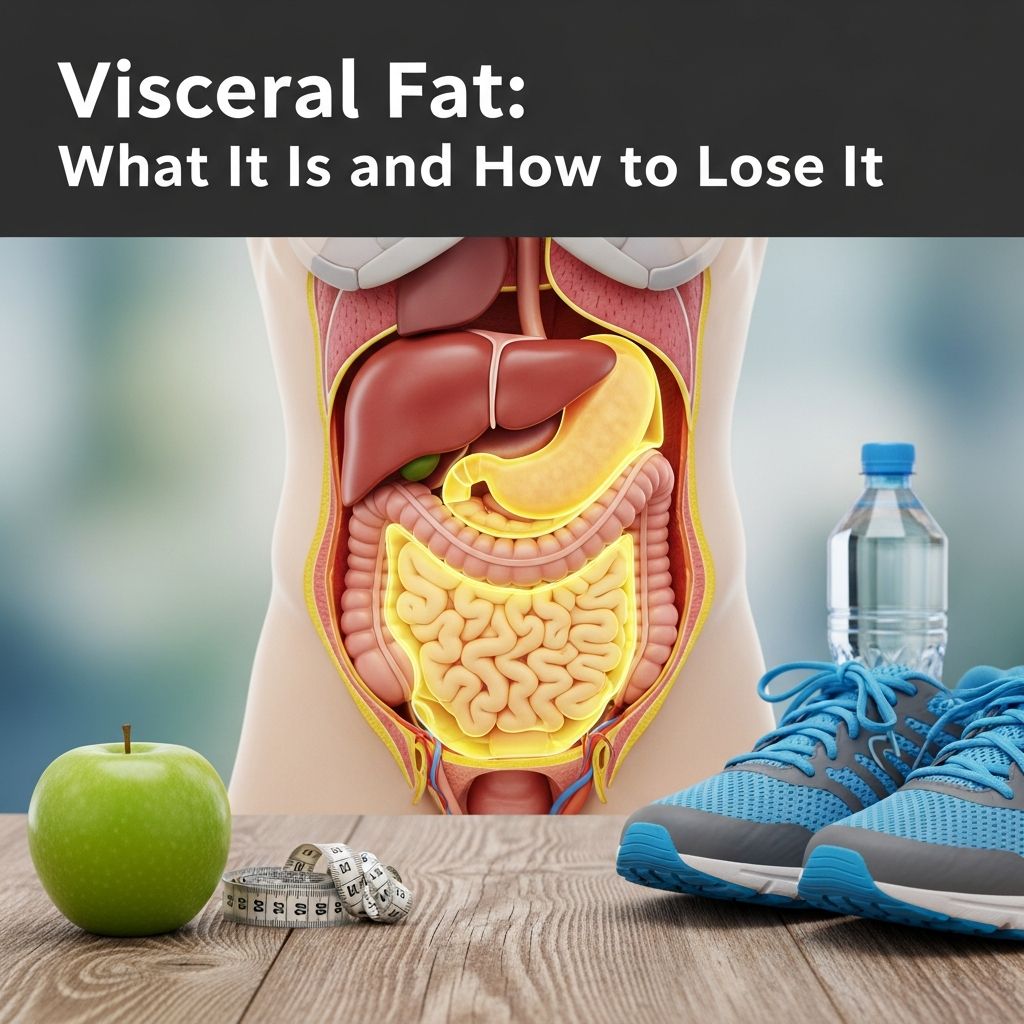
Visceral fat, often called the ‘hidden’ or ‘active’ fat, accumulates deep within the abdominal cavity, surrounding vital organs like the liver, pancreas, and intestines. Unlike subcutaneous fat that you can pinch, visceral fat is metabolically active, releasing hormones and inflammatory substances that drive chronic diseases.
What Is Visceral Fat?
Visceral adipose tissue (VAT) resides in the peritoneal cavity, protected by abdominal muscles but directly influencing organ function through its proximity and rich blood supply. This fat releases free fatty acids (FFAs) directly into the portal vein, flooding the liver and promoting insulin resistance, dyslipidemia, and inflammation.
While some visceral fat is normal and protective, excess accumulation—known as visceral obesity—triggers pathological processes. It secretes cytokines like IL-6 and TNF-alpha, alongside adipokines such as leptin and reduced adiponectin, creating a pro-inflammatory state.
Visceral Fat vs. Subcutaneous Fat
Subcutaneous fat lies just under the skin and serves mainly as energy storage with minimal metabolic impact. Visceral fat, however, is hormonally active and dangerous due to its drainage into the portal circulation, delivering FFAs straight to the liver—only about 5-20% from visceral sources in lean/obese individuals, but enough to impair hepatic function.
| Aspect | Visceral Fat | Subcutaneous Fat |
|---|---|---|
| Location | Deep abdominal cavity, around organs | Under the skin |
| Metabolic Activity | High; releases FFAs, cytokines | Low; primarily energy storage |
| Health Impact | Increases disease risk (diabetes, CVD) | Less harmful; cosmetic concerns |
| Measurement | Imaging (CT/MRI), waist circumference | Calipers, pinch test |
Studies show visceral fat correlates more strongly with metabolic syndrome than total body fat.
Why Is Visceral Fat Dangerous?
Excess visceral fat drives insulin resistance by overwhelming the liver with FFAs, leading to hyperglycemia and type 2 diabetes. It promotes chronic low-grade inflammation, damaging blood vessels and raising cardiovascular risk—even in those with normal BMI.
High VAT links to:
- Heart disease and stroke via dyslipidemia and hypertension
- Type 2 diabetes (odds increase 2-4x)
- Cancers (breast, colorectal) due to altered hormones
- Alzheimer’s from inflammation
- All-cause mortality in middle-aged adults
In the Framingham Heart Study cohorts, visceral fat independently predicted cardiovascular events beyond BMI.
Signs and Symptoms of High Visceral Fat
You can’t see or feel visceral fat, but indirect signs include:
- Apple-shaped body (waist >40″ men, >35″ women)
- High triglycerides, low HDL
- Insulin resistance (acanthosis nigricans)
- Fatty liver symptoms (fatigue, abdominal pain)
- Metabolic syndrome criteria (3+ of: large waist, high BP, high glucose, high trigs, low HDL)
Silent until advanced, it often precedes weight gain.
How to Measure Visceral Fat
Gold standards are CT or MRI scans, quantifying VAT area (cm²). Waist-to-hip ratio (WHR >0.9 men, >0.85 women) or waist circumference predict VAT well (r=0.669 with CT).
At-home proxies:
- Waist Circumference: >40 inches (102 cm) men, >35 inches (88 cm) women signals risk.
- WHR: Measure waist at navel, hips at widest; calculate ratio.
- Bioelectrical Impedance: Some scales estimate VAT score (1-12 ideal).
Ultrasound measures visceral thickness from muscles to aorta, correlating strongly with CT.
Causes and Risk Factors for Visceral Fat
Genetics predispose some to central fat storage, but lifestyle dominates:
- Cortisol from chronic stress favors visceral deposition
- Poor sleep disrupts hormones
- Ultra-processed foods, alcohol, sedentary behavior
- Menopause (estrogen drop shifts fat to abdomen)
- Aging reduces subcutaneous storage capacity
Related Stories



‘Normal weight obesity’—TOFI (thin outside, fat inside)—affects up to 30% of normal BMI adults with high VAT.
Health Risks of Too Much Visceral Fat
Beyond metabolic syndrome, VAT heightens:
- Cardiovascular Disease: Residual risk persists post-weight loss if VAT lingers
- Cancer: Pro-inflammatory milieu promotes oncogenesis
- Neurological Decline: FFAs cross blood-brain barrier
- Respiratory Issues: Compresses lungs/diaphragm
Prospectively, each 10 cm² VAT increase raises mortality 5-10%.
9 Ways to Lose Visceral Fat
- Aerobic Exercise: 150-300 min/week moderate cardio (brisk walking, cycling) reduces VAT 6-10% in 12 weeks.
- Strength Training: Builds muscle, boosts metabolism; 2-3 sessions/week targets VAT.
- HIIT: Short bursts (20-30 min) excel at visceral fat loss vs. steady-state.
- Calorie Deficit Diet: Whole foods, fiber-rich (veggies, legumes); limit sugars/processed carbs.
- Intermittent Fasting: 16:8 windows preferentially mobilizes VAT.
- Sleep 7-9 Hours: Poor sleep spikes cortisol/VAT
- Stress Management: Meditation/yoga lowers cortisol.
- Limit Alcohol: <1 drink/day; excess drives VAT
- Probiotics/Fiber: Gut health influences fat storage.
Combined diet + exercise yields 20-30% VAT reduction in 6 months.
Diet Tips to Reduce Visceral Fat
Focus on Mediterranean-style:
- High fiber (30g+/day): Oats, beans, apples bind FFAs.
- Healthy fats: Avocados, nuts, olive oil over trans fats.
- Protein: Lean meats, fish, eggs preserve muscle.
- Low GI carbs: Quinoa, berries stabilize insulin.
- Avoid fructose-heavy sodas (liver fat culprit).
Soluble fiber supplements (psyllium) cut VAT 3-5%.
Exercises to Target Visceral Fat
Cardio: Running, swimming torch calories.
Core Work: Planks, Russian twists strengthen but don’t spot-reduce; systemic loss needed.
Full-Body: Squats, deadlifts spike growth hormone, VAT mobilizer.
Consistency beats intensity: 10k steps/day halves risk.
Frequently Asked Questions (FAQs)
Can you feel visceral fat?
No, it’s deep inside; use waist measurement as proxy.
Does visceral fat go away first?
Yes, exercise/diet preferentially targets VAT over subcutaneous.
Is visceral fat worse in men or women?
Men store more viscerally; women shift post-menopause.
How long to lose visceral fat?
Visible changes in 4-12 weeks with consistent habits; full reduction 3-6 months.
Can stress cause visceral fat?
Yes, cortisol promotes abdominal storage.
Does BMI detect visceral fat?
No, normal BMI can hide high VAT (‘skinny fat’).
References
- Before The Scale Moves: How Visceral Fat Affects Healthspan — Mito Health. 2023. https://mitohealth.com/blog/visceral-fat-hidden-risk
- The case of visceral fat: argument for the defense — Journal of Clinical Investigation (JCI). 2004-11-15. https://www.jci.org/articles/view/22028
- The clinical importance of visceral adiposity: a critical review — PMC (PubMed Central). 2012. https://pmc.ncbi.nlm.nih.gov/articles/PMC3473928/
- Visceral Fat: What It Is and How to Get Rid of It — Healthline. 2021-01-31. https://www.healthline.com/health/visceral-fat
- Too much belly fat, even for people with a healthy BMI, raises heart risks — American Heart Association. 2021-04-22. https://www.heart.org/en/news/2021/04/22/too-much-belly-fat-even-for-people-with-a-healthy-bmi-raises-heart-risks
Similar Articles








Read full bio of medha deb