Viscosupplementation Treatment for Arthritis
Relief from arthritis pain through hyaluronic acid injections and joint lubrication therapy.
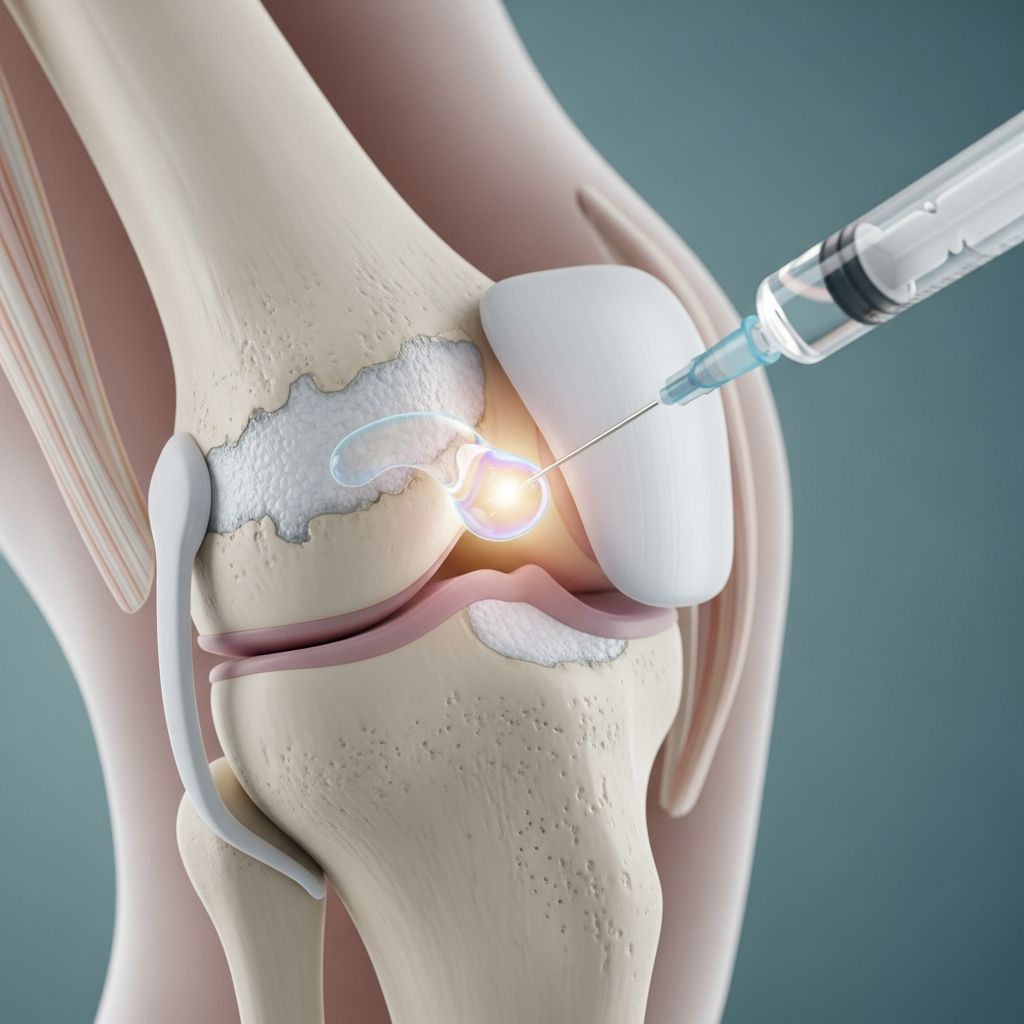
Viscosupplementation is a minimally invasive treatment option designed to help ease arthritis symptoms, particularly osteoarthritis. This procedure involves injecting a gel-like substance called hyaluronic acid directly into an affected joint, most commonly the knee. By restoring lubrication and reducing inflammation within the joint space, viscosupplementation aims to decrease pain, stiffness, and swelling while improving overall joint function and mobility. Although it does not reverse the arthritic process or regenerate damaged cartilage, many patients find this treatment beneficial as part of a comprehensive arthritis management strategy.
What Is Viscosupplementation?
Viscosupplementation is a procedure in which hyaluronic acid—a naturally occurring gel-like substance—is injected directly into a joint affected by arthritis. Hyaluronic acid is a key component of synovial fluid, the viscous liquid that surrounds and cushions joints. This fluid acts as both a lubricant, allowing bones to move smoothly over one another, and as a shock absorber that protects joints from mechanical stress during movement.
The injectable form of hyaluronic acid is a biocompatible, gel-like fluid that mimics the body’s natural joint fluid. When injected into the joint space, it works to supplement the existing synovial fluid, restoring the viscous properties necessary for smooth joint movement and pain-free function. Various commercial preparations of hyaluronic acid are available, and viscosupplementation was first approved by the U.S. Food and Drug Administration in 1997, following successful use in Europe and Asia.
Why Viscosupplementation Is Performed
Osteoarthritis, the most common form of arthritis, develops when the protective cartilage covering the ends of bones gradually wears away over time. As cartilage deteriorates, the synovial fluid within the joint becomes depleted of hyaluronic acid, resulting in reduced lubrication and increased friction between joint surfaces. This degradation of the joint environment leads to characteristic symptoms including pain, stiffness, swelling, and decreased mobility.
People with osteoarthritis often have significantly lower-than-normal concentrations of hyaluronic acid in their affected joints compared to those without arthritis. By supplementing the joint with additional hyaluronic acid through injection, viscosupplementation aims to restore the proper cushioning, lubrication, and protective functions of the synovial fluid.
Viscosupplementation is typically considered when other treatment approaches have not provided adequate symptom relief. Common initial treatments for arthritis include nonsteroidal anti-inflammatory drugs (NSAIDs), corticosteroid injections, physical therapy, weight management, and activity modification. When these conservative treatments fail to adequately control symptoms, viscosupplementation offers another therapeutic option that may provide additional pain relief and functional improvement.
Research suggests that viscosupplementation works best for patients with mild to moderate osteoarthritis in its early stages. The procedure is most commonly performed on the knee joint, though it can be used in other joints affected by arthritis. Ongoing research continues to evaluate the optimal patient populations and timing for this intervention.
Related Stories



How Viscosupplementation Works
The mechanism of action for viscosupplementation is multifactorial and continues to be studied by researchers. Hyaluronic acid molecules have remarkable water-absorbing capabilities, with each molecule capable of absorbing approximately 1,000 times its own weight in water. This unique property creates a hydrogel effect similar to the cushioning provided by healthy cartilage, absorbing water and forming a protective cushion within the joint.
Beyond simple lubrication, hyaluronic acid has demonstrated important biological effects within the arthritic joint. The substance works to downregulate pro-inflammatory factors such as prostaglandin E2 (PGE2) and nuclear factor kappa B (NFkB), reducing the inflammatory cascade that drives arthritis progression. Additionally, hyaluronic acid helps inhibit proteases and proteinases—enzymes that break down the joint matrix and destroy cartilage. By reducing inflammation and minimizing cartilage degradation, viscosupplementation addresses multiple pathways involved in osteoarthritis development.
The treatment also appears to stimulate the body’s natural production of hyaluronic acid, providing a potential longer-term benefit beyond the period during which the injected substance remains in the joint. By restoring viscoelasticity to the synovial fluid, viscosupplementation reduces mechanical forces on the joint while simultaneously modulating the inflammatory environment, creating conditions more favorable for joint health and function.
The Viscosupplementation Procedure
Viscosupplementation is typically an outpatient procedure performed in a clinical setting. Depending on the specific hyaluronic acid preparation used, patients receive between one and five injections administered over several weeks. The injection schedule varies based on the particular product selected by your healthcare provider.
Procedure Steps:
Before the injection, your provider may use imaging techniques such as ultrasound or fluoroscopy to visualize the joint and ensure precise needle placement. This imaging guidance minimizes discomfort and increases treatment effectiveness by confirming that the hyaluronic acid is delivered directly into the joint space.
If excessive fluid has accumulated within the joint due to swelling, your provider may first remove a small amount of this excess synovial fluid through a process called aspiration. This step can help relieve joint swelling and may improve symptom relief. In many cases, the aspiration and injection are performed through a single needle placed in the joint, though some providers may prefer using two separate syringes.
Your provider will then carefully inject the hyaluronic acid gel into the joint space using a syringe and needle. Depending on the extent of the arthritis and the joint involved, you may receive injections at more than one location within the joint. After the injection is complete, a small bandage is applied to the injection site.
The entire procedure is relatively quick and causes minimal discomfort for most patients. You should be able to resume normal activities shortly after the procedure, though your provider may recommend modifications to activity level during the initial recovery period.
Effectiveness of Viscosupplementation
The effectiveness of viscosupplementation in treating arthritis symptoms is an active area of clinical research. While many patients report meaningful relief of arthritis pain, stiffness, and swelling following viscosupplementation, clinical outcomes vary considerably among individuals. Some patients experience significant symptom improvement, while others may see minimal benefit from the treatment.
Current research suggests that viscosupplementation may be most effective for patients with mild to moderate osteoarthritis in its early stages. However, more research is needed to definitively establish which patient populations derive the greatest benefit and to clarify the long-term effects of treatment. Recent studies have provided increasingly supportive evidence for viscosupplementation’s ability to reduce pain, increase functionality, and potentially delay the need for surgical intervention in knee osteoarthritis.
If viscosupplementation proves effective for your symptoms, treatment can typically be repeated after approximately six months. Your healthcare provider will assess your response to the initial course of injections and recommend whether additional treatment cycles would be beneficial. Important to note is that viscosupplementation has never been demonstrated to reverse the underlying arthritic process or regenerate lost cartilage, making it a symptom-management strategy rather than a curative treatment.
Risks and Complications
Although viscosupplementation is generally considered a safe procedure, like all medical interventions, it carries potential risks and complications that you should discuss with your healthcare provider before treatment.
Common and potential risks include:
– Symptom flare-up: The most common side effect is a temporary flare of joint symptoms immediately following the injection. This typically resolves within a short period of time and may be managed with ice application and anti-inflammatory medications if needed.
– Pain at the injection site: Local pain or discomfort at the needle insertion point is common and usually mild and temporary.
– Bleeding: Minor bleeding at the injection site may occur, particularly in patients taking anticoagulant medications.
– Infection: Although uncommon, infection of the joint (septic arthritis) is a serious potential complication that requires immediate medical attention.
– Allergic reaction: Some patients may experience allergic reactions to the hyaluronic acid preparation.
– Inadequate symptom relief: In some cases, the treatment may not provide sufficient pain or symptom relief.
Your individual risk profile for complications depends on various factors including your overall health status, any underlying medical conditions, current medications, and how frequently you receive viscosupplementation injections. Discuss your specific risk factors with your healthcare provider to make an informed decision about whether this treatment is appropriate for you.
Patient Selection and Considerations
Not all arthritis patients are suitable candidates for viscosupplementation. Your healthcare provider will evaluate whether this treatment is appropriate based on the severity and stage of your arthritis, your overall health, your response to previous treatments, and your symptom severity and functional limitations.
Viscosupplementation typically works best for patients with mild to moderate osteoarthritis. Patients with severe arthritis, those who have failed to respond to other treatments, or those seeking only minimal symptom relief may be candidates for consideration. Additionally, certain medical conditions or medications may affect your suitability for the procedure.
Viscosupplementation is most commonly performed on the knee joint, where evidence for its effectiveness is most robust. However, the procedure can be adapted for use in other joints affected by osteoarthritis, though research on effectiveness in non-knee joints is more limited.
Integration Into Comprehensive Arthritis Treatment
Viscosupplementation is most effective when incorporated as part of a comprehensive, multimodal approach to arthritis management. Rather than serving as a standalone treatment, viscosupplementation works best in conjunction with other evidence-based interventions.
Physical therapy plays an important complementary role by helping improve joint mobility, strengthen supporting muscles, increase range of motion, and enhance overall functional capacity. Regular appropriate exercise helps maintain joint health and can amplify the benefits gained from viscosupplementation.
Other components of a comprehensive arthritis management plan may include weight management to reduce stress on joints, activity modification to avoid excessive joint stress, nonsteroidal anti-inflammatory medications to manage inflammation and pain, corticosteroid injections for acute symptom flares, and lifestyle modifications including adequate rest and sleep.
Your healthcare provider will work with you to develop a treatment plan that combines viscosupplementation with these other evidence-based approaches, tailored to your specific needs, symptom severity, and functional goals.
What to Expect After Viscosupplementation
Following viscosupplementation, most patients can resume normal daily activities relatively quickly. However, your provider may recommend limiting strenuous activities or heavy impact activities for a few days after the injection to allow the hyaluronic acid to fully distribute within the joint.
Ice application during the first 24 to 48 hours following injection can help minimize any post-injection swelling or discomfort. Most patients can expect to notice gradual improvement in symptoms over the following weeks, with maximum benefit often occurring within 4 to 8 weeks of injection.
The duration of symptom relief varies among patients, ranging from several weeks to several months. Your provider will monitor your response to treatment and discuss with you whether repeat injections would be beneficial.
Frequently Asked Questions
Q: How long does viscosupplementation take to work?
A: Most patients begin experiencing gradual improvement in symptoms within 1 to 4 weeks following injection, with maximum benefit typically occurring within 4 to 8 weeks. However, individual response varies considerably.
Q: Can viscosupplementation cure arthritis?
A: No. Viscosupplementation does not cure arthritis or reverse the arthritic process. It is a symptom-management treatment that may reduce pain, stiffness, and swelling but does not regenerate damaged cartilage.
Q: How often can I receive viscosupplementation injections?
A: Treatment can typically be repeated every 6 months if the initial course provides benefit. Your provider will determine the appropriate treatment schedule based on your individual response.
Q: Is viscosupplementation painful?
A: The procedure is generally well-tolerated with minimal discomfort. Some patients may experience temporary soreness or a flare of symptoms immediately after injection, which usually resolves quickly.
Q: Can viscosupplementation be used for joints other than the knee?
A: While most commonly performed on the knee, viscosupplementation can be adapted for other joints affected by osteoarthritis, though evidence for effectiveness is most robust in the knee.
References
- Viscosupplementation Treatment for Arthritis — UMass Memorial Health. 2024. https://www.ummhealth.org/health-library/viscosupplementation-treatment-for-arthritis-0
- Viscosupplementation Treatment for Knee Arthritis — American Academy of Orthopaedic Surgeons (AAOS). 2024. https://orthoinfo.aaos.org/en/treatment/viscosupplementation-treatment-for-knee-arthritis/
- A Comprehensive Review of Viscosupplementation in Osteoarthritis — National Center for Biotechnology Information (NCBI). 2024. https://pmc.ncbi.nlm.nih.gov/articles/PMC8567800/
- What Are Viscosupplement Injections? — Mahwah Valley Orthopedic. 2024. https://mahwahvalleyorthopedic.com/what-are-viscosupplement-injections/
- U.S. Food and Drug Administration (FDA) Medical Device Approval Records — FDA. 2024. https://www.fda.gov
Similar Articles








Read full bio of medha deb