Vision Changes in Aging: Understanding Eye Health
Discover how aging affects your eyes and practical strategies to maintain clear vision
The human eye is a remarkable organ, but like all biological systems, it undergoes significant transformations as we age. From the teenage years through advanced age, our eyes experience predictable changes that affect how we see the world. Understanding these modifications helps individuals recognize normal age-related shifts versus warning signs that require professional attention. While some vision changes are inevitable, awareness and proactive care can help preserve visual function and quality of life into later years.
The Aging Process and Lens Changes
One of the most fundamental transformations occurs within the crystalline lens, the transparent structure responsible for focusing light onto the retina. During middle age, typically between 40 and 50 years old, the lens gradually loses its flexibility and elasticity. This process, known as presbyopia, makes it increasingly difficult to focus on nearby objects. The lens becomes less able to change shape—a process called accommodation—which is essential for reading, sewing, and other close-up activities.
Presbyopia affects nearly everyone eventually, regardless of whether they previously needed glasses. Individuals with excellent distance vision suddenly find themselves holding reading materials at arm’s length or struggling in dim lighting. Reading glasses, bifocals, or progressive lenses can compensate for this natural change.
Beyond flexibility loss, the lens undergoes chemical and structural modifications. The normally transparent lens gradually develops a yellowish or brownish tint due to cumulative ultraviolet light exposure over decades. This yellowing contributes to difficulty distinguishing certain colors, particularly blues from blacks. Additionally, the lens may develop increasing rigidity, a condition called nuclear sclerosis, which compounds the loss of focusing ability.
Cataracts: When Lens Clarity Diminishes
As years accumulate, the lens may become progressively cloudy rather than remaining transparent. This clouding, called a cataract, represents one of the most common age-related eye conditions. Cataracts develop as proteins within the lens denature and aggregate, scattering light rather than transmitting it clearly. The haziness can range from mild, causing minimal vision problems, to severe, significantly impairing sight.
The development of cataracts often coincides with glare sensitivity and reduced contrast sensitivity. Older adults with cataracts frequently report difficulty driving at night due to glare from oncoming headlights. While cataracts cannot be reversed through medication, surgical removal and replacement with artificial lenses represents one of the most successful surgical interventions in medicine.
Moisture and Tear Production Changes
The eye’s surface requires constant moisture to maintain clarity and comfort. With aging, tear production naturally decreases, a change resulting from reduced mucous cells in the conjunctiva—the transparent membrane covering the white of the eye. This decline leaves the eye surface more vulnerable to dryness.
Dry eye syndrome becomes increasingly prevalent in older adults, causing symptoms including burning sensations, scratchiness, and paradoxically, excessive tearing when the eyes become irritated. The eye responds to dryness by producing a reflex tear response, which explains why some older adults experience tearing even though their baseline tear production has diminished. Simple interventions such as increased hydration, artificial tear drops, and environmental humidity adjustments can alleviate dry eye symptoms.
Related Stories



Structural Changes in Eye Appearance
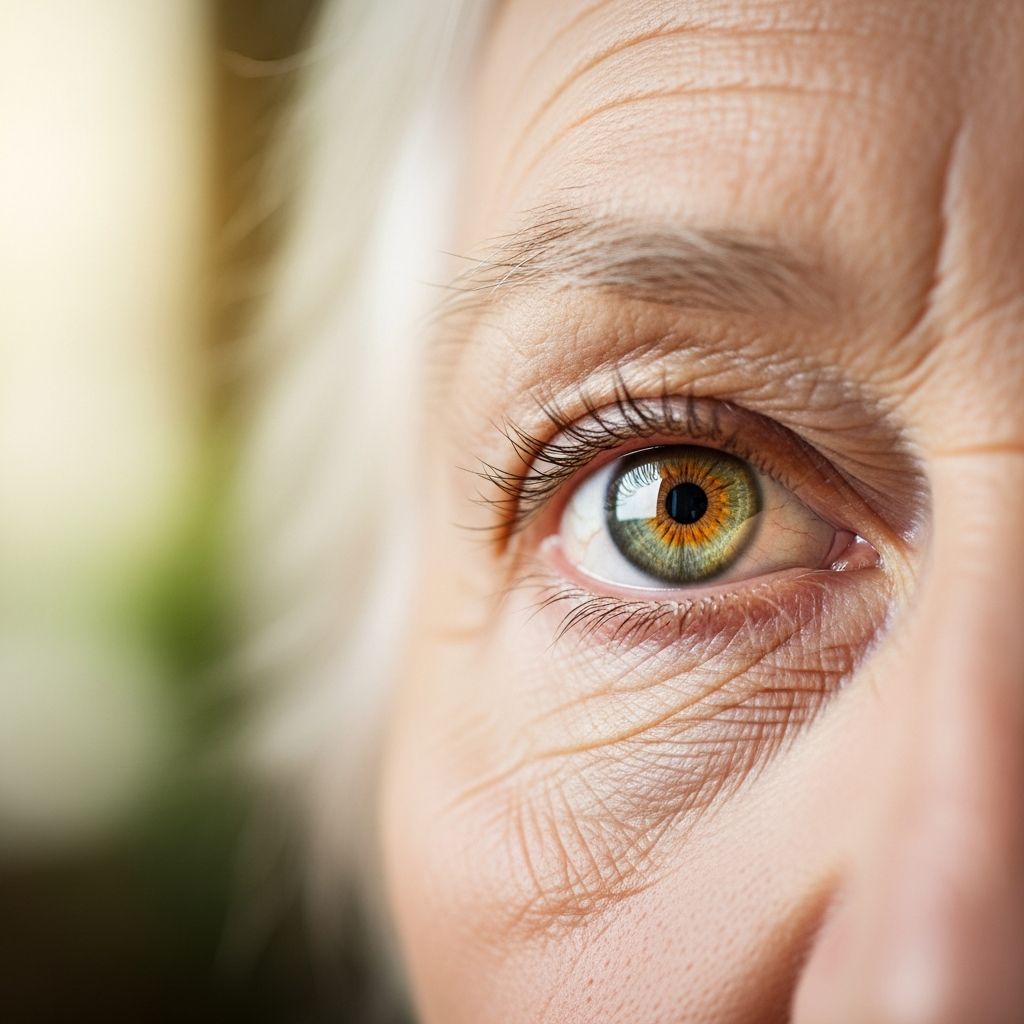
Aging produces visible changes to the eye’s external structure. The conjunctiva—the clear tissue covering the sclera (white of the eye)—gradually thins with age. Simultaneously, the sclera itself may develop a bluish hue due to increased transparency, allowing underlying blood vessels to become more visible.
Another common finding in adults over 60 is arcus senilis, a gray-white ring of calcium and cholesterol deposits that appears at the cornea’s edge. While this condition affects appearance, it does not impair vision or indicate disease. Similarly, fat loss around the eye orbit can cause the eyeball to sink slightly backward—a condition called enophthalmos—or conversely, orbital fat can bulge forward into the eyelids, creating a perpetually puffy appearance.
Eyelid Function and Position Changes
The muscles controlling eyelid movement weaken significantly with age. This loss of muscular tone, combined with gravity and age-related tissue looseness, can cause eyelids to change position. The lower eyelid may turn outward away from the eye (ectropion), reducing tear coverage and causing irritation. Alternatively, it may turn inward (entropion), allowing eyelashes to rub directly against the eyeball surface, creating discomfort and potential scratching.
The upper eyelid can develop ptosis, a drooping condition that occurs when the lid loses strength and support. In some cases, ptosis becomes severe enough to interfere with the upper portion of vision. These eyelid conditions often require surgical correction when they significantly impact vision or comfort.
Pupil Function and Light Adaptation
The muscles controlling pupil size—the iris muscles—naturally weaken with advancing age. As a result, pupils become smaller and respond more sluggishly to light changes. This delayed response has important practical implications for older adults, particularly during activities like night driving. When transitioning from a brightly lit environment to darkness, pupils dilate more slowly, temporarily reducing vision in low-light conditions.
These pupillary changes create specific challenges during evening driving. Oncoming headlights cause initial glare and dazzling as pupils struggle to constrict quickly enough. Additionally, the reduced pupil size limits the amount of light reaching the retina, making objects appear dimmer overall. Older adults often require significantly brighter illumination for reading and other detailed tasks compared to their younger selves.
Retinal Changes and Vision Clarity
The retina—the light-sensitive tissue lining the back of the eye—experiences multiple age-related modifications. Visual acuity, the sharpness of vision, naturally declines despite using the best corrective glasses. This reduction occurs because less light reaches the retina in older eyes, and existing eye conditions like cataracts further reduce light transmission.
Older adults frequently report an increased need for contrast between objects and their backgrounds. This reflects genuine changes in retinal function and light processing. Additionally, many seniors notice increased floaters—small black specks or cloud-like shapes drifting through the visual field. These floating debris typically result from changes in the vitreous humor, the gel filling the eye’s interior. While floaters usually do not significantly impair vision, a sudden increase or appearance of new floaters warrants professional evaluation, as they can sometimes indicate retinal problems.
Age-Related Macular Degeneration
Age-related macular degeneration (AMD) represents the leading cause of vision loss in older adults. The macula, a small region at the retina’s center, is responsible for detailed central vision necessary for reading, driving, and recognizing faces. AMD damages this critical area, causing progressive loss of central vision while typically preserving peripheral or side vision.
AMD affects older adults more frequently, particularly fair-skinned individuals, and shows a familial tendency. Risk factors include smoking, cardiovascular disease, and inadequate nutrition. Two forms exist: dry AMD (atrophic), characterized by gradual cellular degeneration, and wet AMD (neovascular), involving abnormal blood vessel growth. Early detection through regular eye examinations enables interventions such as dietary supplements containing specific vitamins and minerals, which may slow progression.
Glaucoma Development in Later Years
Glaucoma, a disease characterized by elevated intraocular pressure damaging the optic nerve, becomes increasingly common with age. This condition typically progresses without noticeable symptoms until significant vision loss has occurred, earning it the nickname “the silent thief of sight.” Chronic glaucoma causes gradual peripheral vision loss.
Regular comprehensive eye examinations including intraocular pressure measurement and optic nerve evaluation are crucial for early detection. When identified early, glaucoma can be managed through medications, laser treatments, or surgery to slow progression.
Diabetic Retinopathy in Aging Populations
Older adults with diabetes face an increased risk of diabetic retinopathy, a condition involving damage to retinal blood vessels. Elevated blood sugar levels over years or decades cause progressive vascular deterioration. Careful diabetes management through medication, dietary control, and exercise helps prevent or slow this complication.
Comprehensive dilated eye examinations can detect early diabetic retinopathy changes before vision becomes compromised, enabling timely intervention. The longer someone has had diabetes, the greater the risk of retinopathy, making older adults with long-standing diabetes particularly vulnerable.
Retinal Detachment Risk
The retina can separate from the underlying tissue supporting it, a serious condition requiring immediate medical attention. Older adults face increased retinal detachment risk. Symptoms include sudden flashes of light, increased floaters, or a curtain-like shadow appearing in the visual field. These warning signs demand urgent evaluation, as prompt treatment can prevent permanent vision loss.
Low Vision in Advanced Age
Despite best corrective efforts, some older adults develop low vision—significant visual impairment that glasses or surgery cannot fully correct. Various causes contribute to low vision, including advanced macular degeneration, glaucoma, cataracts, and diabetic retinopathy. Rehabilitation services and adaptive tools, such as magnification devices, specialized lighting, and large-print materials, can enhance independence and quality of life for individuals with low vision.
Protective Measures and Preventive Strategies
- UV Protection: Wearing sunglasses with 100% ultraviolet (UV) protection and wide-brimmed hats reduces cumulative UV damage to the lens and macula, lowering cataract and AMD risk
- Regular Eye Examinations: Comprehensive dilated eye exams detect conditions like glaucoma, AMD, cataracts, and diabetic retinopathy before symptoms appear
- Nutritional Support: Diets rich in leafy greens, fish, and foods containing vitamins C and E, zinc, and lutein support retinal health and may reduce AMD progression
- Hydration and Tear Management: Adequate water intake and artificial tears alleviate dry eye symptoms common in older adults
- Smoking Cessation: Smoking accelerates AMD development and increases glaucoma risk, making cessation beneficial for eye health at any age
- Diabetes and Cardiovascular Management: Controlling blood sugar levels prevents diabetic retinopathy, while managing blood pressure and cardiovascular health protects retinal blood vessels
- Adequate Lighting: Increasing illumination brightness and contrast in living spaces compensates for reduced light reaching the aging retina
Living Well With Age-Related Vision Changes
Understanding how aging transforms vision helps older adults distinguish normal changes from warning signs requiring professional evaluation. Many age-related vision changes, while inevitable, need not significantly impact daily functioning. Corrective lenses, surgical interventions, and adaptive strategies enable individuals to maintain independence and quality of life.
The key to preserving vision lies in recognizing changes early, maintaining regular eye care appointments, protecting eyes from environmental damage, and adopting lifestyle modifications supporting ocular health. With proper attention to eye health throughout life, many older adults successfully maintain functional vision well into their later years.
References
- Effects of Aging on the Eyes — Merck Manuals, Christopher J. Brady, MD. https://www.merckmanuals.com/home/eye-disorders/biology-of-the-eyes/effects-of-aging-on-the-eyes
- Caring for Aging Eyes: A Guide to Eye Health for Retirees — Pacific Eye MD. https://www.pacificeyemd.com/guide-to-eye-health-for-retirees/
- Eye Care for the Aging Eye — University of Virginia School of Medicine, Department of Ophthalmology. https://med.virginia.edu/ophthalmology/wp-content/uploads/sites/295/2015/12/AgingEye.pdf
- Aging and Your Eyes — National Institute on Aging (NIA), National Institutes of Health. https://www.nia.nih.gov/health/vision-and-vision-loss/aging-and-your-eyes
- Common Age-Related Eye Problems — Cleveland Clinic. https://my.clevelandclinic.org/health/diseases/common-age-related-eye-problems
- Senior Vision: Over 60 Years of Age — American Optometric Association (AOA). https://www.aoa.org/healthy-eyes/eye-health-for-life/senior-vision
Similar Articles








Read full bio of medha deb