Visual Acuity: Complete Guide To Sharpness Of Sight
Master the fundamentals of visual acuity testing, from classic charts to modern digital tools, and discover how sharp vision impacts daily life.
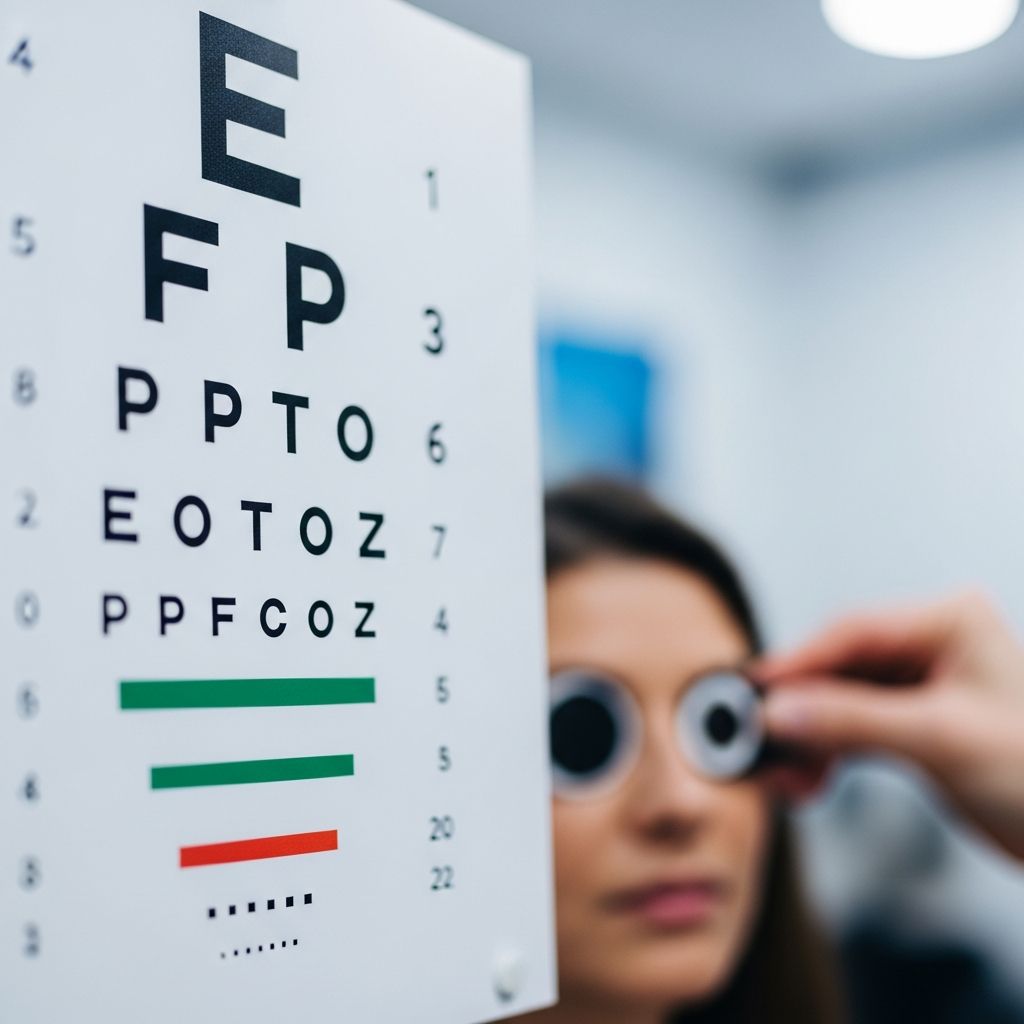
Visual acuity represents the clarity and sharpness of vision, serving as a cornerstone in assessing eye health and overall visual function. This metric quantifies the ability to discern fine details, playing a pivotal role in activities ranging from reading to driving.
The Science Behind Visual Acuity
At its core, visual acuity measures the spatial resolution of the visual system, determined by how well the eye and brain process visual stimuli. It evaluates the smallest details a person can resolve at a given distance, typically using standardized optotypes like letters or symbols. The fovea, the central part of the retina packed with cone cells, is primarily responsible for high-acuity vision. Under ideal conditions, human eyes achieve resolutions down to 0.4 arc minutes using advanced interferometry that bypasses optical flaws.
Expressed in various formats, acuity is often denoted as a fraction (e.g., 20/20), decimal (1.0), or logMAR scale. A 20/20 rating means a person sees at 20 feet what a normal eye sees at that distance, corresponding to a 5-arc-minute visual angle for optotypes.
Traditional Methods of Measuring Visual Acuity
Eye charts have long been the gold standard for acuity assessment. The Snellen chart, developed in 1862, features rows of letters decreasing in size, viewed from 20 feet (6 meters). Patients read aloud until missing more than half the letters on a line, yielding results like 20/40.
- Key Features: Proportional letter spacing and sizing ensure consistent retinal image size.
- Limitations: Unequal letter counts per line and variable illumination can skew results.
Other traditional tools include the Landolt C ring, where observers identify gap orientations, ideal for illiterate or pediatric patients.
Advanced and Gold Standard Testing Protocols
The Early Treatment Diabetic Retinopathy Study (ETDRS) logMAR chart sets the modern benchmark. Retro-illuminated with five optotypes per line, it spans 4 meters and uses logarithmic progression for precise grading. LogMAR converts acuity to a logarithmic scale where 0.0 equals 20/20, and each 0.1 unit drop represents one line worse.
Testing involves monocular assessment post-refraction, occluding the fellow eye, under controlled lighting. Patients guess letters on borderline lines for accuracy.
| Method | Distance | Scale | Strengths | Weaknesses |
|---|---|---|---|---|
| Snellen Chart | 20 ft / 6 m | 20/20 fraction | Widely available, familiar | Inconsistent lines, less precise |
| ETDRS logMAR | 4 m | LogMAR (e.g., 0.0) | High precision, standardized | Costly, space-intensive |
| Near Chart (Rosenbaum) | 14 in / 35 cm | Equivalent logMAR | Portable, quick | Less standardized for distance |
Digital Innovations in Vision Assessment
Smartphone apps and computerized tests like FrACT are revolutionizing acuity measurement. These tools present randomized optotypes, ensuring reliability without memorization bias. A study comparing ETDRS, near charts, and app-based tests found strong correlations, with apps accurate even for remote monitoring during pandemics.
Electro-physiologic methods, such as visual evoked potentials (VEPs), measure brain responses to gratings without behavioral input, useful for infants or severe impairments. Vernier acuity tests hyperacuity by aligning lines, surpassing standard resolution limits at 8 arc seconds.
Factors Influencing Visual Acuity Results
Several variables affect measurements:
- Refractive Errors: Uncorrected nearsightedness or farsightedness blurs lines; pre-testing refraction is essential.
- Illumination and Distance: Proper room lighting and exact positioning prevent errors.
- Patient Factors: Age, fatigue, or motivation impact performance; children may need picture charts.
- Binocular vs. Monocular: Binocular vision often yields better acuity.
Consistent protocols, per standards like EN ISO 8596, ensure reproducibility.
Clinical Importance of Accurate Acuity Testing
Related Stories



Visual acuity guides diagnosis, treatment urgency, and progress tracking. It’s vital for detecting conditions like diabetic retinopathy, cataracts, or amblyopia. In research, logMAR enables precise comparisons across studies. Routine testing detects subtle declines early, preventing irreversible loss.
Preserving and Enhancing Visual Acuity
Maintain sharpness through:
- Annual eye exams for early detection.
- UV-protective sunglasses to shield retinas.
- Balanced diet rich in lutein and zeaxanthin.
- Screen time limits to reduce digital strain.
- Corrective lenses or surgery for refractive issues.
Laser interferometry pre-surgery confirms retinal health despite media opacities.
Visual Acuity in Special Populations
Pediatric testing uses Lea symbols or HOTV charts to engage children. Low-vision patients benefit from larger optotypes or contrast sensitivity tests. Elderly individuals face age-related declines, necessitating frequent monitoring.
Common Misconceptions About Vision Tests
- 20/20 is Perfect: It’s average normal; some achieve 20/10.
- Only Letters Count: Symbols work for non-readers.
- Apps Replace Doctors: Useful adjuncts, but professional calibration needed.
Frequently Asked Questions (FAQs)
What does 20/20 vision really mean?
It indicates seeing at 20 feet what a normal eye sees at that distance, equivalent to 1.0 decimal or 0.0 logMAR.
How often should I test my visual acuity?
Adults: every 1-2 years; more frequently with risks like diabetes.
Can smartphone apps accurately measure acuity?
Yes, studies show good agreement with ETDRS charts under controlled conditions.
What’s the difference between Snellen and logMAR?
Snellen uses fractions with variable precision; logMAR offers equal steps for better statistics.
Does age affect visual acuity?
Yes, peak in young adulthood, declining after 40 due to lens changes.
References
- Visual acuity – Wikipedia — Wikipedia contributors. 2023-10-15. https://en.wikipedia.org/wiki/Visual_acuity
- Comparison of Visual Acuity Measurement Using Three Methods: Standard ETDRS Chart, Near Chart and a Smartphone-Based Eye Chart Application — Dove Press. 2021-06-10. https://www.dovepress.com/comparison-of-visual-acuity-measurement-using-three-methods-standard-e-peer-reviewed-fulltext-article-OPTH
- Back to the basics: Understanding methods for measuring visual acuity — Optometry Times. 2025-01-01. https://www.optometrytimes.com/view/back-to-the-basics-understanding-methods-for-measuring-visual-acuity
- Visual Acuity – Clinical Methods — NCBI Bookshelf. 2023. https://www.ncbi.nlm.nih.gov/books/NBK219/
- Visual acuity test — UCSF Health. 2024. https://www.ucsfhealth.org/medical-tests/visual-acuity-test
Similar Articles








Read full bio of Sneha Tete