Visual Evoked Potential (VEP) Test: Procedure & Results
Comprehensive guide to VEP testing: understanding procedures, applications, and interpretation of results.
Understanding Visual Evoked Potential (VEP) Tests
A visual evoked potential (VEP) test is a noninvasive diagnostic procedure that measures the electrical signal your visual cortex generates in response to visual stimulation. Also known as a visual evoked response (VER), this specialized neurological test plays an important role in assessing how your eyes and brain work together to interpret visual information. By measuring the electrical activity in your brain as it responds to visual stimuli, healthcare providers can identify abnormalities in your visual pathway and diagnose various neurological conditions.
The VEP test works by recording electrical impulses as they travel between brain cells in response to visual input. This noninvasive approach allows neurologists and other healthcare specialists to evaluate the function of your visual system without requiring surgery or other invasive procedures. Understanding how this test works and what it can reveal is essential for patients who may need to undergo this diagnostic evaluation.
What Does a Visual Evoked Potential Test Measure?
A VEP test specifically measures the electrical signal generated by your visual cortex, which is the region of your brain responsible for processing visual information. More precisely, the test assesses the function of your entire visual pathway, which includes several critical structures:
– Your retina, which captures light and converts it into electrical signals- Your optic nerve, which transmits visual information from the eye to the brain- Your optic chiasm, where the optic nerves from both eyes meet and partially cross- Your optic tract, which carries visual signals to the back of your brain- Your visual cortex, located in the occipital lobe at the back of your brain
Any abnormality affecting these visual pathways or the visual cortex itself can appear as an abnormality on the VEP test, making it a valuable diagnostic tool for identifying vision-related neurological issues.
Conditions Diagnosed with Visual Evoked Potential Tests
Visual evoked potential tests can help diagnose or point to several important conditions that affect the nervous system and vision:
– Multiple sclerosis, particularly when optic nerve inflammation occurs- Optic neuritis, which involves inflammation of the optic nerve- Head or brain trauma that may affect visual pathways- Brain tumors, including gliomas on the optic nerve- Demyelinating diseases that damage nerve coverings- Other neurological conditions affecting visual function
Additionally, VEPs can help providers assess the progression of certain already-diagnosed neurodegenerative conditions. This monitoring capability makes the test valuable not just for initial diagnosis but also for tracking disease progression over time.
How the Visual Evoked Potential Test Works
The Basic Procedure
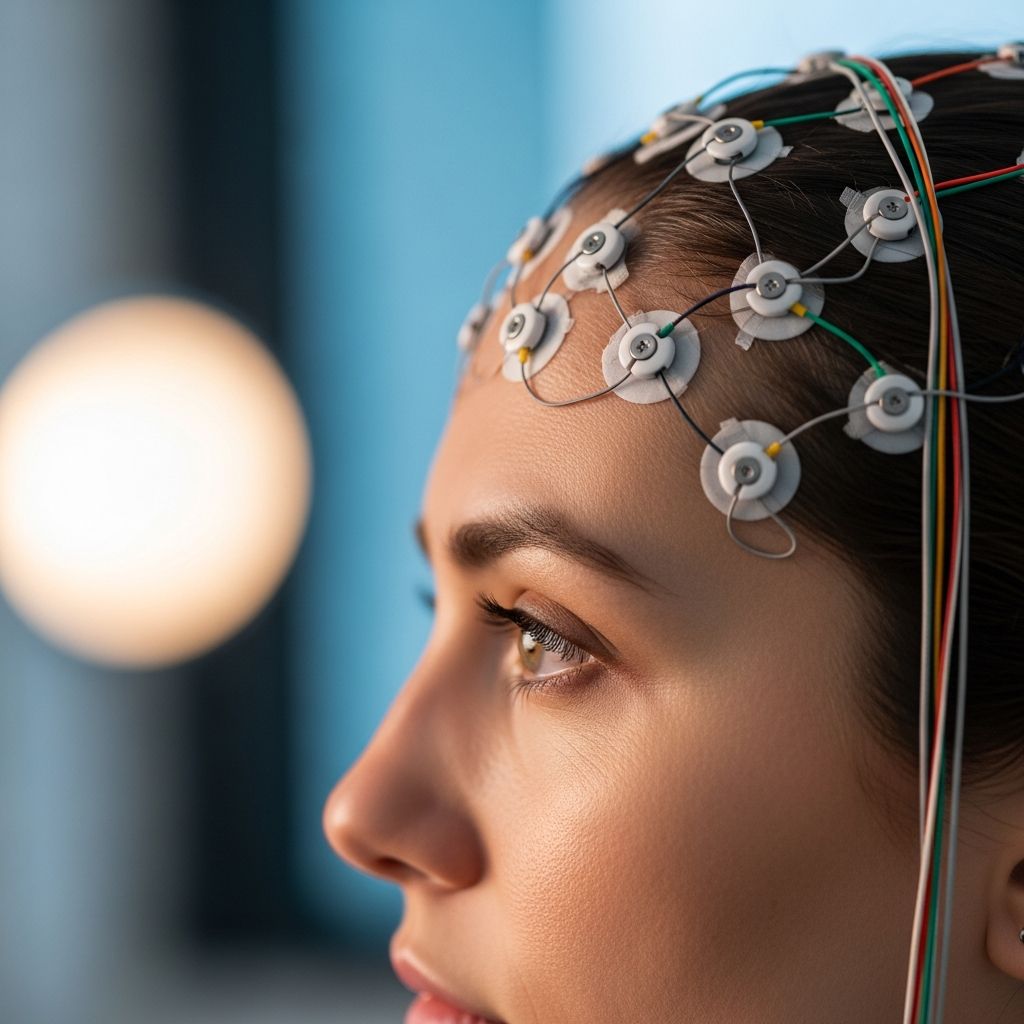
A visual evoked potential test involves a straightforward process that takes place in a neurophysiology laboratory. Electrodes are placed on specific parts of your scalp to measure electrical signals as they travel between brain cells. As you watch a visual stimulus—most commonly a flashing checkerboard pattern displayed on a screen—your visual pathway responds to and interprets the stimulus. The electrodes record the resulting electrical activity in your brain.
Related Stories



During the test, the evoked potential machine averages the EEG signals following multiple visual stimuli to accurately assess the functioning of your visual pathway. The machine records the electrical response to visual stimulation on several channels or traces. Your brain’s visual cortex produces specific waveforms that occur at very specific times in response to visual stimuli. A specialist then interprets these wave patterns and looks for abnormal activity that can indicate various issues with your visual pathway.
The Role of Electroencephalography
Healthcare providers run VEP tests in the background of an electroencephalogram (EEG), which records general electrical activity in the brain. This combination allows for comprehensive assessment of your brain’s electrical functioning while specifically isolating your response to visual stimuli. The specialized equipment used in VEP testing is designed to filter out background brain activity and focus on the precise electrical signals generated in response to the visual pattern.
Preparing for Your VEP Test
Proper preparation is essential for ensuring accurate VEP test results. Your healthcare provider will go over what to expect during the test and provide specific instructions on how to prepare. Don’t hesitate to ask questions or voice any concerns you may have about the procedure.
Pre-Test Requirements
Before your VEP test, you’ll need to ensure your hair is clean and free of any products that could interfere with electrode function. Specifically, you should avoid using:
– Hair sprays- Hair gels- Hair oils- Other styling products
These products can create a barrier between your scalp and the electrodes, preventing proper electrical contact and potentially compromising test accuracy. Additionally, your healthcare provider may recommend wearing comfortable, loose-fitting clothing and arriving a few minutes early to allow time for the electrode placement process.
What to Expect During the Test
Step-by-Step Procedure
While the specific process may vary depending on the type of VEP test being performed, you can generally expect the following experience:
– You will be seated comfortably in front of a screen in a quiet testing room- Recording electrodes will be attached to your scalp at predetermined locations using a conductive paste or adhesive- The test administrator will verify that all electrodes are properly positioned and making good contact with your scalp- You will be instructed to focus on the center of the screen and keep your eyes fixed on the displayed pattern- A flashing checkerboard pattern will appear on the screen, alternating between black and white squares- You’ll watch the pattern for the duration of the test while the electrodes record your brain’s electrical response- The test may take up to 60 minutes to complete, depending on the specific type of VEP being performed- Multiple stimulus presentations will occur to ensure accurate averaging of your brain’s response
Throughout the test, remain still and relaxed. The procedure is painless and involves no electrical stimulation—the electrodes only record activity, they don’t send signals into your brain. You may be asked to blink periodically or follow specific instructions from the test administrator, but the overall experience is straightforward and well-tolerated by most patients.
Types of Visual Evoked Potential Tests
Several different types of VEP tests exist, each with specific applications and variations in the visual stimulus used. The most common type is the pattern-reversal VEP, which uses a checkerboard pattern that rapidly reverses its black and white squares. This type is particularly useful for detecting delays in optic nerve conduction.
Flash VEPs use brief flashes of light rather than patterned stimuli and are often used when patients cannot adequately view or respond to pattern stimuli. Multifocal VEPs assess different regions of the visual field simultaneously, providing localized information about various parts of your visual pathway. Your healthcare provider will determine which type of VEP test is most appropriate based on your specific clinical situation and the conditions being investigated.
Understanding Your Visual Evoked Potential Test Results
How Results Are Interpreted
Once a specialist has interpreted the results of your VEP test, they’ll prepare a detailed report and send it to your healthcare provider, who will then share the results with you. Interpretation requires specialized expertise, as neurologists or neurophysiologists must analyze the waves your brain creates in response to the visual stimulus and compare them to established normal values.
The specialists plot these waveforms on a graph, examining both the timing (latency) and the size (amplitude) of the electrical responses. Normal VEP latency occurs at approximately 100 milliseconds (msec) after the visual stimulus, referred to as the P100 wave. Any significant deviation from these normal parameters can indicate abnormal visual pathway function.
What Different Results May Indicate
VEPs can detect several different issues in your visual pathway, and each issue has a different presentation in terms of the shape of the wave and the timing of the response. For example, in demyelinating conditions of the optic nerve—such as multiple sclerosis—the VEP test shows a delay in your brain’s responses. This prolonged latency suggests that electrical signals are traveling more slowly along the optic nerve, often due to inflammation or demyelination affecting the nerve.
Other abnormalities might include reduced amplitude (smaller wave size), indicating decreased signal strength, or unusual waveform shapes suggesting specific types of visual pathway damage. Your healthcare provider will explain what your specific results mean and whether they indicate the presence of a particular condition or require additional testing for clarification.
Advantages and Limitations of VEP Testing
Strengths of the VEP Test
Visual evoked potential testing offers several significant advantages as a diagnostic tool. The procedure is completely noninvasive, requiring no injections, radiation exposure, or invasive procedures. The test is also relatively quick and well-tolerated by patients, with no pain or discomfort beyond the mild sensation of electrode adhesive on the scalp. VEP testing provides objective, measurable data about visual pathway function rather than relying solely on patient symptoms or subjective visual assessments.
Considerations and Limitations
VEP testing does have some limitations that healthcare providers consider when ordering diagnostic tests. The test is highly technique-dependent, meaning that the person administering the test and the person interpreting the results must be highly skilled, with limited room for error. Additionally, VEP results must be interpreted in the clinical context—abnormal results require correlation with clinical symptoms and other diagnostic findings to establish a definitive diagnosis.
Other Types of Evoked Potential Tests
Beyond visual evoked potentials, healthcare providers may use other types of evoked potential tests depending on the clinical situation. Somatosensory evoked potential (SEP) tests use electrical stimulation to measure nerve impulses traveling from peripheral nerves through the spinal cord to the brain. These tests can help assess spinal cord function and identify demyelination or other abnormalities affecting motor and sensory pathways.
Brainstem auditory evoked potentials (BAEP) measure your brain’s electrical response to sound stimuli and can help evaluate the auditory nerve and brainstem pathways. However, it’s important to note that magnetic resonance imaging (MRI) has increasingly become the preferred method for looking for lesions or scarring on the spinal cord in conditions like multiple sclerosis, reducing reliance on some evoked potential testing.
Frequently Asked Questions About VEP Tests
Q: Is the VEP test painful?
A: No, the VEP test is completely painless. The electrodes only record electrical activity; they do not send any electrical current into your brain. You may feel slight discomfort from the electrode adhesive when it’s removed, but the actual testing procedure causes no pain.
Q: How long does a VEP test take?
A: A VEP test typically takes up to 60 minutes to complete, though the actual time may vary depending on the specific type of test being performed and individual factors.
Q: Can I eat or drink before my VEP test?
A: Most healthcare providers allow normal eating and drinking before a VEP test since it’s a noninvasive procedure. However, check with your specific testing facility for their particular pre-test instructions.
Q: What should I wear for my VEP test?
A: Wear comfortable, loose-fitting clothing. Avoid wearing tight hats, headbands, or other items that might interfere with electrode placement on your scalp. You may be asked to remove glasses or contact lenses, so verify this with your healthcare provider beforehand.
Q: Are there any risks associated with VEP testing?
A: VEP testing is very safe with minimal to no risks. Some people may experience mild anxiety about the procedure or temporary skin irritation from the electrode adhesive, but serious complications are extremely rare.
Q: When will I get my results?
A: Your healthcare provider will receive your VEP results within a few days after the test. They will then schedule a follow-up appointment to discuss the findings with you and explain what the results mean for your diagnosis and treatment plan.
Q: Can I drive after my VEP test?
A: Yes, you can drive after your VEP test. The procedure doesn’t affect your ability to drive or operate machinery, and no sedation is used during the test.
Conclusion
Visual evoked potential testing remains an important diagnostic tool in neurological practice, offering valuable objective information about how your visual system functions. As a noninvasive, painless procedure that provides measurable data about optic nerve and visual pathway function, VEP testing can help healthcare providers diagnose various neurological conditions and monitor disease progression. While newer technologies have supplemented VEP testing in some clinical contexts, this test continues to play an important role in comprehensive neurological evaluation. Your healthcare provider will explain whether VEP testing is appropriate for your situation and what your results mean for your health and treatment plan.
References
- Visual Evoked Potential (VEP Test): Procedure & Results — Cleveland Clinic. 2024. https://my.clevelandclinic.org/health/diagnostics/24650-visual-evoked-potential-vep-test
- Visual Evoked Potential (VEP) Test for Multiple Sclerosis — HealthCentral. 2024. https://www.healthcentral.com/condition/multiple-sclerosis/visual-evoked-potential-test
- Evaluation of optic neuropathy in multiple sclerosis using low-contrast visual acuity — National Center for Biotechnology Information (NCBI). https://pmc.ncbi.nlm.nih.gov/articles/PMC2788801/
- Optic Neuritis Clinical Guide — Cleveland Clinic. 2024. https://my.clevelandclinic.org/departments/neurological/depts/multiple-sclerosis/ms-approaches/optic-neuritis
- Evoked Potentials — Cleveland Clinic Abu Dhabi. https://www.clevelandclinicabudhabi.ae/en/health-hub/health-resource/diagnostics-and-testing/evoked-potentials
Similar Articles








Read full bio of Sneha Tete