Visual Field Testing: Complete Guide For Patients
Discover how visual field tests detect hidden vision loss from glaucoma, strokes, and more to protect your sight early.
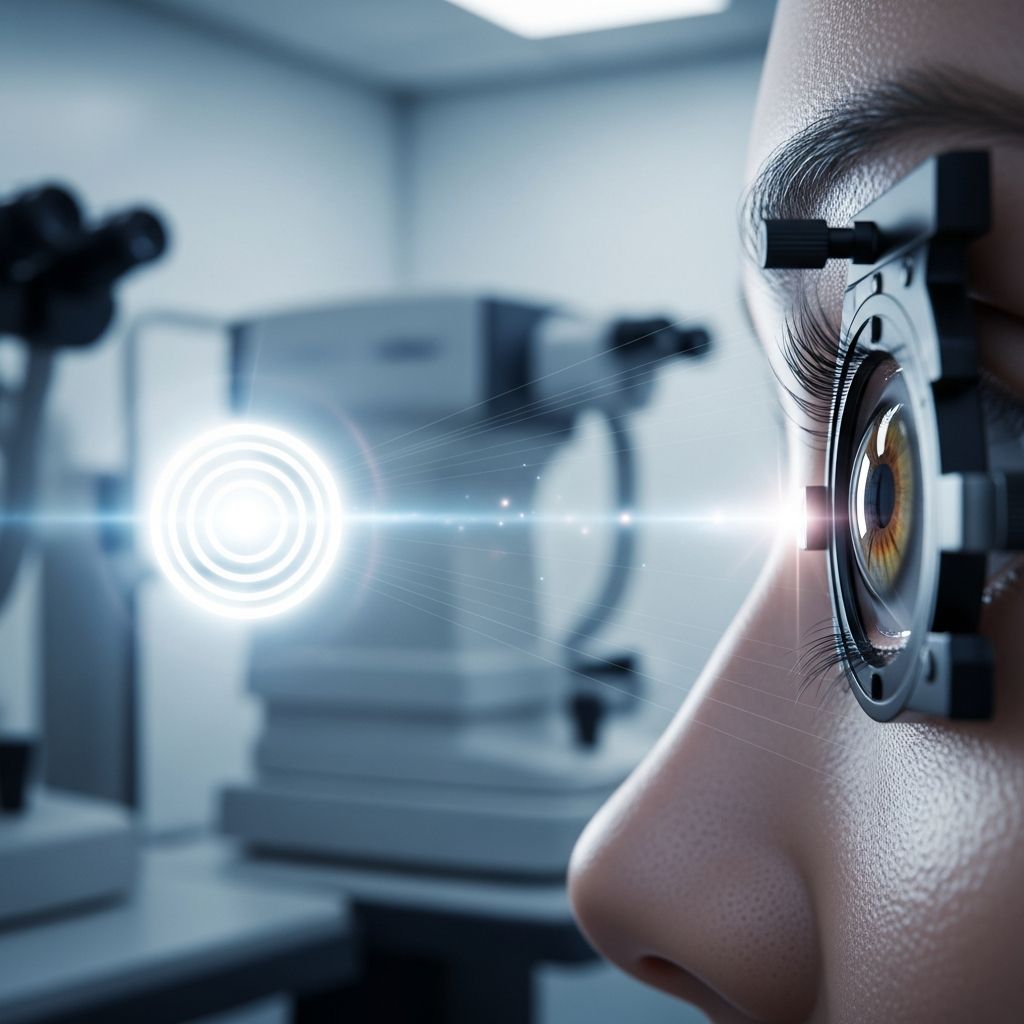
Visual field testing evaluates the full scope of your peripheral and central vision, identifying subtle defects that might indicate serious eye or neurological conditions. This non-invasive exam helps clinicians detect issues like glaucoma before noticeable symptoms appear, enabling timely intervention to preserve vision.
Understanding Your Visual Field
The
visual field
encompasses everything you can see without moving your eyes while focusing on a central point, including side, upper, and lower vision. Healthy individuals have a wide field—about 180 degrees horizontally—but diseases can create blind spots or narrowed areas.Vision loss often starts peripherally, and the brain compensates by filling gaps, delaying self-detection. Regular testing reveals these changes early, crucial for conditions affecting the optic nerve, retina, or brain pathways.
Why Visual Field Tests Matter
These tests are vital for diagnosing and tracking progressive diseases. They map sensitivity across the visual field, spotting patterns that pinpoint causes:
- Glaucoma: Gradual peripheral loss, often arc-shaped defects.
- Neurological issues: Stroke or tumors cause hemifield losses respecting meridians.
- Retinal problems: Scotomas or scattered spots from macular degeneration.
Monitoring tracks treatment efficacy, like eye drops for glaucoma, preventing irreversible damage.
Common Types of Visual Field Tests
Several methods exist, from manual to advanced automated systems. Providers select based on needs—screening, detailed mapping, or neurologic evaluation.
| Test Type | Description | Best For | Duration |
|---|---|---|---|
| Tangent Screen | Stare at central target on flat black screen; signal when moving object enters side vision. | Central 30 degrees; brain/nerve issues. | 10-15 min/eye |
| Goldmann Perimetry | Manual dome test; examiner controls light flashes, patient presses button. | Full field; reliable for unreliable patients. | 15-20 min/eye |
| Humphrey (Automated) | Computer-controlled dome; static lights of varying brightness test thresholds. | Glaucoma monitoring; precise mapping. | 5-10 min/eye |
| Virtual Reality/Tablet | Headset or app-based; emerging for home screening. | Accessibility; glaucoma detection in remote areas. |
Automated tests like Humphrey use algorithms (e.g., SITA) for efficiency, adjusting light intensity based on responses for accurate sensitivity maps.
How Automated Perimetry Works
In a typical Humphrey test, rest your chin on a support, cover one eye, and fixate on a central light. A computer flashes brief lights (200ms) at random spots inside a dome. Press a button for each detection. The system retests points for reliability, generating:
- Numerical map: Sensitivity in decibels per location.
- Pattern deviation: Highlights abnormal areas vs. age norms.
- Gaze tracking: Monitors fixation losses or blinks.
False positives/negatives flag unreliable results, prompting retests.
Interpreting Test Results
Printouts show grayscale maps—darker areas indicate poorer sensitivity. Key metrics include mean deviation (overall loss) and pattern standard deviation (irregularity).
Common defect patterns:
- Nasal step: Glaucoma affecting one hemifield.
- Arcuate scotoma: Optic nerve fiber bundle damage.
- Bitemporal hemianopia: Chiasmal compression (e.g., pituitary tumor).
- Enlarged blind spot: Optic neuritis or papilledema.
Serial tests compare progression; subtle changes over time confirm disease activity.
Who Should Get Tested
Not everyone needs routine testing, but high-risk groups benefit:
- Age 60+ for baseline screening.
- Glaucoma suspects or diagnosed patients (every 6-12 months).
- Family history of glaucoma.
- Diabetes, high blood pressure, or migraines.
- Symptoms: shadows, side vision loss, bumping objects.
Related Stories



Neurologists order for headaches, strokes, or tumors.
Preparing for Your Test
Maximize accuracy with these steps:
- Get 6-8 hours sleep; fatigue causes fixation losses.
- Avoid caffeine/alcohol 24 hours prior—they affect responses.
- Remove bifocals if testing distance vision; wear contacts if usual.
- Practice fixation: blink normally, stay alert.
- Arrive 15 min early for dilation if needed.
Inform your doctor of medications affecting alertness or vision.
What to Expect During the Exam
The process is straightforward and painless:
- Technician explains and positions you.
- Test one eye (other patched).
- Fixate steadily; respond to lights (ignore sounds).
- Short breaks if lengthy.
- Repeat for second eye.
Total time: 15-30 minutes. Some feel eye strain post-test.
Reliability and Limitations
Results depend on patient cooperation. Common artifacts:
- Fixation losses: Looking away shifts mapping.
- False responses: Trigger-happy or hesitant pressing.
- Ptosis or cataracts obscure pupil tracking.
Advanced tests use eye-tracking for better accuracy. Repeat if unreliable.
Limitations: Doesn’t detect causes—needs OCT or imaging. Emerging tech like VR improves access but awaits validation.
Role in Glaucoma Management
Glaucoma silently erodes peripheral vision via optic nerve damage. High intraocular pressure is key, but normal-tension cases occur. Visual fields baseline diagnosis and gauge drops/lasers/surgery efficacy.
Early detection halts progression: 20% field loss may go unnoticed, but testing reveals it.
Beyond Glaucoma: Broader Applications
Tests aid diverse conditions:
- Stroke/Trauma: Homonymous defects.
- Multiple Sclerosis: Central scotomas.
- Diabetes: Retinopathy-induced losses.
- Medications: Hydroxychloroquine toxicity screening.
Interdisciplinary: Eye docs collaborate with neurologists.
Future of Visual Field Testing
Innovations promise easier testing: VR headsets for home use, AI-analyzed tablet apps. Nepal studies show 95% correlation with standard perimeters for glaucoma screening.
These could expand access in underserved areas, shifting paradigms from clinic-only to frequent monitoring.
Frequently Asked Questions (FAQs)
Q: Does the test hurt?
A: No, it’s painless—just pressing a button for lights.
Q: How often do I need it?
A: Depends on diagnosis—yearly for monitoring, as advised.
Q: Can I drive after?
A: Yes, unless dilated; bring sunglasses.
Q: What if results are abnormal?
A: Doctor discusses patterns, next steps like imaging.
Q: Are home tests accurate?
A: Emerging options show promise but consult pros for confirmation.
References
- Visual field test – Wikipedia — Wikipedia. 2023. https://en.wikipedia.org/wiki/Visual_field_test
- Visual field – UCSF Health — UCSF Health. 2023-10-19. https://www.ucsfhealth.org/medical-tests/visual-field
- Visual Field Testing for Glaucoma and Other Eye Diseases — Windsor Refocus Eye Doctors. 2023. https://windsor.refocuseyedoctors.com/article/visual-field-testing-for-glaucoma-and-other-eye-diseases/
- Humphrey Visual Field – StatPearls — NCBI Bookshelf. 2023-08-08. https://www.ncbi.nlm.nih.gov/books/NBK585112/
- Visual Field Test – Cleveland Clinic — Cleveland Clinic. 2023-06-28. https://my.clevelandclinic.org/health/diagnostics/14420-visual-field-test
- Glaucoma: Understanding the Visual Field Test — BrightFocus Foundation. 2023. https://www.brightfocus.org/resource/glaucoma-understanding-the-visual-field-test/
- Visual Field Testing: From One Medical Student to Another — EyeRounds.org. 2023. https://eyerounds.org/tutorials/VF-testing/
Similar Articles








Read full bio of medha deb