Visual Field Testing For Ptosis: Superior 36 Explained
Master the techniques for accurate visual field assessment in eyelid ptosis cases
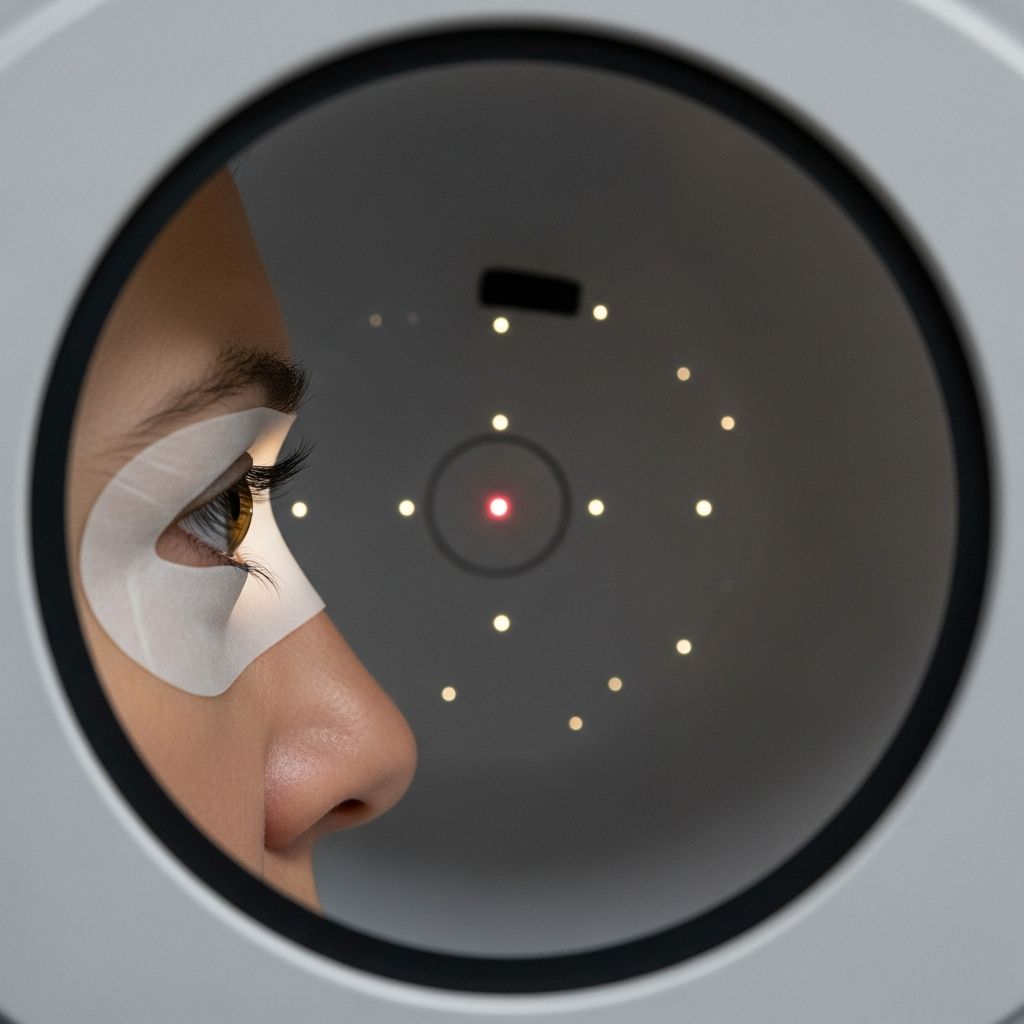
Ptosis, or drooping of the upper eyelid, presents a unique diagnostic challenge for eye care professionals. While many patients seek treatment for cosmetic reasons, others experience genuine functional impairment that affects their daily activities and quality of life. The ability to accurately measure and document vision loss caused by eyelid obstruction is critical for determining whether surgical intervention is medically necessary and for justifying insurance coverage. Visual field testing has emerged as the gold standard for objectively quantifying the functional impact of ptosis, providing clinicians with measurable data that supports clinical decision-making.
Understanding Ptosis and Its Impact on Vision
Ptosis occurs when the levator muscle, which elevates the eyelid, becomes weakened or dysfunctional. This condition can develop from various causes, including age-related degeneration, neurological disorders, trauma, or congenital factors. When the eyelid droops significantly, it can obstruct the superior visual field, potentially interfering with reading, driving, and other vision-dependent tasks.
The severity of visual impairment varies considerably among patients. Some individuals with mild ptosis experience no functional limitations, while others with moderate eyelid descent report substantial difficulties with their visual function. This variability underscores the importance of objective testing rather than relying solely on clinical observation or patient subjective complaints.
The Role of Taped Versus Untaped Testing Protocols
One of the most distinctive aspects of ptosis visual field assessment is the comparison between taped and untaped conditions. This dual-protocol approach provides invaluable information about the relationship between eyelid position and visual function.
Understanding the Untaped Visual Field
The untaped visual field test measures the patient’s actual vision in their current clinical state, with ptosis present and unmodified. This assessment documents the true functional loss attributable to the drooping eyelid. During this examination, patients sit at the perimeter device with their eyes in their natural position, and the examiner records which visual stimuli the patient can detect across the visual field.
The Purpose of Eyelid Taping
Eyelid taping during visual field testing serves a specific and clinically important purpose. Clinicians use specialized medical tape to manually elevate the ptotic eyelid to a more normal position, simulating the expected visual field improvement after surgical correction. This allows patients and surgeons to preview potential post-operative visual outcomes before committing to surgical intervention.
Several reasons justify this testing approach:
- Demonstrates whether eyelid elevation would meaningfully improve superior visual field access
- Provides objective evidence of surgical potential benefit
- Helps patients understand expected post-operative visual improvements
- Supports insurance documentation by showing measurable functional improvement
- Identifies cases where surgical benefit may be limited despite eyelid drooping
Interpreting the Comparison
The difference between taped and untaped results is the key clinical metric. Insurance companies and medical necessity standards typically require documentation showing significant improvement when the eyelid is elevated. A meaningful improvement is generally defined as at least 12 degrees or 30 percent improvement in superior visual field detection when the eyelid is taped compared to the untaped condition.
Related Stories



The Superior 36 Visual Field Test: A Targeted Assessment Tool
While comprehensive visual field testing devices like the Humphrey Visual Field Analyzer have been used historically in ptosis assessment, the Superior 36 test has emerged as the preferred examination for eyelid-related visual impairment. This specialized test was designed specifically to evaluate ptosis and related conditions affecting the upper eyelid.
Test Specifications and Methodology
The Superior 36 visual field test is an abbreviated examination that focuses exclusively on the upper 52 degrees of the visual field, collecting data from 36 specific points in this region. This targeted approach makes the test faster and more practical than comprehensive perimetry, while maintaining sufficient sensitivity to detect clinically meaningful superior field defects caused by ptosis.
As a suprathreshold test, the Superior 36 presents visual stimuli at predetermined intensity levels rather than establishing individual threshold values for each point. This streamlined methodology reduces testing time while providing the specific information needed for clinical decision-making in ptosis cases.
Advantages Over Conventional Perimetry
Traditional visual field tests used for glaucoma assessment, such as the Humphrey 24-2, require considerably more time and test numerous points throughout the entire visual field. For ptosis patients, this comprehensive approach is often unnecessary and can increase patient fatigue, potentially compromising test reliability. The Superior 36 represents a more efficient alternative by concentrating testing resources on the clinically relevant superior field region.
| Test Feature | Superior 36 | Humphrey 24-2 |
|---|---|---|
| Test Points | 36 points in upper field | 54 points across full field |
| Field Coverage | Upper 52 degrees | 24 degrees all directions |
| Test Type | Suprathreshold | Threshold-based |
| Duration | 5-10 minutes | 15-30 minutes |
| Primary Use | Ptosis and blepharoplasty | Glaucoma and general screening |
Ensuring Test Reliability and Standardization
Accurate visual field assessment in ptosis patients requires attention to numerous procedural details that can significantly influence results. Because insurance companies and medical necessity determinations often depend on these measurements, clinicians must implement standardized protocols that produce reproducible, reliable data.
Factors Affecting Test Quality
Multiple variables can compromise visual field test reliability in ptosis patients:
- Fixation stability: Patients must maintain steady central fixation throughout testing. Eyelid ptosis can actually make this more challenging, as drooping lid tissue may partially obstruct the fixation target
- Response consistency: Patient reaction time and alertness affect stimulus detection. Fatigue during testing can lead to missed points that don’t reflect true visual field loss
- Eyelid taping technique: The consistency and positioning of tape placement directly influences the degree of lid elevation. Standardized taping methods should be documented and reproduced for valid comparison
- Media clarity: Cataracts, corneal scarring, or other media opacities can reduce stimulus visibility and complicate interpretation
- Pupil characteristics: Differences in pupil size between the taped and untaped conditions can affect light perception thresholds
- Dry eye syndrome: Patients with ptosis often have associated dry eye disease, which can interfere with test results
Optimizing Testing Conditions
To minimize these confounding variables, clinicians should employ several practical strategies. Before beginning the test, verify that the patient’s refraction is current and appropriate for the testing distance. Confirm that the patient understands the testing instructions and can maintain fixation. Allow patients adequate rest between eyes and consider shorter test sessions for patients with limited endurance or concentration difficulties.
Document any significant dry eye symptoms and consider artificial tear instillation before testing if needed. When taping the eyelid, use consistent technique and measure the degree of lid elevation to ensure reproducibility. Photograph the patient in both taped and untaped conditions to provide visual documentation of eyelid position changes corresponding to the visual field results.
Interpreting Visual Field Results in Ptosis Cases
Proper interpretation of ptosis visual field tests requires understanding the expected patterns of visual loss and recognizing factors that distinguish true ptosis-related field defects from other causes of superior field loss.
Characteristic Patterns of Ptosis-Related Visual Loss
Ptosis typically produces a distinctive pattern on visual field testing. Missed points tend to cluster in the superior field, with defects most pronounced along the vertical meridian directly above fixation. The location and density of missed points should correspond to the vertical position and degree of eyelid droop observed clinically.
In mild ptosis, only the most superior test points may be missed. As eyelid descent becomes more severe, the area of superior field loss expands downward. When eyelid tape is applied, sensitivity improves throughout the previously impaired superior field region, with improvement most pronounced in the upper portion of the tested area.
Key Metrics for Surgical Decision-Making
Several specific findings support surgical correction of ptosis:
- Twelve degrees or greater improvement in superior visual field height when comparing taped to untaped results
- Thirty percent or greater relative improvement in the number of detected points in the superior field with taping
- Documented patient complaints of functional visual impairment consistent with the measured field loss
- Clinical photographs demonstrating significant eyelid descent with visual axis obstruction
- Patient-reported impact on activities of daily living such as reading, driving, or computer work
Recognizing Limitations and Special Considerations
Modified visual field tests designed for ptosis assessment have demonstrated high sensitivity (approximately 98.8%) and specificity (approximately 92.5%) for detecting clinically significant ptosis. However, these tests may not reliably detect visual field defects associated with very subtle degrees of eyelid drooping.
Patients with obvious ptosis who experience significant difficulty maintaining position or concentration during testing should not be denied surgical consideration based solely on test results. Supplementary assessment methods such as quality of life questionnaires, detailed patient history, or threshold perimetry may provide additional valuable information in these situations.
Documentation and Insurance Requirements
Comprehensive documentation is essential for obtaining insurance authorization for ptosis surgery. Most insurers require multiple components of evidence beyond the visual field test alone.
The documentation package should include:
- Objective visual field test results showing superior field loss in the untaped condition
- Comparison demonstrating meaningful improvement with eyelid taping
- Clinical photographs of the patient’s eyes in primary gaze position, showing eyelid position and degree of descent
- Detailed description of how ptosis affects the patient’s visual function and quality of life
- Measurement of eyelid position using quantitative metrics such as margin-to-reflex distance
- Assessment of levator function to help determine the type of surgical procedure most likely to be successful
Modern Technology and Portable Testing Solutions
Recent advances in visual field testing technology have introduced portable VR-based devices that offer significant practical advantages for ptosis assessment. These systems support both taped and untaped protocols, provide built-in Superior 36 testing capabilities, and generate documentation suitable for insurance submission.
Advantages of modern portable perimetry for ptosis assessment include improved patient comfort, faster testing times, standardized protocols, direct integration with electronic health records, and cleaner, more professional documentation. The portability of these devices allows testing in clinic settings without requiring specialized room configurations, making testing more accessible to patients and more practical for high-volume practices.
Frequently Asked Questions About Ptosis Visual Field Testing
Why is visual field testing necessary for ptosis patients?
Visual field testing provides objective, measurable documentation of vision loss caused by eyelid obstruction. This objective evidence is essential for insurance authorization, helps determine surgical candidacy, and provides baseline data to compare against post-operative visual function improvements.
Does every ptosis patient require visual field testing?
No. Visual field testing is typically reserved for moderate to severe ptosis cases where functional impairment is suspected or when surgical intervention is being considered. Mild ptosis that does not affect vision may not require formal visual field assessment.
Why is the taped test different from the untaped test?
The untaped test shows current vision loss from ptosis, while the taped test simulates post-operative vision by manually elevating the eyelid. The difference between these tests quantifies the potential benefit of surgery and justifies the need for intervention.
What if taping doesn’t improve the visual field?
Minimal improvement with taping suggests that eyelid elevation alone may not provide significant functional benefit. In such cases, surgery may not be recommended, or alternative factors contributing to visual difficulty should be evaluated.
How long does Superior 36 testing take?
Superior 36 testing typically requires 5 to 10 minutes per eye, making it considerably faster than comprehensive visual field tests. This shorter duration reduces patient fatigue and improves test reliability.
Best Practices for Clinical Implementation
Successful visual field assessment in ptosis patients requires development of standardized office protocols. Train all staff involved in testing on proper patient positioning, eyelid taping technique, and instructions that promote patient understanding and cooperation. Implement quality control procedures that verify test reliability and identify results requiring repeat testing before documentation.
Maintain detailed records of testing methodology, including photographs of eyelid taping, documented measurements of eyelid elevation, and notes regarding any patient factors that may have influenced results. This comprehensive documentation demonstrates attention to standardization and supports insurance submissions.
References
- Understanding Ptosis and the Superior 36 Visual Field Test — Virtual Field. 2024. https://www.virtualfield.io/blog/understanding-ptosis-and-the-superior-36-visual-field-test
- Modified Visual Field Test for Ptosis Surgery — National Center for Biotechnology Information (NCBI/PMC). 2011. https://pmc.ncbi.nlm.nih.gov/articles/PMC3178305/
- Diagnosing Ptosis: Visual Field Testing — All About Vision. 2024. https://www.allaboutvision.com/conditions/ptosis/eye-test/
- Superior 36 Visual Field Screen — Virtual Field. 2024. https://www.virtualfield.io/resources/visual-field-testing/superior-36-visual-field-screen
- The Ultimate Guide to Assessing Eyelid Ptosis — Eyes on Eye Care. 2024. https://eyesoneyecare.com/resources/the-ultimate-guide-to-assessing-eyelid-ptosis/
Similar Articles








Read full bio of medha deb