Visual Hallucinations in AMD: Charles Bonnet Syndrome
Discover how age-related macular degeneration triggers visual hallucinations through Charles Bonnet syndrome, and learn effective management strategies for better quality of life.
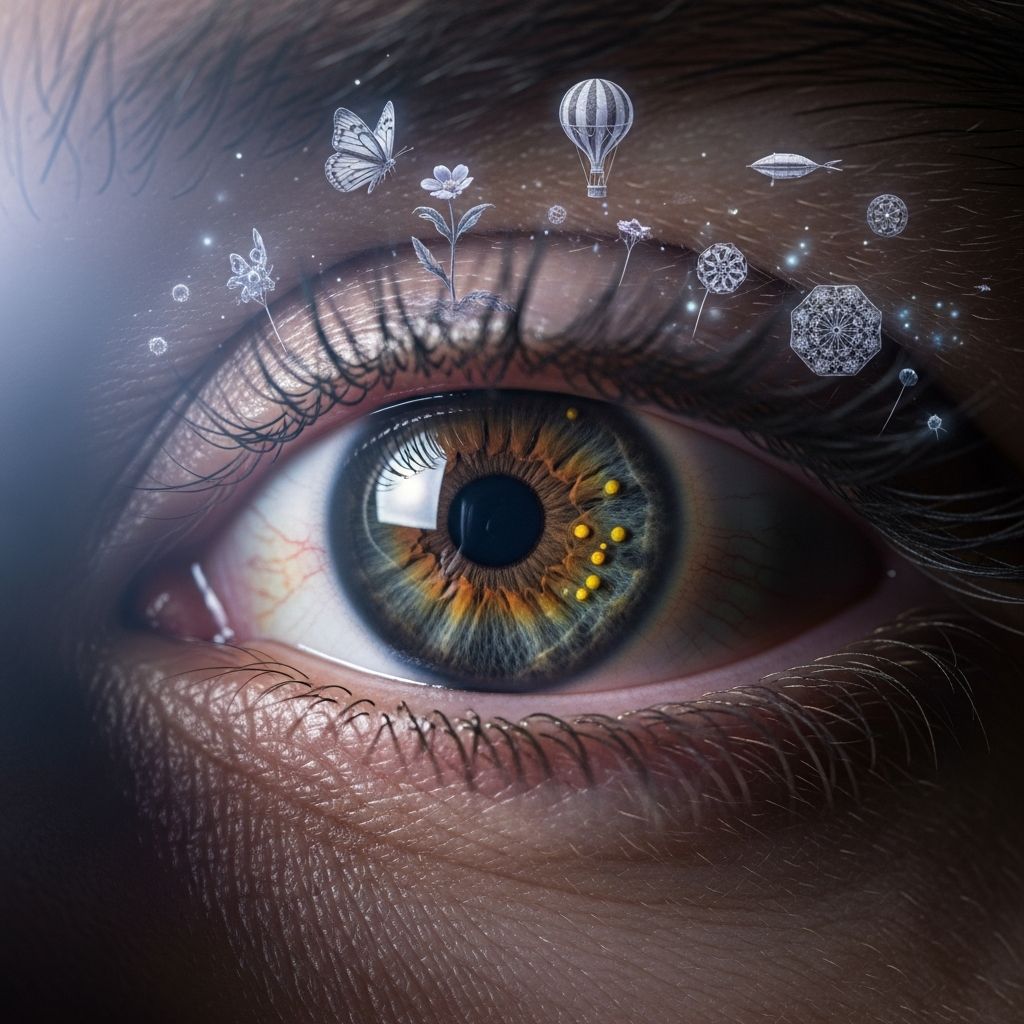
Age-related macular degeneration (AMD) stands as a primary cause of vision impairment among older adults, often leading to a surprising side effect: visual hallucinations known as Charles Bonnet syndrome (CBS). These vivid images arise when the brain compensates for lost visual input from damaged retinas, creating patterns, figures, or scenes without any underlying psychiatric condition.
Understanding Age-Related Macular Degeneration Basics
AMD targets the macula, the retina’s central region responsible for sharp, detailed vision needed for reading, driving, and face recognition. There are two main types: dry AMD, which progresses slowly through drusen buildup and retinal thinning, and wet AMD, where abnormal blood vessels leak fluid, causing rapid damage.
Dry AMD affects most patients initially, with symptoms like gradual central blurriness or distorted lines. Wet AMD brings sudden changes, including blind spots or wavy vision. Severe cases in either form reduce central sight profoundly, though peripheral vision remains intact, preventing total blindness.
The Emergence of Charles Bonnet Syndrome
Charles Bonnet syndrome occurs when significant vision loss deprives the brain’s visual cortex of normal stimuli. Idle neurons, deprived of input, spontaneously generate images drawn from memory—ranging from simple grids and colors to elaborate tableaux of people, animals, or landscapes.
Named after an 18th-century philosopher who documented his grandfather’s experiences, CBS affects 10-60% of those with substantial sight reduction, depending on the study. It’s prevalent in AMD patients over 80 but can strike younger individuals or those with milder impairments like small scotomas.
Recognizing Symptoms of Visual Hallucinations
CBS manifestations are strictly visual, lacking sound, touch, or other sensory elements. Common experiences include:
- Geometric patterns like lattices, tiles, or mosaics.
- Lush floral displays or vivid carpets.
- Figures of people, often lifelike but sometimes cartoonish or incomplete.
- Animals, buildings, or scenic views that flicker into awareness.
Hallucinations may last seconds to hours, appearing unpredictably—often in low light, during fatigue, or boredom. They can emerge months or years post-vision loss onset and typically fade after 12-18 months as the brain adapts.
| Symptom Type | Description | Frequency in CBS |
|---|---|---|
| Simple Patterns | Grids, dots, colors | Common (50-70%) |
| Complex Scenes | People, animals, landscapes | Frequent (40-60%) |
| Distortions | Incomplete or altered figures | Occasional (20-40%) |
This table summarizes hallmark visuals, highlighting their non-threatening nature in most cases.
Why AMD Triggers These Brain Responses
The macula’s deterioration disrupts signal transmission to the visual cortex. Without fresh data, brain cells ‘fire’ erratically, reconstructing familiar images. This deafferentation phenomenon mirrors effects in other sight-stealing conditions like glaucoma or stroke.
Risk escalates with bilateral involvement or abrupt vision drops, as in wet AMD conversions. Yet, CBS signals no disease progression; it’s a neural workaround.
Differentiating CBS from Mental Health Concerns
Related Stories



A major barrier is stigma—many hide symptoms fearing dementia labels. Unlike psychosis, CBS patients recognize visions as unreal, retain insight, and lack delusions or behavioral changes.
- CBS Insight: Sufferers know images are fabricated.
- Psychosis Difference: Belief in reality persists.
- CBS Trigger: Vision loss alone.
- Psychosis Factors: Often multifactorial, with auditory elements.
Education reassures: up to half of macular patients encounter this, normalizing the experience.
Practical Coping Strategies for Daily Life
Management centers on reassurance, vision optimization, and distraction:
- Illuminate Spaces: Maximize lighting to flood the brain with real input.
- Enhance Vision Aids: Use magnifiers, high-contrast settings, or low-vision rehab.
- Stay Active: Engage senses via TV, audio books, puzzles, or social interaction to occupy idle neurons.
- Track Patterns: Note triggers like dim rooms or tiredness for prevention.
- Discuss Openly: Share with doctors or support groups to reduce anxiety.
Some find amusement in benign visions once understood. Medications rarely help and aren’t standard.
Diagnostic Steps and Professional Support
Eye specialists confirm CBS via history and vision tests ruling out other causes. No specific therapy exists, but addressing AMD—through AREDS supplements for dry forms or injections for wet—slows progression.
Referrals to low-vision clinics provide tools like screen readers. Counseling demystifies symptoms, boosting confidence.
Long-Term Outlook and Adaptation
Most hallucinations wane as the brain recalibrates, though some persist intermittently. Pairing with AMD care preserves function; lifestyle tweaks like diet rich in leafy greens and fish support retinal health.
Support networks, including online forums from reputable orgs, foster community. Proactive monitoring ensures timely interventions.
Frequently Asked Questions (FAQs)
Is Charles Bonnet syndrome a sign of dementia?
No, CBS stems purely from vision deprivation, with full awareness of unreality. It doesn’t correlate with cognitive decline.
Can children experience CBS?
Rarely, but possible with congenital or early-onset vision loss. It’s mostly seen in elderly AMD cases.
Do CBS hallucinations ever become dangerous?
Typically benign and non-frightening; if distressing, consult for vision optimization or psychological support.
How does wet AMD differ from dry in causing CBS?
Wet AMD’s swift loss heightens risk via sudden input drop, but both types qualify if sight impairment is severe.
Are there treatments to stop hallucinations?
No direct cure; focus on boosting real vision and distraction reduces episodes naturally over time.
Embracing knowledge empowers those with AMD to navigate CBS confidently, maintaining independence and peace of mind.
References
- Low Vision and Visual Hallucinations — Low Vision Arizona. Accessed 2026. https://www.lowvisionarizona.com/wet-amd-and-visual-hallucinations/
- Vision loss and visual hallucinations: the Charles Bonnet syndrome — PMC (PubMed Central). 2009-05-26. https://pmc.ncbi.nlm.nih.gov/articles/PMC2683559/
- Eyes – Charles Bonnet syndrome — Better Health Channel (Vic.gov.au). Accessed 2026. https://www.betterhealth.vic.gov.au/health/conditionsandtreatments/eyes-charles-bonnet-syndrome
- Macular Degeneration: Symptoms, Diagnosis & Treatment — Cleveland Clinic. Accessed 2026. https://my.clevelandclinic.org/health/diseases/15246-macular-degeneration
- Hallucinations & Macular Degeneration: What is Charles Bonnet Syndrome? — BrightFocus Foundation. Accessed 2026. https://www.brightfocus.org/resource/hallucinations-macular-degeneration-what-is-charles-bonnet-syndrome/
- Wet macular degeneration – Symptoms and causes — Mayo Clinic. Accessed 2026. https://www.mayoclinic.org/diseases-conditions/wet-macular-degeneration/symptoms-causes/syc-20351107
- Charles Bonnet syndrome (CBS) — Macular Society. Accessed 2026. https://www.macularsociety.org/macular-disease/macular-conditions/charles-bonnet-syndrome/
Similar Articles








Read full bio of Sneha Tete