Macular Degeneration: 4 Stages, Symptoms, Prevention
Explore how age-related macular degeneration transforms everyday vision through detailed descriptions of its visual effects and progression stages.
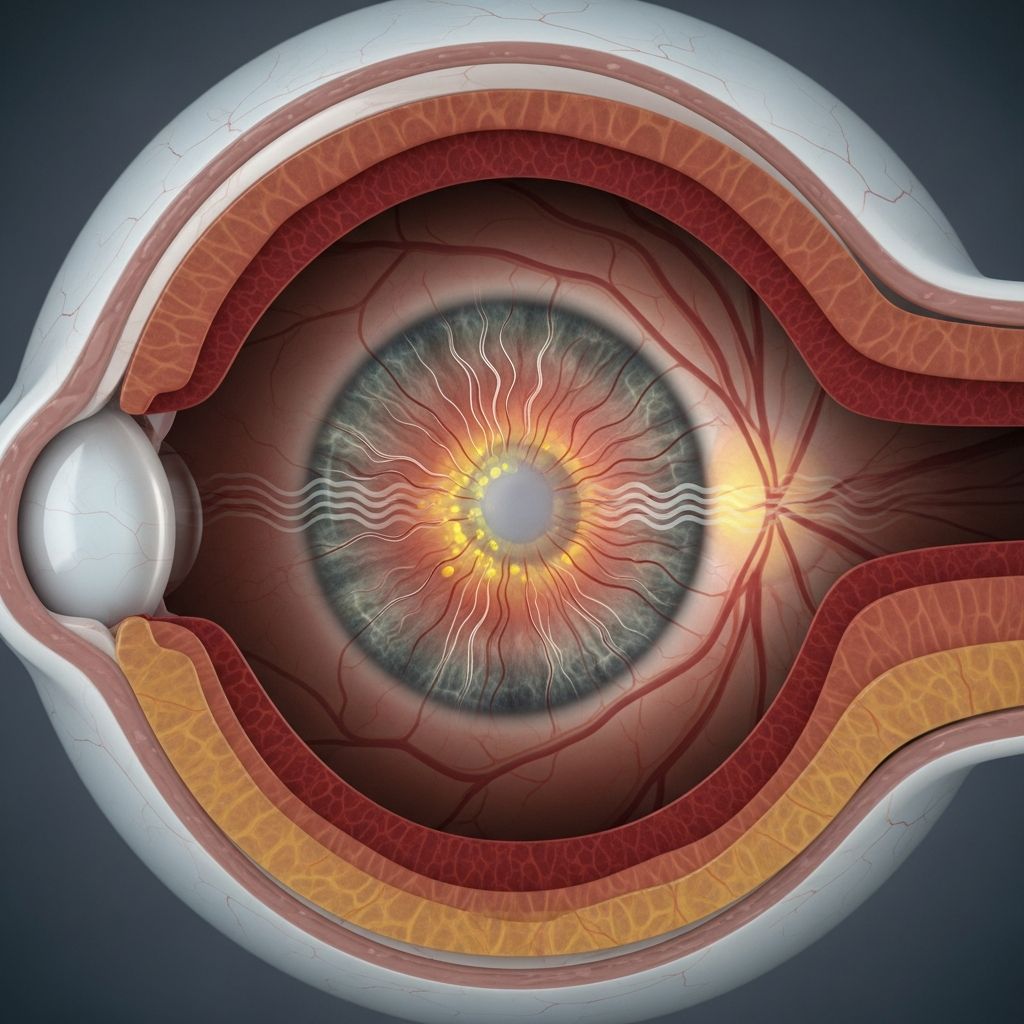
Age-related macular degeneration (AMD) stands as a primary cause of central vision loss among individuals over 60 in the United States, affecting nearly 20 million adults and projected to impact 288 million globally by 2040. This condition targets the macula, the retina’s central region responsible for sharp, detailed sight, leading to progressive blurring or distortion without causing total blindness.
Understanding the Macula’s Vital Role
The macula enables precise tasks like reading, driving, and face recognition by providing high-resolution central vision. Damage here spares peripheral vision but severely hampers daily activities. AMD occurs in two forms: dry (atrophic), comprising about 90% of cases, and wet (neovascular), which is rarer but more aggressive.
In dry AMD, yellow protein deposits called drusen accumulate beneath the macula, causing tissue thinning and cell loss over time. Wet AMD involves abnormal blood vessel growth under the retina, leading to leaks and rapid damage.
Progression Stages and Their Visual Impact
AMD advances through distinct stages, each altering vision uniquely. Early detection via regular eye exams is crucial, as initial changes may go unnoticed.
Early Dry AMD: Subtle Onset
At this stage, small drusen form without noticeable symptoms for many. Vision remains largely intact, but microscopic retinal changes begin. Some report needing brighter light for reading, a faint sign of emerging issues.
- Visual cue: Central vision appears normal, but fine details like text edges may soften imperceptibly.
- Prevalence: Common in those over 55, often bilateral but asymptomatic.
Intermediate Dry AMD: Emerging Blurriness
Medium to large drusen develop, thinning the macula further. Central vision blurs mildly, with shadows or fuzziness at the center. Colors dull slightly, and low-light adaptation slows.
- Visual cue: Straight lines subtly warp; faces blur at distance, resembling a soft filter over the visual center.
- Challenges: Reading requires magnification; driving at dusk becomes taxing.
Late Dry AMD: Significant Central Loss
Advanced atrophy creates a defined blind spot in central vision. Peripheral sight persists, allowing navigation, but detailed work falters.
- Visual cue: A growing gray or black spot obscures the center, expanding to engulf text or faces.
- Impact: Legal blindness possible in affected eyes; one healthy eye may compensate initially.
Wet AMD: Sudden Distortion
Often evolving from dry AMD, wet form brings swift changes via leaking vessels. Straight lines bend dramatically, and central vision darkens rapidly.
- Visual cue: Wavy distortions (metamorphopsia) dominate; a dark, irregular blotch invades the center.
- Urgency: Rapid progression demands immediate care to salvage vision.
Recognizing Key Symptoms Through Vision Changes
Symptoms manifest gradually in dry AMD and abruptly in wet, primarily affecting central vision.
| Symptom | Description | Visual Effect |
|---|---|---|
| Central Blurriness | Fuzzy core of sight worsens over time. | Words or faces lose sharpness, like viewing through fogged glass. |
| Distorted Lines | Straight edges appear bent or wavy. | Grid patterns ripple, signaling wet AMD onset. |
| Blind Spots | Fixed dark areas in center. | Missing letters in text; obscured facial features. |
| Light Sensitivity | Struggles with glare or dimness. | Glare blacks out surroundings; slow dark adjustment. |
| Color Fading | Hues appear washed out. | Reduced vibrancy, harder to differentiate similar shades. |
Related Stories



These signs often affect one eye first, masking severity until both are involved. Routine exams uncover silent progression.
Risk Factors Influencing AMD Development
Age remains the top risk, striking most over 50, but modifiable factors accelerate onset.
- Genetics: Family history raises susceptibility; specific genes identified.
- Lifestyle: Smoking doubles risk; obesity hastens progression to late stages.
- Demographics: More prevalent in Caucasians.
- Health Conditions: Cardiovascular disease correlates with higher incidence.
Diagnostic Approaches and Visual Assessments
Eye specialists use tools like Amsler grids to detect distortions—patients view grid lines, noting waves or missing segments indicative of AMD. Fundus photography reveals drusen, while optical coherence tomography (OCT) images retinal layers for thinning or fluid. Fluorescein angiography highlights leaking vessels in wet AMD.
Visual field tests map blind spots, quantifying central loss. Early intermediate stages show mild defects; late stages reveal pronounced scotomas.
Management Strategies Across Stages
No cure exists, but interventions slow progression and aid adaptation.
Dry AMD Management
AREDS2 nutritional supplements (vitamins C/E, lutein, zeaxanthin, zinc) reduce intermediate-to-advanced risk by 25% in high-risk individuals. Lifestyle shifts—quitting smoking, weight control, exercise—bolster retinal health.
Wet AMD Treatments
Anti-VEGF injections (e.g., ranibizumab) shrink abnormal vessels, stabilizing or improving vision in most cases. Photodynamic therapy or laser seals leaks selectively.
Low Vision Aids
Magnifiers, high-contrast lighting, and screen readers enhance remaining sight. Occupational therapy teaches adaptive techniques.
Prevention: Safeguarding Your Central Vision
Annual dilated exams post-50 detect early AMD. UV-protective sunglasses, antioxidant-rich diets (leafy greens, fish), and no smoking fortify eyes against degeneration.
- Control blood pressure and cholesterol to mitigate vascular risks.
- Maintain healthy weight; studies link obesity to faster advancement.
Frequently Asked Questions (FAQs)
Does AMD cause complete blindness?
No, peripheral vision remains, but central loss impairs key tasks.
Can young people get macular degeneration?
Rarely; mostly age-related, but hereditary or trauma-induced forms occur earlier.
How often should I get eye exams if at risk?
Annually after 55, or sooner with family history/smoking.
Is wet AMD reversible?
Treatments can halt progression and restore some vision, but not fully reverse damage.
Are there home tests for AMD?
Amsler grid checks for distortions; consult a doctor for confirmation.
Living Well with Macular Degeneration
Support groups and rehab services empower adaptation. Many maintain independence using aids and strategies tailored to their vision profile. Proactive monitoring transforms AMD from a vision thief to a manageable condition.
References
- Macular Degeneration: Symptoms, Diagnosis & Treatment — Cleveland Clinic. 2023. https://my.clevelandclinic.org/health/diseases/15246-macular-degeneration
- Dry macular degeneration – Symptoms and causes — Mayo Clinic. 2023. https://www.mayoclinic.org/diseases-conditions/dry-macular-degeneration/symptoms-causes/syc-20350375
- Age-Related Macular Degeneration (AMD) — National Eye Institute (NEI). 2023. https://www.nei.nih.gov/eye-health-information/eye-conditions-and-diseases/age-related-macular-degeneration
- Macular Degeneration Signs & Symptoms — BrightFocus Foundation. 2023. https://www.brightfocus.org/macular/signs-symptoms/
- Age-related macular degeneration (AMD) – Symptoms — NHS. 2023. https://www.nhs.uk/conditions/age-related-macular-degeneration-amd/symptoms/
Similar Articles








Read full bio of medha deb