Vital Signs: Body Temperature, Pulse, Respiration & Blood Pressure
Understanding the four critical vital signs that indicate your overall health and body function.
Understanding Vital Signs: The Cornerstone of Health Assessment
Vital signs are objective measurements of the essential physiological functions of your body that indicate whether it is working properly. These measurements are termed “vital” because their assessment represents the critical first step in any clinical evaluation. Healthcare providers routinely monitor vital signs in all settings, from primary care and urgent care to emergency departments and specialized surgical environments. When healthcare professionals take your vital signs, they are gathering crucial information about your heart function, breathing, temperature regulation, and circulatory system performance.
The primary purpose of measuring vital signs is to establish a baseline of your normal health status and to detect any abnormalities that may indicate illness, injury, or physiological stress. Vital signs serve as objective, factual data that cannot be influenced by personal feelings or opinions. This objectivity makes them invaluable tools for healthcare professionals who need reliable information to make clinical decisions and determine appropriate treatment plans.
The Four Main Vital Signs
The most commonly recorded vital signs include four primary measurements that form the foundation of health assessment. Understanding each of these measurements and their significance can help you better communicate with your healthcare provider and recognize when something might be amiss with your health.
1. Body Temperature
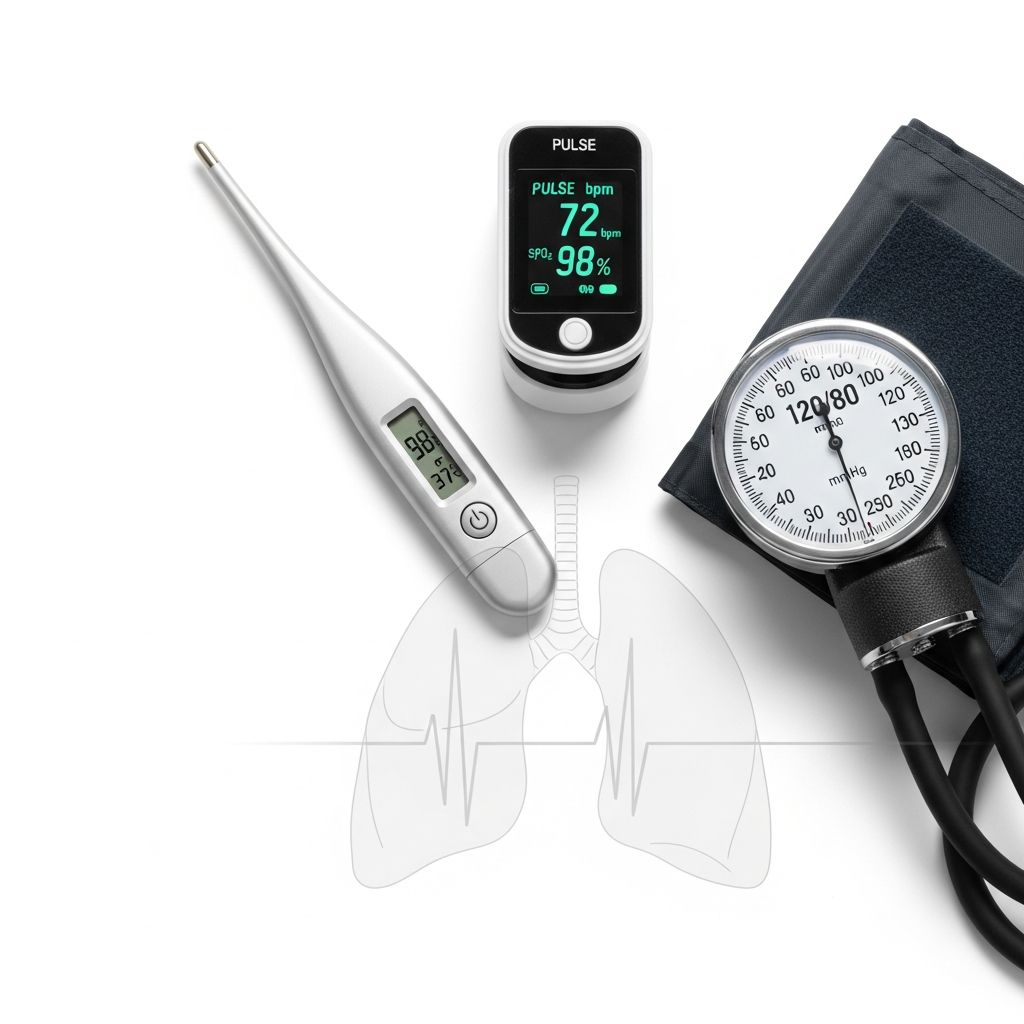
Body temperature measures the degree of heat in your body and reflects your body’s ability to generate and get rid of heat. The normal body temperature for most adults is approximately 98.6°F (37°C), though normal body temperature can vary slightly depending on age, time of day, and individual variations. Body temperature is typically measured using a thermometer placed under the tongue, in the ear, on the forehead, or under the arm, with each method potentially yielding slightly different readings.
Your body maintains a relatively constant core temperature through a sophisticated system of thermoregulation controlled by the hypothalamus in your brain. When you have a fever, your body temperature rises above the normal range, typically indicating an infection or inflammatory response. Conversely, hypothermia occurs when your body temperature drops below 95°F (35°C), which can be life-threatening if severe. Temperature abnormalities can result from fever, infection, heat exhaustion, cold exposure, medication side effects, or metabolic disorders.
2. Pulse Rate (Heart Rate)
Your pulse rate, also called heart rate, is the number of times your heart beats per minute. A normal resting heart rate for adults typically ranges from 60 to 100 beats per minute, though athletes and highly trained individuals may have lower resting heart rates. Your pulse can be felt at several points on your body where arteries run close to the skin, with the wrist (radial artery) and neck (carotid artery) being the most common locations for assessment.
When assessing pulse rate, healthcare providers evaluate not only the speed but also other important characteristics. The rhythm of the pulse—whether it is regular or irregular—is essential, as irregularly irregular patterns may indicate conditions like atrial fibrillation or atrial flutter. The volume or strength of the pulse provides information about adequate tissue perfusion, while pulse amplitude and rate of increase can indicate conditions such as aortic stenosis or aortic regurgitation. An elevated heart rate above 100 beats per minute is called tachycardia and may indicate anxiety, fever, infection, hyperthyroidism, or cardiovascular stress. A heart rate below 60 beats per minute is called bradycardia and may be normal in athletes or indicate heart block or other cardiac conditions.
Related Stories



3. Respiration Rate
Respiration rate measures how many times you breathe in one minute. The normal respiration rate for a resting adult typically ranges from 12 to 20 breaths per minute. Respiration rate reflects your lungs’ ability to exchange oxygen and carbon dioxide and is closely linked to your metabolic state and overall oxygenation. Importantly, respiratory rate is often the most neglected vital sign reported in hospitalized patients, yet it is more sensitive than other vital signs in picking up critically ill patients.
When evaluating respiration, healthcare providers observe breathing patterns and look for any signs of respiratory distress. Normal breathing should be quiet and rhythmic. Abnormal breathing patterns include tachypnea (rapid breathing), dyspnea (difficult or labored breathing), and apnea (temporary absence of breathing). Signs of respiratory distress may include grunting sounds, nasal flaring, muscle retractions in the neck or abdomen, and cyanosis (bluish discoloration of the skin indicating low oxygen levels). An elevated respiration rate above 20 breaths per minute, particularly a rate over 35 breaths per minute, has been strongly associated with life-threatening adverse events.
4. Blood Pressure
Blood pressure is the force exerted by blood against the walls of your arteries as your heart pumps. Blood pressure is measured in millimeters of mercury (mm Hg) and is expressed as two numbers: systolic pressure (the top number) over diastolic pressure (the bottom number). For example, a reading of 120/80 mm Hg is considered normal blood pressure for most adults. The systolic number represents the pressure when your heart contracts and pushes blood out, while the diastolic number represents the pressure when your heart relaxes between beats.
Blood pressure categories for adults include normal (less than 120/80 mm Hg), elevated (120-129 and less than 80 mm Hg), stage 1 hypertension (130-139 or 80-89 mm Hg), and stage 2 hypertension (140 or higher or 90 or higher mm Hg). The American Heart Association recommends home monitoring for anyone diagnosed with high blood pressure or hypertension to help their healthcare provider determine appropriate treatment strategies. Chronically elevated blood pressure increases the risk of heart disease, stroke, and kidney disease. Conversely, low blood pressure (hypotension) can result in dizziness, fainting, and inadequate blood flow to vital organs.
Additional Vital Signs Sometimes Measured
While the four measurements described above are the most commonly recorded vital signs, some healthcare settings also monitor additional parameters that provide important clinical information:
- Oxygen Saturation: This measures the percentage of oxygen in your blood, typically using a non-invasive pulse oximeter placed on your finger. Normal oxygen saturation is generally considered 95% or higher.
- Level of Consciousness: Healthcare providers assess alertness and responsiveness using standardized scales. The AVPU scale evaluates whether a patient is Alert, responds to Voice, responds to Pain, or is Unresponsive.
Why Vital Signs Matter
Vital signs are highly responsive to abnormalities and changes within the body, making them extremely useful tools to monitor homeostasis and measure normal physiological functions. When someone is ill, the body’s strength is challenged and vital signs will often deviate from their normal range as the body attempts to restore stability. The sensitivity of vital signs to even subtle changes in a person’s health condition is highly effective for early detection of problems.
Vital signs provide objective proof that a change has occurred, which can reveal whether the body is maintaining stability (homeostasis) or experiencing physiological stress. In acute care settings, vital signs are sometimes measured on an ongoing basis using wearable monitoring devices because they are such important tools for assessing the body’s stability. Early warning score (EWS) tools, which primarily use vital sign abnormalities, are critical in predicting cardiac arrest and death within 48 hours of measurement.
The degree of vital sign abnormalities may predict long-term patient health outcomes, return emergency room visits, hospital readmission frequency, and healthcare resource utilization. Vital signs also help physical therapists predict treatment indications, contraindications, and outcomes, and are appropriate for characterizing cardiovascular and pulmonary symptoms as part of aerobic capacity assessment.
Factors That Can Affect Vital Signs
Many factors can temporarily or permanently alter your vital signs beyond normal ranges. Understanding these factors helps healthcare providers interpret vital sign readings accurately:
- Age and individual variations in baseline measurements
- Physical activity and exercise level
- Medications and medication side effects
- Emotional stress and anxiety
- Caffeine or stimulant consumption
- Body position (sitting, standing, or lying down)
- Environmental temperature
- Infections and fever
- Metabolic disorders
- Underlying cardiovascular or respiratory conditions
When to Seek Immediate Medical Care
Certain vital sign readings warrant immediate medical attention. If you experience symptoms such as chest pain, shortness of breath, back pain, numbness or weakness, changes in vision, or difficulty speaking, do not wait to see if the problem resolves on its own—call 911 immediately. Additionally, seek emergency care if you notice extreme color changes in your skin (cyanosis), severe difficulty breathing, or signs of severe distress.
Monitoring Vital Signs at Home
For individuals with chronic conditions like hypertension, regular home monitoring of vital signs can be an important part of disease management. Home blood pressure monitors are widely available and can help you and your healthcare provider track your readings over time. When using home monitoring devices, follow the manufacturer’s instructions carefully to ensure accurate measurements. Most importantly, maintain a log of your readings to share with your healthcare provider during appointments.
Understanding Vital Sign Abnormalities in Special Populations
Vital sign interpretation must sometimes be adjusted for special populations. In older adults, for example, our core body temperature tends to be lower, and the ability of the body to change with different kinds of stressors becomes minimized. Subtle variations from the core body temperature can be significant findings, as fever in an older patient often indicates a more severe infection and is associated with increased rates of life-threatening consequences. Blood vessels in older adults have higher arterial stiffness, leading to higher systolic blood pressure and increased pulse pressure.
Additionally, individuals who are medically fragile, have had multiple hospitalizations due to illness or infection (especially ICU or PACU stays), have had recurring infections like pneumonia or urinary tract infections, or have recently undergone surgical procedures require particularly vigilant vital sign monitoring.
Frequently Asked Questions
Q: How often should vital signs be checked?
A: The frequency of vital sign measurement varies depending on the clinical setting and patient condition. In acute care settings, vital signs may be measured every few hours or continuously. In routine office visits, they are typically measured at the beginning of each appointment. The timing of the next observation set is determined by a weighted average score deduced from vital sign measurements (early warning score).
Q: Can anxiety affect vital signs?
A: Yes, anxiety and stress can temporarily elevate heart rate, blood pressure, and respiration rate. This is why healthcare providers may ask you to rest for several minutes before measuring vital signs to ensure more accurate baseline readings.
Q: What is “white coat syndrome”?
A: White coat syndrome (or white coat hypertension) occurs when a person’s blood pressure is elevated during a healthcare provider visit but is normal when measured at home. This is typically caused by anxiety related to the medical setting.
Q: Why is respiration rate often overlooked?
A: Despite being the most sensitive vital sign in identifying critically ill patients, respiration rate is frequently the most neglected vital sign reported in hospitalized patients, often due to time constraints or oversight by healthcare staff.
Q: What does an irregular pulse mean?
A: An irregular pulse may indicate various cardiac conditions, with an irregularly irregular pattern being more commonly indicative of processes like atrial fibrillation or atrial flutter. It should be evaluated by a healthcare provider.
Q: Can medications affect vital signs?
A: Yes, many medications can affect vital signs. For example, certain medications can increase heart rate, others can lower blood pressure, and some can affect respiration. Always inform your healthcare provider about all medications you are taking.
References
- Vital Signs Health & Safety Alert — Commonwealth of Virginia Department of Behavioral Health and Developmental Services. November 2021. https://dbhds.virginia.gov/assets/doc/OIH/vital-signs-health-safety-alert-nov-21.pdf
- Vital Signs and Introduction to NEWS — University of Glasgow. https://www.gla.ac.uk/media/Media_678204_smxx.pdf
- Vital Signs — Physiopedia. https://www.physio-pedia.com/Vital_Signs
- Vital Sign Assessment — StatPearls, National Center for Biotechnology Information (NCBI). https://www.ncbi.nlm.nih.gov/books/NBK553213/
Similar Articles








Read full bio of medha deb