Vitamin B12 Deficiency: Symptoms, Causes & Treatment
Understanding vitamin B12 deficiency: Learn about symptoms, causes, diagnosis, and effective treatment options.
What Is Vitamin B12 Deficiency?
Vitamin B12 deficiency, sometimes called cobalamin deficiency, occurs when your body is either not consuming enough vitamin B12 through diet or is not absorbing it properly from food sources. Vitamin B12 is a critical nutrient that helps your body produce red blood cells and DNA, the genetic material present in all cells. This essential micronutrient is fundamental to how your body functions at a cellular level.
When your body lacks adequate vitamin B12, it can result in a condition where you don’t have enough healthy red blood cells to transport oxygen throughout your body. This condition is known as vitamin B12 deficiency anemia. However, it’s important to understand that you can have a vitamin B12 deficiency without developing anemia. The symptoms and severity can vary significantly depending on how long the deficiency has existed and how severe it is.
Without proper treatment, vitamin B12 deficiency can lead to serious physical, neurological, and psychological complications. Early detection and treatment are crucial to prevent long-term damage to your nervous system and brain function.
Symptoms of Vitamin B12 Deficiency
The symptoms of vitamin B12 deficiency develop gradually and can worsen over time. Many people may not experience any noticeable symptoms despite having low B12 levels in their blood. When symptoms do appear, they can be mistaken for other conditions, making diagnosis challenging. Common symptoms include:
Physical Symptoms
Physical manifestations of vitamin B12 deficiency are often the first signs people notice. These include persistent fatigue and weakness that doesn’t improve with rest, shortness of breath with minimal exertion, dizziness or lightheadedness, and pale or yellowish skin appearance. Some individuals experience jaundiced skin, where the skin takes on a yellowish tint due to elevated bilirubin levels from red blood cell breakdown.
Additional physical symptoms may include headaches, loss of appetite, weight loss, and gastrointestinal issues such as constipation or diarrhea. The body’s ability to maintain energy production and oxygen transport becomes compromised, leading to these widespread physical effects.
Neurological Symptoms
Neurological symptoms are particularly concerning because they can become permanent if left untreated. These symptoms include numbness or tingling sensations in your hands and feet (paresthesia), difficulty with balance and coordination problems, muscle weakness and loss of strength, vision problems or blurred vision, and a sensation similar to walking on cotton.
More severe neurological complications can develop over time, including nerve damage that may be irreversible, difficulty walking and maintaining proper gait, and loss of coordination in limbs. These symptoms occur because vitamin B12 is essential for maintaining the myelin sheath that protects nerve fibers.
Psychological and Cognitive Symptoms
Related Stories



Vitamin B12 plays a crucial role in brain function and mental health. Psychological symptoms of deficiency include difficulty remembering information or getting confused, mental fog or difficulty concentrating, mood changes including depression and anxiety, irritability and personality changes, and in severe cases, dementia-like symptoms.
Some individuals experience hallucinations, paranoia, or other psychiatric symptoms. The severity of these psychological symptoms can be alarming and may lead to misdiagnosis as a primary psychiatric condition rather than a nutritional deficiency.
Causes of Vitamin B12 Deficiency
Vitamin B12 deficiency can develop through various pathways, including insufficient dietary intake or problems with absorption. Understanding the underlying cause is essential for determining the appropriate treatment approach.
Dietary Insufficiency
One primary cause of vitamin B12 deficiency is not consuming enough B12-rich foods. Vitamin B12 is naturally found primarily in animal products including meat, fish, poultry, eggs, and dairy products. Individuals following vegetarian or vegan diets are at higher risk of developing deficiency unless they consume fortified plant-based foods or supplements. Even people who eat animal products may develop deficiency if their overall diet is inadequate in B12 content.
Absorption Problems
The more common cause of vitamin B12 deficiency involves problems with absorption rather than insufficient intake. Your body requires intrinsic factor, a protein produced in the stomach, to absorb vitamin B12 efficiently. Several conditions can interfere with this absorption process:
Pernicious Anemia: This autoimmune condition prevents your body from producing adequate intrinsic factor, blocking B12 absorption. Pernicious anemia is one of the most common causes of vitamin B12 deficiency and can cause lasting neurological damage if untreated.
Gastrointestinal Surgery: Surgical procedures that remove or bypass portions of the stomach or small intestine, such as gastric bypass or subtotal gastrectomy, can significantly reduce B12 absorption capacity.
Digestive Disorders: Conditions like Crohn’s disease, celiac disease, and irritable bowel syndrome can impair vitamin B12 absorption in the digestive tract.
Medications: Certain medications, particularly metformin used for diabetes and proton pump inhibitors used for acid reflux, can reduce B12 absorption when used long-term.
Bacterial Overgrowth: Certain bacteria in the intestines can compete with your body for available vitamin B12, reducing the amount absorbed.
Genetic Factors: Some genetic mutations, such as those affecting the MMACHC enzyme involved in intracellular B12 processing, can impair how your body handles vitamin B12 at the cellular level.
Risk Factors for Vitamin B12 Deficiency
Certain groups of people face higher risks of developing vitamin B12 deficiency:
– Older Adults: Aging affects stomach acid production and intrinsic factor availability, increasing deficiency risk- Vegetarians and Vegans: Limited dietary sources of natural B12 in plant-based diets- People with Gastrointestinal Disorders: Conditions affecting nutrient absorption- Post-Surgical Patients: Those who have undergone gastric bypass or similar procedures- Long-term Medication Users: Individuals taking metformin or proton pump inhibitors- People with Autoimmune Conditions: Particularly those with pernicious anemia- Heavy Alcohol Users: Alcohol impairs B12 absorption and storage
How Vitamin B12 Deficiency Is Diagnosed
Diagnosing vitamin B12 deficiency can be challenging because symptoms often overlap with other conditions. Healthcare providers typically use several approaches to confirm the diagnosis, particularly in individuals with high risk factors or symptoms suggestive of deficiency.
Blood Tests
The primary diagnostic method involves measuring your blood vitamin B12 level. A level below 200 pg/mL has specificity greater than 95% in predicting true vitamin B12 deficiency. However, levels between 200 and 300 pg/mL fall in a gray zone where additional testing may be necessary, especially if you have symptoms.
Healthcare providers may also measure:
– Methylmalonic Acid (MMA): Elevated levels indicate B12 deficiency- Homocysteine: High levels suggest B12 or folate deficiency, as both micronutrients regulate this amino acid, and elevated homocysteine is a risk factor for cardiovascular disease- Serum Folate: To differentiate between B12 and folate deficiency- Complete Blood Count (CBC): To check for anemia and macrocytosis (enlarged red blood cells)
Peripheral Blood Smear
This test examines blood cells under a microscope to identify characteristic changes. In megaloblastic anemia caused by severe B12 deficiency, blood cells appear abnormally large (macrocytosis), with hypersegmented neutrophils showing multiple lobes in their nuclei.
Additional Testing
If initial tests suggest deficiency but results are equivocal, your healthcare provider may perform additional testing to identify the underlying cause, including antibody testing for pernicious anemia, intrinsic factor antibody tests, tests for gastrointestinal absorption issues, and evaluation for medication side effects or genetic factors.
Complications of Untreated Vitamin B12 Deficiency
Left untreated, vitamin B12 deficiency can cause lasting side effects affecting your nervous system and brain. These severe complications may include irreversible nerve damage, permanent neurological dysfunction, cognitive decline and dementia, mobility problems and loss of coordination, and anemia-related complications.
The neurological damage from prolonged B12 deficiency may persist even after treatment restores normal B12 levels, making early diagnosis and treatment critical.
Treatment Options for Vitamin B12 Deficiency
Getting more vitamin B12 treats the deficiency effectively. Providers may prescribe cyanocobalamin, a human-made form of B12. Treatment options vary based on the severity of deficiency and underlying cause:
Intramuscular Injections
Intramuscular vitamin B12 injections bypass the digestive system entirely, making them highly effective for people with absorption problems. The standard dose is typically 1,000 micrograms administered weekly initially, then monthly for maintenance. This route is preferred for pernicious anemia and other absorption-related deficiencies.
Oral Supplements
High-dose oral vitamin B12 supplements can be effective, particularly after initial B12 stores are replenished through injections. These are suitable for dietary insufficiency and may be used for long-term maintenance therapy. Daily doses typically range from 1,000 to 2,000 micrograms.
Dietary Changes
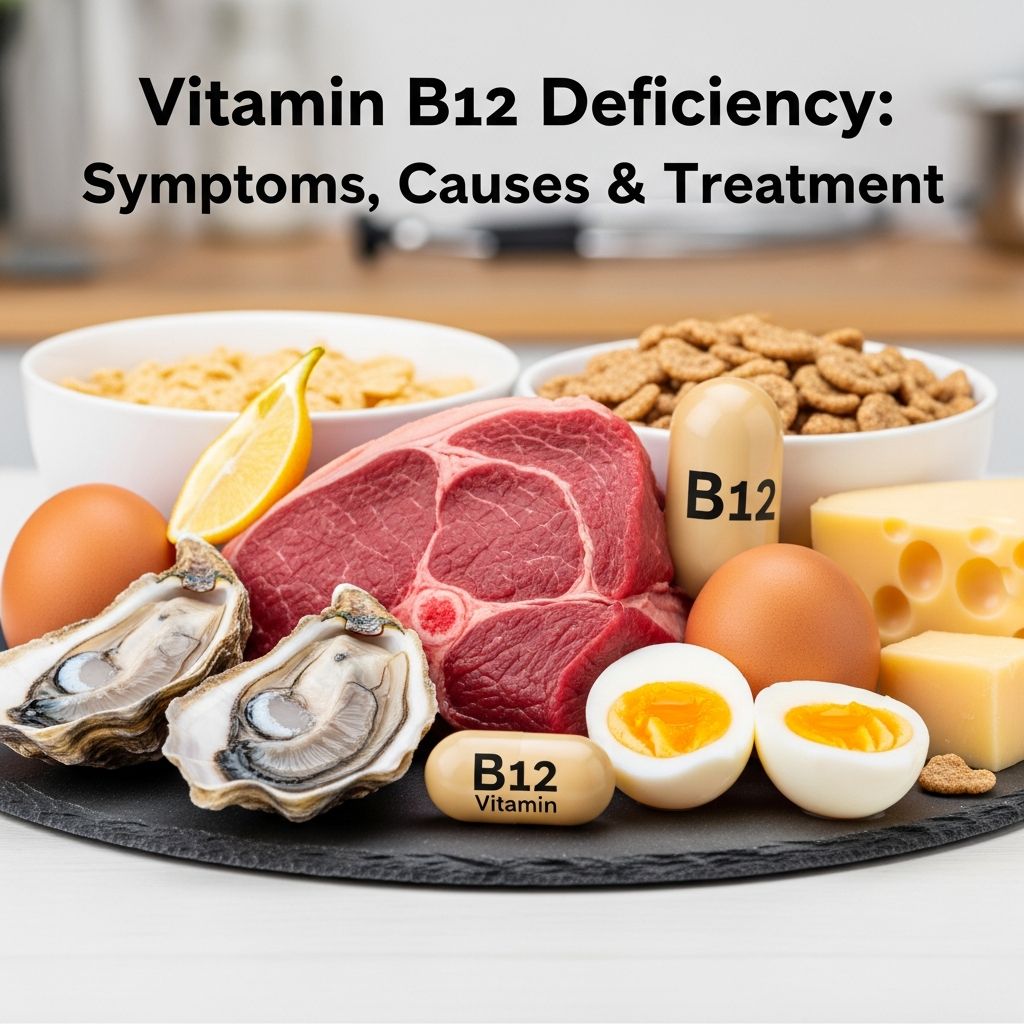
For deficiency caused by insufficient dietary intake, increasing consumption of B12-rich foods can help. These include beef, fish, poultry, eggs, and dairy products. Vegetarians and vegans should consume fortified cereals, plant-based milks, and nutritional yeast, or use supplements.
Treating Underlying Conditions
Managing the underlying cause is essential for long-term success. This may include treating pernicious anemia, adjusting medications that interfere with B12 absorption, treating gastrointestinal disorders, or managing bacterial overgrowth with antibiotics.
Prognosis and Recovery
Most people begin feeling better shortly after starting appropriate treatment. However, the timeline for improvement varies. In severe cases with megaloblastic anemia, bone marrow recovery can be observed within days of treatment initiation, with significant improvements in blood counts and mental status occurring within 2 weeks.
For pernicious anemia specifically, increasing vitamin B12 intake may eliminate most symptoms, though neurological complications can persist even after B12 stores are fully replaced. The duration of treatment depends on the cause: some people need treatment only until B12 levels normalize, while others require lifelong B12 therapy.
Prevention of Vitamin B12 Deficiency
Preventing vitamin B12 deficiency involves ensuring adequate B12 intake through diet or supplements. Vegetarians and vegans should consume fortified foods or take regular B12 supplements. Individuals with risk factors for absorption problems should discuss screening with their healthcare provider. Those taking medications affecting B12 absorption may need supplementation or monitoring.
Frequently Asked Questions
Q: Can you have vitamin B12 deficiency without anemia?
A: Yes, you can have vitamin B12 deficiency without developing anemia. While B12 is essential for red blood cell production, a deficiency can cause neurological and psychological symptoms without significantly affecting red blood cell counts.
Q: How long does it take to recover from vitamin B12 deficiency?
A: Recovery time varies depending on severity and treatment method. Some people feel better within days of starting treatment, while others may take weeks to months. However, neurological complications may not fully resolve even after B12 levels normalize.
Q: Is vitamin B12 deficiency permanent?
A: Vitamin B12 deficiency itself is treatable and reversible with appropriate therapy. However, prolonged deficiency can cause permanent nerve damage and neurological complications that may not fully resolve even after treatment.
Q: Can vitamin B12 supplements prevent deficiency?
A: Yes, regular B12 supplements can prevent deficiency, particularly for vegetarians, vegans, and individuals with absorption problems. Consult your healthcare provider about appropriate supplementation for your situation.
Q: What vitamin B12 level is considered deficient?
A: A vitamin B12 level below 200 pg/mL is generally considered deficient. Levels between 200 and 300 pg/mL are in a gray zone where additional testing may be necessary, especially if symptoms are present.
References
- Megaloblastic Anemia Due to Severe Vitamin B12 Deficiency — Cleveland Clinic Journal of Medicine. 2017-01-15. https://www.ccjm.org/content/89/1/8
- Vitamin B12 and Folate Metabolism in Cardiovascular Disease — Cleveland Clinic Lerner Research Institute. 2013. https://www.lerner.ccf.org/cardiovascular-metabolic/jacobsen/
- Pernicious Anemia: Definition, Symptoms, Causes & Treatment — Cleveland Clinic. 2024. https://my.clevelandclinic.org/health/diseases/22377-pernicious-anemia
- Vitamin B12 Deficiency: Symptoms, Causes & Treatment — Cleveland Clinic. 2024. https://my.clevelandclinic.org/health/diseases/22831-vitamin-b12-deficiency
- Vitamin B Deficiency — Cleveland Clinic Journal of Medicine. 2016-01-15. https://www.ccjm.org/content/ccjom/83/1/16.full.pdf
- Vitamin B12 Injections: What They Can and Can’t Do — Cleveland Clinic Health. 2024. https://health.clevelandclinic.org/can-b12-shots-boost-energy-help-lose-weight
- Vitamin Deficiency Anemia: Symptoms & Causes — Cleveland Clinic. 2024. https://my.clevelandclinic.org/health/diseases/17732-vitamin-deficiency-anemia
Similar Articles








Read full bio of Sneha Tete