Vitamin D for Infants: Supplementation Guide
Essential insights on why babies need vitamin D drops, safe dosing, and preventing deficiency risks for optimal growth.
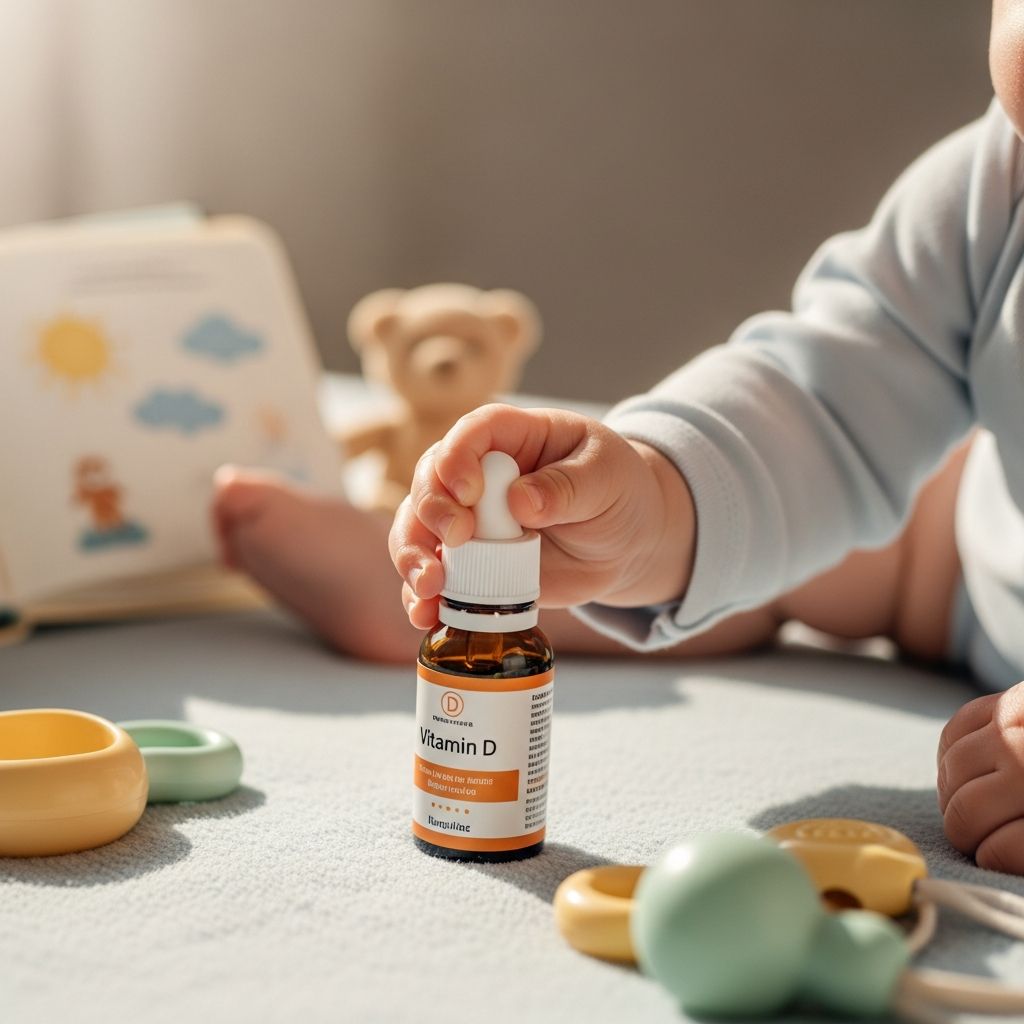
Vitamin D plays a pivotal role in infant development, particularly in building strong bones and supporting immune function. Health authorities like the American Academy of Pediatrics recommend 400 IU daily for most babies to prevent deficiency-related conditions such as rickets.
The Critical Role of Vitamin D in Early Development
Vitamin D, often called the “sunshine vitamin,” is essential for calcium absorption and bone mineralization in growing infants. Without adequate levels, babies risk developing rickets, a disorder characterized by softened and weakened bones that can lead to deformities, growth delays, and fractures. Beyond skeletal health, emerging research links vitamin D to enhanced immune responses, potentially reducing the incidence of respiratory tract infections (RTIs) in early childhood.
Infants have unique vulnerabilities because their bodies produce limited vitamin D from sunlight exposure due to immature skin and recommendations to limit direct sun to prevent burns. Breast milk, while nutritionally superior, typically provides insufficient vitamin D—often less than 100 IU per liter—necessitating supplementation.
Who Needs Vitamin D Supplements and When to Start
All breastfed or partially breastfed infants should receive 400 IU of vitamin D daily, beginning shortly after birth. This continues until the baby is weaned to iron-fortified formula or consumes at least 1 liter (about 32 ounces) of vitamin D-fortified formula per day. Formula-fed babies consuming less than this amount also require supplements to bridge the gap.
- Breastfed babies: 400 IU/day from birth.
- Partially breastfed: Same dosage if breast milk is primary source.
- Formula-fed under 32 oz/day: Supplement to reach 400 IU total.
Maternal supplementation offers an alternative: mothers taking 4,000–6,400 IU daily can enrich breast milk sufficiently, but only one method—direct infant drops or maternal dosing—should be used to avoid excess.
Health Benefits Supported by Evidence
Adequate vitamin D supports multiple facets of infant health:
- Bone Health: Prevents rickets by facilitating calcium and phosphorus utilization.
- Immune Support: Studies show supplemented infants experience delayed first RTIs (over 6 months vs. 60 days) and fewer infections overall.
- Long-term Growth: Prenatal maternal supplementation correlates with higher birth weight and reduced small-for-gestational-age risk.
Pregnancy supplementation (400–600 IU daily) may lower preterm birth and preeclampsia risks, benefiting newborns indirectly.
Safe Dosing Practices and Product Selection
Use liquid vitamin D drops formulated for infants, administered via the provided dropper for precise measurement. Never exceed 400 IU daily unless directed by a pediatrician. Store supplements away from heat and light, and check expiration dates.
| Infant Group | Daily Dose | Duration | Source |
|---|---|---|---|
| Breastfed | 400 IU | From birth until 1L formula/day | Mayo Clinic |
| Formula <32oz | 400 IU | Until full formula intake | CDC |
| Maternal Option | 4,000-6,400 IU (mother) | During breastfeeding | InfantRisk |
Consult pediatricians for babies with conditions like obesity, dark skin, or malabsorption issues (e.g., celiac), which increase deficiency risk.
Risks of Deficiency vs. Overdose
Deficiency Risks: Rickets remains a concern, with symptoms including bowed legs, delayed walking, and muscle weakness. Low levels also heighten RTI susceptibility.
Related Stories



Overdose Dangers: Excess vitamin D (>10,000 IU/day) can cause hypercalcemia, leading to kidney stones, nausea, and in severe cases, life-threatening toxicity. Asymptomatic intoxication has been documented even from single high doses, with prolonged recovery. Compliance is low—only 2-19% of infants get recommended doses—highlighting education needs.
Administration Tips for Parents
Squeeze drops directly into the baby’s mouth during feeding for easy acceptance. Track intake in a journal and discuss at well-child visits. If using formula, verify fortification levels (typically 40-100 IU per 100mL).
- Read labels carefully.
- Use only infant-specific products.
- Avoid combining maternal and infant supplements.
- Monitor for side effects like vomiting or excessive thirst.
Prenatal and Postnatal Strategies
Pregnant women should aim for 600 IU daily, potentially higher under guidance, to optimize cord blood levels and infant outcomes. Postnatally, routine screening isn’t universal but consider for at-risk groups.
Common Myths and Facts
| Myth | Fact | Source |
|---|---|---|
| Sun exposure replaces supplements | Limited safe sun yields insufficient vitamin D; supplements needed. | |
| Formula alone suffices | Requires ~1L/day; most infants need extra. | |
| Overdose is impossible | Possible with high doses; monitor total intake. |
Frequently Asked Questions (FAQs)
At what age should I start vitamin D for my baby?
Ideally within the first few days of life for breastfed infants.
Can too much vitamin D harm my baby?
Yes, exceeding 4,000 IU/day risks toxicity; stick to 400 IU.
Is supplementation needed if my baby gets some sun?
Sun alone is unreliable; guidelines recommend supplements regardless.
What if my baby refuses drops?
Mix with breast milk or formula; consult a doctor for alternatives.
How long until rickets risk passes?
Continue until full formula intake or age 1, when diet diversifies.
Monitoring and When to See a Doctor
Watch for deficiency signs like soft skull or irritability, or overdose symptoms like constipation. Annual blood tests may be advised for high-risk infants. Always inform pediatricians of supplements.
References
- Vitamin D for babies: Are supplements needed? — Mayo Clinic. 2023-10-15. https://www.mayoclinic.org/healthy-lifestyle/infant-and-toddler-health/expert-answers/vitamin-d-for-babies/faq-20058161
- An Infant with Asymptomatic Vitamin D Intoxication — PMC – NIH. 2022-02-20. https://pmc.ncbi.nlm.nih.gov/articles/PMC8898842/
- The Impact of Vitamin D Deficiency on Infants’ Health — PMC – NIH. 2023-10-01. https://pmc.ncbi.nlm.nih.gov/articles/PMC10609616/
- Vitamin D Supplementation and Breastfeeding — InfantRisk Center. 2024-01-12. https://infantrisk.com/content/vitamin-d-supplementation-and-breastfeeding
- Vitamin D Supplements: What Parents Should Know — Children’s Hospital of Philadelphia. 2023-05-20. https://www.chop.edu/news/health-tip/vitamin-d-supplements-what-parents-should-know
- Vitamin D | Infant and Toddler Nutrition — CDC. 2024-08-10. https://www.cdc.gov/infant-toddler-nutrition/vitamins-minerals/vitamin-d.html
Similar Articles








Read full bio of Sneha Tete