Vitamins and Minerals: Essential Guide to Nutritional Health
Comprehensive guide to vitamins, minerals, supplements, and their role in maintaining optimal health.
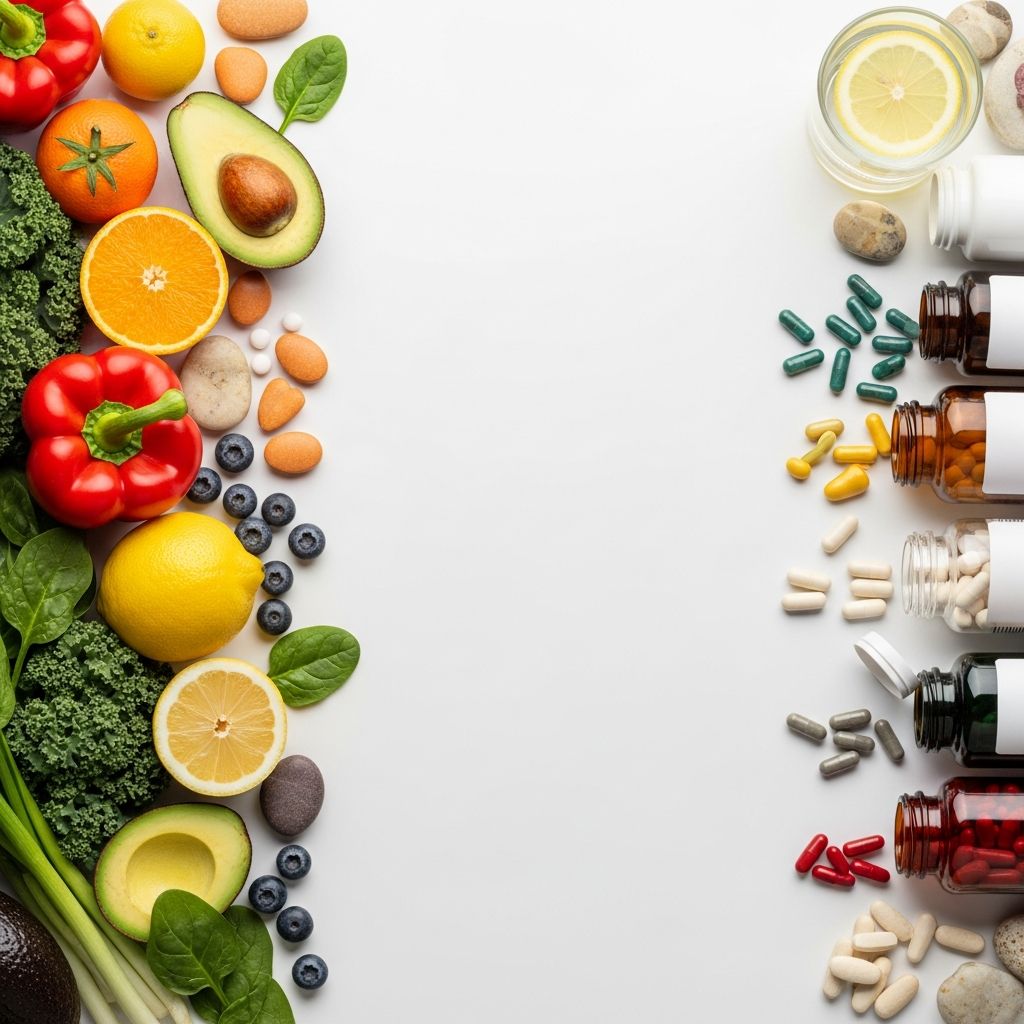
Vitamins and minerals are essential substances that our bodies need to function normally and maintain optimal health. These micronutrients play critical roles in energy production, immune function, bone health, and countless other physiological processes. Understanding what these nutrients are, where to find them, and how much you need is fundamental to making informed dietary choices and achieving wellness goals.
What Are Vitamins and Minerals?
Vitamins are organic compounds produced by plants or animals that are essential for normal growth and nutrition. Minerals, on the other hand, are inorganic substances found in soil and water that are absorbed by plants and consumed by animals. Both are vital micronutrients that your body requires in smaller quantities compared to macronutrients like protein, carbohydrates, and fats, yet they are absolutely necessary for survival and optimal functioning.
Essential Vitamins
There are thirteen essential vitamins that your body requires to function properly. These vitamins are divided into two categories: fat-soluble and water-soluble. Fat-soluble vitamins, including vitamins A, D, E, and K, are stored in body fat and can accumulate over time. Water-soluble vitamins, including vitamin C and the B vitamins, are not stored in the body and must be obtained regularly through diet or supplementation.
Fat-Soluble Vitamins
Vitamin A supports vision, immune function, and skin health. It helps your eyes adjust to light changes and maintains the health of your skin and mucous membranes. Vitamin D plays a crucial role in calcium absorption and bone health, while also supporting immune function and mood regulation. Vitamin E acts as a powerful antioxidant, protecting cells from damage caused by free radicals. Vitamin K is essential for blood clotting and bone metabolism, ensuring that wounds heal properly and bones remain strong.
Water-Soluble Vitamins
Vitamin C supports immune function, collagen synthesis, and acts as an antioxidant to protect cells from oxidative stress. B vitamins play essential roles in energy metabolism and nervous system function. These include thiamin (B1), which helps convert carbohydrates into energy; riboflavin (B2), which supports energy production and cell growth; niacin (B3), which aids in DNA repair and energy metabolism; pantothenic acid (B5), which helps turn food into energy; pyridoxine (B6), which supports brain development and function; cobalamin (B12), which maintains nerve and blood cell health; biotin, which supports hair, skin, and nail health; and folate/folic acid, which is crucial for cell division and DNA synthesis, particularly important for pregnant women.
Essential Minerals
A number of minerals are essential for health and perform diverse functions throughout the body. Major minerals needed in larger amounts include calcium, phosphorus, potassium, sodium, chloride, and magnesium. Trace minerals required in smaller amounts include iron, zinc, iodine, sulfur, cobalt, copper, fluoride, manganese, and selenium.
Major Minerals
Calcium is vital for bone health, muscle function, and nerve signaling. Approximately 99% of your body’s calcium is stored in bones and teeth, making this mineral crucial for maintaining skeletal strength throughout life. Phosphorus works with calcium to build and maintain bones and teeth. Potassium helps regulate blood pressure, muscle contractions, and heart rhythm. Sodium and chloride maintain proper fluid balance and support nerve and muscle function. Magnesium is involved in over 300 enzymatic reactions in the body, including energy production, protein synthesis, and muscle and nerve function.
Trace Minerals
Iron is essential for oxygen transport in the blood and energy production. Zinc supports immune function, wound healing, and protein synthesis. Iodine is crucial for thyroid function and metabolism regulation. Copper aids in iron metabolism and connective tissue formation. Selenium functions as an antioxidant and supports thyroid health. Manganese contributes to bone health and metabolism, while fluoride supports dental health by strengthening tooth enamel.
Meeting Nutritional Requirements Through Whole Foods
The Dietary Guidelines for Americans 2020–2025 recommends that people should aim to meet their nutritional requirements through a healthy eating pattern that includes nutrient-dense foods. This approach provides not only vitamins and minerals but also fiber, phytonutrients, and other beneficial compounds that work synergistically to support health. Whole foods offer complex nutritional profiles that supplements alone cannot replicate.
Food Sources of Key Nutrients
Calcium-rich foods include milk, cheese, and yogurt; vegetables like kale, broccoli, and Chinese cabbage; and canned sardines and salmon with soft bones that you eat. You can get enough vitamin C by eating a variety of foods including citrus fruits such as oranges and grapefruit and their juices, as well as red and green peppers, kiwifruit, broccoli, strawberries, baked potatoes, and tomatoes. Green leafy vegetables are excellent sources of vitamin K. Red meat, poultry, oysters and other seafood, and fortified breakfast cereals are good sources of zinc. Beans, nuts, whole grains, and dairy products also contain zinc. Nuts are a rich source of copper, supporting various enzymatic functions in the body.
Understanding Multivitamin and Mineral Supplements
Multivitamin and mineral (MVM) supplements are products that contain multiple vitamins and minerals in varying amounts. While the Dietary Guidelines recommend obtaining nutrients from food, supplements may play a role for certain populations. However, it is important to understand how supplements are regulated and what you should know before taking them.
Supplement Regulation and Labeling
There is no standard or regulatory definition for what nutrients MVMs, or any dietary supplement, must contain or at what levels. Manufacturers choose which vitamins, minerals, and other ingredients, as well as the amounts, to include in their products. However, MVMs are required to provide nutrition information on a Supplement Facts panel and list all ingredients on the product label. Ingredients not included in the Supplement Facts panel must be listed under “Other Ingredients.” This transparency allows consumers to make informed decisions about what they are consuming.
Research on Vitamin and Mineral Supplements
Scientific research continues to explore the effectiveness of various vitamin and mineral supplements in preventing or treating specific health conditions. One notable example involves research on supplements for eye health.
Age-Related Eye Disease Studies
The National Institutes of Health sponsored the Age-Related Eye Disease Study (AREDS), which showed that a dietary supplement formulation containing high doses of vitamins C and E, beta-carotene, zinc, and copper can help slow the progression to advanced age-related macular degeneration (AMD). This landmark study provided evidence that certain nutrient combinations may offer protective benefits for age-related eye conditions. A second study, AREDS2, showed that removing beta-carotene from the AREDS formulation did not lessen its protective effect against developing advanced AMD. AREDS2 also showed that adding omega-3 fatty acids did not improve the effectiveness of the formulation. These findings help refine recommendations about which nutrients are most beneficial for eye health.
Special Population Considerations
The Dietary Guidelines for Americans 2020–2025 provides specific recommendations for certain populations with unique nutritional needs. Women who are or may become pregnant require higher amounts of certain nutrients, particularly folate, to support fetal development and prevent neural tube defects. Women who breastfeed have increased nutritional demands to support milk production and maintain their own health. People ages 60 and over may have increased needs for certain vitamins and minerals, such as vitamin B12 and vitamin D, due to changes in nutrient absorption and metabolism that occur with aging.
Safety Considerations for Supplements
While vitamins and minerals are essential for health, taking excessive amounts through supplements can be harmful. Fat-soluble vitamins can accumulate in body tissues and potentially reach toxic levels. It is important to follow recommended daily allowances and consult with healthcare providers before starting any supplement regimen, particularly if you are taking medications or have existing health conditions. Some supplements can interact with medications or affect the absorption of other nutrients.
Frequently Asked Questions
Q: Should everyone take multivitamin and mineral supplements?
A: The Dietary Guidelines for Americans recommend meeting nutritional needs through a healthy eating pattern that includes nutrient-dense foods. However, supplements may be appropriate for certain populations, including those with specific dietary restrictions, older adults, and women of childbearing age. Consult with a healthcare provider to determine if supplements are necessary for your individual needs.
Q: Are there risks associated with taking too many vitamins and minerals?
A: Yes, excessive intake of certain vitamins and minerals can cause adverse effects. Fat-soluble vitamins like A, D, E, and K can accumulate in body tissues and potentially reach toxic levels. Excess iron can damage organs, and high doses of certain minerals can cause gastrointestinal upset or other complications. Always follow recommended dosages and discuss supplementation with your healthcare provider.
Q: How do I know if I have a deficiency in vitamins or minerals?
A: Symptoms of nutrient deficiencies vary depending on which nutrient is lacking. Common signs include fatigue, weakness, poor wound healing, or cognitive difficulties. However, many deficiencies have no obvious symptoms. Blood tests can identify specific deficiencies, so consult with a healthcare provider if you suspect you may be deficient in any nutrients.
Q: Can I get all the vitamins and minerals I need from food alone?
A: For most people following a balanced, varied diet that includes fruits, vegetables, whole grains, lean proteins, and dairy products, it is possible to obtain adequate vitamins and minerals from food sources alone. However, certain populations, dietary restrictions, or health conditions may necessitate supplementation. A registered dietitian can help you assess your dietary intake and determine if supplements are needed.
Q: What is the difference between synthetic and natural vitamins?
A: Synthetic vitamins are manufactured in laboratories, while natural vitamins are derived from food sources. In most cases, the body processes these forms similarly, though bioavailability and absorption can vary. The most important factor is obtaining adequate amounts of essential nutrients, regardless of whether they come from food or supplements.
Key Takeaways
Vitamins and minerals are essential micronutrients that support virtually every function in your body. While the Dietary Guidelines for Americans recommend obtaining these nutrients primarily through nutrient-dense foods, supplements may play a role for certain populations. Understanding what these nutrients do, how much you need, and where to find them is essential for making informed dietary choices. If you are considering vitamin or mineral supplementation, discuss your individual needs with a healthcare provider to ensure you are making the best choices for your health.
References
- Vitamins and Minerals — National Center for Complementary and Integrative Health (NCCIH), National Institutes of Health. 2024. https://www.nccih.nih.gov/health/vitamins-and-minerals
- Dietary Guidelines for Americans 2020–2025 — U.S. Department of Agriculture (USDA) and U.S. Department of Health and Human Services (HHS). 2020. https://www.dietaryguidelines.gov
- Multivitamin/Mineral Supplements Fact Sheet — Office of Dietary Supplements, National Institutes of Health. 2024. https://ods.od.nih.gov/factsheets/MultivitaminMinerals-HealthProfessional/
- Age-Related Eye Disease Study (AREDS) and AREDS2 — National Eye Institute, National Institutes of Health. 2023. https://www.nei.nih.gov/research/clinical-trials/age-related-eye-disease-study
- Vitamin and Mineral Supplement Fact Sheets — Office of Dietary Supplements, National Institutes of Health. 2024. https://ods.od.nih.gov/factsheets/list-VitaminsMinerals/
- Using Dietary Supplements Wisely — National Center for Complementary and Integrative Health (NCCIH), National Institutes of Health. 2024. https://www.nccih.nih.gov/health/using-dietary-supplements-wisely
Similar Articles







Read full bio of medha deb