Vitreous Detachment: 3 Key Symptoms And Warning Signs
Understand posterior vitreous detachment: symptoms, risks, diagnosis, and when to seek urgent eye care for optimal vision health.
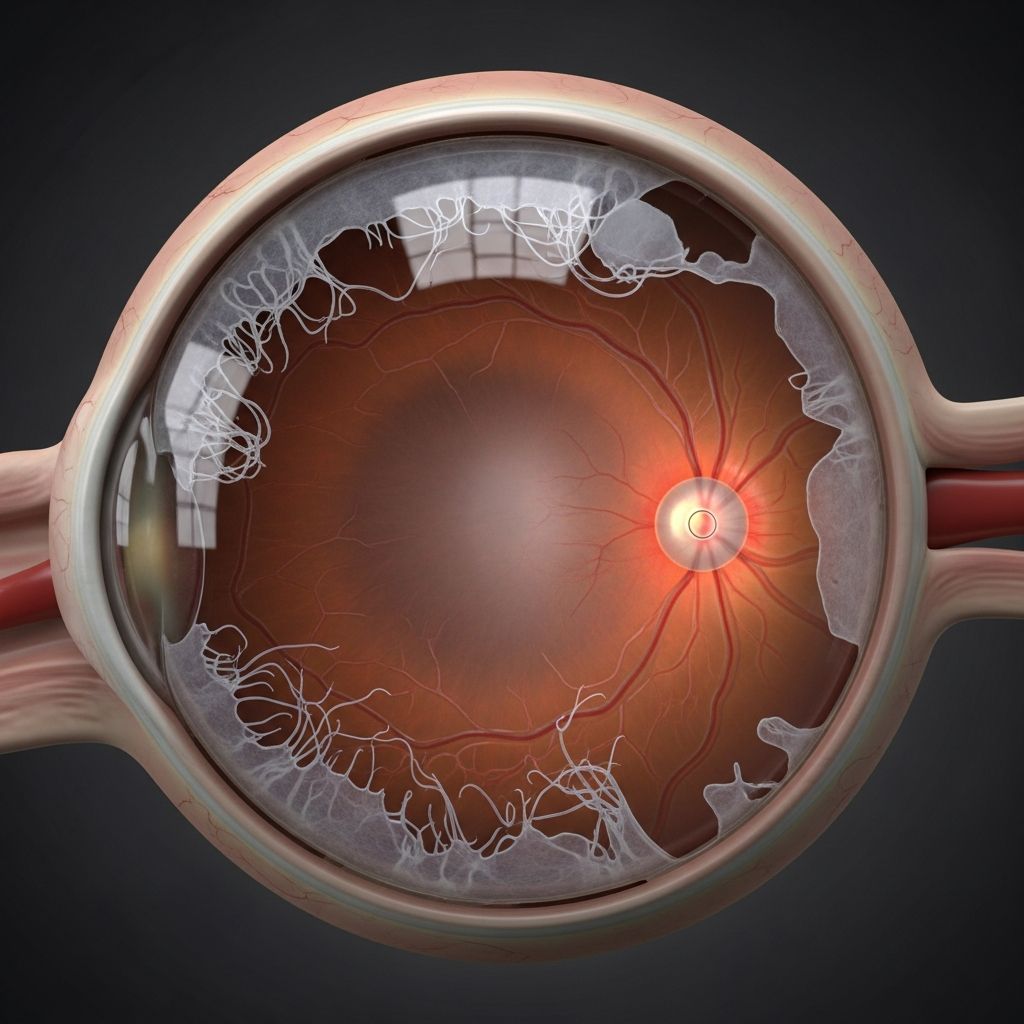
The vitreous, or vitreous humor, is a clear, gel-like substance that fills the space between the lens and retina in the eye. Posterior vitreous detachment (PVD) occurs when this gel shrinks and pulls away from the retina, a process that commonly affects people over age 50.
Understanding the Vitreous and Its Role in Vision
The vitreous provides structural support to the eye, maintaining its shape and transmitting light to the retina. Composed mostly of water, collagen, and hyaluronic acid, it remains firmly attached to the retina in youth. Over decades, it undergoes liquefaction, becoming more watery and less viscous. This natural change leads to posterior vitreous detachment, where the gel separates from the retinal surface, typically starting at the optic disc and macula.
While PVD itself poses no threat to vision, the separation can sometimes exert traction on the retina, potentially leading to complications. Awareness of this process empowers individuals to recognize symptoms early and consult eye specialists promptly.
Primary Symptoms of Posterior Vitreous Detachment
Most individuals with PVD experience visual disturbances that appear suddenly. These symptoms arise as vitreous strands cast shadows on the retina or stimulate retinal cells during detachment.
- Floaters: Small, dark specks, strings, cobwebs, or rings drifting across the visual field. They move with eye motion and are more noticeable against bright backgrounds.
- Flashes of light (photopsias): Brief streaks, sparks, or lightning-like bursts, often in peripheral vision, especially in low light. These occur due to mechanical stimulation of the retina.
- Weiss ring: A circular floater sometimes visible during eye exams, indicating complete posterior detachment.
Symptoms typically peak within days to weeks and gradually fade as the brain adapts by ignoring them. Central vision remains unaffected in uncomplicated cases.
Factors That Increase Risk for PVD
Age is the predominant risk factor, with PVD occurring in about 66% of people over 70. Other contributors alter vitreous structure or adherence to the retina.
| Risk Factor | Description |
|---|---|
| Advanced Age | Vitreous liquefaction accelerates after 50, leading to detachment in over half of cases by age 70. |
| High Myopia | Elongated eye shape stretches the vitreous, promoting early separation. |
| Eye Surgery | Cataract extraction or LASIK disrupts vitreous attachments. |
| Trauma | Injury can trigger premature vitreous changes. |
| Inflammation (Uveitis) | Damages internal eye structures, hastening gel breakdown. |
Individuals with these factors should monitor vision changes closely.
Distinguishing Benign Symptoms from Serious Complications
Not all floaters or flashes signal PVD; they can stem from other issues. Crucially, 10-15% of symptomatic PVD cases involve retinal tears due to vitreous traction.
Urgent Warning Signs Requiring Immediate Care:
- Sudden shower of numerous new floaters.
- Increased or persistent flashes.
- Shadow, curtain, or veil obscuring peripheral or central vision.
- Sudden vision blurring or loss.
These indicate possible retinal tear, macular hole, or detachment, which threaten sight if untreated. Macular holes or full detachments can cause permanent vision impairment without intervention.
PVD causes no pain, redness, or discomfort. Accompanying symptoms suggest alternative diagnoses like glaucoma or infection.
Related Stories



How Eye Specialists Diagnose Vitreous Detachment
Diagnosis begins with a comprehensive dilated eye exam. Ophthalmologists use:
- Slit-lamp biomicroscopy: Views anterior and posterior segments.
- Indirect ophthalmoscopy: Provides wide-field retinal imaging with a condensing lens.
- Optical coherence tomography (OCT): High-resolution cross-sections confirming vitreous separation and macular status.
These detect tears, holes, or bleeding invisible to patients. A Weiss ring confirms complete PVD. Early detection prevents progression to sight-threatening issues.
Management Strategies for Vitreous Detachment
PVD requires no direct treatment in most cases. The gel stabilizes post-separation, and symptoms diminish over 3-6 months as the brain filters floaters.
- Observation: Regular follow-ups (1-6 weeks initially) monitor for complications.
- Lifestyle Adjustments: Avoid rubbing eyes; wear protective eyewear during activities.
For persistent, vision-impairing floaters (rare), options include vitrectomy surgery, weighing risks like cataract formation or infection. Laser vitreolysis targets floaters but lacks universal endorsement due to limited evidence.
Potential Complications and Their Treatments
Though uncommon, vitreous traction can cause:
- Retinal Tears: Treated with laser photocoagulation or cryotherapy to seal edges, preventing detachment (success rate >90%).
- Retinal Detachment: Surgical repair via scleral buckle, vitrectomy, or pneumatic retinopexy.
- Macular Hole: Vitrectomy with gas bubble to close the hole.
- Vitreous Hemorrhage: Observation or vitrectomy if persistent.
Prompt intervention preserves vision in nearly all cases.
Living with Floaters: Coping Tips
Floaters persist lifelong for some but rarely impair function. Strategies include:
- Focusing vision on busy backgrounds to displace floaters.
- Avoiding fixation; shift gaze instead.
- Stress reduction, as anxiety heightens awareness.
- Annual eye exams for at-risk individuals.
Most adapt fully, regaining pre-PVD visual comfort.
Preventive Measures and Routine Eye Care
No method prevents PVD, a normal aging process. However:
- Maintain blood sugar and blood pressure control to protect retinal health.
- Protect eyes from trauma with safety gear.
- Schedule dilated exams yearly after age 50 or sooner with risk factors.
Early detection framework minimizes complication risks.
Frequently Asked Questions (FAQs)
Does vitreous detachment cause permanent vision loss?
No, uncomplicated PVD does not affect vision long-term. Complications like tears occur in <15% and are treatable if addressed promptly.
How long do PVD symptoms last?
Floaters and flashes peak early and fade over weeks to months. Some floaters remain but become less bothersome.
Can PVD happen in both eyes?
Yes, often sequentially; the second eye detaches months to years later.
Is treatment always needed for floaters?
No, observation suffices. Surgery is reserved for severe cases impacting daily life.
Who should get screened after noticing symptoms?
Anyone with new floaters or flashes, especially over 50 or with risk factors, should see an ophthalmologist urgently.
References
- Vitreous Detachment Care in Colorado — Retina Colorado. Accessed 2026. https://www.retinacolorado.com/retinal-care/vitreous-detachment
- Posterior Vitreous Detachment (PVD) — ReFocus Eye Health Cheshire. Accessed 2026. https://cheshire.refocuseyedoctors.com/article/posterior-vitreous-detachment-pvd/
- Vitreous Detachment — Medical Eye Center. Accessed 2026. https://www.medicaleyenc.com/vitreous-detachment.php
- Posterior Vitreous Detachment — West Texas Eye Associates. Accessed 2026. https://www.westtexaseye.com/blog/posterior-vitreous-detachment/
- Posterior Vitreous Detachment — Cleveland Clinic. 2023-10-24. https://my.clevelandclinic.org/health/diseases/14413-posterior-vitreous-detachment
Similar Articles








Read full bio of Sneha Tete