Vitreous Hemorrhage: Symptoms & Treatment
Understanding vitreous hemorrhage: causes, symptoms, diagnosis, and evidence-based treatment options.
Understanding Vitreous Hemorrhage
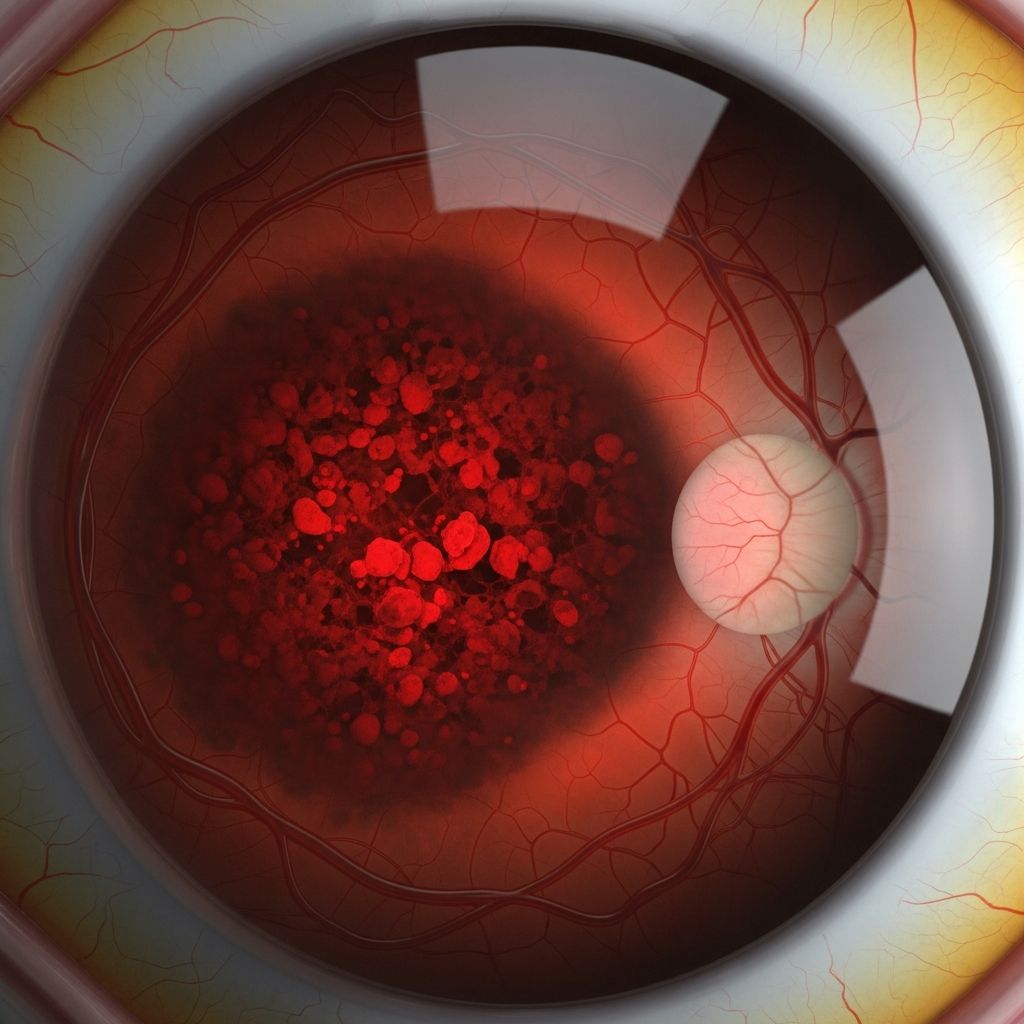
A vitreous hemorrhage occurs when blood leaks into the vitreous of your eye, resulting in sudden but painless vision loss in the affected eye. This condition can potentially lead to permanent vision loss, depending on its underlying cause. The vitreous is the largest space within your eye and contains the vitreous body, a gel-like substance that maintains the eye’s globe-like shape while allowing light to pass through so you can see clearly.
When blood enters the vitreous, it blocks light from reaching the retina, causing the characteristic vision problems associated with this condition. While vitreous hemorrhage doesn’t typically produce visible changes that others can observe on the surface of your eye, it significantly impacts your ability to see.
The Anatomy of the Vitreous
The vitreous is a transparent, gel-like substance that fills the large cavity of your eye behind the lens. This gel maintains the eye’s structural integrity and allows light to pass through unobstructed. When functioning normally, the vitreous is completely clear, permitting light rays to travel through the eye to the retina, where vision is processed. The vitreous body must remain transparent for optimal vision, making any bleeding within this space particularly problematic for visual function.
Symptoms of Vitreous Hemorrhage
The primary symptom of vitreous hemorrhage is sudden vision deterioration or vision loss. Patients typically experience this vision change without accompanying pain, which is why many people may not realize they have a serious eye condition requiring immediate attention.
Vision loss from vitreous hemorrhage can manifest in several ways:
– Sudden appearance of floaters or cobweb-like patterns- Hazy or cloudy vision- Significant reduction in visual clarity- Sudden onset of shadow or darkness in the visual field
The severity and appearance of these symptoms depend on the amount of blood in the vitreous and its location. Small hemorrhages may cause minimal symptoms, while larger bleeds can result in severe vision loss or complete blindness in the affected eye.
Causes of Vitreous Hemorrhage
Vitreous hemorrhage occurs when blood vessels in the eye leak blood into the vitreous space. Two primary mechanisms can cause this condition: mechanical force and underlying disease.
Mechanical Force Causes
Physical trauma to the eye or head can damage blood vessels and cause bleeding into the vitreous. Potential mechanical causes include:
– Eye injuries or trauma- Blunt force to the head or eye- Penetrating eye injuries- Complications following eye surgery
Disease-Related Causes
Various diseases can weaken blood vessels in the eye or disrupt their normal function, leading to vitreous hemorrhage. Common disease-related causes include:
– Proliferative diabetic retinopathy- Age-related macular degeneration- Retinal vein occlusion- Retinal tears or detachment- Bleeding disorders or blood thinning medications- High blood pressure- Severe eye inflammation or uveitis
Related Stories



Proliferative diabetic retinopathy represents one of the most common causes of vitreous hemorrhage, particularly in patients with poorly controlled diabetes. In this condition, abnormal blood vessels develop on the retina and can rupture, causing bleeding into the vitreous.
Diagnosis of Vitreous Hemorrhage
An eye care specialist can diagnose vitreous hemorrhage using various diagnostic methods. The initial evaluation typically involves:
Initial Examination Tools
– Ophthalmoscope examination to visualize bleeding- Slit lamp examination for detailed visualization- Visual acuity testing
These standard tools are often sufficient to identify vitreous hemorrhage. However, your eye care provider may recommend additional testing to determine the underlying cause of the bleeding.
Additional Diagnostic Tests
Several lab and imaging tests can help diagnose vitreous hemorrhage or identify conditions causing it:
– Ultrasound imaging (B-scan or A-scan) to visualize structures when bleeding obscures the view- Optical coherence tomography (OCT) to assess retinal structure- Fluorescein angiography to evaluate blood vessel function- Blood tests to check for bleeding disorders or diabetes- Fundus photography to document hemorrhage location and extent
These diagnostic approaches help your eye care specialist identify not only the presence of vitreous hemorrhage but also its underlying cause, which is essential for determining appropriate treatment.
Treatment Approaches for Vitreous Hemorrhage
Several treatment options exist for vitreous hemorrhage, and your specific treatment plan may involve one or more approaches. The choice of treatment depends on the cause, severity, and how quickly treatment is initiated.
Observation and Watchful Waiting
Small vitreous hemorrhages may clear spontaneously as your eye gradually reabsorbs the blood. Your doctor may recommend observation with periodic follow-up examinations to monitor the hemorrhage’s resolution.
Anti-VEGF Injections
Anti-vascular endothelial growth factor (anti-VEGF) medications such as aflibercept can be injected directly into the vitreous. These medications work by stimulating regression of abnormal blood vessel growth while the hemorrhage is naturally reabsorbed. This approach is particularly useful for vitreous hemorrhage caused by proliferative diabetic retinopathy. Studies demonstrate that aflibercept can be an effective initial treatment for PDR-related vitreous hemorrhage, though vitreous hemorrhage clearance takes longer compared to surgical approaches.
Laser Treatment (Panretinal Photocoagulation)
Panretinal photocoagulation (PRP) uses laser energy to treat abnormal blood vessels throughout the retina. This treatment prevents future bleeding and is often used in combination with other approaches, particularly when treating diabetic retinopathy-related hemorrhage.
Vitrectomy Surgery
Vitrectomy is a surgical procedure that removes the vitreous gel along with the blood inside it. The vitreous is then replaced with a clear solution that allows light to pass through the eye normally. Vitrectomy has been the standard treatment for non-clearing vitreous hemorrhage since the 1970s. Benefits of vitrectomy include rapid clearance of hemorrhage, elimination of traction on neovascular vessels that contribute to recurrent bleeding, and intraoperative delivery of photocoagulation. Studies show that vitrectomy with panretinal photocoagulation provides faster visual recovery, particularly when baseline vision is severely compromised (worse than 20/800), and reduces the likelihood of recurrent vitreous hemorrhage.
Treatment Comparison: Aflibercept vs. Vitrectomy
Recent clinical trials have compared initial treatment with anti-VEGF injections to vitrectomy with panretinal photocoagulation for proliferative diabetic retinopathy-related vitreous hemorrhage:
| Factor | Aflibercept Injections | Vitrectomy with PRP |
|---|---|---|
| Hemorrhage Clearance Time | Median 36 weeks | Median 4 weeks |
| Recurrent Hemorrhage Risk | 49% of participants | 15% of participants |
| Visual Acuity at 24 Weeks | No significant difference | Faster recovery with worse baseline VA |
| Invasiveness | Non-surgical in-office procedure | Surgical procedure |
Both initial aflibercept and vitrectomy with panretinal photocoagulation are considered viable treatment approaches for proliferative diabetic retinopathy-related vitreous hemorrhage. Although overall visual outcomes were not significantly different between treatment groups from 12 weeks through 2 years, vitrectomy offers benefits including faster vision restoration, reduced likelihood of recurrent vitreous hemorrhage, and greater resolution of neovascularization.
Long-Term Vision Changes and Prognosis
Vitreous hemorrhage can cause long-term vision changes, some permanent and others temporary. Your eye care specialist can provide personalized information about what to expect in your specific case and strategies to support your recovery.
The outlook for vitreous hemorrhage depends on several factors:
– The underlying cause of the hemorrhage- How quickly treatment is initiated- The extent of the bleeding- Whether the patient has chronic conditions like diabetes or macular degeneration- Your overall eye health
Chronic conditions such as Type 2 diabetes or age-related macular degeneration tend to have less favorable outcomes. However, prompt diagnosis and appropriate treatment can significantly improve visual outcomes in many cases.
Frequently Asked Questions
Q: Is vitreous hemorrhage always painless?
A: Yes, vitreous hemorrhage typically does not cause pain. The primary symptom is vision loss or disturbance, not eye discomfort. If you experience eye pain along with vision changes, contact your eye care provider immediately as this may indicate a different condition.
Q: Can vitreous hemorrhage clear on its own?
A: Yes, small vitreous hemorrhages can sometimes clear spontaneously as the eye gradually reabsorbs the blood. However, larger hemorrhages may require intervention to restore vision quickly and prevent complications. Your eye care specialist can determine whether your specific hemorrhage will likely clear on its own or requires treatment.
Q: What should I do if I suddenly experience vision loss?
A: Sudden vision loss warrants immediate attention from an eye care professional. Schedule an urgent appointment with your ophthalmologist or optometrist, or visit an emergency eye clinic. Early diagnosis and treatment can significantly impact outcomes.
Q: Is vitrectomy the only surgical treatment for vitreous hemorrhage?
A: Vitrectomy is the primary surgical treatment, but treatment decisions depend on your specific condition. Non-surgical options like anti-VEGF injections may be appropriate for certain causes of vitreous hemorrhage. Your eye care specialist will recommend the best approach based on your individual circumstances.
Q: Can I prevent vitreous hemorrhage?
A: You can reduce your risk by managing chronic conditions like diabetes through good blood sugar control, maintaining healthy blood pressure, wearing protective eyewear during activities with trauma risk, and having regular eye exams. If you have diabetes or other risk factors, work closely with your healthcare provider to minimize your risk.
Q: How long does vitreous hemorrhage treatment typically take?
A: Treatment duration varies depending on the approach chosen and the underlying cause. Anti-VEGF injections typically involve a series of monthly injections, while vitrectomy is a single surgical procedure. Recovery and vision improvement timelines differ significantly between approaches.
References
- Visual Acuity, Vitreous Hemorrhage, and Other Ocular Outcomes Following Initial Aflibercept or Vitrectomy with Panretinal Photocoagulation for Proliferative Diabetic Retinopathy — National Center for Biotechnology Information (NCBI). 2021. https://pmc.ncbi.nlm.nih.gov/articles/PMC8295737/
- Effect of Intravitreous Aflibercept vs Vitrectomy with Panretinal Photocoagulation on Vision-Related Outcomes in Patients with Vitreous Hemorrhage Secondary to Proliferative Diabetic Retinopathy — JAMA (Journal of the American Medical Association). 2020. https://jamanetwork.com/journals/jama/fullarticle/2774049
- Vitreous Hemorrhage: Symptoms & Treatment — Cleveland Clinic. 2024. https://my.clevelandclinic.org/health/diseases/vitreous-hemorrhage
Similar Articles








Read full bio of Sneha Tete