VKH Disease: Modern Treatment Strategies
Explore evolving therapies for Vogt-Koyanagi-Harada disease, from corticosteroids to advanced immunosuppressants, for optimal vision preservation.
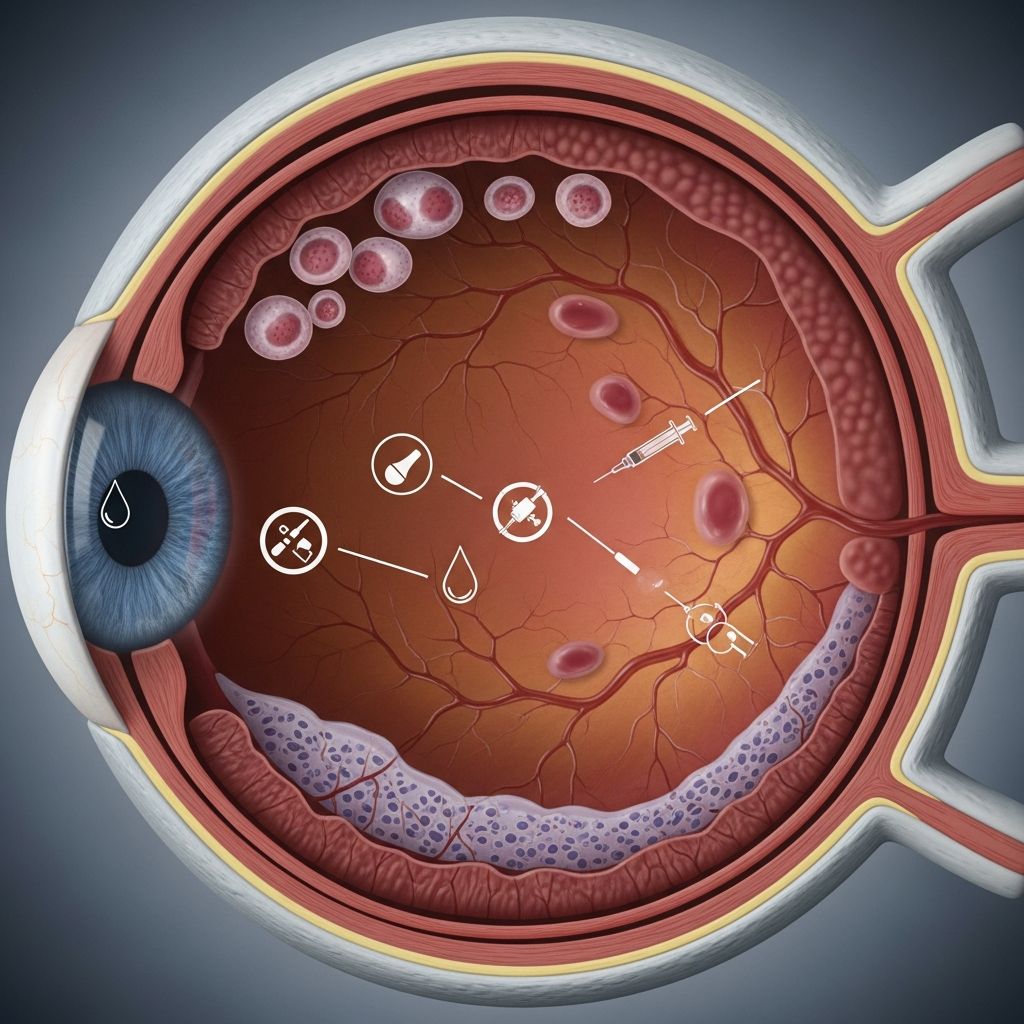
Vogt-Koyanagi-Harada (VKH) disease is a multisystem autoimmune disorder primarily affecting the eyes, leading to severe uveitis and potential vision impairment if not managed promptly. Effective management hinges on rapid initiation of therapy to curb inflammation and avert long-term damage like sunset glow fundus.
Understanding the Pathophysiology of VKH
VKH arises from an aberrant T-cell mediated immune response targeting melanocytes in the uvea, inner ear, meninges, and skin. This triggers bilateral panuveitis, serous retinal detachments, and extraocular manifestations such as hearing loss, tinnitus, vitiligo, and alopecia. Early diagnosis via clinical criteria, multimodal imaging (OCT, fluorescein angiography), and lumbar puncture for cerebrospinal fluid analysis is crucial for timely intervention.
The disease progresses through acute, chronic recurrent, and convalescent stages. Without aggressive treatment, up to 60% of cases develop sunset glow fundus—a depigmented choroid signaling irreversible damage—and subretinal fibrosis in 34%, both linked to poor visual prognosis.
Foundational Role of Corticosteroids
High-dose systemic corticosteroids remain the cornerstone of VKH therapy. Intravenous methylprednisolone pulses (1 g/day for 3 days) followed by oral prednisone (1-2 mg/kg/day) achieve rapid inflammation control in most acute cases.
Studies confirm no significant difference in outcomes between oral and IV routes, but prolonged tapering over 6-12 months is essential to prevent relapse. Rapid weaning within 6 months correlates with higher recurrence rates and inferior visual acuity.
- Dosage protocol: Initial high-dose taper to 0.1-0.2 mg/kg over months, monitoring for flares.
- Local adjuncts: Intravitreal triamcinolone or dexamethasone implants for unilateral flares or steroid-sparing.
- Monitoring: Weekly clinical exams, OCT for macular thickness, and fundus photography.
While effective initially, steroid monotherapy yields suboptimal long-term results, with only 40% achieving stable remission at 24 months.
Evolution Toward Immunosuppressive Combination Therapy
Contemporary guidelines advocate early integration of immunosuppressive therapy (IMT) with low-dose steroids, shifting from historical steroid-only regimens. A 20-year retrospective analysis of 26 patients showed 73% received combination therapy in recent years, yielding superior 24-month visual acuity (p<0.05) and stability compared to steroids alone.
Early IMT (within 2-3 months) reduces sunset glow fundus incidence from 60% to 16% and subretinal fibrosis from 34% to 16%. Average initiation time: 2.1 months post-diagnosis.
Key Immunosuppressants in VKH Management
Antimetabolites and biologics form the IMT backbone, selected based on disease severity, patient comorbidities, and response profile.
Antimetabolites: Proven Steroid-Sparers
| Agent | Efficacy Highlights | Common Dosage | Side Effects |
|---|---|---|---|
| Mycophenolate Mofetil (MMF) | Most used (68% in series); remission in 93.4% acute cases; reduced recurrence. | 1-2 g/day | GI upset, cytopenias, infection risk |
| Azathioprine (AZA) | Early use (<3 months) superior outcomes; 55% first-choice in some cohorts. | 1-2.5 mg/kg/day | Hepatotoxicity, myelosuppression, TPMT screening required |
| Methotrexate (MTX) | Pediatric efficacy with implants; 2.5x control rate vs MMF (NS). | 15-25 mg/week | Folate supp., pulmonary fibrosis risk |
MMF stands out for tolerability and efficacy in acute-onset VKH, achieving 20/20 vision in 93% eyes when first-line. Paredes et al. endorse first-line IMT for superior outcomes over delayed addition.
Biologic Agents: For Refractory Cases
TNF-alpha inhibitors like infliximab and adalimumab excel in steroid-resistant or pediatric VKH. Infliximab infusions (3-5 doses) induced remission in refractory adults, normalizing OCT.
- Infliximab: Literature review: 4-9 infusions for remission in steroid failures.
- Rituximab: B-cell depletion; remission in 9/9 failures post-conventional therapy.
- Adalimumab: Subcutaneous; promising in pediatrics, lower immunogenicity.
Anti-TNF agents gain traction but require more RCTs for first-line status.
Emerging and Investigational Therapies
Intravenous immunoglobulin (IVIg) shows preliminary symptom improvement, warranting larger trials for safety data. Subgingival fundus therapy (SGF)—local steroids/implants—matches systemic efficacy in anterior uveitis control while avoiding metabolic side effects, ideal for diabetics.
Related Stories



Cyclosporine aids chronic uveitic VKH; fluocinolone implants enhance MTX response. Survey of uveitis specialists: 37.5% prefer steroid monotherapy initially, but 51% opt oral.
Treatment Algorithms and Patient Selection
Acute Initial-Onset: IV steroids + early MMF/AZA (within 3 months).
Chronic/Recurrent: Escalate to biologics if flare on dual therapy.
Pediatric/Comorbid: MTX/adalimumab or SGF to minimize systemic exposure.
Individualize based on response at 3 months: taper steroids if stable on IMT; escalate if not.
Monitoring, Complications, and Prognosis
Quarterly OCT, visual fields, and BCVA tracking guide adjustments. Complications: Cataract (63%), glaucoma (32%), CME (20%).
Combination therapy boosts 24-month stability probability. Early intervention preserves vision in >90% to 20/40+.
Frequently Asked Questions (FAQs)
What is the first-line treatment for VKH?
High-dose systemic corticosteroids, followed by early IMT like MMF.
How long does VKH treatment last?
Acute phase: 6-12 months taper; chronic may require lifelong IMT.
Can VKH be cured?
Not curative, but controlled with therapy to prevent progression.
Is surgery needed for VKH?
Rarely; for complications like cataracts or fibrosis.
What are VKH recurrence signs?
Blurred vision, photophobia, serous detachments on OCT.
References
- Vogt-Koyanagi-Harada Disease – Symptoms, Causes, Treatment — National Organization for Rare Disorders. 2023. https://rarediseases.org/rare-diseases/vogt-koyanagi-harada-disease/
- Immunosuppressive therapy for Vogt-Koyanagi-Harada disease — PMC/NCBI. 2023-05-15. https://pmc.ncbi.nlm.nih.gov/articles/PMC10199158/
- Vogt-Koyanagi-Harada Syndrome — StatPearls/NCBI Bookshelf. 2023-10-01. https://www.ncbi.nlm.nih.gov/books/NBK574571/
- Comprehensive and updated review on the diagnosis and treatment — Annals of Eye Science. 2021. https://aes.amegroups.org/article/view/7332/html
- Vogt-Koyanagi-Harada Syndrome: An Update — Review of Ophthalmology. 2023. https://www.reviewofophthalmology.com/article/vogtkoyanagiharada-syndrome-an-update
- A survey study of uveitis specialists — Frontiers in Ophthalmology. 2023. https://www.frontiersin.org/journals/ophthalmology/articles/10.3389/fopht.2023.1217711/full
Similar Articles








Read full bio of medha deb