Vogt-Koyanagi-Harada Syndrome: Causes, Symptoms, and Treatment
Comprehensive guide to VKH syndrome: understanding this rare autoimmune inflammatory condition affecting eyes, skin, and hearing.
Vogt-Koyanagi-Harada Syndrome: A Comprehensive Overview
Vogt-Koyanagi-Harada (VKH) disease is a rare, bilateral granulomatous panuveitis characterized by inflammation of multiple body systems, including the eyes, ears, skin, and the meninges (the membrane covering the brain and spinal cord). This autoimmune inflammatory condition typically presents with sudden-onset vision loss accompanied by systemic manifestations such as hearing loss, skin depigmentation, and neurological symptoms. Although the exact etiology remains unknown, VKH is believed to be triggered by molecular mimicry following a viral illness in genetically predisposed individuals.
Epidemiology and Risk Factors
VKH disease affects individuals across a wide age range, though patients typically present in the third or fourth decade of life (ages 30 60 years). However, cases have been documented in children as young as 3 years old and adults up to 78 years of age. Women are disproportionately affected, with reported female-to-male ratios ranging from 3:2 to 2:1.
The disease demonstrates notable geographic and ethnic variations. Hispanic patients experience more aggressive disease progression, particularly concerning the development of subretinal fibrosis, which can occur within approximately 6 months in this population compared to 6 years in non-Hispanic patients. VKH is more prevalent in populations with darker skin pigmentation, including individuals of Hispanic, Native American, Asian, Middle Eastern, and African descent.
Age-related differences in disease presentation are clinically significant. Pediatric cases tend to be more aggressive, long-standing, and challenging to manage, with higher rates of subretinal fibrosis development. Conversely, older patients (typically above age 65) more frequently develop optic disc hyperemia and choroidal detachments.
Clinical Presentation and Disease Phases
VKH disease progresses through distinct clinical phases, each with characteristic symptoms and findings:
1. Prodromal Phase
The prodromal phase represents the initial manifestation of VKH disease and typically lasts from hours to several weeks, though it is often self-limited. During this phase, patients commonly experience:
- Severe headaches and deep eye pain
- Dizziness (vertigo) and nausea
- Photophobia (light sensitivity)
- Meningeal signs such as neck stiffness
- Fever
- Visual disturbances, including photopsia (flashing lights)
A detailed patient history often reveals recent recovery from a viral illness preceding symptom onset. Chorioretinal findings during this phase are minimal and may be missed without specialized imaging such as indocyanine green (ICG) angiography combined with cerebrospinal fluid (CSF) analysis.
2. Acute Uveitic Phase
Following the prodromal phase by several days to weeks, the acute uveitic phase emerges as the most visually symptomatic stage. Key features include:
- Bilateral eye involvement (though one eye may be affected initially, approximately 94% of patients develop bilateral involvement within 2 weeks)
- Rapid onset of blurred vision and decreased visual acuity
- Photophobia and eye pain
- Anterior chamber reaction with keratic precipitates
- Posterior segment inflammation with characteristic choroidal thickening
- Exudative retinal detachments (often multiple and diffuse)
- Optic disc hyperemia and edema
- Retinal edema
Inflammatory edema during this phase may extend to the retina, optic nerve, or ciliary body, potentially leading to vision-threatening complications such as acute angle-closure glaucoma. The inflammation characteristically affects the entire intraocular compartment, defining the panuveitic nature of the disease.
Related Stories



3. Chronic or Convalescent Phase
The chronic phase typically develops weeks after the acute uveitic stage and is characterized by extraocular physical manifestations. This phase may persist for several months to several years and includes:
Ocular Manifestations:
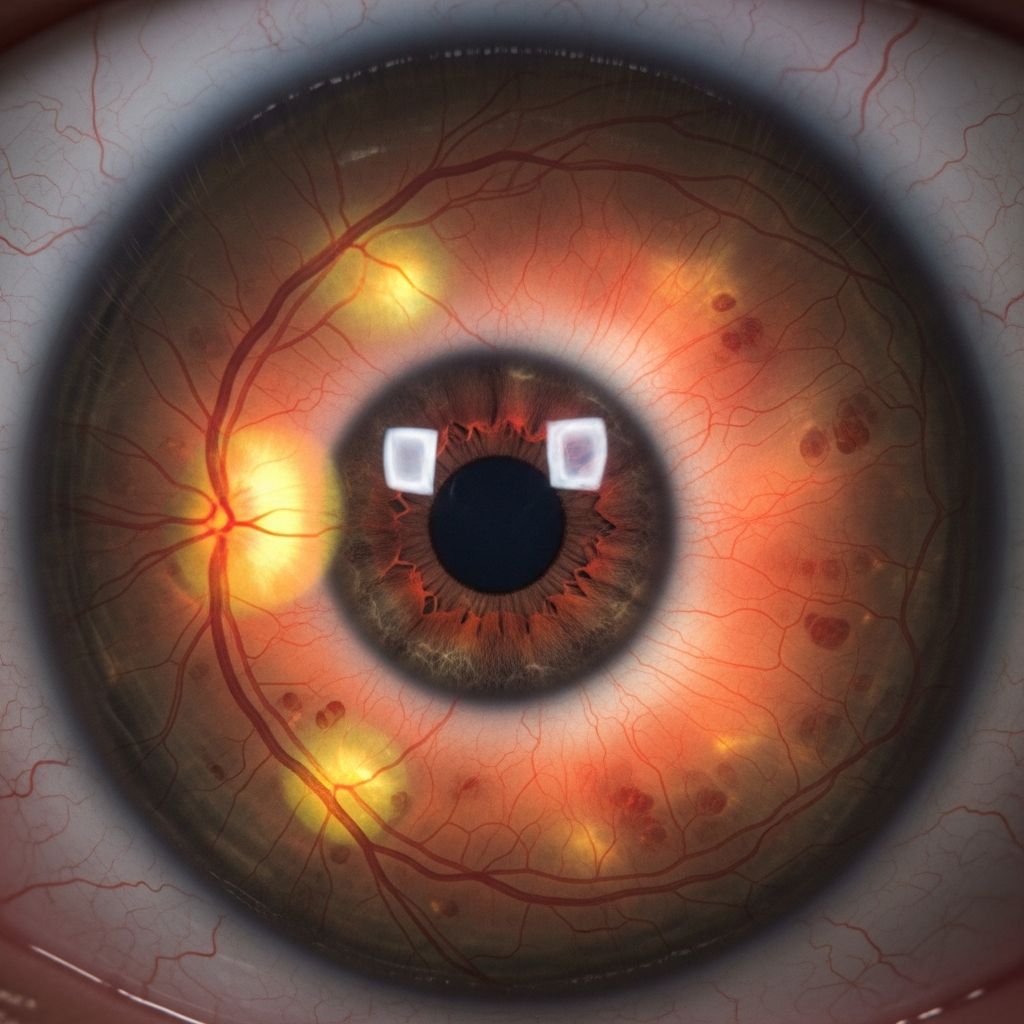
- Progressive depigmentation of the choroid, creating the characteristic “sunset-glow fundus” appearance 6 a pale optic disc with a bright red-orange choroid
- Loss of color in the choroid layer (the vascular layer beneath the retina)
- Development of small yellow nodules in the retina
- Choroidal scars and chorioretinal atrophy
Dermatological Manifestations:
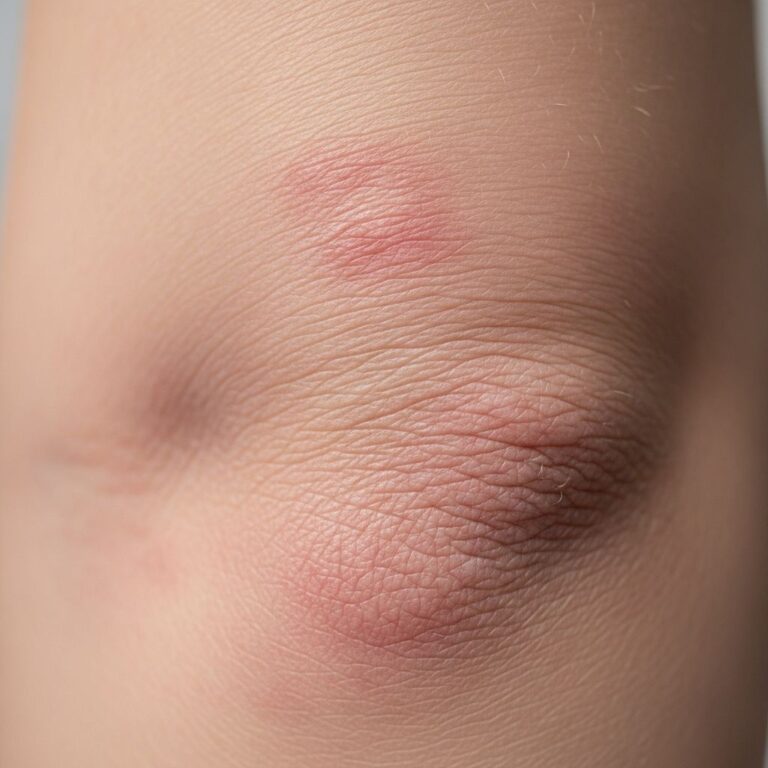
- Vitiligo: Smooth, white patches caused by loss of pigment-producing melanocytes, typically appearing on the face, eyelids, torso, hands, shoulders, and lower back approximately 2 3 months after disease onset
- Sugiura sign: Perilimbal vitiligo (white patches around the iris margin), the earliest depigmentation to manifest, typically appearing 1 month after the acute stage
- Poliosis: Whitening of hair and eyelashes, commonly affecting the eyebrows, eyelashes, and scalp
- Alopecia: Sudden hair loss
Auditory Manifestations:
- Sensorineural hearing loss
- Tinnitus (ringing in the ears)
- Dysacusis (difficulty perceiving sound)
- Vertigo
4. Recurrent Chronic Phase
Some patients experience recurrent episodes of inflammation characterized by:
- Panuveitis symptoms recurring
- Sight-threatening complications including sunset glow fundus progression
- Choroidal neovascular membrane development
- Neovascularization of the iris
- Open- and closed-angle glaucoma
- Subretinal fibrosis
Recurrent episodes serve as markers of poor visual prognosis and may necessitate more aggressive immunosuppressive therapy.
Diagnostic Criteria and Classification
The VKH International Workshop established three distinct classifications to standardize diagnosis:
Complete VKH Disease
Complete disease encompasses the presence of:
- Ocular findings: bilateral diffuse choroiditis with potential serous retinal detachments
- Neurologic manifestations: tinnitus, neck stiffness, cranial nerve involvement, cerebrospinal fluid pleocytosis
- Dermatologic signs: vitiligo, alopecia, or poliosis
Incomplete VKH Disease
Incomplete disease presents with either:
- Ocular findings combined with dermatologic symptoms, OR
- Ocular findings combined with neurologic manifestations
In this classification, one systemic feature (dermatologic or neurologic) is present alongside intraocular disease.
Suspected VKH Disease
Suspected disease presents with intraocular findings characteristic of VKH without evidence of dermatologic or neurologic manifestations. This classification requires exclusion of other causes, including penetrating ocular trauma, prior intraocular surgery, or infectious etiologies.
Diagnostic Investigations
Imaging Modalities
Indocyanine Green (ICG) Angiography: ICG-angiography is particularly valuable during the prodromal phase, revealing focal areas of delayed choroidal perfusion and characteristic choroidal folds (hypofluorescent lines radiating from the optic nerve). Subsequently, multiple hyperfluorescent pinpoints and progressive subretinal pooling delineate exudative retinal detachments, ultimately demonstrating disc hyperfluorescence and vascular hyperfluorescence.
Ultrasonography: B-scan ultrasonography during acute stages demonstrates diffuse choroidal thickening with low to medium reflectivity, serous retinal detachments, vitreous opacities (without posterior vitreous detachment), and scleral or episcleral thickening.
Electroretinography (ERG): Full-field ERG analysis in patients with chronic-stage VKH shows diffusely diminished amplitudes in both scotopic (low-light) and photopic (bright-light) phases, reflecting widespread retinal dysfunction.
Laboratory Testing
Cerebrospinal fluid (CSF) examination represents a critical diagnostic tool, revealing:
- Pleocytosis (increased white blood cell count), which may persist for up to 8 weeks
- Elevated protein levels in early stages
CSF analysis is particularly valuable during the prodromal phase when ocular findings are subtle, helping establish systemic involvement characteristic of complete VKH disease.
Differential Diagnosis
VKH must be distinguished from other causes of bilateral uveitis and intraocular inflammation, including:
- Sympathetic ophthalmia
- Sarcoidosis
- Tuberculosis
- Syphilis
- Acute retinal necrosis (ARN)
- Cytomegalovirus (CMV) retinitis
- Toxoplasmosis
- Other infectious and inflammatory etiologies
A comprehensive history excluding prior penetrating trauma, intraocular surgery, or infectious exposure is essential for accurate diagnosis.
Complications and Visual Prognosis
Without appropriate treatment, VKH can result in severe vision-threatening complications:
- Subretinal Fibrosis: Chronic serous retinal detachments leading to subretinal fibrosis represent a significant cause of severe vision loss, occurring in approximately 6% of eyes with VKH overall, but at much higher rates in Hispanic populations
- Glaucoma: Both open-angle and closed-angle glaucoma may develop secondary to inflammation
- Cataract Formation: Secondary cataracts may develop from chronic inflammation
- Permanent Vision Loss: The sunset-glow fundus appearance, while characteristic, indicates progressive depigmentation and is associated with poor visual outcomes
- Band Keratopathy: Calcium deposition in the cornea may occur
Management and Treatment Options
Early aggressive anti-inflammatory therapy is crucial to prevent irreversible vision loss and systemic complications. Treatment typically involves a stepwise approach:
First-Line Therapy: Systemic Corticosteroids
High-dose systemic corticosteroids form the cornerstone of VKH management, typically initiated at doses equivalent to 1 mg/kg/day of prednisone, gradually tapered over months based on clinical response and inflammatory markers.
Adjunctive Immunosuppression
For steroid-dependent patients or those requiring long-term control, steroid-sparing immunosuppressive agents are added, including:
- Methotrexate
- Azathioprine
- Mycophenolate mofetil
- Biologic agents (TNF-alpha inhibitors)
Topical and Regional Therapy
- Topical corticosteroids for anterior segment inflammation
- Topical cycloplegic agents to relieve ciliary body pain and prevent posterior synechiae
- Periocular corticosteroid injections for refractory posterior segment inflammation
Prognosis and Long-Term Outcomes
With early recognition and aggressive immunosuppressive therapy, most patients achieve visual improvement and stabilization. However, recurrent episodes, delayed diagnosis, or inadequate treatment can result in permanent vision impairment. Close ophthalmologic monitoring and multidisciplinary care involving dermatology and neurology are essential for optimal outcomes.
Frequently Asked Questions
Q: Is Vogt-Koyanagi-Harada syndrome contagious?
A: No, VKH is not contagious. It is an autoimmune inflammatory condition triggered by the body’s immune system mistakenly attacking melanocyte-containing tissues.
Q: Can VKH disease be cured?
A: While VKH cannot be permanently cured, early aggressive treatment with systemic corticosteroids and immunosuppressive agents can effectively control inflammation, prevent vision loss, and achieve long-term remission in many patients.
Q: What is the difference between complete and incomplete VKH disease?
A: Complete VKH includes ocular inflammation plus both neurologic and dermatologic manifestations. Incomplete VKH presents with ocular findings and either neurologic or dermatologic manifestations (but not both). Suspected VKH shows only ocular findings without systemic features.
Q: Why do Hispanic patients experience more severe VKH disease?
A: Hispanic patients develop complications such as subretinal fibrosis much more rapidly (within 6 months) compared to 6 years in non-Hispanic populations. The biological reasons remain under investigation but likely involve genetic factors affecting immune response and melanocyte vulnerability.
Q: What does ”sunset-glow fundus” mean?
A: Sunset-glow fundus is a characteristic appearance that develops during the chronic phase, where the optic disc becomes pale and the choroid appears bright red-orange due to progressive loss of pigment. It indicates chronicity of disease and is associated with poorer visual outcomes.
Q: How soon should treatment be started after diagnosis?
A: Treatment should be initiated as soon as VKH is suspected or diagnosed. Early aggressive therapy with high-dose systemic corticosteroids significantly improves visual prognosis and reduces the risk of vision-threatening complications.
References
- Vogt-Koyanagi-Harada Disease 6 Symptoms, Causes, Treatment 6 National Organization for Rare Disorders. 2024. https://rarediseases.org/rare-diseases/vogt-koyanagi-harada-disease/
- Vogt-Koyanagi-Harada Syndrome 6 StatPearls, National Center for Biotechnology Information (NCBI). 2024. https://www.ncbi.nlm.nih.gov/books/NBK574571/
- Vogt-Koyanagi-Harada disease: the step-by-step approach to a clinical entity 6 PubMed Central (PMC), National Institutes of Health. 2022. https://pmc.ncbi.nlm.nih.gov/articles/PMC9098759/
- Vogt-Koyanagi-Harada Disease 6 EyeWiki, American Academy of Ophthalmology. 2024. https://eyewiki.org/Vogt-Koyanagi-Harada_Disease
- Vogt-Koyanagi-Harada Disease (VKH) 6 Cleveland Clinic. 2024. https://my.clevelandclinic.org/health/diseases/vogt-koyanagi-harada-disease-vkh
Similar Articles








Read full bio of medha deb