Vulva: Anatomy, Function, Health & Care Guide
Complete guide to vulva anatomy, function, and essential care tips for reproductive health.
Understanding Your Vulva: Anatomy, Function, and Health
Your vulva is the collective term for your external genitals—the visible area between your legs that serves multiple vital functions. It allows you to menstruate, give birth, urinate, and experience sexual pleasure. Understanding your vulva’s anatomy and function is essential for maintaining reproductive and sexual health, preventing infections, and recognizing when something may need medical attention.
The vulva consists of several interconnected structures, each with specific functions that contribute to your overall health and well-being. Many people use the terms “vulva” and “vagina” interchangeably, but they refer to different parts of your body. Your vagina is the internal muscular canal, while your vulva is the external area you can see and touch.
The External Structures of Your Vulva
Your vulva comprises multiple external structures that work together to protect your internal reproductive organs and facilitate essential bodily functions. These structures are sensitive, complex, and deserve proper understanding and care.
Labia Majora (Outer Lips)
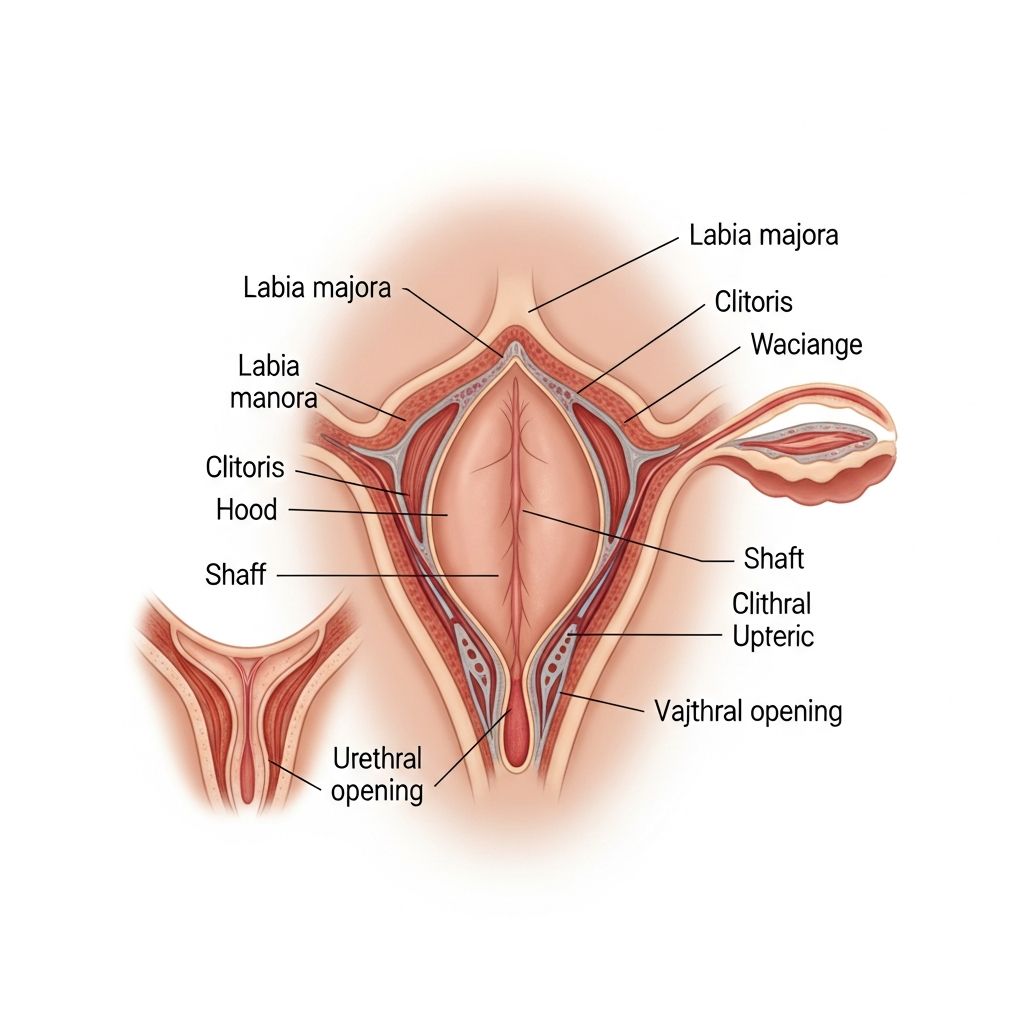
The labia majora are the larger, outer folds of your vulva. These fleshy structures surround and protect the more delicate inner structures of your vulva. The labia majora are typically covered with pubic hair after puberty and contain sweat glands and oil glands that help maintain moisture and protect the area. They extend from your pubic mound down to the perineum, the area between your vaginal opening and anus.
The size, shape, color, and texture of labia majora vary significantly from person to person, and this natural variation is completely normal. Some individuals have prominent labia majora, while others have flatter or less visible outer lips. These variations do not indicate any health concerns.
Labia Minora (Inner Lips)
Your inner lips, or labia minora, are hairless, vertical folds located inside your outer lips. They start above your clitoris and extend downward to your perineum. The labia minora are typically thinner and more delicate than the labia majora, with a smooth or slightly textured surface. Their color often ranges from pink to dark brown, depending on your skin tone and natural pigmentation.
The uppermost part of your labia minora forms the clitoral hood, which houses and protects your highly sensitive clitoris. This protective tissue helps diffuse sensation from your clitoris, allowing clitoral stimulation to feel pleasurable rather than painful during sexual activity. Like the labia majora, the appearance of labia minora varies widely among individuals, and this diversity is completely healthy and normal.
The Clitoris
Your clitoris is your most sensitive erogenous zone and plays a crucial role in sexual pleasure. The visible part of your clitoris, called the glans, is filled with thousands of nerve endings that make it incredibly sensitive to touch. The glans is typically small, ranging from the size of a pea to larger, depending on individual variation.
Related Stories



What many people don’t realize is that the clitoris extends internally into your body, shaped like an upside-down wishbone. The internal structure branches out to form a V shape, with portions of the clitoris surrounding your vaginal opening. During sexual arousal, blood flow increases to the clitoris, causing it to swell and become even more sensitive. This internal swelling adds pressure to your vaginal wall, which can increase pleasurable sensations.
It’s important to note that the clitoris does not contain the urethra, unlike the penis. The urethra has its own separate opening located just below the clitoris.
The Urethral Opening
Your urethral opening is a small slit located just below your clitoris. This opening allows urine to exit your body. The urethra is the tube that carries urine from your bladder to this opening. Because of its location near the clitoris and vaginal opening, the urethral opening can sometimes be affected by friction during sexual activity or become irritated by certain products or infections.
The Vaginal Opening
Below your urethral opening is your vaginal opening, also called the vaginal introitus. This opening leads to your vagina, a flexible, muscular canal inside your body that allows menstruation, pregnancy, and childbirth. The outermost third of your vagina contains highly sensitive nerve endings that typically produce pleasurable feelings when touched during sexual activity.
The vaginal opening is surrounded by the labia minora and is partly covered by the hymen, a delicate membrane that sits over a portion of the opening. The hymen can tear during first sexual intercourse, tampon use, or certain physical activities, though it’s important to know that not everyone experiences tearing or bleeding.
Important Internal Structures Related to the Vulva
Bartholin Glands
Located at the entrance of your vagina are two Bartholin glands, each approximately the size of a pea. These glands secrete fluid that lubricates your vagina and vulva, making sexual contact feel more pleasurable and reducing friction. The lubrication produced by Bartholin glands is especially important during sexual arousal, when increased lubrication prepares your body for penetration.
While Bartholin glands play an important role, they are not solely responsible for vaginal lubrication. Skene’s glands and secretions from your vaginal wall also contribute significantly to maintaining moisture in the vaginal area. Together, these structures work to maintain an environment that feels comfortable and is protected against irritation and infection.
The Hymen
The hymen is a delicate, thin membrane of tissue that sits over part of your vaginal opening. Contrary to popular myths, the hymen is not a seal that proves virginity. The hymen can stretch or tear from various activities, including tampon insertion, exercise, medical examinations, or sexual penetration. Many people never experience noticeable tearing or bleeding related to the hymen, and its state has no bearing on sexual history or health status.
The Vagina
While the vagina itself is an internal structure, it’s closely connected to vulva health. Your vagina is a stretchy, muscular tube positioned in your pelvis between your bladder and rectum. It extends from your cervix at the top to your vaginal opening at the bottom. The vaginal walls contain significant blood supply and numerous nerve endings that aid in sexual pleasure and lubrication.
Your vagina typically measures about 3 to 4 inches (7 to 10 centimeters) deep when not aroused. During sexual arousal, blood flow to the vulva and vagina increases, causing the area to expand. Your vagina can stretch to approximately 4 to 8 inches deep when aroused, and your cervix lifts slightly to further lengthen the vaginal canal. This natural expansion accommodates penetration and enhances pleasure.
Functions of Your Vulva
Your vulva serves multiple critical functions essential to your health and well-being:
Menstruation
During your menstrual cycle, the lining of your uterus sheds through your cervix, vagina, and out through your vaginal opening. Your vulva facilitates this process and helps protect the internal reproductive organs during menstruation.
Reproduction and Childbirth
Your vulva is the entry point for sperm to reach your vagina and reproductive tract. During childbirth, the vaginal opening and surrounding vulvar tissues stretch to allow a baby to pass through. The pelvic floor muscles and connective tissue supports around your vulva play critical roles in maintaining proper positioning of your reproductive organs and supporting the structures needed for pregnancy and delivery.
Urination
Your urethral opening allows urine to exit your body. The location of this opening near other vulvar structures makes proper hygiene and care important for preventing urinary tract infections.
Sexual Pleasure
Your vulva is an erogenous zone filled with sensitive nerve endings. The clitoris is particularly sensitive and capable of producing the most intense and pleasurable sexual responses in your body. During sexual arousal, increased blood flow to the vulva causes swelling and heightened sensitivity, enhancing sexual pleasure.
Vulva Health and Care
Maintaining vulva health involves understanding what’s normal for your body and taking steps to prevent infections and irritation. Here are essential care strategies:
Avoiding Irritants
The vulva has delicate skin that can be irritated by certain products and practices. Avoid douches, scented soaps, douches, and feminine hygiene sprays, which can disrupt your natural pH balance and harm beneficial bacteria. Wash your vulva with warm water only, or use mild, unscented cleansers designed for intimate areas.
Preventing Infections
Keeping your vulva clean and dry helps prevent bacterial and fungal infections. Change out of wet clothing promptly, wear breathable underwear, and avoid tight-fitting pants that trap moisture. Practicing safe sex and regular STI screening are important for preventing sexually transmitted infections.
Recognizing Normal Variation
Understanding that vulvas come in many different shapes, sizes, colors, and textures is crucial for sexual and reproductive health. Natural variation in labia size, color, and asymmetry is completely normal and healthy. If you have concerns about your vulva’s appearance or function, consult with a healthcare provider rather than seeking unnecessary cosmetic procedures.
Monitoring Changes
Pay attention to changes in vulva health, including unusual discharge, persistent itching, pain, or visible lesions. These changes may indicate infections or other conditions requiring medical evaluation.
Hormonal Changes Throughout Your Life
Your vulva and vagina change throughout your life in response to hormonal fluctuations. Cells in the vagina are especially responsive to estrogen, which your body produces in higher amounts during reproductive years than during menopause.
During puberty, hormonal changes trigger the growth of pubic hair, development of the labia, and changes in vaginal discharge. During reproductive years, your vulva and vagina undergo regular changes related to your menstrual cycle. After menopause, decreased estrogen production can lead to vulvovaginal atrophy, causing dryness, thinning of tissues, and changes in lubrication. Understanding these natural changes helps you maintain health across all life stages.
Pelvic Floor Support and Function
The pelvic floor muscles play a critical role in supporting vulvar and vaginal structures. These muscles, particularly the levator ani muscle complex, support pelvic organs and contribute to urinary, bowel, and sexual function. Pelvic floor strength can be maintained or improved through exercises like Kegels, which involve contracting and relaxing these muscles. Strong pelvic floor muscles enhance sexual pleasure, improve bladder control, and support healthy vaginal positioning.
Frequently Asked Questions
Q: Is it normal for my labia to be asymmetrical?
A: Yes, asymmetry in the labia is completely normal and common. Most people have one labia minora or majora that is larger or differently shaped than the other. This natural variation is healthy and requires no treatment.
Q: What should normal vaginal discharge look like?
A: Normal vaginal discharge varies throughout your menstrual cycle, ranging from clear to whitish, thick to watery, and minimal to more abundant. Changes related to your cycle are normal. However, discharge with an unusual color, odor, or consistency accompanied by itching or pain may indicate an infection requiring medical evaluation.
Q: How can I maintain vulva health during menstruation?
A: Change pads or tampons regularly, wear breathable period products, and maintain gentle hygiene by rinsing with warm water. Avoid scented products and douches, which can disrupt your natural pH and increase infection risk.
Q: When should I see a healthcare provider about vulva concerns?
A: Consult a healthcare provider if you experience persistent itching, pain, unusual discharge, visible lesions, or any changes that concern you. Regular gynecological examinations are also important for sexual and reproductive health monitoring.
Q: Can pelvic floor exercises improve sexual function?
A: Yes, strengthening pelvic floor muscles through exercises like Kegels can enhance sexual pleasure, improve sensation, and increase sexual satisfaction for many people.
Conclusion
Your vulva is a complex, vital part of your reproductive and sexual health. Understanding its anatomy, function, and how to care for it properly empowers you to maintain health, recognize when something may need medical attention, and appreciate the natural diversity of vulvar appearance and function. By avoiding irritants, preventing infections, and maintaining awareness of what’s normal for your body, you can support vulva health throughout all stages of your life.
References
- Vulva: Location, Anatomy, Function, Conditions & Care — Cleveland Clinic. 2024. https://my.clevelandclinic.org/health/body/vulva
- Vagina: Anatomy, Function, Conditions & Care — Cleveland Clinic. 2024. https://my.clevelandclinic.org/health/body/22469-vagina
- Clitoris: Anatomy, Location, Purpose & Conditions — Cleveland Clinic. 2024. https://my.clevelandclinic.org/health/body/22823-clitoris
- Contemporary views on female pelvic anatomy — Cleveland Clinic Journal of Medicine. 2005. https://www.ccjm.org/content/ccjom/72/12_suppl_4/S3.full.pdf
- Vulva: Definition, Anatomy, & Function — Britannica. 2024. https://www.britannica.com/science/vulva
- Female Reproductive System: Structure & Function — Cleveland Clinic. 2024. https://my.clevelandclinic.org/health/articles/9118-female-reproductive-system
- 9 Tips To Keep Your Vagina and Vulva Healthy — Cleveland Clinic Health. 2024. https://health.clevelandclinic.org/how-to-keep-your-vagina-happy-healthy
Similar Articles








Read full bio of medha deb