Vulval Cancer Symptoms, Diagnosis & Treatment: Complete Guide
Comprehensive guide to vulval cancer: symptoms, causes, diagnosis, treatment, and prognosis for early detection and effective management.
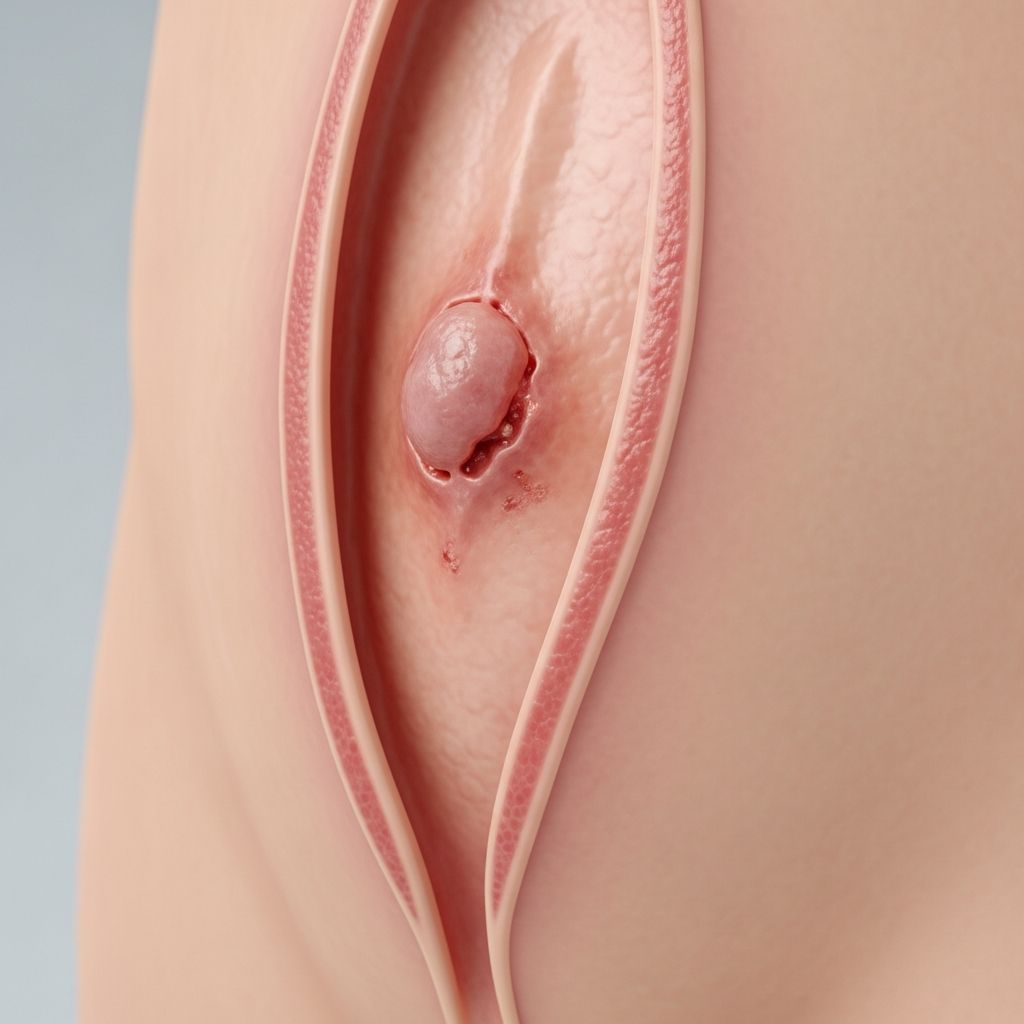
Author: Reviewed by: Dermatologists / Updated: This article provides an in-depth examination of vulval cancer, a rare but serious condition affecting the external female genitalia.
What is vulval cancer?
Vulval cancer, also known as vulvar cancer, is a rare malignancy that develops on the vulva, the external part of the female genital organs. It most commonly arises from the skin of the vulva, particularly the labia minora and majora, clitoris, or perineal area. Squamous cell carcinoma accounts for approximately 90-95% of cases, while rarer types include melanomas, adenocarcinomas, and basal cell carcinomas. Although uncommon, representing less than 5% of all gynaecological cancers, early detection significantly improves outcomes.
The vulva includes the mons pubis, labia majora, labia minora, clitoris, vestibular bulbs, and vaginal opening. Cancer can originate from squamous epithelium, skin appendages, or connective tissues. Risk increases with age, typically affecting postmenopausal women over 65, though younger cases linked to human papillomavirus (HPV) are rising.
Who gets vulval cancer?
Vulval cancer primarily affects older women, with peak incidence between 70-80 years. Lifetime risk is about 1 in 340 women in developed countries. Incidence has slightly increased due to HPV-related cases in younger women.
- Age: Over 90% diagnosed in women aged 60+; median age 76 years.
- Risk factors: Vulval intraepithelial neoplasia (VIN), lichen sclerosus, HPV infection (high-risk types 16/18), smoking, immunosuppression (e.g., HIV), previous cervical cancer or HPV-related lesions.
Geographical variations exist, with higher rates in developed nations possibly due to better reporting and ageing populations.
What causes vulval cancer?
Vulval cancers are classified into HPV-associated (younger women, warty/basaloid types) and HPV-independent (older women, keratinising types linked to chronic skin conditions).
- HPV-dependent (30-50%): High-risk HPV (16, 18) causes VIN leading to cancer; similar to cervical cancer pathogenesis.
- HPV-independent (50-70%): Arises from lichen sclerosus or lichen planus; genetic mutations (e.g., TP53) drive progression.
- Other factors: Smoking impairs immunity; immunosuppression accelerates VIN progression.
What are the clinical features of vulval cancer?
Early vulval cancer is often asymptomatic or mistaken for benign conditions. Persistent symptoms warrant investigation.
- Common symptoms: Chronic itching (pruritus, most frequent), pain, burning, soreness.
- Lesion appearance: Raised lump, ulcer, wart-like growth, thickened patches (red, white, dark); cauliflower-like growths.
- Advanced signs: Bleeding, discharge, dysuria, foul odour.
Symptoms persist >2 weeks; self-examination is crucial.
How is vulval cancer diagnosed?
Diagnosis combines clinical assessment and histopathology.
- Examination: Visual inspection, palpation of vulva and groin.
- Colposcopy: Magnifies lesions with acetic acid to highlight abnormalities.
- Biopsy: Essential; punch/incisional biopsy with 2-3mm margins. Confirms squamous cell carcinoma and differentiates VIN.
- Imaging: CT/MRI/PET for staging if invasion suspected.
What is the treatment for vulval cancer?
Treatment is stage-dependent, prioritizing surgery with fertility/sexual function preservation.
Early-stage (IA-IB)
Wide local excision (1-2cm margins) ± sentinel lymph node biopsy (SLNB).
Locally advanced
Radical vulvectomy ± inguinofemoral lymphadenectomy; neoadjuvant chemoradiation for unresectable tumours.
Advanced/metastatic
Chemoradiation, palliative surgery, systemic therapy (e.g., cisplatin, pembrolizumab for PD-L1+).
Related Stories



Radiation used post-surgery for positive margins/nodes; chemotherapy sensitizes.
Complications of surgery
- Wound issues: Infection, dehiscence (20-50%).
- Lymphoedema: Leg swelling post-groin dissection (30-70%).
- Psychosexual: Body image, dyspareunia; counselling advised.
What is the prognosis for vulval cancer?
5-year survival: Stage I 90%, II 70-80%, III 30-50%, IV 10-20%. Groin nodes critically impact prognosis.
| Stage | 5-Year Survival |
|---|---|
| I | 90-98% |
| II | 70-80% |
| III | 30-50% |
| IV | 10-20% |
Prevention of vulval cancer
- HPV vaccination (Gardasil 9) prevents VIN/cancer.
- Smoking cessation, VIN treatment, skin condition management.
- Vulval self-exam monthly post-menopause.
Establishing a diagnosis of vulval cancer
See primary care for symptoms; urgent gynaecology/oncology referral. Multidisciplinary team manages.
Vulval cancer FAQs
Q: Is vulval cancer curable?
A: Yes, highly curable in early stages with >90% survival via surgery.
Q: Does HPV cause vulval cancer?
A: Yes, in 30-50% cases; vaccination reduces risk.
Q: What does vulval cancer look like?
A: Itchy lumps, ulcers, discoloured patches, warts.
Q: How fast does vulval cancer spread?
A: Slowly; groin nodes first site.
Q: Can vulval cancer be prevented?
A: Partially via HPV vaccine, smoking cessation, VIN surveillance.
References
- Vulvar Cancer Symptoms & Treatment — UConn Health. 2023. https://www.uconnhealth.org/cancer-blood-disorders/services-specialties/vulvar-cancer
- Vulvar Cancer — Foundation for Women’s Cancer. 2024. https://foundationforwomenscancer.org/gynecologic-cancers/gynecologic-cancer-types/vulvar-cancer/
- Vulvar Cancer Treatment – NCI — National Cancer Institute (cancer.gov). 2025-01-15. https://www.cancer.gov/types/vulvar/patient/vulvar-treatment-pdq
- Vulvar cancer: epidemiology, clinical presentation, and management — PMC/NCBI (PMC4374790). 2015-04-01. https://pmc.ncbi.nlm.nih.gov/articles/PMC4374790/
- Vulvar cancer — Cancer Council Australia. 2024. https://www.cancer.org.au/cancer-information/types-of-cancer/vulvar-cancer
- Vulvar Cancer Treatment Options — Society of Gynecologic Oncology (SGO). 2023. https://www.sgo.org/patient-resources/vulvar-cancer/vulvar-cancer-treatment-options/
Similar Articles








Read full bio of Sneha Tete