Vulval Intraepithelial Neoplasia: What You Need To Know
Comprehensive guide to VIN: precancerous vulval skin changes, causes, symptoms, diagnosis, and treatments to prevent progression to cancer.
What is vulval intraepithelial neoplasia?
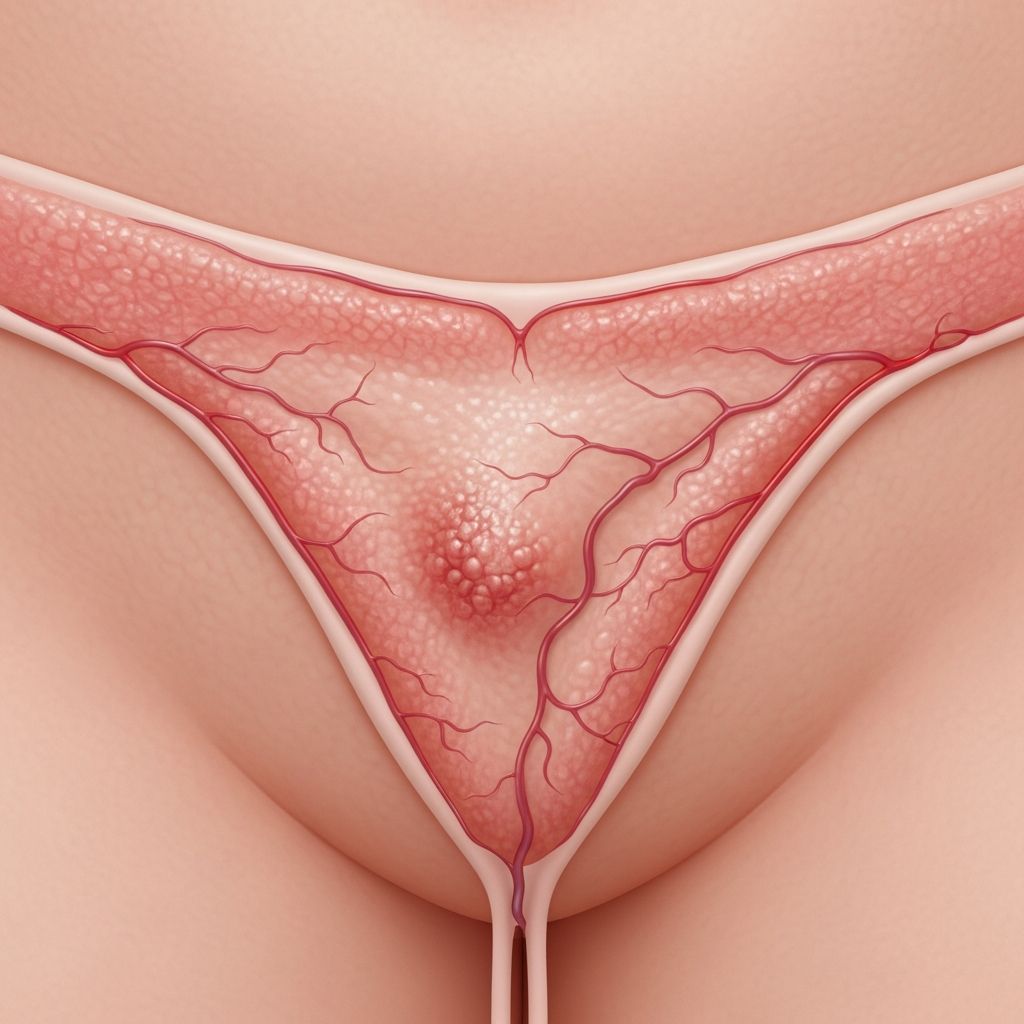
Vulval intraepithelial neoplasia (VIN) refers to precancerous changes in the skin of the vulva, the external female genitalia. These abnormal cells affect the squamous epithelium, the outermost layer of skin, and carry a risk of progressing to invasive vulval squamous cell carcinoma if untreated. VIN is classified into two main types: usual-type VIN (uVIN), now termed high-grade squamous intraepithelial lesion (HSIL), and differentiated-type VIN (dVIN). uVIN/HSIL is strongly associated with human papillomavirus (HPV) infection, particularly high-risk types like HPV-16, while dVIN often links to chronic inflammatory conditions such as lichen sclerosus.
Most cases of VIN are diagnosed in women over 45, but uVIN/HSIL can occur in younger individuals due to HPV exposure. The condition is increasingly recognized with improved screening and awareness. Early detection through biopsy is crucial, as VIN can be asymptomatic or mimic benign conditions.
Who gets vulval intraepithelial neoplasia?
Risk factors for VIN include:
- HPV infection: Primary cause of uVIN/HSIL, especially in sexually active women. High-risk HPV types persist and drive cellular changes.
- Immunosuppression: HIV, organ transplant recipients, or long-term steroid use increase susceptibility.
- Lichen sclerosus or lichen planus: Associated with dVIN, which has a higher progression risk to cancer.
- Smoking: Impairs immune clearance of HPV and promotes persistence.
- Previous HPV-related lesions: History of cervical intraepithelial neoplasia (CIN) or anal intraepithelial neoplasia raises risk.
- Multiple sexual partners: Increases HPV exposure.
uVIN/HSIL often presents multifocally in younger women, while dVIN is typically unifocal in older postmenopausal women.
What causes vulval intraepithelial neoplasia?
The pathogenesis differs by type:
- uVIN/HSIL: Driven by high-risk HPV integration into host DNA, leading to oncoproteins E6 and E7 that inactivate p53 and Rb tumor suppressors. This causes uncontrolled proliferation in the basal epithelium.
- dVIN: Arises from chronic inflammation, often lichen sclerosus, with TP53 mutations rather than HPV. Hyperkeratosis and basal atypia are hallmarks.
Progression to invasion occurs in 4-33% of cases over years, higher for dVIN (up to 33%). Spontaneous regression is possible in young women with uVIN/HSIL, especially if HPV clears.
What are the clinical features of vulval intraepithelial neoplasia?
VIN lesions vary widely:
- uVIN/HSIL: Multifocal, raised white, red, or pigmented papules/plaques; may be warty or acetowhite on colposcopy.
- dVIN: Unifocal, thickened, white hyperkeratotic plaques resembling lichen sclerosus.
- Low-grade SIL (LSIL): Flat, subtle changes that may resolve spontaneously.
Symptoms, if present, include persistent itching, soreness, burning (worse with urination), pain during sex, or skin thickening. Up to 50% are asymptomatic, found incidentally.
How is vulval intraepithelial neoplasia diagnosed?
Diagnosis requires vulvoscopy (magnified exam, often with acetic acid) and biopsy:
- Visual inspection and history.
- Colposcopy: 3-5% acetic acid highlights acetowhite areas.
- Biopsy: Punch or incisional from suspicious sites. Confirms grade and type via histopathology (koilocytosis in uVIN, atypia in dVIN).
Related Stories



Rule out invasion if ulcerated or indurated. Multidisciplinary input from dermatology, gynecology, and pathology is ideal.
What is the treatment for vulval intraepithelial neoplasia?
Treatment aims to excise/destroy abnormal cells, relieve symptoms, and prevent cancer. LSIL may be observed; HSIL/dVIN requires intervention.
Surgical excision
Wide local excision with 3-5mm margins is gold standard for dVIN or suspected invasion. Complete vulvectomy for extensive multifocal disease. Ensures clear margins but risks scarring/dyspareunia.
Laser ablation
CO2 laser vaporizes lesions, preserving tissue. Effective for multifocal uVIN/HSIL. Risks include pain, infection, pigment changes, hair loss.
Medical therapy
| Treatment | Regimen | Efficacy/Side Effects |
|---|---|---|
| Imiquimod 5% cream (off-label) | 3x/week for 12-20 weeks | 50-90% response; inflammation, pain. Less effective in immunocompromised. |
| Cidofovir gel | Topical application | Varying efficacy; inflammation, fatigue. |
| Photodynamic therapy (PDT) | Light-activated cream/injection | Effective in trials; requires equipment, flu-like symptoms. |
| 5-FU cream | Topical | Limited data; irritation. |
Steroids/emollients manage symptoms.
Complications of vulval intraepithelial neoplasia
Untreated VIN progresses to squamous cell carcinoma (4-33% risk). Recurrence is common (30-50%), necessitating lifelong surveillance. Treatment complications: scarring, chronic pain, sexual dysfunction.
How can vulval intraepithelial neoplasia be prevented?
- HPV vaccination (Gardasil 9) before sexual debut.
- Smoking cessation.
- Treatment of lichen sclerosus.
- Regular self-exam and screening in high-risk groups.
Related topics
- Vulval cancer
- Lichen sclerosus
- HPV infection
- Cervical intraepithelial neoplasia
Frequently asked questions
What is VIN?
Precancerous vulval skin changes that may progress to cancer if untreated.
Is VIN cancer?
No, but a precursor. Early treatment prevents progression.
Does VIN always cause symptoms?
No, many are asymptomatic; itching/pain common when present.
How is VIN treated?
Excision, laser, imiquimod; follow-up essential.
Can VIN recur?
Yes, lifelong monitoring required.
References
- Management of Vulvar Intraepithelial Neoplasia — American College of Obstetricians and Gynecologists (ACOG). 2016-10 (authoritative guideline, remains relevant). https://www.acog.org/clinical/clinical-guidance/committee-opinion/articles/2016/10/management-of-vulvar-intraepithelial-neoplasia
- Vulval intraepithelial neoplasia (VIN) — Macmillan Cancer Support. Accessed 2026. https://www.macmillan.org.uk/cancer-information-and-support/worried-about-cancer/pre-cancerous-and-genetic-conditions/vulval-intraepithelial-neoplasia
- Vulval intraepithelial neoplasia Patient Information Leaflet — British Association of Dermatologists (via Skin Health Info). 2024-11. https://www.skinhealthinfo.org.uk/wp-content/uploads/2024/11/Vulval-intraepithelial-neoplasia-PIL-Nov-2024.pdf
- Vulval intraepithelial neoplasia (VIN) — Cancer Research UK. Accessed 2026. https://www.cancerresearchuk.org/about-cancer/vulval-cancer/vulval-intraepithelial-neoplasia
- Vulvar Intraepithelial Neoplasia: Causes, Symptoms & Treatment — Cleveland Clinic. Accessed 2026. https://my.clevelandclinic.org/health/diseases/vulvar-intraepithelial-neoplasia
- Vulval intraepithelial neoplasia (VIN) — DermNet NZ. Accessed 2026. https://dermnetnz.org/topics/vulval-intraepithelial-neoplasia
Similar Articles








Read full bio of medha deb