Vulval Ulcers: 10 Clinical Images For Differential Diagnosis
Comprehensive visual guide to vulval ulcers: causes, clinical images, and differential diagnosis for accurate identification.
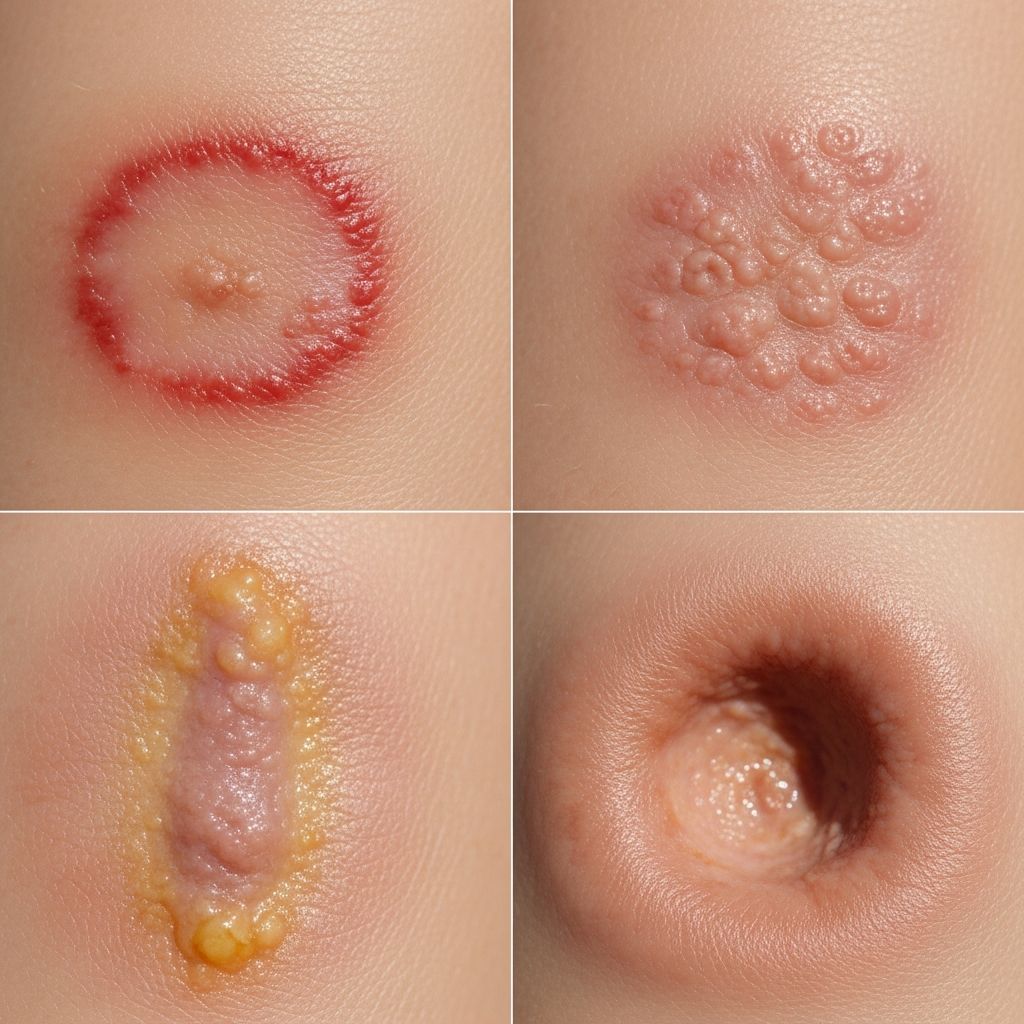
Vulval ulcers are open sores or erosions on the vulva, often resulting from tissue damage due to inflammation, infection, or other pathologies. These lesions can cause significant pain, discomfort, and concern, necessitating prompt evaluation. This article presents a curated collection of clinical images illustrating various causes of vulval ulcers, drawn from dermatological archives. Images depict real cases to aid in visual recognition and differential diagnosis. Always consult a healthcare professional for diagnosis and management, as self-assessment is insufficient.
What are vulval ulcers?
Vulval ulcers represent breaks in the skin or mucous membranes of the vulva, characterized by tissue loss and often accompanied by pain, erythema, or discharge. They arise from focal inflammation leading to tissue necrosis. Common presentations include shallow erosions, deep punched-out ulcers, or clustered vesicles that rupture. While many are benign and self-limiting, others signal serious underlying conditions like sexually transmitted infections (STIs) or systemic diseases. Early identification through visual inspection is crucial, supplemented by swabs, biopsies, or serology.
Symptoms frequently include sharp pain during urination or intercourse, itching, swelling, and lymphadenopathy. Non-sexually acquired ulcers are particularly common in adolescents, often linked to immune responses or trauma. According to clinical guidelines, the most prevalent infectious cause in adults is herpes simplex virus (HSV), while aphthous ulcers predominate in younger patients.
Causes of vulval ulcers
Vulval ulcers stem from infectious and non-infectious etiologies. Infectious causes account for approximately 70% of cases in sexually active adults, with STIs leading. Non-infectious ulcers, comprising aphthosis and inflammatory conditions, are more frequent in adolescents and virgins. Key categories include:
- Infectious: STIs (HSV, syphilis, chancroid), bacterial (streptococcus), viral (EBV, CMV), fungal (candida).
- Non-infectious: Aphthous ulcers, trauma, autoimmune (Behcet’s, Crohn’s), drug reactions, malignancies.
Accurate differentiation relies on history, examination, and targeted testing. For instance, HSV ulcers are typically multiple and recurrent, whereas syphilitic chancre is solitary and painless.
Herpes simplex
Herpes simplex virus (HSV-2 > HSV-1) causes the most common vulval ulcers worldwide. Initial infection presents with clustered vesicles on an erythematous base that rupture into shallow, painful ulcers with scalloped edges. Prodromal tingling precedes outbreaks. Recurrent episodes are milder, often unilateral. Images show tender, superficial ulcers 1-3 mm in diameter, sometimes coalescing into larger erosions. Secondary bacterial infection can deepen lesions. Tzanck smear reveals multinucleated giant cells; PCR confirms diagnosis. Antivirals like aciclovir shorten duration.
Clinical image description: Multiple superficial ulcers on labia minora with surrounding erythema and vesicles. Lesions appear 3-5 days post-exposure, healing in 7-14 days without scarring.
Syphilis
Primary syphilis manifests as a chancre: a firm, painless ulcer with raised indurated borders and clean base, often 1-2 cm. Located on labia, fourchette, or perineum, it may go unnoticed. Dark-field microscopy detects Treponema pallidum. Serology (RPR/VDRL) follows. Without treatment, it resolves in 3-6 weeks but progresses to secondary syphilis. Images depict solitary, button-like ulcers contrasting with painful herpetic lesions. Penicillin G remains the treatment of choice.
Clinical image description: Single round ulcer on posterior fourchette with indurated edges, minimal exudate.
Related Stories



Chancroid
Haemophilus ducreyi causes painful, ragged ulcers with undermined edges and purulent base, often multiple due to autoinoculation. Accompanied by suppurative inguinal buboes in 50% cases. More common in tropics but reportable worldwide. Gram stain shows school-of-fish arrangement; culture confirms. Images reveal deep, excavated ulcers 1-2 cm with greyish membrane. Treatment: azithromycin or ceftriaxone.
Clinical image description: Irregular, tender ulcer on labia majora with surrounding oedema and bubo.
Aphthous ulcers
Non-sexually acquired genital ulceration (NSAGU) or aphthosis presents as large, deep, punched-out ulcers with yellow fibrinous base and erythematous halo. Common in adolescents, triggered by EBV, CMV, or stress. Images show solitary or few ulcers >1 cm on labia or vestibule, causing severe dysuria. They heal slowly (2-6 weeks) without scarring. Supportive care suffices; steroids for severe cases.
Clinical image description: Large, discrete ulcer on introitus with inflammatory rim.
Behçet’s syndrome
Systemic vasculitis with recurrent oral and genital ulcers. Vulval lesions are deep, painful, with necrotic base, often scarring. Associated with uveitis, pathergy. Diagnosed clinically (International Criteria). Images depict irregular ulcers on labia majora. Colchicine or thalidomide for genital ulcers.
Clinical image description: Multiple deep ulcers with scarring on vulva.
Crohn’s disease
Gastrointestinal disorder with vulval involvement: ‘knife-cut’ ulcers, oedema, fissures. Images show linear ulcers, vegetating plaques, or abscesses. Biopsy reveals granulomas. Treated with anti-TNF agents.
Clinical image description: Fissured, oedematous labia with longitudinal ulcers.
Lymphogranuloma venereum
Chlamydia trachomatis serovars L1-L3 cause transient papule evolving to shallow ulcer, followed by buboes. PCR diagnosis. Images: small inguinal ulcers.
Clinical image description: Transient vesicle turning ulcer on thigh-vulva junction.
Granuloma inguinale
Donovanosis (Klebsiella granulomatis): beefy-red, hypertrophic ulcers spreading contiguously. Wright stain shows Donovan bodies. Images: extensive erosive plaques.
Clinical image description: Velvety ulcer on perineum.
Fixed drug eruption
Recurrent hyperpigmented ulcers from NSAIDs, antibiotics. Images: round, dusky ulcers.
Clinical image description: Solitary blister evolving to ulcer on labia.
Malignancy
Squamous cell carcinoma: irregular, indurated ulcer with rolled edges. Biopsy essential. Images: persistent, non-healing lesion.
Clinical image description: Ulcerated nodule on vulva.
What is the treatment for vulval ulcers?
Treatment targets the cause:
- HSV: Aciclovir 400mg TDS 5 days.
- Syphilis: Benzathine penicillin 2.4MU IM.
- Bacterial: Antibiotics per sensitivity.
- Aphthous: Lidocaine, salt baths, prednisolone if severe.
- Symptomatic: Analgesics, barrier creams, avoid irritants.
Supportive measures: sitz baths, petroleum jelly, loose clothing. Biopsy suspicious lesions.
Frequently Asked Questions
Are vulval ulcers always due to STIs?
No, up to 30% are non-infectious, especially in adolescents (aphthous ulcers).
Do vulval ulcers heal on their own?
Many do, but untreated STIs can lead to complications; seek medical advice.
Can I have sex with vulval ulcers?
Abstain until healed to prevent transmission and irritation.
When should I see a doctor?
Immediately if painful, recurrent, or with systemic symptoms.
How are vulval ulcers diagnosed?
Swabs, serology, biopsy; visual inspection key.
References
- Genital Ulcers: Causes, Symptoms, Diagnosis & Treatment — Cleveland Clinic. 2023-05-15. https://my.clevelandclinic.org/health/diseases/23320-genital-ulcers
- Diagnosis and Management of Genital Ulcers — American Academy of Family Physicians (AAFP). 2012-02-01. https://www.aafp.org/pubs/afp/issues/2012/0201/p254.html
- Differential diagnosis of vulval ulcers — DermNet NZ. 2024-01-10. https://dermnetnz.org/topics/differential-diagnosis-of-vulval-ulcers
- Clinical Practice Guidelines: Vulval ulcers — Royal Children’s Hospital Melbourne. 2023-08-20. https://www.rch.org.au/clinicalguide/guideline_index/vulval_ulcers/
- Vulvar ulcers: Causes, symptoms, and treatments — Medical News Today. 2023-11-12. https://www.medicalnewstoday.com/articles/genital-ulcers
Similar Articles








Read full bio of Sneha Tete